
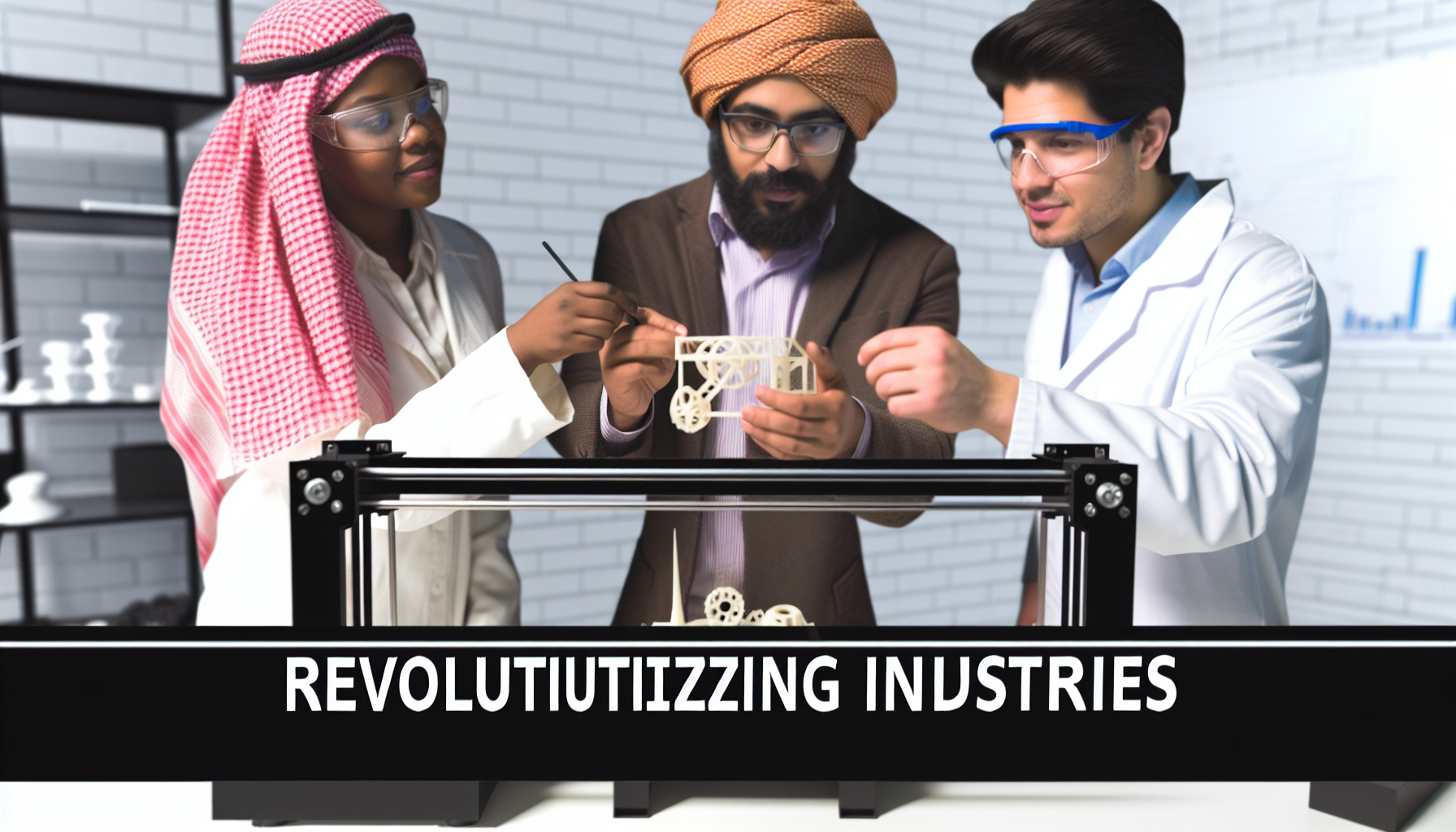

The realm of 3D printing continues to expand its horizons, finding applications across diverse sectors, from automotive to healthcare. Recent developments highlight how this technology is evolving, improving efficiency, and enhancing product capabilities. This article delves into the latest innovations, including advancements in automotive engineering, assistive technology, and orthopedic solutions.
Advancements in Automotive Applications
Conflux Technology has set a significant milestone by testing a 3D printed transmission oil cooler on a Multimatic Motorsports car. This breakthrough demonstrates the potential of 3D printing in enhancing automotive performance and sustainability. The oil cooler, crafted using advanced additive manufacturing techniques, promises to reduce weight and improve thermal management, which is crucial for high-performance vehicles.
By integrating 3D printed components, manufacturers can achieve greater design flexibility and accelerate the prototyping process. This is particularly vital in motorsports, where every fraction of a second counts. The successful implementation of a 3D printed oil cooler in a competitive racing environment marks a pivotal step toward broader adoption of 3D printing in the automotive industry.
Innovative 3D Printing Platforms at MIT
At the Massachusetts Institute of Technology (MIT), a team of researchers led by Luis Fernando Velásquez-García has developed a groundbreaking multimaterial 3D printing platform capable of fabricating functioning electric linear motors in just three hours. This innovation aims to revolutionize how hardware is produced, particularly in remote locations where traditional manufacturing methods may not be feasible.
The ability to print complex electronic components on-site can significantly reduce supply chain dependencies and lead times. With this technology, industries could see a shift toward localized production, minimizing transportation costs and environmental impact. This could also enhance the agility of manufacturing, allowing companies to respond more quickly to market demands.
Enhancing Healthcare with 3D Printing
Stryker, a prominent player in the medical device sector, has introduced a novel 3D printed orthopedic implant that promises to improve patient outcomes and procedural efficiency. This advancement showcases how 3D printing can be leveraged to create customized medical solutions tailored to individual patients’ anatomical needs.
The orthopedic implant is designed to promote improved integration with bone tissue and reduce recovery times. By utilizing 3D printing, Stryker can produce implants with complex geometries that are often difficult to achieve with traditional manufacturing methods. This innovation not only enhances the functionality of the implants but also opens new avenues for personalized medicine.
Assistive Technology Innovations
In an exciting initiative for the assistive technology sector, a global engineering nonprofit has launched an innovation center in New York City. The center aims to harness the power of 3D printing to develop solutions that enhance the quality of life for individuals with disabilities. This initiative underscores the potential of 3D printing to create affordable and accessible assistive devices.
- Customization: 3D printing allows for the creation of highly personalized devices that cater to the unique needs of each user.
- Affordability: By reducing manufacturing costs, 3D printing can make assistive technology more accessible.
- Rapid Prototyping: The speed of 3D printing facilitates quick iterations of design, enabling faster deployment of solutions.
The innovation center will serve as a collaborative space for engineers, designers, and healthcare professionals to work together in developing new technologies. This multidisciplinary approach is essential for creating effective assistive devices that truly meet the needs of users.
The Future of 3D Printing
As we explore these advancements in 3D printing, it becomes clear that the technology is poised to reshape industries significantly. The integration of 3D printing in automotive applications, healthcare solutions, and assistive technologies reflects a growing trend toward innovation and efficiency.
With ongoing research and development, we can expect to see even more groundbreaking applications of 3D printing in the near future. The ability to produce complex components quickly and affordably will likely lead to an explosion of creativity and functionality across various fields.
In conclusion, as innovations such as Conflux Technology’s oil cooler, MIT’s electric linear motor platform, Stryker’s orthopedic implant, and the new assistive technology center emerge, they collectively signify a bright future for 3D printing. This technology not only enhances existing products but also paves the way for entirely new solutions that can address some of the most pressing challenges in manufacturing, healthcare, and accessibility.






