
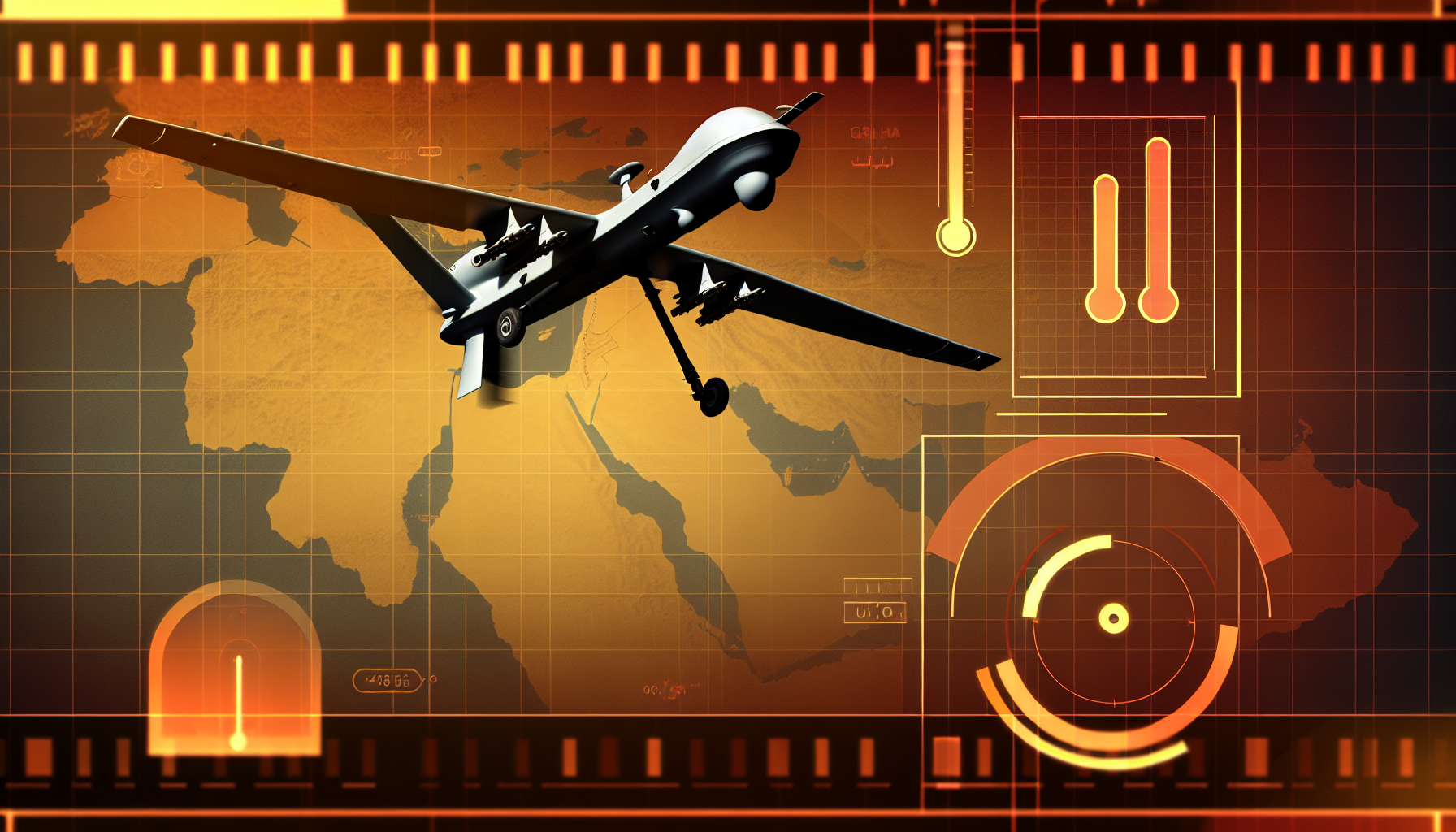

The geopolitical landscape of the Middle East is witnessing a significant transformation with Iran’s advancing military drone technology, which has recently been employed in a series of provocative attacks targeting Israel and U.S. interests. This escalation, highlighted by Geo News on March 15, 2026, raises critical questions about regional security, potential conflict escalation, and the vulnerabilities of U.S. military bases in the region.
The Nature of the Threat
Iran’s drone capabilities have evolved dramatically over the past few years, positioning the nation as a formidable player in the realm of unmanned aerial warfare. The recent attacks demonstrate not only the effectiveness of these drones but also Iran’s willingness to use them as a tool of foreign policy. Recent incidents have targeted not just military installations but also critical infrastructure, which raises alarm bells among neighboring countries and Western allies.
The Attacks on Israel and U.S. Interests
In the latest series of drone strikes, Iranian forces have been implicated in direct assaults on both Israeli military assets and U.S. interests in the Gulf region. These attacks were characterized by their precision and the sophistication of the technology used, suggesting that Iran has made significant strides in its drone warfare capabilities.
- Targeting Strategy: The choice of targets reflects a calculated strategy by Iran to demonstrate its reach and capabilities against both Israel and the United States.
- Military Implications: The use of drones in these attacks indicates a shift in warfare tactics, moving away from traditional ground engagements to high-tech aerial assaults.
U.S. Military Vulnerabilities
The attacks have raised serious concerns regarding the vulnerabilities of U.S. military bases in the Middle East. Analysts have pointed out that the existing defense systems may not be adequately equipped to handle the evolving nature of drone warfare.
Strategic Military Bases
U.S. bases in the Gulf region, which have long been considered safe havens for American troops, are now under increased scrutiny. The effectiveness of their air defense systems has been called into question, particularly in light of recent events.
- Base Locations: Many of these bases are located in areas that are within striking distance of Iranian drones, making them vulnerable to such attacks.
- Defense Systems: The current defense systems, designed for traditional missile threats, may not be optimized for the fast, low-flying drones that Iran is deploying.
Regional Security Concerns
The ramifications of Iran’s drone attacks extend beyond just U.S. military concerns; they also pose a significant threat to regional security. Countries in the Gulf region, particularly those in close proximity to Iran, are increasingly anxious about the potential for conflict escalation.
The Role of the UAE
The United Arab Emirates (UAE) has also found itself entangled in this web of conflict, as it has historically been aligned with U.S. interests in the region. The UAE’s involvement in the crisis underscores the complexity of Middle Eastern geopolitics.
- Political Alliances: The UAE’s alliance with the U.S. has been a cornerstone of its foreign policy, but recent developments may force a reevaluation of this relationship.
- Military Readiness: The UAE has begun to bolster its military capabilities in response to the increased threat posed by Iranian drone strikes.
The Geopolitical Ramifications
The implications of these drone attacks are profound, potentially altering the balance of power in the region. Analysts warn that if left unaddressed, Iran’s aggressive posturing could lead to a wider conflict involving multiple regional players.
Potential for Broader Conflict
As tensions escalate, the potential for miscalculation increases. The risk of a broader conflict cannot be overlooked, especially given the volatile nature of Middle Eastern politics.
- Involvement of Other Nations: Other countries in the region, such as Saudi Arabia and Israel, may feel compelled to respond militarily, further complicating the situation.
- International Reactions: The international community, particularly Western nations, will need to navigate a delicate balance in responding to Iran’s provocations without exacerbating the situation.
Conclusion
Iran’s recent drone attacks serve as a stark reminder of the changing dynamics in the Middle East. As military technology continues to evolve, so too do the strategies employed by nations in conflict. The implications of these developments are vast, affecting not just regional security but also the broader geopolitical landscape.
As nations grapple with the realities of drone warfare, the need for enhanced defense measures and diplomatic engagement has never been more urgent. The situation in the Gulf remains fluid, and the world watches closely as these developments unfold, aware that the stakes have never been higher.






