
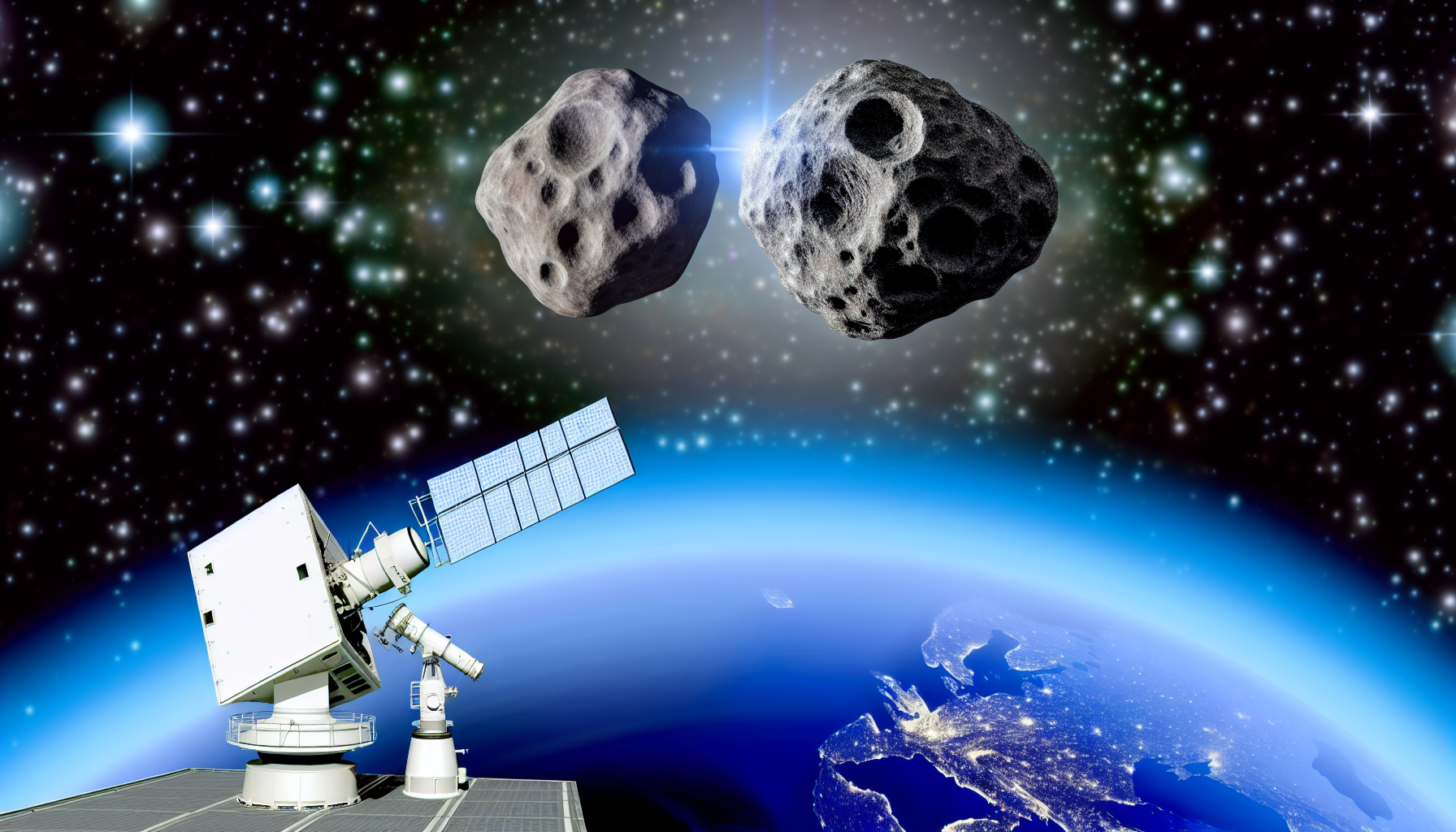

On March 17, 2026, NASA will be closely monitoring the trajectory of two asteroids as they make their approach to Earth. While the presence of these near-Earth objects might cause a stir among space enthusiasts and the general public alike, NASA has reassured everyone that there is no cause for alarm. Both asteroids are expected to pass safely at significant distances, allowing scientists to continue their observations without concern for potential impacts.
Details of the Asteroids
The first asteroid, designated as 2015 VO142, measures approximately 18 feet (or about 5.5 meters) in diameter. This relatively small object will pass by Earth at a distance of approximately 649,000 miles (equivalent to about 1.05 million kilometers), which is well beyond the orbit of the Moon. Such a distance poses no threat to our planet, offering a safe margin for both celestial bodies.
The second asteroid, known as 2026 EZ2, is considerably larger, with a diameter of about 170 feet (or around 52 meters). This asteroid is comparable in size to a commercial airplane and will approach Earth at a distance of 2,340,000 miles (or about 3.77 million kilometers). Like its smaller counterpart, 2026 EZ2 does not pose any threat to Earth, but its size makes it a noteworthy object for study.
NASA’s Monitoring Efforts
NASA employs a range of high-precision instruments to track near-Earth objects (NEOs), including asteroids and comets. These tools include telescopes and radar systems that allow scientists to accurately determine the size, trajectory, and potential risk associated with these celestial bodies.
By continuously monitoring these objects, NASA is able to refine its planetary defense strategies. The organization works closely with various observatories around the globe to gather data and enhance our understanding of these space rocks. The goal is to ensure that if an asteroid were ever on a collision course with Earth, we would have the information necessary to take appropriate action.
The Importance of Tracking Near-Earth Objects
As our understanding of the cosmos deepens, the importance of tracking NEOs becomes increasingly evident. Asteroids and comets that venture close to Earth can vary significantly in size, speed, and composition. While the vast majority pose no danger, the potential for impact does exist, and the consequences could be catastrophic.
For instance, scientists believe that a large asteroid impact was responsible for the extinction of the dinosaurs approximately 66 million years ago. This historical event underscores the necessity for ongoing monitoring and preparedness in the event that we encounter a larger, more hazardous NEO.
Public Interest and Awareness
The recent announcements about the approaching asteroids have sparked interest among the public. Many people are curious about the nature of these celestial bodies and their potential impacts on Earth. NASA has made it a priority to communicate effectively with the public regarding space events and potential risks.
In addition to monitoring asteroids, NASA also engages in public education campaigns to promote awareness about space phenomena. This includes providing updates via social media, press releases, and educational programs designed to inspire the next generation of astronomers and scientists.
Key Takeaways
- Asteroid 2015 VO142 will pass by at approximately 649,000 miles from Earth.
- Asteroid 2026 EZ2 will approach at a distance of 2,340,000 miles.
- Neither asteroid poses a threat to Earth.
- NASA uses advanced monitoring tools to track and study NEOs.
- Public awareness of asteroid tracking is essential for planetary defense.
Future of Planetary Defense
Looking ahead, NASA’s planetary defense initiatives will continue to evolve. The agency is actively researching strategies to mitigate the risks posed by larger asteroids that could threaten Earth. This includes developing technologies for deflection, which could potentially alter the course of an asteroid on a collision trajectory.
Additionally, international cooperation is becoming increasingly important in the field of planetary defense. Many countries are working together to share data and resources, fostering a collaborative approach to monitoring and responding to NEOs. This global effort is crucial, as the threat of asteroid impacts does not recognize national borders.
Conclusion
The upcoming close approaches of asteroids 2015 VO142 and 2026 EZ2 serve as a reminder of the dynamic nature of our solar system. While these particular asteroids present no danger, they highlight the importance of ongoing monitoring and research in planetary defense.
As we learn more about these celestial objects, we can better prepare for any potential future threats. NASA’s commitment to tracking and studying NEOs not only safeguards our planet but also enriches our understanding of the universe. With each pass of these asteroids, we gain valuable insights that contribute to our knowledge and preparedness for whatever the cosmos may bring.






