
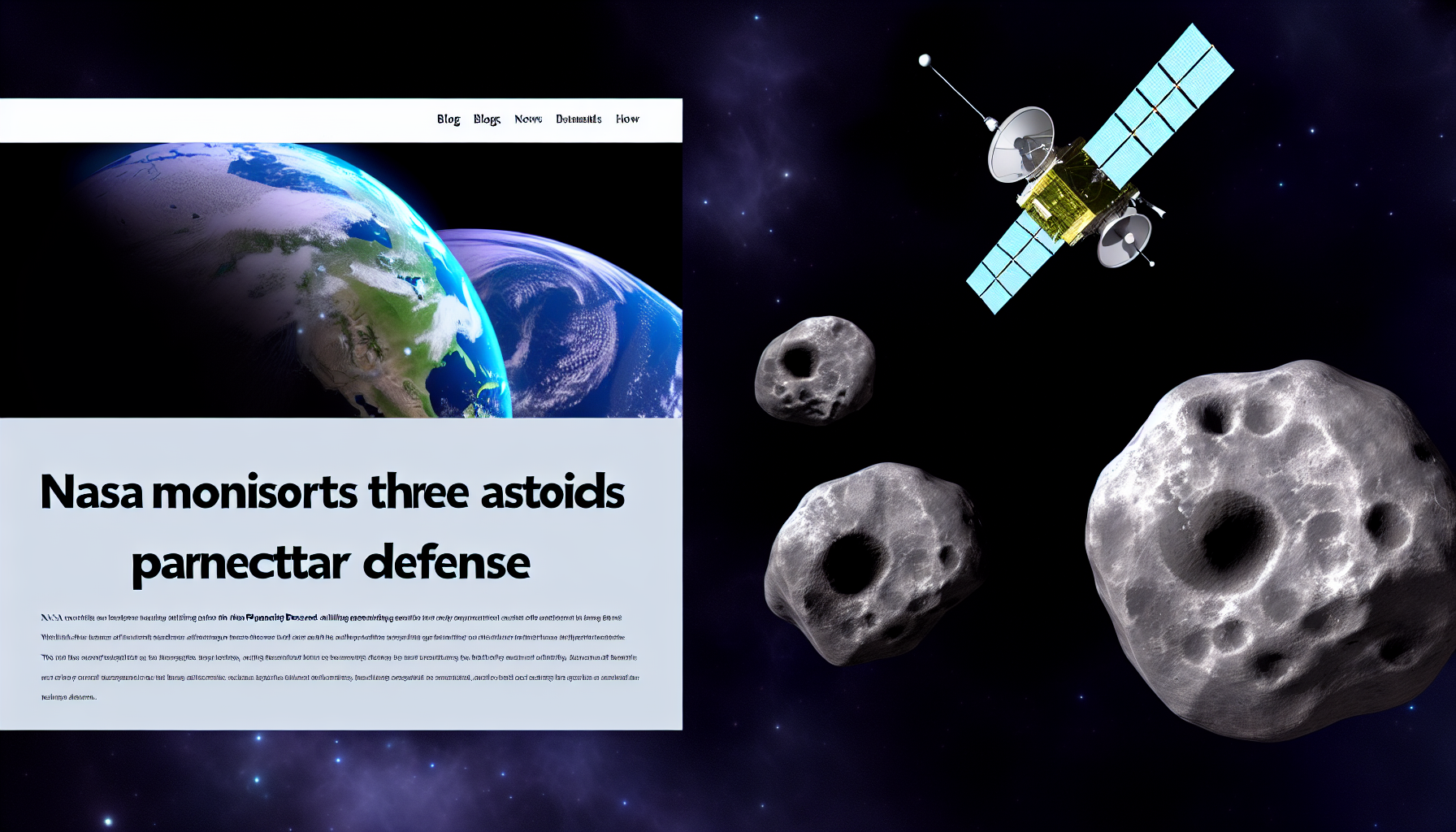

On March 19, 2026, Earth will face a close encounter with not one, but three asteroids, as confirmed by NASA. These celestial bodies, designated as 2026 FA, 2026 EF2, and 2026 ED3, are being closely monitored by the space agency as part of its ongoing planetary defense efforts. While the specific details regarding the sizes and distances of these asteroids during their closest approach have not been disclosed, the event underscores the importance of vigilance in tracking near-Earth objects (NEOs) and ensuring the safety of our planet.
The Significance of Tracking Near-Earth Objects
The monitoring of asteroids and other NEOs is crucial for several reasons. First and foremost is the potential threat these objects pose to Earth. Although the vast majority of asteroids are small and harmless, larger ones have the capacity to cause significant damage should they collide with our planet. Historical events, such as the asteroid impact that contributed to the extinction of the dinosaurs about 66 million years ago, serve as stark reminders of the risks associated with these space rocks.
NASA and other space agencies around the world have ramped up efforts to detect and track NEOs, employing advanced telescopes and observational technologies. By identifying the trajectories of these asteroids, scientists can assess any potential collision risks and develop strategies for planetary defense.
Details of the Approaching Asteroids
While the specific dimensions and closest approach distances of asteroids 2026 FA, 2026 EF2, and 2026 ED3 have not been publicly disclosed, the act of tracking these objects is a testament to the meticulous work performed by NASA’s Near-Earth Object Observations (NEOO) program. This program focuses on identifying, tracking, and characterizing NEOs to ensure that any potential threats are duly noted and addressed.
Each of the three asteroids will pass within a range that qualifies them as near-Earth objects, but they are not expected to collide with our planet. The details of their trajectories are continuously updated as new data becomes available, allowing scientists to refine their predictions and maintain an accurate understanding of their paths.
Planetary Defense Strategies
NASA’s planetary defense strategy encompasses a variety of initiatives aimed at monitoring and mitigating the risks posed by NEOs. Here are some key components:
- Detection: Utilizing ground-based and space-based telescopes to discover new NEOs and track known ones.
- Characterization: Analyzing the physical characteristics of asteroids, including size, shape, composition, and rotation.
- Risk Assessment: Calculating the probability of potential impacts and evaluating possible consequences.
- Deflection Techniques: Developing methods to alter an asteroid’s trajectory, including kinetic impactors and gravitational tractors.
One of the most notable upcoming missions aimed at testing deflection techniques is NASA’s Double Asteroid Redirection Test (DART), set to launch in late 2021. This mission will target a binary asteroid system and attempt to change the orbit of the smaller asteroid by crashing a spacecraft into it at high speed.
Increasing Detection Capabilities
The increasing number of near-Earth object detections highlights the significance of advancements in technology and collaborative efforts among international space agencies. The discovery of asteroids is often made possible through powerful telescopes equipped with advanced imaging capabilities and software that can analyze vast amounts of data quickly.
In recent years, the number of detected NEOs has surged, reflecting improved detection capabilities. As of now, thousands of NEOs have been identified, with many being classified as potentially hazardous. This classification indicates that they have orbits that could bring them into proximity with Earth.
Public Awareness and Preparedness
Public awareness about the potential dangers posed by asteroids is essential for fostering support for planetary defense initiatives. NASA and other organizations have made significant efforts to educate the public through outreach programs, informational websites, and community events.
Understanding the risks associated with NEOs not only helps promote scientific literacy but also encourages collective action. Governments, scientists, and private entities can work together to ensure that adequate resources are allocated for detection, tracking, and potential deflection strategies.
Conclusion: A Call for Vigilance
As the date of March 19, 2026, approaches, the monitoring of asteroids 2026 FA, 2026 EF2, and 2026 ED3 serves as a reminder of the dynamic and sometimes dangerous nature of our solar system. While these asteroids pose no immediate threat, their close approach highlights the importance of ongoing efforts to detect, track, and characterize near-Earth objects.
NASA’s commitment to planetary defense is a vital aspect of safeguarding our planet from potential cosmic hazards. By continuing to enhance detection capabilities and developing deflection strategies, we can better prepare for any future threats from space. The more we understand about potential risks, the better equipped we will be to protect our world and ensure a safe future for generations to come.






