
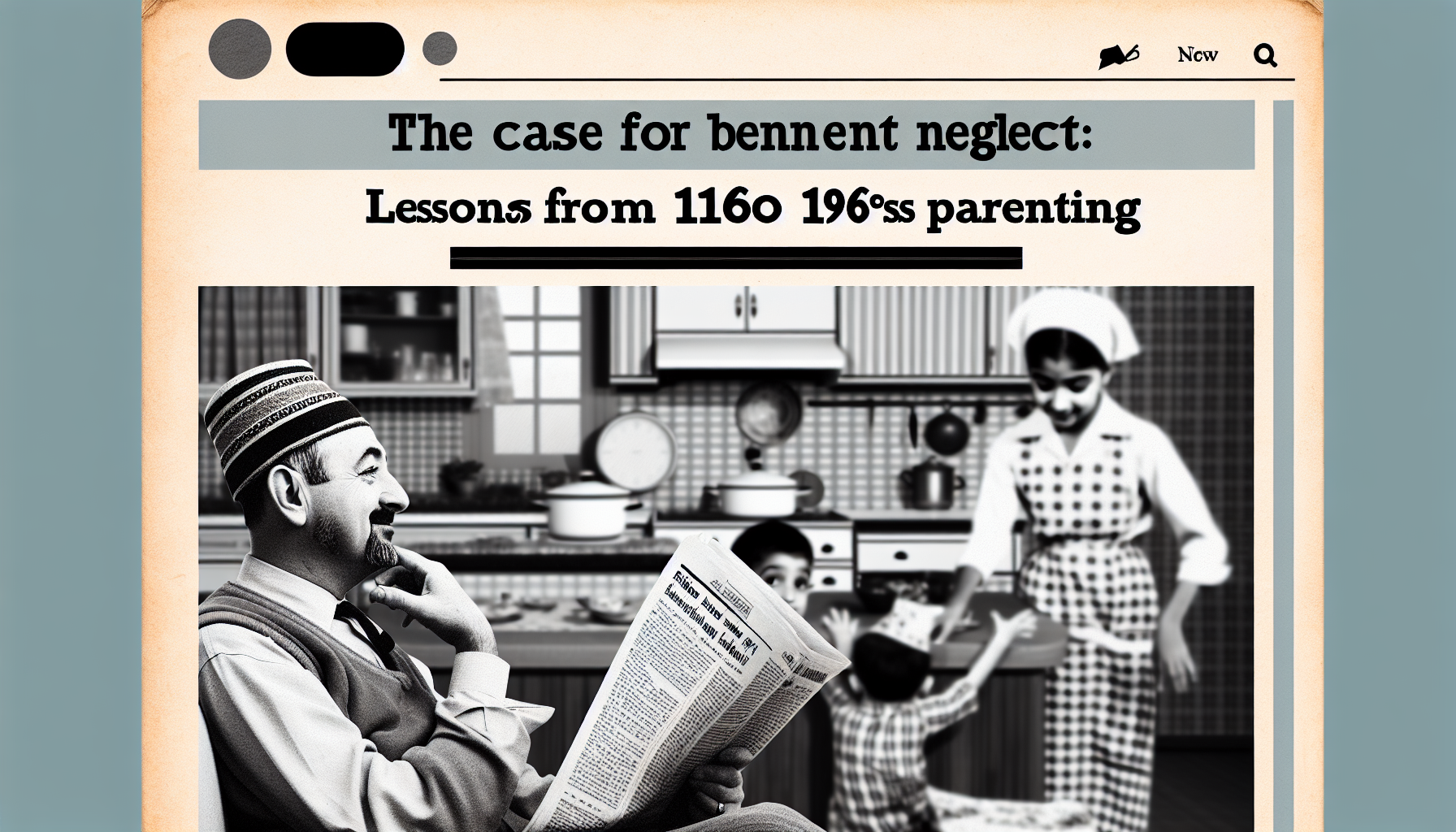

The concept of parenting has evolved dramatically over the decades, with today’s parents often engaging in what is termed ‘intensive parenting.’ This approach is characterized by constant involvement in children’s lives, from mediating disputes among playmates to determining dinner options. In stark contrast, many who grew up in the 1960s reflect on a style of parenting known as ‘benign neglect,’ where children were encouraged to navigate their own lives largely without parental intervention. This article explores the implications of these differing styles and how benign neglect may have fostered independence and resilience in children of that era.
What is Benign Neglect?
Benign neglect is a term that describes a hands-off approach to parenting. In the 1960s, it was not uncommon for parents to allow their children to experience boredom, resolve conflicts on their own, and even make decisions about meals without parental input. The author of the referenced article reminisces about a childhood in which parents did not constantly monitor their children’s activities, suggesting that this lack of oversight allowed kids to develop critical life skills.
The Freedom to Be Bored
One of the hallmarks of growing up in the 1960s was the allowance of boredom. Children were expected to find their own entertainment, whether it involved climbing trees, playing with sticks, or inventing games with friends. This experience of boredom is often seen as a vital part of childhood development, as it fosters creativity and resourcefulness. The author notes that children today might not face the same opportunities for imaginative play, often relying on structured activities or digital entertainment.
Benefits of Unstructured Play
- Creativity: Unstructured play encourages children to think outside the box and come up with their own solutions.
- Independence: Without constant supervision, children learn to navigate challenges on their own.
- Social Skills: Resolving conflicts among peers without adult intervention helps children develop negotiation and communication skills.
The Impact of Overparenting
In recent years, parents have become increasingly involved in their children’s lives, a shift that the author attributes in part to a heightened awareness of child development and safety concerns. While this engagement may stem from a place of love and protection, it can inadvertently hinder a child’s ability to develop independence. For instance, the author contrasts her upbringing with that of her granddaughter, who, unlike her, may not have the freedom to walk alone to a friend’s house or climb trees without parental worry.
Modern Parenting Challenges
Today’s parents often find themselves mediating disputes over board games or closely monitoring playdates, spending significant time managing social interactions. While the intention is to help children navigate their relationships, such involvement can lead to heightened anxiety and a lack of confidence among children. The author argues that overparenting can create a generation of kids who may struggle with decision-making and problem-solving because they have not had the opportunity to practice these skills independently.
Lessons from the Past
The author’s reflections on childhood in the 1960s serve as a reminder of the benefits of allowing children some degree of freedom. With fewer restrictions and more opportunities for self-directed play, children learned to rely on their own judgment and creativity. The author recalls a moment of watching a child thrive with just a stick, illustrating how children can find joy and purpose in simple objects when left to their own devices.
Encouraging Resourcefulness
To cultivate independence in today’s children, parents might consider implementing some principles of benign neglect:
- Limit Structured Activities: Allow children time to engage in unstructured play, where they can explore their interests freely.
- Encourage Problem-Solving: Instead of stepping in to resolve conflicts, give children the tools to negotiate their disputes and find solutions.
- Foster Independence: Allow children to make choices about their activities and set boundaries that encourage exploration.
Finding a Balance
It’s essential to strike a balance between being involved and allowing children the freedom they need to grow. While modern parents face different challenges than those in the 1960s, the core goal remains the same: to raise capable, independent individuals. Parents today can learn from the past by embracing opportunities for benign neglect, giving their children the space to learn and grow without constant oversight.
Conclusion
The parenting style of the 1960s, characterized by benign neglect, offers valuable insights into child development. By allowing children the freedom to explore, play, and resolve their conflicts, parents can help foster independence and resilience. While it’s natural for modern parents to be concerned about safety and well-being, it’s crucial to remember that some of the most valuable lessons come from allowing children the space to navigate their own worlds. As the author demonstrates, there is immense value in stepping back and letting kids just be kids.






