
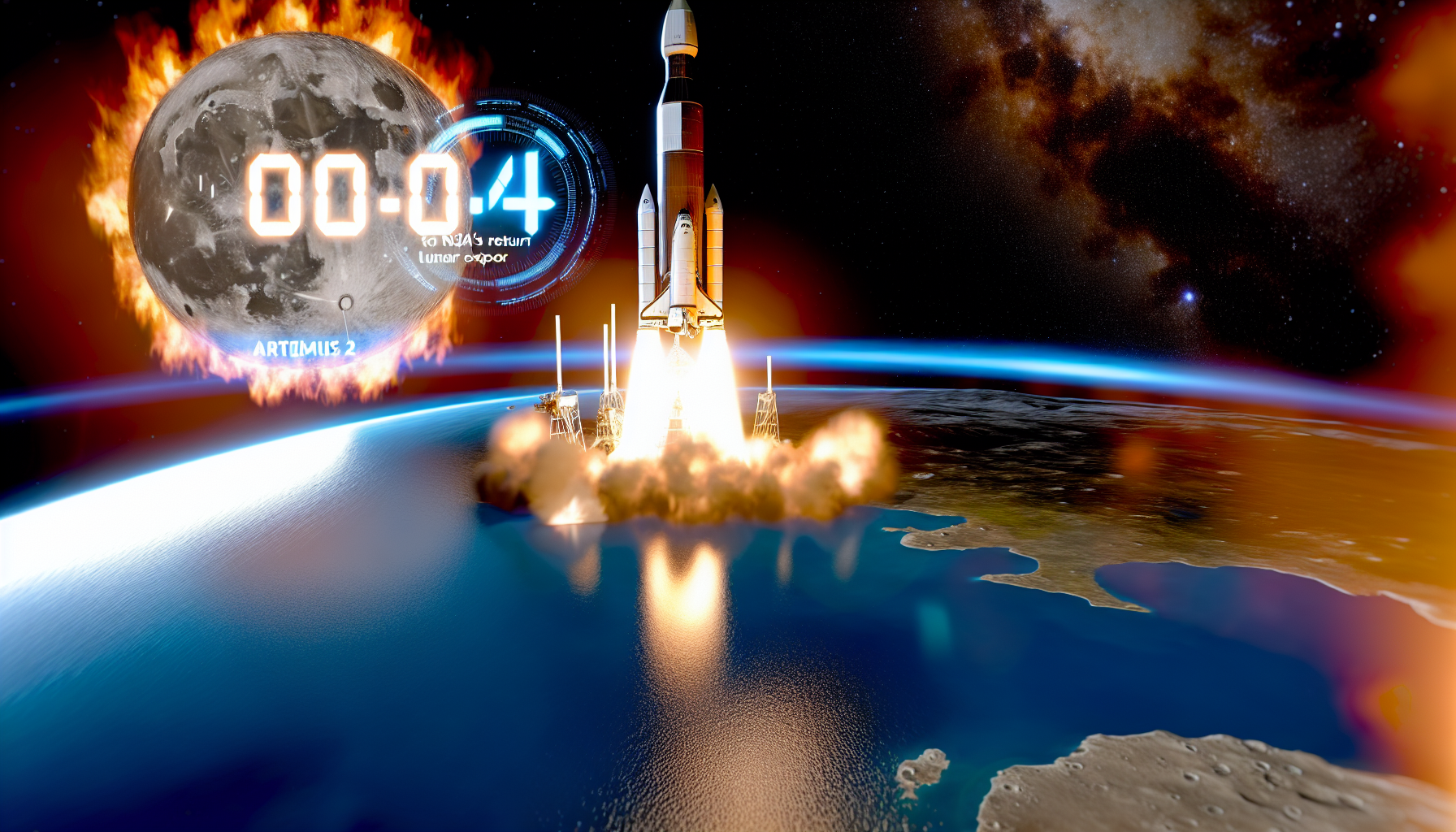

NASA’s Artemis 2 mission, poised to be a landmark event in space exploration, is set to launch no earlier than April 1, 2026. This mission marks the first crewed lunar journey since the Apollo program concluded in 1972, and it is part of NASA’s broader Artemis program aimed at returning humans to the Moon and ultimately preparing for crewed missions to Mars.
Mission Overview
Artemis 2 aims to carry four astronauts on a 10-day voyage around the Moon. The mission is significant not only for its historical context but also for its role in testing the systems and technologies that will be essential for future lunar and Martian missions.
Launch Details
The launch is scheduled for 6:24 p.m. EDT (2224 GMT) from Kennedy Space Center’s Launch Complex 39B. This location has a storied history, having been the site of numerous historic launches, including the Apollo missions in the 1960s and 70s.
Preparations Underway
The mission stack, which includes the Space Launch System (SLS) rocket and the Orion crew capsule, began its rollout from the Vehicle Assembly Building on March 20. This critical phase of the mission faced a delay due to high winds but is now on track for the upcoming launch.
Astronauts in Quarantine
As part of final preparations, the four astronauts selected for the mission are currently in quarantine. This precautionary measure ensures that they remain healthy and free from any illness that could jeopardize the mission. On March 29, they held a virtual press conference at 11:30 a.m. EDT, addressing media questions and providing insights into their training and readiness for the mission.
Meet the Crew
The Artemis 2 crew comprises a diverse and experienced group of astronauts, each bringing unique skills and backgrounds that will contribute to the mission’s success:
- Commander: [Name], a veteran astronaut with extensive experience in space missions.
- Pilot: [Name], known for their expertise in piloting complex spacecraft.
- Mission Specialist 1: [Name], who has a background in science and technology.
- Mission Specialist 2: [Name], recognized for their work in human spaceflight.
While the specific names of the astronauts were not detailed in the source material, their selection is a testament to NASA’s commitment to assembling a highly qualified team for this groundbreaking mission.
Significance of Artemis 2
Artemis 2 is not just a return to human lunar exploration; it represents a stepping stone towards more ambitious goals. The mission will provide critical data about the Orion spacecraft’s performance in deep space, which is essential for long-duration missions to the Moon and beyond. Additionally, it serves as a precursor to Artemis 3, which is intended to land astronauts on the lunar surface, including the first woman and the next man.
Technological Advancements
The Artemis program, and specifically Artemis 2, is at the forefront of technological innovation in space exploration. The SLS rocket is designed to be the most powerful launch vehicle ever built, capable of carrying astronauts and cargo beyond low Earth orbit. The Orion crew capsule features advanced life support systems, navigation, and communication technologies designed for deep space travel.
Public Engagement and Support
Nasa has actively engaged the public in the Artemis program through educational initiatives, outreach programs, and social media campaigns. The excitement surrounding Artemis 2 is palpable, with many expressing their anticipation for the mission through various platforms. NASA has emphasized the importance of involving the public in this new era of lunar exploration, reminding everyone that they are part of this historic journey.
Future Missions and Goals
Following Artemis 2, NASA’s Artemis program will continue to evolve, with plans for Artemis 3 and subsequent missions aimed at establishing a sustainable human presence on the Moon. These future missions will not only focus on exploration but also on conducting scientific research that could pave the way for future human missions to Mars.
Conclusion
The countdown to Artemis 2 is an exciting time for NASA and space enthusiasts worldwide. As preparations progress and the launch window approaches, the mission symbolizes a new chapter in human space exploration. With the successful crewed lunar mission, NASA aims to inspire future generations and solidify humanity’s presence in the cosmos.
As we look forward to April 2026, the world watches with bated breath as NASA prepares to launch its ambitious Artemis 2 mission, bringing us one step closer to returning humans to the Moon and beyond.






