
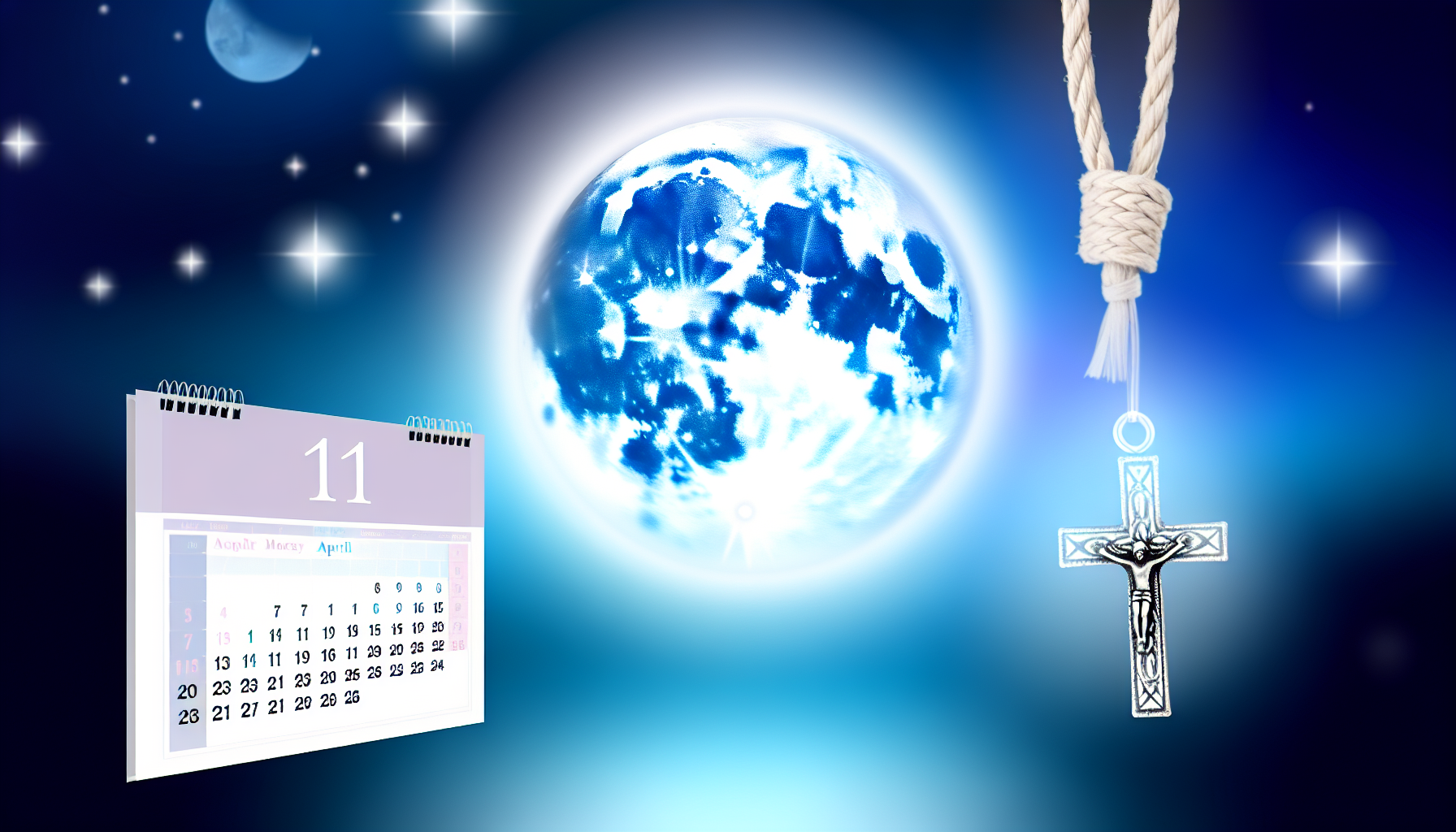

Every spring, the arrival of the full moon in April ignites a fascinating interplay between astronomy and Christian tradition. This year, on April 1, 2026, the first full moon of spring will rise in the night sky, marking a significant moment that holds the key to determining the date of Easter Sunday. Known as the Pink Moon, this celestial event is not just a beautiful sight but a critical component of the ecclesiastical calendar, which governs the timing of Easter celebrations.
The Importance of the Pink Moon
The term “Pink Moon” derives from the early spring bloom of wild ground phlox, a perennial flower that heralds the arrival of warmer weather in parts of North America. However, its significance transcends mere botanical observations; it plays a pivotal role in a complex system that has been used for centuries to calculate the date of Easter.
Understanding the Easter Calculation
Easter is classified as a movable feast, meaning that its date changes each year rather than being fixed to a specific date like Christmas. The formula for determining Easter is rooted in the lunar calendar, specifically the cycles of the moon. According to the Council of Nicaea in 325 AD, Easter is celebrated on the first Sunday following the first full moon after the vernal equinox. The vernal equinox typically occurs on or around March 21 each year.
Deciphering the Formula
To break it down:
- The vernal equinox marks the beginning of spring.
- The first full moon after the vernal equinox is termed the ecclesiastical full moon.
- Easter Sunday is observed on the following Sunday.
This means that Easter can fall anywhere between March 22 and April 25 in any given year. In 2026, the ecclesiastical full moon will occur on April 1, making the following Sunday, April 4, Easter Sunday.
The Astronomical and Cultural Significance
The connection between lunar phases and Easter dates highlights the intersection of astronomy and religious practices. This system reflects ancient civilizations’ understanding of the moon’s phases and their influence on agricultural cycles, festivals, and religious observances. The timing of Easter is deeply embedded in the Christian tradition, linking the resurrection of Jesus Christ to the timing of the spring equinox and the renewal of life inherent in the season.
Historical Context
The method for calculating Easter has evolved over time. Early Christians utilized the Jewish calendar, which is lunisolar, to determine their feasts. The necessity of establishing a unified method for celebrating Easter led to the Council of Nicaea’s formulation, which has influenced Christian practices for nearly 1,700 years.
While the Gregorian calendar, introduced by Pope Gregory XIII in 1582, corrected discrepancies in the Julian calendar, the formula for Easter’s calculation remained tethered to the lunar cycles, perpetuating the link between the moon and the celebration of resurrection.
Modern Observations and Variations
Today, various Christian denominations continue to observe Easter on different dates. For instance, Eastern Orthodox Christians often celebrate Easter on a different Sunday than Western Christian traditions due to their use of the Julian calendar for determining the full moon. This divergence can create a fascinating tapestry of celebrations across the globe.
April’s Full Moon: A Celestial Event
The Pink Moon, occurring on April 1, 2026, will not only signify the ecclesiastical full moon but also serve as a reminder of the beauty and significance of lunar phases. Observers can expect to see a bright and vibrant moon illuminating the night sky, offering a perfect opportunity for stargazing and reflection.
During this time, enthusiasts and casual observers alike may partake in various traditions, rituals, and celebrations surrounding the moon’s appearance. Many people take the time to appreciate the natural world and the changing seasons, drawing inspiration from ancient connections to the lunar calendar.
Conclusion
The Pink Moon of April 1, 2026, is more than just an astronomical event; it is a vital part of a centuries-old tradition that intertwines the realms of faith and science. By understanding the relationship between lunar phases and the timing of Easter, we can appreciate not only the beauty of the cosmos but also the rich tapestry of human culture that has celebrated these celestial phenomena for millennia.
As we look forward to this spring’s full moon and the subsequent Easter celebration, we are reminded of the enduring connection between our planet, the moon, and the calendar—a connection that continues to inspire awe and reverence in our lives today.






