
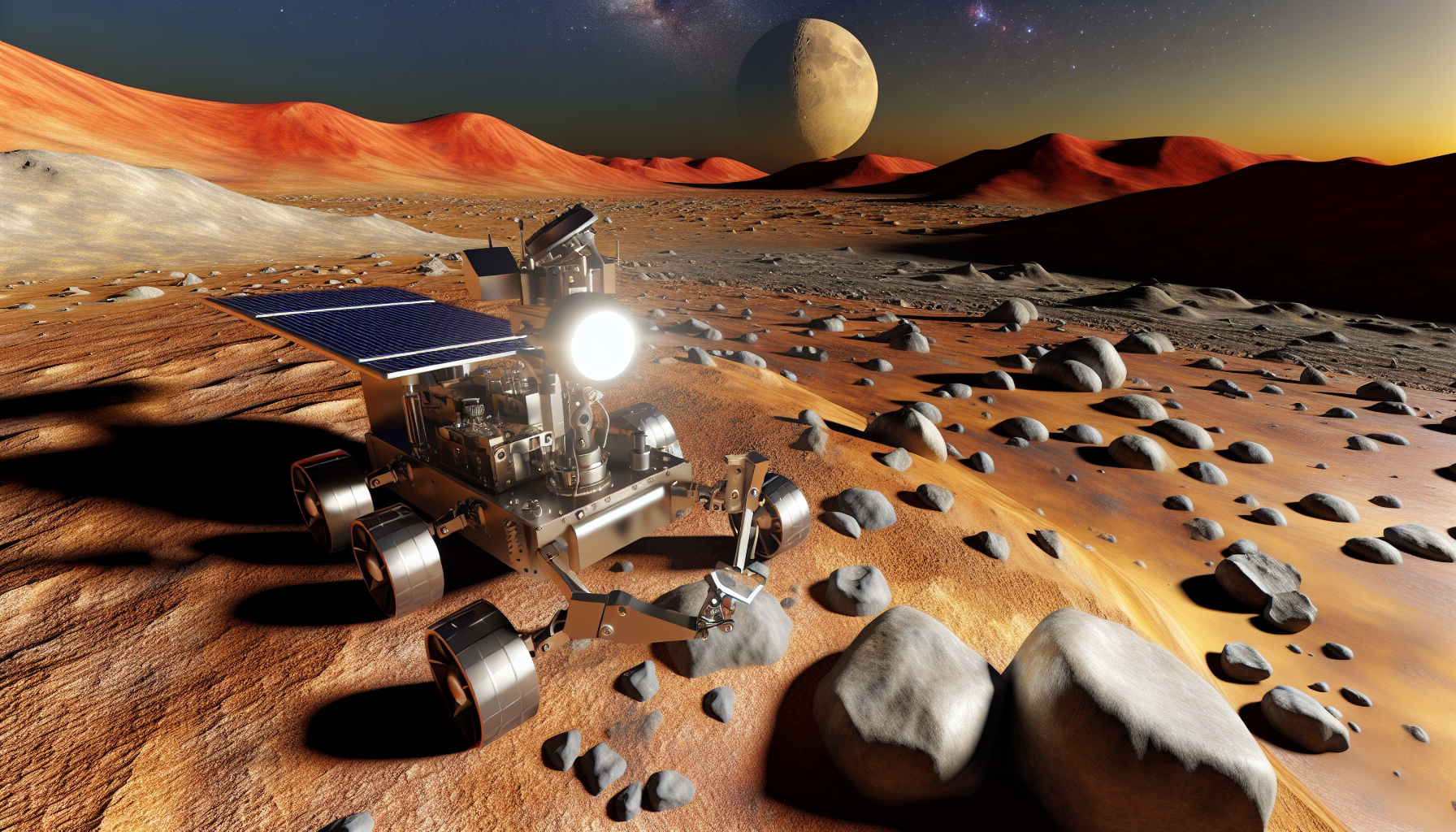

The quest to explore Mars and uncover signs of life has taken a significant leap forward with the development of a new semi-autonomous walking robot. This groundbreaking technology has been designed for planetary exploration, offering a revolutionary approach to analyzing the Martian landscape. Published on April 8, 2026, by Frontiers, the research highlights the robot’s ability to navigate complex terrains and conduct geological analysis without direct human intervention. The implications of this innovation could drastically alter the future of Mars missions, making them more efficient and effective in the search for extraterrestrial life.
The Need for Advanced Exploration Technologies
As missions to Mars become increasingly ambitious, the need for advanced exploration technologies has never been more pressing. Traditional methods of exploration often involve rovers that require constant human oversight and control. These vehicles typically move slowly and depend on pre-programmed paths, which can limit their ability to adapt to new findings or unexpected geological features.
The challenge lies in the vast and varied Martian terrain, which includes rocky landscapes, deep craters, and potential signs of past water. To effectively search for signs of life and valuable resources, exploration tools must be capable of quickly identifying and analyzing geological targets. This is where the new semi-autonomous robot comes into play.
A Breakthrough in Robotic Design
The newly developed walking robot possesses a unique design that enables it to traverse rocky and uneven surfaces more efficiently than traditional rovers. Unlike conventional exploration vehicles, this robot can operate independently, making real-time decisions based on its environment. This capability allows it to complete missions up to three times faster than traditional methods, a significant improvement that could enhance the overall effectiveness of Mars missions.
How It Works
The robot is equipped with advanced sensors and compact scientific instruments designed for astrobiology and resource detection. These instruments allow it to analyze rocks and soil samples on-site, providing valuable data that can inform further exploration strategies. The system’s semi-autonomous nature means it can identify key geological targets without waiting for human commands, an essential feature for missions that may involve communication delays with Earth.
- Enhanced Mobility: The robot’s walking capabilities provide improved navigation through difficult terrains.
- Real-Time Analysis: Equipped with compact instruments, it can analyze geological samples on-site.
- Efficiency: Completes missions up to three times quicker than traditional rovers.
- Autonomous Decision-Making: Identifies and selects targets without human input.
Implications for Future Mars Missions
The introduction of this semi-autonomous robot could vastly expand the scope of future Mars missions. With the ability to quickly and efficiently conduct geological surveys, the robot could provide scientists with critical insights into Mars’ history and its potential to harbor life.
One of the primary goals of Mars exploration is to find evidence of past or present life. The robot’s advanced analytical capabilities could lead to the discovery of organic materials or other biosignatures that indicate the planet’s habitability. Additionally, the robot could aid in identifying resources that may be beneficial for future human colonization efforts, such as water ice or minerals.
Collaboration with AI
Another significant aspect of this robot’s design is its integration with artificial intelligence (AI). The AI system enables the robot to learn from its experiences and improve its decision-making processes over time. This adaptability is crucial in the unpredictable environment of Mars, where conditions can change rapidly.
Moreover, the combination of AI and autonomous operations minimizes the need for constant human intervention, which is particularly advantageous given the communication delays that can occur between Earth and Mars. This autonomous functionality allows for more timely responses to new discoveries and enhances the overall efficiency of mission operations.
Challenges Ahead
While the development of this semi-autonomous walking robot marks a significant advancement in planetary exploration technology, several challenges remain. The Martian environment is harsh and unpredictable, and the robot must be equipped to handle extreme temperatures, dust storms, and other potential hazards.
Additionally, ensuring the reliability and longevity of the robot’s components is critical for the success of long-duration missions. Engineers and scientists will need to conduct extensive testing to ensure that the robot can withstand the rigors of the Martian environment over extended periods.
Future Prospects
Despite these challenges, the potential for this semi-autonomous robot to transform Mars exploration is immense. As technology continues to progress, we can expect to see even more sophisticated robotic systems developed for planetary exploration. This innovation not only enhances our ability to search for life on Mars but also paves the way for future missions to other celestial bodies.
The ongoing research and development in this field will undoubtedly contribute to our understanding of the universe and the possibility of life beyond Earth. With each new technological advancement, we move closer to answering one of humanity’s oldest questions: Are we alone in the universe?
Conclusion
The development of the semi-autonomous walking robot represents a pivotal moment in the field of planetary exploration. By significantly increasing the efficiency and effectiveness of Mars missions, this robotic innovation opens new avenues for scientific discovery and the search for life beyond our planet. As we continue to explore the mysteries of Mars, the insights gained from this technology could lead to profound implications for our understanding of life in the universe.






