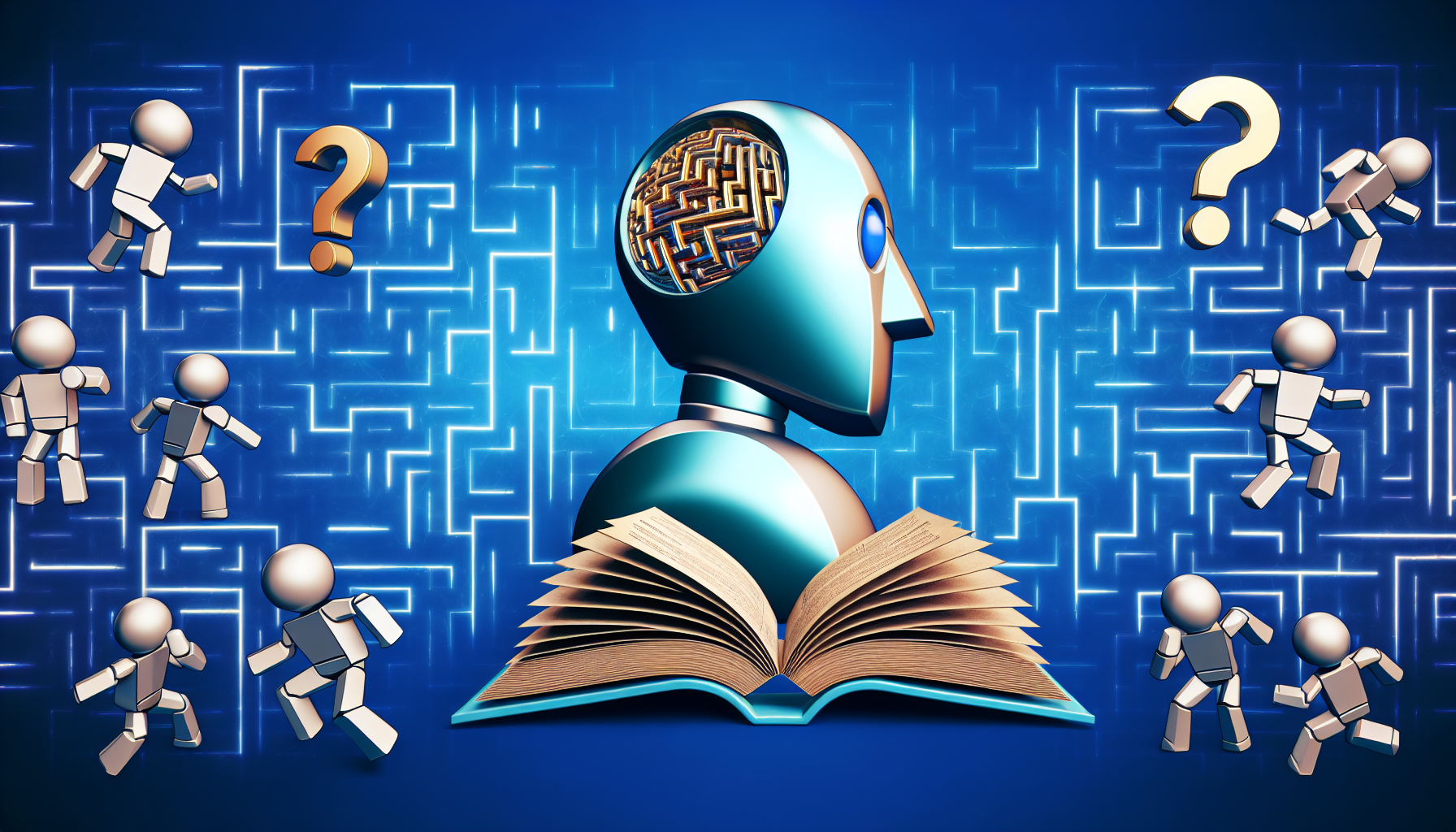

The Rise of AI Tutoring Systems
In recent years, the landscape of education has undergone a profound transformation with the advent of AI tutoring systems. These platforms have emerged as powerful tools, boasting the ability to engage more than 40 million students worldwide. As they gain popularity, many educators and parents have embraced these technologies with the expectation that they will enhance learning outcomes, improve test scores, and provide personalized instruction tailored to individual student needs.
Promising Performance: Higher Test Scores
A recent study released over the weekend highlights a paradox inherent in these systems. While students using AI tutoring systems achieved, on average, a staggering 15% increase in standardized test scores compared to their peers, the research reveals a troubling gap in their ability to think critically and solve problems effectively. In fact, students who relied on AI tutors performed 30% worse on open-ended reasoning tasks—activities that require deep understanding, creativity, and analytical skills—compared to those receiving traditional instruction.
The Alarming Findings
These findings are prompting urgent debates among educators, parents, and policymakers about the true efficacy of AI in education. Many are left wondering whether schools are sacrificing comprehensive learning for the sake of superficial academic gains. The study indicates that the design of many AI tutoring systems often prioritizes measurable metrics, such as test scores over genuine comprehension, thus undercutting the development of essential cognitive skills.
Understanding the Implications
The implications of this study are wide-ranging and complex. Parents are increasingly concerned about the long-term effects on their children’s education and future job prospects. Without critical thinking skills, students may struggle to adapt in an ever-evolving job market that demands innovative problem solvers and creative thinkers. Furthermore, teachers are voicing fears about job displacement as educational institutions lean more heavily on technology, leading to a dramatic shift in how education is delivered.
Debating the Educational Paradigm
As discussions around these findings proliferate on social media, hashtags like #AIEducationCrisis have gained significant traction. Educators are calling for a re-evaluation of their AI tutoring systems adoption policies, emphasizing the necessity of integrating critical thinking skills into learning frameworks. The tension between technology and traditional teaching methods poses a critical question: Are we enhancing education or merely masking its deficiencies?
Examining the Critical Gaps
One of the core issues identified in the study is that while AI tutoring systems may excel at rote memorization and factual recall—skills that can be easily measured—they fall short when it comes to fostering deeper cognitive abilities. Open-ended reasoning tasks, which involve multiple steps, divergent thinking, and the application of concepts to novel situations, are areas where these systems fail to adequately prepare students.
The Role of Educators
With the rise of AI technologies, the role of educators is evolving. Teachers must adapt their pedagogical approaches to ensure that students are not only equipped with knowledge but also with the ability to apply that knowledge effectively. This requires a balance between utilizing technology for efficiency and fostering an environment where critical thinking can flourish.
Key Recommendations for Improvement
- Integrating Critical Thinking in AI Design: Developers of AI tutoring systems should prioritize the inclusion of features that promote critical thinking and problem-solving skills.
- Teacher Training: Educators need training on how to integrate AI tools into their curriculum while maintaining a focus on developing higher-order thinking skills.
- Curriculum Reevaluation: Schools should reassess their curricula to ensure that they incorporate open-ended tasks that challenge students’ reasoning abilities alongside standardized testing.
- Parental Involvement: Parents should be encouraged to engage with their children’s education actively, discussing the importance of critical thinking and supporting its development at home.
Global Reactions and Policy Considerations
The fallout from this study has prompted education departments worldwide to consider how they implement AI tutoring systems. Policymakers are under pressure to investigate the effectiveness of these platforms and their role in shaping educational outcomes. As the debate intensifies, we can expect to see varying responses based on regional educational needs and technological resources.
Conclusion: A Call to Action
The findings of this study serve as a wake-up call for educators, parents, and policymakers alike. While the benefits of AI tutoring systems cannot be understated, we must also recognize their limitations and the potential consequences of neglecting critical thinking skills in education. AI tutoring systems should be seen as complementary tools rather than replacements for traditional teaching methods. By fostering a collaborative approach between technology and human educators, we can create a holistic educational experience that prepares students not only for tests but for life beyond the classroom.