
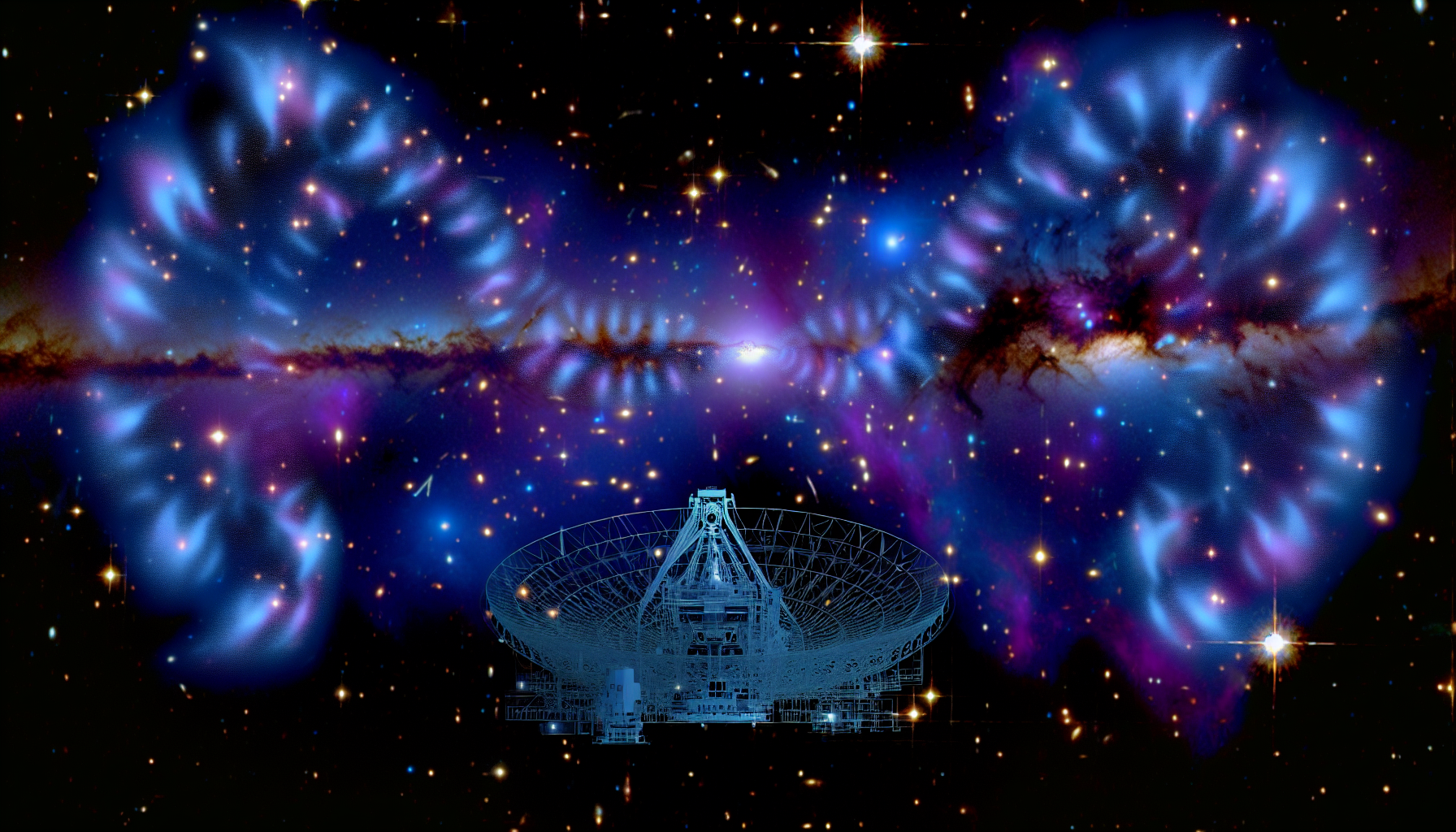

In a groundbreaking discovery that has captured the imagination of both the scientific community and space enthusiasts, astronomers have identified over 1,000 new radio galaxies featuring unique ‘wing-like’ extensions. This remarkable finding stems from the data captured by the LOFAR Two-meter Sky Survey Data Release 2 and marks a significant milestone in the field of radio astronomy. Among these new cosmic structures, 621 have been confirmed as genuine winged sources, raising intriguing questions about their formation and the dynamics of galaxy evolution.
The Anatomy of Winged Radio Galaxies
Radio galaxies are celestial objects that emit powerful radio waves, often due to the presence of supermassive black holes at their centers. The newly discovered ‘winged’ radio galaxies, however, add a fresh twist to our understanding of these enigmatic entities. These galaxies exhibit distinctive wing-like structures that extend far beyond their main bodies, resembling the appendages of a bird. This extraordinary morphology challenges existing models of galaxy formation and evolution, inviting astronomers to reconsider how galaxies might interact with their environments.
A Closer Look at the Discovery
The research, which was submitted to arXiv on April 24, 2026, has sparked widespread interest within both the academic community and popular media. With over 1,000 new radio galaxies identified in one sweep, this discovery not only enhances our catalogs of known cosmic structures but also provides fresh data that can deepen our understanding of the universe.
Among the most remarkable aspects of these winged galaxies is their formation mechanism. Traditional models of radio galaxy evolution often posit that their structures arise from interactions with the surrounding intergalactic medium, where jets of particles ejected from the supermassive black hole create lobes of radio emission. However, the presence of wing-like extensions complicates these models, suggesting that there may be additional factors or processes at play.
The Role of LOFAR
The Low Frequency Array (LOFAR) has been instrumental in this discovery. As a radio telescope network spread across Europe, LOFAR specializes in capturing low-frequency radio emissions from cosmic sources. Its unique capabilities allow astronomers to probe the universe in ways that optical telescopes cannot, revealing structures that might otherwise remain hidden from view.
Data from the LOFAR Two-meter Sky Survey not only helps identify these new radio galaxies but also provides insight into their physical characteristics, including their size, brightness, and the nature of their emissions. The ongoing analysis of this data will likely lead to further revelations about the complexities of galaxy formation and the interplay between galaxies and their surrounding environments.
The Implications of the Findings
The implications of identifying over 1,000 new winged radio galaxies are profound. This discovery not only expands our inventory of cosmic structures but also raises fundamental questions about how galaxies evolve over time. Some of the key areas of investigation include:
- Formation Mechanisms: Understanding how these winged structures form could lead to new insights into the nature of galactic evolution.
- Interaction with the Environment: The existence of wings may suggest complex interactions with surrounding gas and dark matter, highlighting the dynamic nature of the cosmos.
- Influence of Supermassive Black Holes: The role of black holes in shaping the morphology of galaxies may need to be reevaluated based on these findings.
Visual Impact and Public Engagement
The visually striking nature of these winged radio galaxies has significant viral potential, making them a hot topic in both scientific circles and mainstream media. As images and data about these cosmic structures circulate online, they evoke wonder and curiosity among the general public. Astronomers and science communicators alike are leveraging this interest to engage audiences with the fundamental mysteries of the universe.
Educational Outreach and Citizen Science
In addition to stimulating interest in professional astronomy, the discovery of winged radio galaxies presents unique opportunities for educational outreach and citizen science initiatives. Enthusiasts and amateur astronomers can participate in ongoing research efforts, helping to analyze data or contribute to the classification of new celestial objects. This democratization of science fosters a deeper connection between the public and the universe, encouraging exploration and inquiry.
Conclusion
The identification of over 1,000 winged radio galaxies represents a paradigm shift in our understanding of galactic structures and their formation. As astronomers continue to unravel the mysteries of these cosmic anomalies, we can expect new insights that challenge conventional models and expand our knowledge of the universe. The combination of stunning visuals, groundbreaking research, and fundamental questions about galaxy evolution makes this discovery a captivating subject that resonates well beyond the confines of the scientific community.
Stay tuned as we continue to explore the cosmos, uncovering the secrets of galaxies, stars, and the enigmatic forces that shape our universe. The journey into the depths of space is just beginning, and with every new discovery, we bring ourselves one step closer to understanding the vastness of existence.




