
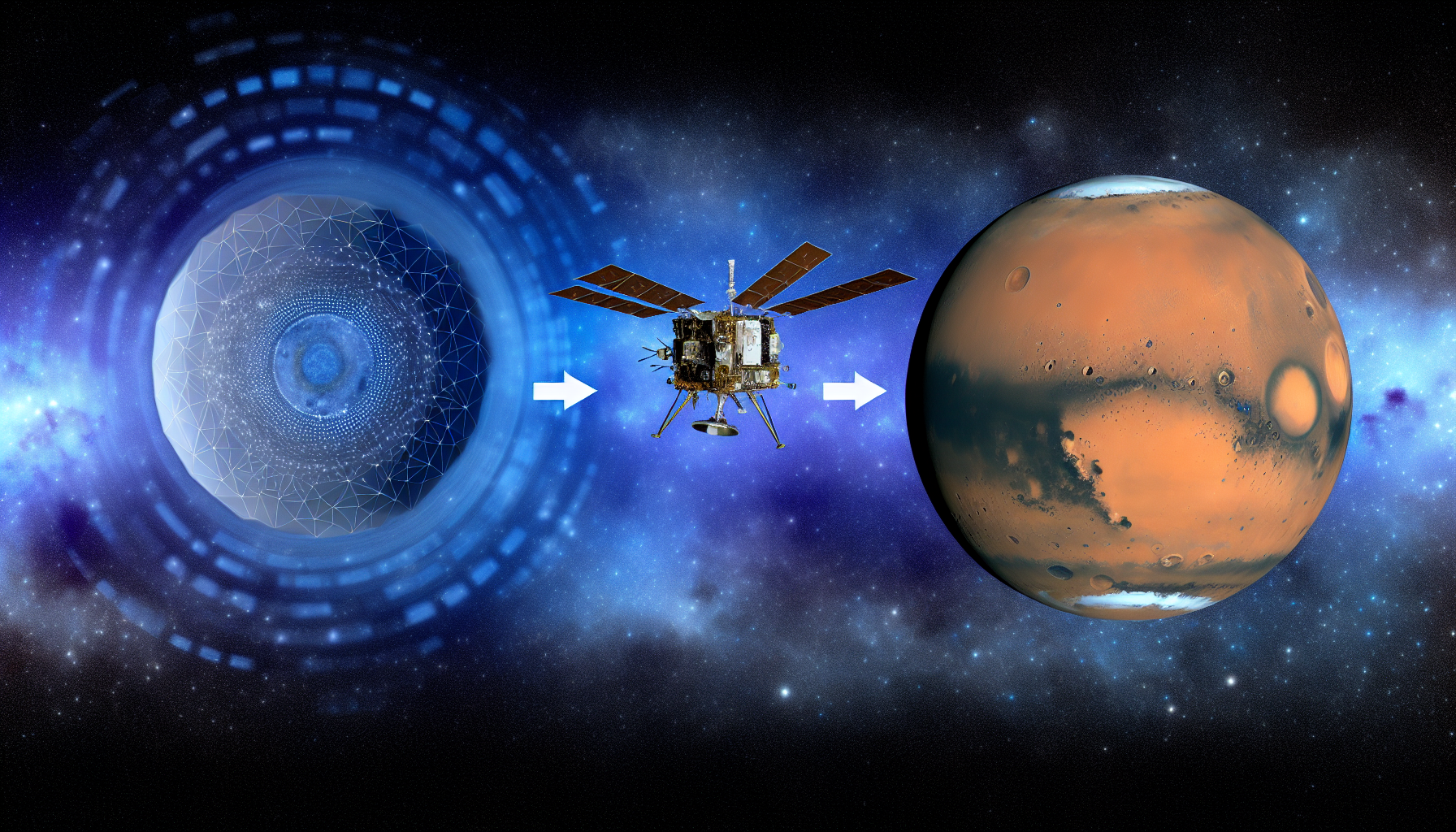

Introduction to the NASA Psyche Mission
The NASA Psyche mission is set to embark on an extraordinary journey, aiming to explore an asteroid that is unlike any other in our solar system. The mission targets the asteroid 16 Psyche, which is believed to be predominantly composed of metal, and is thought to represent the exposed core of a protoplanet. This unique prospect offers clues about the formation of terrestrial planets, including Earth.
The Mars Gravity Assist: A Pivotal Maneuver
On May 15, 2026, the Psyche spacecraft will execute a crucial gravity assist maneuver, skimming just 2,800 miles above the surface of Mars while traveling at an impressive speed of 12,333 miles per hour. This close encounter is not merely a spectacular visual event; it serves as a critical step in redirecting the spacecraft towards its ultimate destination—the metallic asteroid Psyche.
Why Gravity Assists Matter
Gravity assistance, or gravity slingshots, are a common maneuver in space exploration. By utilizing the gravity of a planet, spacecraft can increase their velocity without expending additional fuel. This method is especially vital for missions venturing to distant targets, like the Psyche, which orbits in the asteroid belt between Mars and Jupiter.
The Excitement Leading Up to the Encounter
As the date approaches, the excitement surrounding the NASA Psyche mission is palpable. Space enthusiasts and the general public alike are eagerly anticipating real-time updates and extensive coverage from NASA. The excitement is amplified by the anticipation of stunning visuals as the spacecraft nears Mars.
Social Media Buzz and Live Coverage
The event has sparked considerable social media activity, with many followers of space exploration sharing their thoughts and excitement about this historic moment. NASA plans to provide live coverage of the maneuver, which will likely draw in viewers from around the globe. This combination of cutting-edge technology and breathtaking visuals is expected to captivate both casual observers and dedicated astronomy fans.
What Lies Beyond: The Journey to Psyche
After the gravity assist, the NASA Psyche mission will continue its journey, eventually reaching the asteroid Psyche in 2029. Upon arrival, the spacecraft will study the asteroid’s surface, composition, and potential for providing insight into the building blocks of our planet. Unlike other asteroids composed mainly of rock and ice, Psyche is believed to contain a significant amount of metallic material, raising intriguing questions about its formation.
Understanding Planetary Formation
Studying Psyche could provide invaluable knowledge about the early solar system and the processes that shaped terrestrial planets. The asteroid is thought to be a remnant of a protoplanet that never fully formed, making it a unique window into the past.
The Technological Marvel Behind the Mission
The Psyche spacecraft itself is a testament to modern engineering and innovation. Equipped with advanced instruments, the spacecraft will employ multiple analysis techniques to gather data about the asteroid. These instruments include a multi-spectral imager, a magnetometer to measure the magnetic field, and a gamma-ray and neutron spectrometer to analyze surface composition.
The Role of Public Engagement
The NASA Psyche mission is not just a scientific endeavor; it is also an opportunity for public engagement and education. By sharing updates and live coverage, NASA aims to inspire the next generation of scientists, engineers, and space enthusiasts. The anticipation of the Mars gravity assist is just one aspect of a broader narrative that encourages curiosity about the universe.
Challenges Ahead
While the excitement surrounding the Psyche mission is undeniable, it is essential to acknowledge the challenges that lie ahead. The spacecraft will navigate through the complexities of space travel, including potential obstacles such as cosmic radiation, micrometeorite impacts, and the harsh environment of the asteroid belt.
Ensuring Mission Success
NASA has implemented rigorous testing and simulations to prepare for these challenges. The team has prepared contingency plans to ensure the mission can adapt to unforeseen circumstances, which are common in space exploration. These preparations are crucial to maximizing the chances of success and obtaining meaningful data from Psyche.
The Broader Impact of the Psyche Mission
Beyond its scientific objectives, the NASA Psyche mission holds broader implications for humanity’s understanding of our place in the universe. Studying a metal-rich asteroid could provide insights into the resources available in space, potentially paving the way for future exploration and even habitation of other celestial bodies.
Resource Utilization in Space Exploration
As we look toward the future, the potential for utilizing resources from asteroids like Psyche becomes increasingly relevant. With the advancement of technology, the idea of mining asteroids for metals and other materials is no longer a distant dream. The data collected from the Psyche mission could inform future endeavors in resource mining, which may be essential for sustaining human activities beyond Earth.
Conclusion: A Momentous Journey Awaits
The NASA Psyche mission is poised to be a landmark achievement in space exploration. The upcoming gravity assist maneuver at Mars is not just a critical aspect of the mission; it represents a moment of collective excitement and curiosity for all of humanity. As we prepare for this momentous event, we are reminded of the power of exploration and the endless possibilities that lie beyond our planet.
With the potential to reshape our understanding of planetary formation and resource utilization, the Psyche mission will undoubtedly leave a lasting legacy in the field of astronomy. As we count down to the gravity assist, let us embrace the wonder of discovery and the spirit of exploration that drives us to reach for the stars.




