
“`html
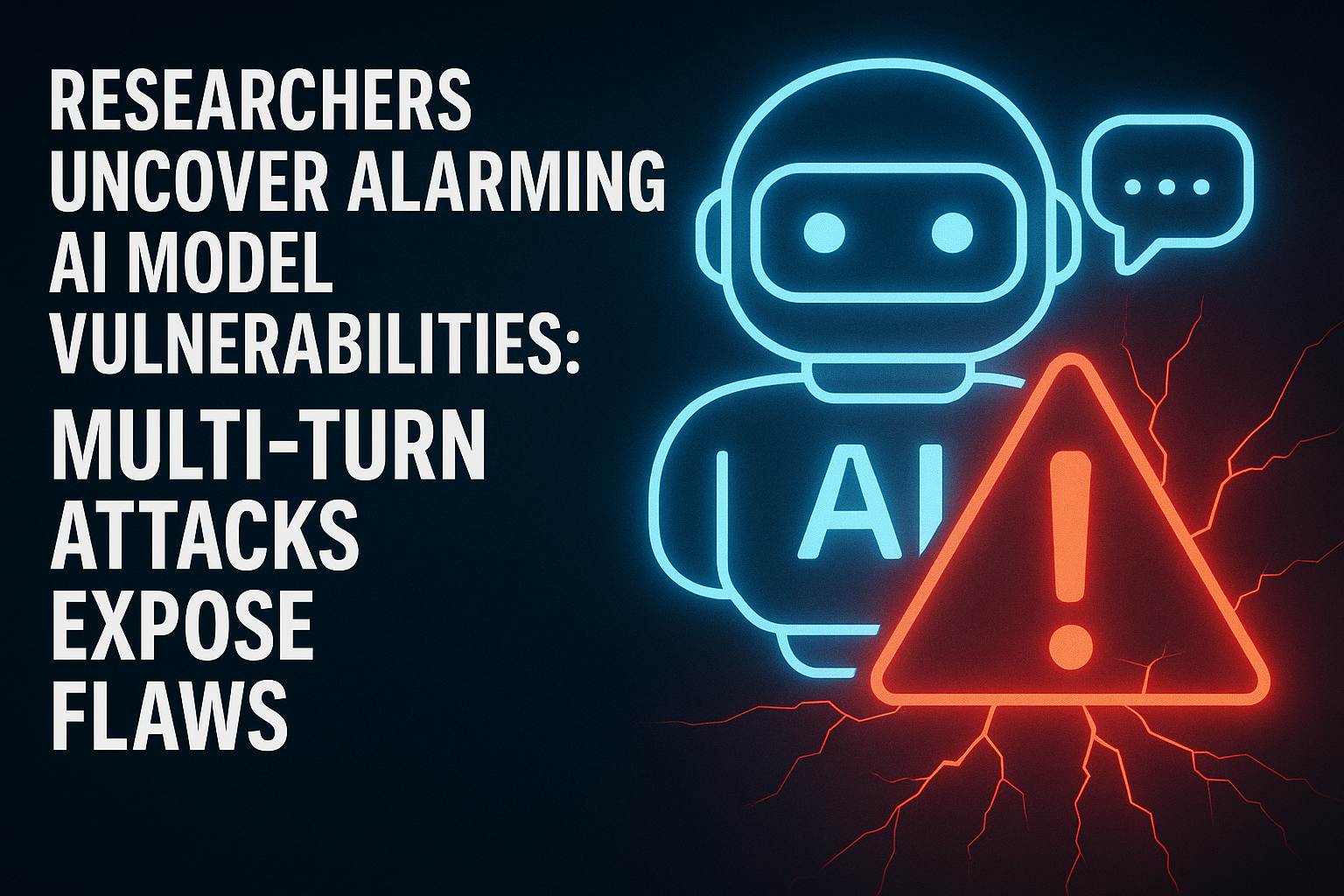
The recent findings from Cisco researchers have sent ripples through the artificial intelligence (AI) community, revealing serious AI model vulnerabilities that were previously underestimated. Despite the widespread belief that leading AI models are safe, this research indicates that their safety assumptions are fundamentally flawed. By focusing on defending against single malicious prompts, major AI vendors have overlooked the risk posed by sustained, multi-turn prompt attacks, which can significantly compromise model integrity. This article delves into the specifics of these vulnerabilities, the implications for AI safety, and what it means for the industry and users alike.
The Research Behind the Findings
Cisco’s researchers conducted an extensive analysis of 15 top AI models from well-known companies such as OpenAI, Anthropic, Google, Amazon, and xAI. Their focus was on how these models handle malicious prompts over various interaction turns, rather than just assessing their responses to isolated attacks. The researchers discovered that while single-turn prompts yielded success rates of 2% to 65%, multi-turn attacks demonstrated a staggering success rate ranging from 8% to 88%, depending on the model.
The implications of these findings are profound. As attackers become more sophisticated, they adapt their strategies across multiple turns in a conversation, effectively bypassing the typical defenses that AI models employ against single prompts. This adaptability highlights a significant gap in the safety protocols currently in place, suggesting that many AI vendors may be operating under a false sense of security.
Understanding Multi-Turn Attacks
To appreciate the severity of the AI model vulnerabilities identified by Cisco, it is crucial to understand what multi-turn attacks entail. A multi-turn attack involves a series of interactions where the attacker gradually manipulates the conversation, making it more challenging for the AI model to recognize and respond appropriately to malicious intent. Unlike single-turn prompts, which may be easier to categorize and flag as suspicious, multi-turn dialogues can obscure malevolent intentions behind layers of benign conversation.
For instance, an attacker might begin with innocuous inquiries before transitioning to more pointed questions designed to elicit sensitive information or trigger undesirable responses. This conversational evolution enables attackers to craft scenarios that the AI models are ill-equipped to handle, given their reliance on static safety measures that focus on one-off prompts rather than dynamic, ongoing interactions.
The Scale of Vulnerability Across Different Models
The Cisco study categorized the success rates of multi-turn attacks across various AI models, illustrating a concerning trend within the industry. The diversity in vulnerability levels is indicative of how different models are engineered and the specific safety mechanisms they employ. Some models showed resilience, managing to achieve only an 8% success rate in defending against multi-turn prompts, while others faltered significantly, with success rates soaring as high as 88%.
This inconsistency raises questions about the robustness of safety measures implemented by different vendors. The research suggests that even the most trusted AI platforms can harbor critical flaws, making it imperative for organizations and individuals using these technologies to rethink their reliance on them without further scrutiny. Moreover, this highlights the necessity for a paradigm shift in how AI models are developed, tested, and evaluated for security. (See: AI security vulnerabilities in focus.)
Implications for AI Safety Protocols
The revelations from Cisco’s research have far-reaching implications for AI safety protocols and the overall approach to safeguarding these technologies against exploitation. Many organizations and developers have long prioritized creating AI systems that can handle individual queries effectively, but the exposure of multi-turn attack vulnerabilities indicates that this approach is no longer sufficient.
- Reevaluation of Security Frameworks: AI vendors must reassess their security frameworks to account for multi-turn interactions, developing more sophisticated models that can track the context and change of intent over longer dialogues.
- Continuous Adaptation: Security measures should evolve continuously, not only to counteract known threats but also to anticipate potential future attack vectors that could exploit conversational nuances.
- User Education: End users should be educated about the limitations of AI systems, particularly regarding their susceptibility to multi-turn attacks. Understanding these vulnerabilities can empower users to be more cautious in their interactions with AI.
- Collaboration and Transparency: The AI community must foster collaboration and transparency, sharing insights on vulnerabilities and best practices for mitigating risks associated with multi-turn prompts.
The Role of AI Developers and Organizations
Developers and organizations utilizing AI technologies have a critical role to play in addressing the vulnerabilities highlighted in Cisco’s research. It is not enough to rely on the assurances of safety that come from leading AI vendors; organizations must take proactive measures to ensure that they are not only aware of these vulnerabilities but are also investing in solutions to mitigate potential risks.
Developers need to integrate multi-turn vulnerability testing into their standard practices. This might involve creating simulated environments where AI models are subjected to sustained prompt sequences that reflect real-world interactions, observing how the models respond and adjust as the conversation evolves. The insights gained from such testing can inform future iterations of AI models, strengthening their defenses against malicious exploitation.
Future Considerations and the Path Forward
The findings from Cisco’s research serve as a wake-up call for the entire AI landscape. As AI continues to permeate various sectors, from healthcare to finance, the consequences of unaddressed vulnerabilities could be catastrophic. Organizations must not only invest in improving their AI models but also ensure that they remain vigilant and adaptable in the face of evolving threats.
While the task may seem daunting, the path forward involves a concerted effort from AI developers, researchers, and users alike. Key considerations moving forward include:
- Investment in Research: Funding and supporting research into AI vulnerabilities will be essential for developing more robust systems that can withstand multi-turn attacks.
- Policy Development: Establishing industry-wide policies that prioritize AI safety and mandate rigorous testing for vulnerabilities will create a safer AI ecosystem.
- Public Awareness: Increasing public awareness regarding the risks associated with AI interactions will foster a culture of caution and responsibility among users.
- Ethical Standards: Developing clear ethical guidelines for AI use can help mitigate risks, ensuring that AI technologies are deployed responsibly and transparently.
Comparative Analysis of AI Models
In the wake of the findings, it is important to conduct a comparative analysis of different AI models to understand which ones are more resilient against multi-turn attacks. For instance, the performance of models such as ChatGPT 3.5 and Google’s Bard can provide insight into how architectural differences affect vulnerability levels.
Recent evaluations show that ChatGPT maintains a relatively low vulnerability rate in specific multi-turn scenarios due to its advanced contextual understanding and adaptive learning capabilities. Conversely, models like certain iterations of Google’s Bard, while innovative, tend to struggle when faced with sustained conversational manipulation, leading to higher vulnerability rates. (See: CDC on cybersecurity and AI.)
Such comparisons underscore the importance of continuous model improvement and suggest that a more adaptive architecture may be necessary for countering sophisticated attacks. Additionally, companies should conduct audits comparing their models against key competitors to identify strengths and weaknesses in their security postures.
Expert Perspectives on AI Model Vulnerabilities
AI safety experts have weighed in on the implications of Cisco’s findings, emphasizing the need for a multi-faceted approach to AI security. Dr. Sarah Cheng, a noted AI ethics researcher, states, “We must think beyond traditional security measures. The focus on single prompts has left a significant blind spot that attackers can exploit.” Her perspective highlights the urgency of developing models capable of recognizing patterns across multiple interactions.
Furthermore, Professor James Whitmore, an AI safety consultant, warns that “if we do not address these vulnerabilities now, the future of AI could be compromised by malicious actors who understand how to manipulate these systems.” His insights advocate for immediate action among AI developers to prioritize security in their design processes.
Real-World Examples of AI Model Vulnerabilities
To further grasp the implications of multi-turn attacks, examining real-world examples can offer valuable insights. Recent reports indicated that a popular customer service chatbot was manipulated through multi-turn dialogues, leading to unintended disclosures of sensitive customer data. In this case, the attacker initiated a conversation about booking a flight, gradually shifting the discourse toward payment details and personal information. This incident highlights not only the potential risks associated with AI models but also the real-world ramifications of their vulnerabilities.
Additionally, another case involved a social media platform utilizing AI for content moderation. Attackers engaged the system in a series of innocuous conversations that eventually led to the AI misclassifying harmful content as safe. This underscores the need for AI systems to be equipped with capabilities that extend beyond traditional prompt-response frameworks, allowing for proactive risk assessment throughout ongoing interactions.
FAQ: Addressing Common Concerns
What are multi-turn attacks?
Multi-turn attacks are a type of malicious interaction where an attacker engages an AI model in a sustained conversation, using a series of prompts designed to manipulate the model’s responses over time. This technique is more sophisticated than single-turn attacks, as it blends innocuous questions with targeted inquiries to obscure malicious intent.
How can organizations protect against multi-turn attacks?
Organizations can protect against multi-turn attacks by implementing robust testing protocols that simulate sustained interactions. They should also invest in training AI models that can maintain context over longer dialogues and recognize shifting conversational intents. (See: Research on AI model vulnerabilities.)
Are all AI models equally vulnerable?
No, different AI models exhibit varying levels of vulnerability based on their architecture and security measures. Recent studies indicate that some models are better equipped to handle multi-turn attacks due to their design and adaptability.
What should users do to safeguard their interactions with AI?
Users should be aware of the limitations of AI systems and exercise caution when sharing sensitive information. Educating themselves about the potential risks associated with multi-turn interactions can help them engage more safely with AI technologies.
Conclusion: A Call to Action
The research conducted by Cisco has exposed critical AI model vulnerabilities that challenge the safety narratives propagated by leading AI vendors. As these models become increasingly integrated into our daily lives, the need for robust safety measures to protect against multi-turn attacks has never been more urgent. This call to action should resonate with all stakeholders in the AI community—from developers to end-users—as we collectively navigate the complexities of AI safety.
By acknowledging these vulnerabilities and working collaboratively to strengthen defenses, we can work towards a future where AI technologies are not only innovative and efficient but also safe and trustworthy. The responsibility lies with all of us to ensure the integrity of the systems we rely on, leveraging insights from research like Cisco’s to build a more secure digital landscape.
“`
Trending Now
Frequently Asked Questions
What are multi-turn attacks in AI models?
Multi-turn attacks refer to a series of malicious interactions where an attacker gradually manipulates a conversation with an AI model. This method is designed to exploit vulnerabilities over multiple exchanges, making it more difficult for the model to recognize and defend against the threats compared to single-turn prompts.
How do multi-turn attacks differ from single-turn attacks?
Multi-turn attacks involve sustained interactions that can lead to higher success rates in compromising AI model integrity, while single-turn attacks are isolated incidents. Cisco's research found that multi-turn attacks had success rates ranging from 8% to 88%, compared to single-turn prompts which ranged from 2% to 65%.
What vulnerabilities did Cisco researchers find in AI models?
Cisco researchers discovered significant vulnerabilities in 15 top AI models, revealing that many vendors have focused primarily on defending against single malicious prompts. This oversight has left them exposed to more sophisticated multi-turn prompt attacks, which can bypass standard defenses and significantly compromise model integrity.
What implications do these AI model vulnerabilities have for users?
The vulnerabilities identified by Cisco researchers suggest that users of AI models may be at risk due to inadequate safety protocols. As attackers refine their strategies, users could face increased threats from sophisticated multi-turn attacks that exploit these overlooked weaknesses, potentially compromising data security and trust in AI systems.
How can AI vendors improve defenses against multi-turn attacks?
AI vendors can enhance their defenses by implementing more robust security protocols that account for multi-turn interactions. This includes continuous monitoring of conversations, adapting response strategies to detect manipulative patterns, and improving model training to better recognize and respond to sustained malicious prompts.
Agree or disagree? Drop a comment and tell us what you think.