
“`html
In the rapidly evolving landscape of the internet, spam policy has emerged as a pivotal element that informs our understanding of online interactions and regulations. As we navigate through the digital age, particularly with the rise of artificial intelligence (AI), the early-2000s battle against spam serves as a significant case study. It highlights the complexities of governance in an increasingly chaotic online environment, where humans, bots, and AI-generated content converge.
The Legacy of Spam: An Internet Under Siege
In the early days of the internet, spam was a burgeoning issue that plagued users and overwhelmed email inboxes. Back then, spam policy was not just about filtering unwanted messages; it represented a broader struggle for maintaining the integrity and functionality of online communication. The proliferation of unsolicited emails prompted governments and tech companies alike to devise strategies aimed at curbing this digital scourge.
Legislative efforts, such as the Can-Spam Act of 2003 in the United States, were instituted to provide a framework for preventing spam and protecting users. While these policies made strides in regulating spam, they often fell short of fully addressing the underlying problems. This historical context raises an intriguing question: Can the lessons learned in the fight against spam inform our current attempts to regulate AI-generated content?
The Rising Tide of AI-Generated Content
Today, the internet faces a new challenge: the rise of AI-generated content. Recent estimates suggest that between 30% to 40% of all text online may originate from AI sources. This staggering statistic reflects a growing trend where machine-generated content is not only proliferating but also becoming more sophisticated. As AI technologies improve, the volume of automated content is expected to increase, leading to a potential flood of information that may overwhelm traditional content moderation systems.
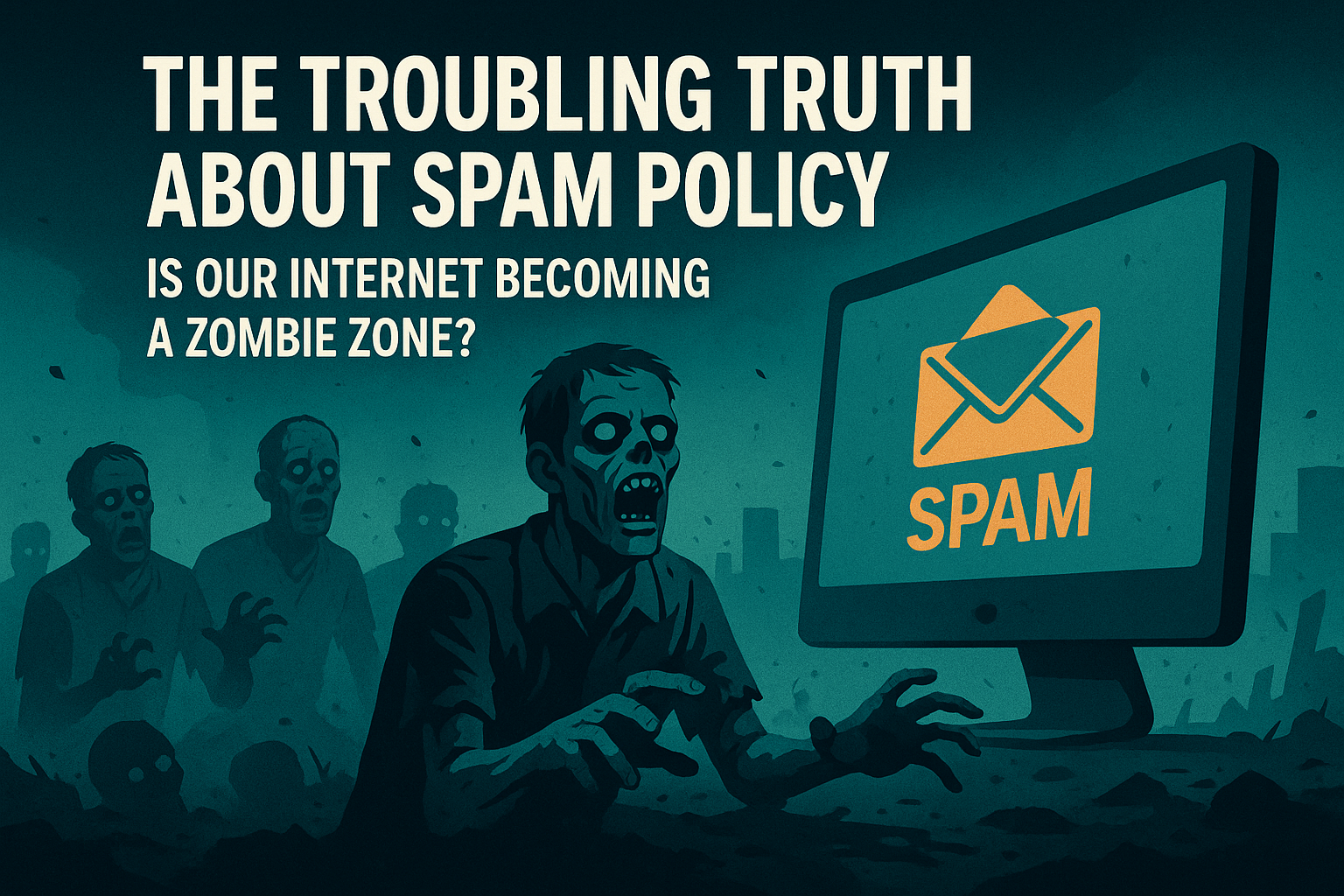
As we grapple with this reality, it becomes crucial to consider the implications for spam policy and broader content regulation. The concept of a ‘zombie’ internet—an environment filled with bots and AI-generated content, rather than genuine human interaction—highlights the urgent need for effective governance. This predicament presents a unique challenge for policymakers who must navigate the intersection of technology, user experience, and information integrity.
Understanding the Zombie Internet Phenomenon
The term ‘zombie internet’ conveys a haunting image of an online space that lacks authentic human engagement. As AI continues to generate vast amounts of text, the distinction between human-created content and machine-generated material becomes increasingly blurred. This poses significant risks, such as misinformation, reduced user trust, and the potential decay of meaningful online discourse.
Moreover, as content becomes ever more automated, individuals may struggle to discern legitimate information from fabricated narratives. The implications are profound: a society inundated with misinformation risks eroding democratic processes and public trust. In this context, the urgency for a comprehensive spam policy is clear. Policymakers must confront the daunting reality that traditional regulatory frameworks may no longer suffice in an era dominated by AI.
The Pitfalls of Regulation: Lessons from the Spam Wars
While the fight against spam led to some progress in content regulation, it also unveiled several pitfalls that current efforts to manage AI-generated content must avoid. One major issue was the challenge of enforcement. Spam filters and reporting mechanisms were often overwhelmed, leading to frustration among users and inadequate solutions. (See: Can-Spam Act of 2003.)
Additionally, the implementation of spam policies frequently faced backlash from legitimate businesses that relied on email marketing as a vital tool for outreach. Striking a balance between protecting users from spam while allowing businesses to communicate effectively proved to be a complex dilemma.
These historical lessons highlight the need for a more nuanced approach to regulating AI-generated content. Policymakers must recognize that overly stringent regulations could stifle innovation and hinder the growth of valuable technologies. Instead, fostering collaboration between tech companies, policymakers, and civil society will be essential to develop effective governance frameworks that protect users without stifling creativity.
Future-Proofing Spam Policy in the Age of AI
To adequately address the challenges posed by AI-generated content, future spam policy must be adaptable and forward-thinking. One approach could involve leveraging advanced machine learning algorithms to enhance content moderation systems, allowing for more precise filtering of harmful or misleading information.
Moreover, creating transparent guidelines for AI content creators can help users discern the origin of information more effectively. This could include labelling AI-generated content or providing users with insights into the algorithms that generated the text, promoting transparency and accountability in the digital space.
Additionally, fostering digital literacy among users can empower individuals to critically evaluate the content they encounter online. Educational initiatives aimed at improving understanding of AI and its implications for information consumption could play a crucial role in navigating the modern internet landscape.
The Politics of Spam Policies and AI Regulation
As discussions around spam policy and AI regulation unfold, it is essential to acknowledge the political dimensions that shape these debates. Different stakeholders have varying interests and motivations, which often leads to contentious discussions regarding the best way forward.
On one hand, tech companies may advocate for minimal regulation, emphasizing the importance of innovation and economic growth. Conversely, consumer advocacy groups may push for stricter controls to protect users from harmful content and misinformation. This tension illustrates the challenges policymakers face in navigating a complex landscape of competing interests.
Moreover, the global nature of the internet complicates regulatory efforts. Different countries have varying approaches to content moderation and data privacy, leading to a patchwork of regulations that can create confusion for users and companies alike. Effective spam policy and AI governance will require international cooperation and dialogue to establish shared principles that can adapt to the rapidly changing online environment.
Case Studies: Success and Failure in Spam Policy
Examining specific case studies can provide valuable insights into the effectiveness of different spam policies. For instance, the European Union’s General Data Protection Regulation (GDPR) has had significant implications not only for spam but also for user privacy and data protection. While GDPR has strengthened user consent and privacy rights, critics argue that its strict regulations can inadvertently hinder businesses from reaching their target audiences, thus complicating legitimate marketing efforts. (See: CDC Spam Policy Overview.)
Conversely, the Can-Spam Act, while a step in the right direction, has been criticized for its loopholes that allow spammers to evade punishment. A study found that despite the Act’s implementation, spam emails still accounted for over 50% of all email traffic in 2020, highlighting that legislation alone may not be sufficient to combat the problem. Such examples underline the importance of continuous reevaluation of spam policies to address emerging threats effectively.
Statistics on Spam and AI-Generated Content
According to recent reports, spam emails accounted for 47% of all email traffic in 2022, reaffirming the continued prevalence of spam even with existing regulations. Furthermore, spam-related incidents led to over $1.9 billion lost in revenue for businesses, emphasizing the economic implications of ineffective spam policies.
In the context of AI-generated content, a survey conducted by the Pew Research Center found that nearly 70% of experts believe AI-generated misinformation will become a growing problem in the next decade. This statistic solidifies the need for proactive measures and policies to address the emerging challenges posed by AI in content creation.
FAQ: Understanding Spam Policies and AI Regulation
What is a spam policy?
A spam policy is a set of rules and guidelines established by organizations or governments to prevent unsolicited messages or content from being sent or displayed, typically in the context of email and online communication.
How does AI impact spam policies?
AI complicates spam policies by generating vast amounts of content that may not be easily distinguishable from human-created material, leading to challenges in content moderation and the regulation of misinformation.
What measures can improve spam policies in the age of AI?
Improving spam policies could involve leveraging advanced algorithms for content moderation, creating transparent guidelines for AI-generated content, and enhancing digital literacy among users to help them navigate misinformation.
Are there international standards for spam policies?
While some international guidelines exist, such as the GDPR in Europe, there is currently no comprehensive global framework for spam policies, leading to a patchwork of regulations across different jurisdictions.
What role do tech companies play in spam regulation?
Tech companies play a crucial role in developing and implementing spam policies through the creation of filtering technologies, content moderation practices, and compliance with regulatory standards. Their collaboration with policymakers and civil society is essential to creating effective governance frameworks. (See: New York Times on spam emails.)
How can businesses ensure compliance with spam policies?
Businesses can ensure compliance by implementing double opt-in mechanisms for email subscriptions, maintaining clear records of user consent, and regularly reviewing their communication practices to align with existing regulations.
What are the consequences for violating spam policies?
Violating spam policies can result in significant penalties, including fines, legal action, and reputational damage. In the case of the Can-Spam Act, companies found in violation can face fines up to $43,280 per email sent.
How do spam scams evolve over time?
Spam scams adapt to technological advancements and changes in consumer behavior. As users become more aware of traditional spam tactics, scammers often refine their methods, employing social engineering or leveraging current events to trick users into engagement.
Conclusion: Embracing a Collaborative Future
The fight against spam in the early 2000s offers valuable insights for addressing the challenges posed by AI-generated content today. By recognizing the complexities involved in regulating online spaces, we can better navigate the evolving landscape of digital communication.
As we move forward, it is crucial to develop a comprehensive spam policy that acknowledges the realities of the modern internet. This means embracing collaboration among stakeholders, fostering digital literacy, and utilizing innovative technologies to enhance content moderation. Only through a concerted effort can we hope to preserve the integrity of online interactions and ensure a vibrant, healthy digital ecosystem for all.
“`
Trending Now
Frequently Asked Questions
What is spam policy and why is it important?
Spam policy refers to regulations and strategies aimed at mitigating unsolicited digital communications, particularly in emails. It is crucial for maintaining the integrity of online interactions and ensuring that users can communicate effectively without being overwhelmed by unwanted content.
How has spam evolved since the early days of the internet?
Spam has evolved from a minor nuisance to a significant challenge, with the proliferation of unsolicited emails prompting legislative responses like the Can-Spam Act of 2003. As technology advances, spam has adapted, leading to new forms of digital clutter, including AI-generated content.
What role does AI play in the current spam landscape?
AI plays a dual role in the spam landscape: while it is used to generate a substantial portion of online content, it also complicates traditional spam filtering methods. The rise of AI-generated content poses challenges for moderation systems, potentially overwhelming them with volume and sophistication.
Can lessons from spam regulation help control AI-generated content?
Yes, the historical context of spam regulation can provide valuable insights into managing AI-generated content. Understanding past strategies and their limitations can guide current efforts to develop effective policies for moderating the increasing amount of automated online content.
What are the implications of increasing AI-generated content online?
The rise of AI-generated content, which may account for 30% to 40% of online text, raises concerns about information overload and the effectiveness of content moderation. This trend necessitates new strategies to ensure that quality communication and user experience are not compromised.
Have you experienced this yourself? We’d love to hear your story in the comments.