
“`html
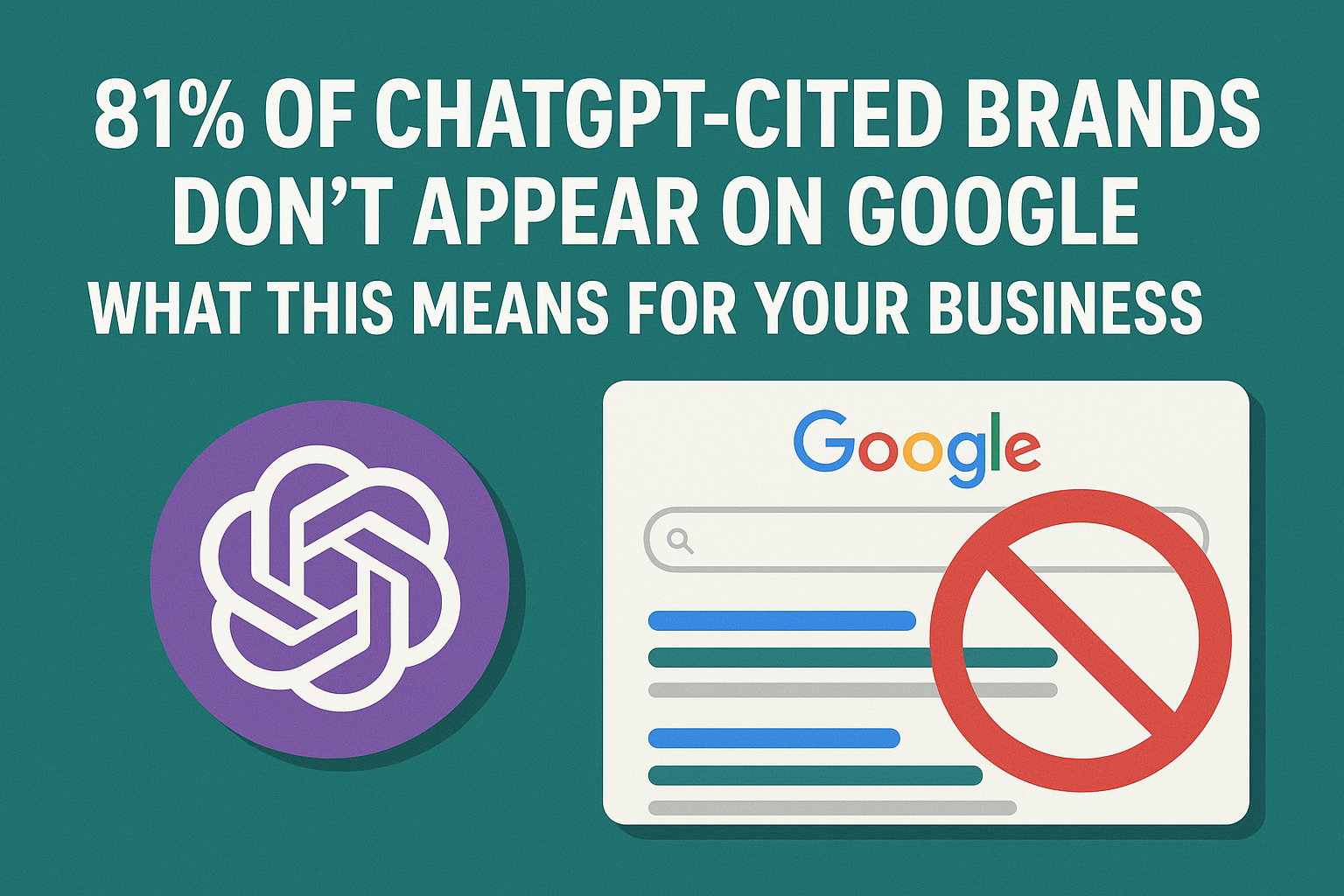
The digital landscape is evolving rapidly, and businesses are striving to stay ahead in an environment marked by constant change. In a revealing new study by EMGI, it was found that a staggering 81% of brands cited by ChatGPT do not rank in Google’s top 10 results. This startling statistic highlights a significant disconnect between the visibility provided by AI-generated citations and traditional search engine optimization (SEO) performance. For business leaders and marketers, this raises critical questions about the effectiveness of their online strategies and the implications for brand visibility in a world increasingly dominated by artificial intelligence.
1. The Study at a Glance
The EMGI study has raised eyebrows across the marketing sphere, suggesting that the AI’s approach to citing brands is at odds with what users expect to find on Google. With 81% of the cited brands failing to appear in Google’s top results, the research indicates that strong SEO performance does not guarantee visibility in AI-generated contexts. This is particularly troubling for businesses that have invested heavily in SEO strategies, as it challenges a core belief that effective SEO correlates with increased visibility in AI-assisted search.
Furthermore, the findings point towards a potential future where AI-generated content could dictate consumer perception and brand discovery independent of traditional search engine results. As AI tools like ChatGPT become more integrated into everyday search experiences, understanding this disconnect is imperative for brands aiming to remain relevant and visible.
2. The Disconnect Between AI and Google Rankings
The study exposes a critical gap; brands that excel in SEO may not necessarily translate that success into AI visibility. This disconnect hints at a deeper issue within digital marketing strategies. While many companies focus on optimizing their websites and content for Google searches, they may overlook the growing influence of AI in shaping consumer behavior and preferences.
This finding is particularly pressing for brands that rely on traditional metrics to gauge success. With a staggering proportion of brands cited by ChatGPT not making it into Google’s search results, companies must reconsider how they define visibility and success in a changing landscape. Companies must adopt a dual strategy that encompasses both traditional SEO and emerging AI technologies to ensure comprehensive brand representation.
3. Implications for Businesses
The ramifications of this study are far-reaching for business leaders. For many, the fear of missing out (FOMO) is palpable—if a brand isn’t represented in AI-generated responses, are they losing potential revenue and customer engagement? The answer could indeed be yes, as consumers increasingly rely on AI tools for their search needs. In fact, if consumers are not discovering a brand through AI, they may see it as less relevant or even entirely obsolete.
For companies that have meticulously crafted their SEO strategies, this revelation can be jarring. It compels organizations to reassess their marketing tactics and consider whether they are allocating resources effectively. Integrating AI considerations into the marketing mix may not just be beneficial; it may soon be essential for survival in a competitive marketplace. (See: New York Times on AI and brands.)
4. Adapting SEO Strategies for AI Visibility
Given the findings of the EMGI report, businesses must pivot their SEO strategies. A few actionable steps can help organizations adapt:
- Invest in AI Optimization: Companies should explore how their content can be optimized for AI tools like ChatGPT. This means understanding the types of queries AI might handle and ensuring that relevant content is structured in a way that can be easily accessed and cited.
- Focus on Brand Reputation: Since AI tools often pull from a wide range of sources, maintaining a positive brand reputation across various platforms can increase the likelihood of being cited. Engaging positively with customers can also lead to organic mentions that AI might pick up.
- Monitor AI Trends: Businesses should stay abreast of emerging AI trends and tools to understand how they can leverage these technologies for brand visibility. This also includes analyzing how competitors are being represented in AI-generated content.
By taking these steps, companies can better position themselves in a rapidly evolving digital landscape, ensuring that they remain relevant not just on Google, but in AI-driven contexts as well.
5. Revenue Implications
The potential impact on revenue cannot be overlooked. Brands that are not cited by AI and, consequently, are less visible to consumers may face a decline in customer acquisition and retention. Given the rapid shifts in consumer behavior, where AI-generated responses are becoming a go-to source of information, failing to appear in these contexts can result in significant revenue losses.
For instance, a brand that sells a highly sought-after product may not see the same return on investment if they are not being recognized by AI tools. This could lead to decreased sales and market share, particularly if competitors are successfully optimizing for both traditional search engines and AI-generated content.
To counteract this potential loss, businesses must integrate AI visibility into their financial forecasts and marketing budgets. Allocating funds to research and implement AI practices can be an essential investment for long-term growth.
6. Case Studies: Brands Adapting to AI
Several brands have already begun to adapt to the AI landscape, positioning themselves for success despite the challenges highlighted in the EMGI study. For example, a leading tech company may invest in AI-driven content marketing strategies that prioritize the creation of high-quality, easily digestible content that aligns with AI algorithms.
Another case is a consumer goods manufacturer that leverages user-generated content and social proof within its AI marketing strategy. By promoting customer reviews and testimonials, the brand enhances its chances of being cited by AI tools, thereby increasing visibility and consumer trust.
These examples illustrate how proactive measures can lead to increased brand visibility in AI-generated contexts, demonstrating the importance of a multi-faceted approach to digital marketing. (See: Harvard research on AI's impact.)
7. The Future of SEO and AI
The intersection of SEO and AI will continue to evolve, and brands must remain vigilant to adapt to these changes. As AI becomes more integrated into consumer search behaviors, the rules governing digital marketing will shift. Companies that cling to traditional SEO practices without considering AI implications may find themselves at a significant disadvantage.
Looking ahead, we can anticipate that search engines will also evolve to compete with AI-generated responses. Companies that understand and prepare for this shift stand to gain a competitive edge. This may involve rethinking keyword strategies, understanding AI algorithms, and enhancing brand voice across digital platforms.
8. FAQs About ChatGPT and Brand Visibility
What does the EMGI study reveal about AI-generated citations?
The EMGI study reveals that 81% of brands cited by ChatGPT do not rank in Google’s top 10 search results, exposing a disconnect between AI visibility and traditional SEO performance.
How can businesses improve their chances of being cited by AI?
Businesses can improve their chances of being cited by focusing on high-quality content, engaging positively with customers, and monitoring AI trends for strategic insights.
Why is AI visibility important for brand revenue?
AI visibility is crucial for brand revenue because it influences consumer perception and brand discovery, which directly impacts customer acquisition and retention rates.
How does ChatGPT influence consumer behavior?
ChatGPT influences consumer behavior by providing instant, relevant answers to queries, shaping how individuals discover brands and products. This often leads users to trust AI-generated responses over traditional search results. (See: ScienceDirect article on SEO and AI.)
What are the potential long-term effects of AI on digital marketing?
Long-term, AI may redefine digital marketing landscapes by emphasizing real-time data analysis, predictive algorithms, and personalized content creation, making it essential for brands to continuously adapt their strategies.
Can traditional SEO still be relevant in an AI-driven world?
Yes, traditional SEO can still be relevant, but it must evolve to incorporate AI insights and methodologies to enhance visibility across both search engines and AI platforms.
9. Best Practices for Enhancing AI Visibility
To effectively enhance visibility in AI-driven platforms, brands should adopt best practices that focus on both content quality and strategic optimization. Here are some key recommendations:
- Create Authoritative Content: Ensure your content is backed by thorough research and is presented in an authoritative manner. This may involve collaborating with experts or earning certifications that lend credibility to your brand.
- Embrace Structured Data: Implementing schema markup can enhance how search engines and AI tools interpret your content, potentially improving your chances of being cited in AI-generated responses.
- Leverage Social Media Interaction: Actively engage with audiences on social media platforms where AI tools may pull data. This not only helps in brand reputation but also increases the likelihood of being mentioned in AI-generated outputs.
- Utilize Video and Visual Content: As AI becomes more adept at parsing visual content, integrating videos, infographics, and other multimedia formats can enhance engagement and improve citation potential.
10. Conclusion: The New Era of Digital Marketing
The findings from EMGI serve as a wakeup call for brands navigating the complexities of digital marketing in an AI-driven world. With 81% of ChatGPT-cited brands not ranking on Google, it’s clear that businesses must adopt adaptive marketing strategies that embrace both traditional SEO and the emerging influence of AI. This dual approach not only enhances visibility but also fortifies brand relevance in a rapidly shifting landscape.
As AI technologies continue to reshape consumer interactions, staying ahead of these trends will be critical for companies aiming to thrive. By understanding the nuances of ChatGPT brands Google ranking and optimizing their strategies accordingly, businesses can position themselves for sustained success in the digital age.
“`
Trending Now
- this guide on how an indian court ruling on google ads could change the future of digital advertising
- this guide on why millions turn to expedia for unbeatable cheap travel deals
- the complete explanation
- our breakdown of how 14 million reddit posts reveal shifting trends in mental health discussion
- the complete explanation
Frequently Asked Questions
Why do many brands cited by ChatGPT not appear on Google?
A recent study found that 81% of brands cited by ChatGPT do not rank in Google's top 10 results. This suggests a disconnect between AI-generated citations and traditional SEO performance, indicating that high SEO rankings do not guarantee visibility in AI contexts.
What are the implications of AI-generated content for brand visibility?
The findings suggest that AI-generated content could influence consumer perception and brand discovery independently of traditional search engine results, making it crucial for businesses to adapt their strategies in an AI-dominated digital landscape.
How can businesses improve their visibility in AI-assisted searches?
To enhance visibility in AI-assisted searches, businesses should not only focus on traditional SEO but also consider optimizing their content for AI platforms. This may involve adapting strategies to align with how AI tools like ChatGPT generate citations.
Is strong SEO enough for brand visibility today?
The study indicates that strong SEO performance does not necessarily translate to visibility in AI-generated contexts. Businesses must recognize that AI tools may prioritize different factors than traditional search engines.
What should marketers consider regarding AI and SEO?
Marketers need to understand the evolving landscape where AI tools influence brand visibility. They should assess their digital strategies to ensure they address both traditional SEO and the emerging dynamics of AI-generated content.
Have you experienced this yourself? We’d love to hear your story in the comments.