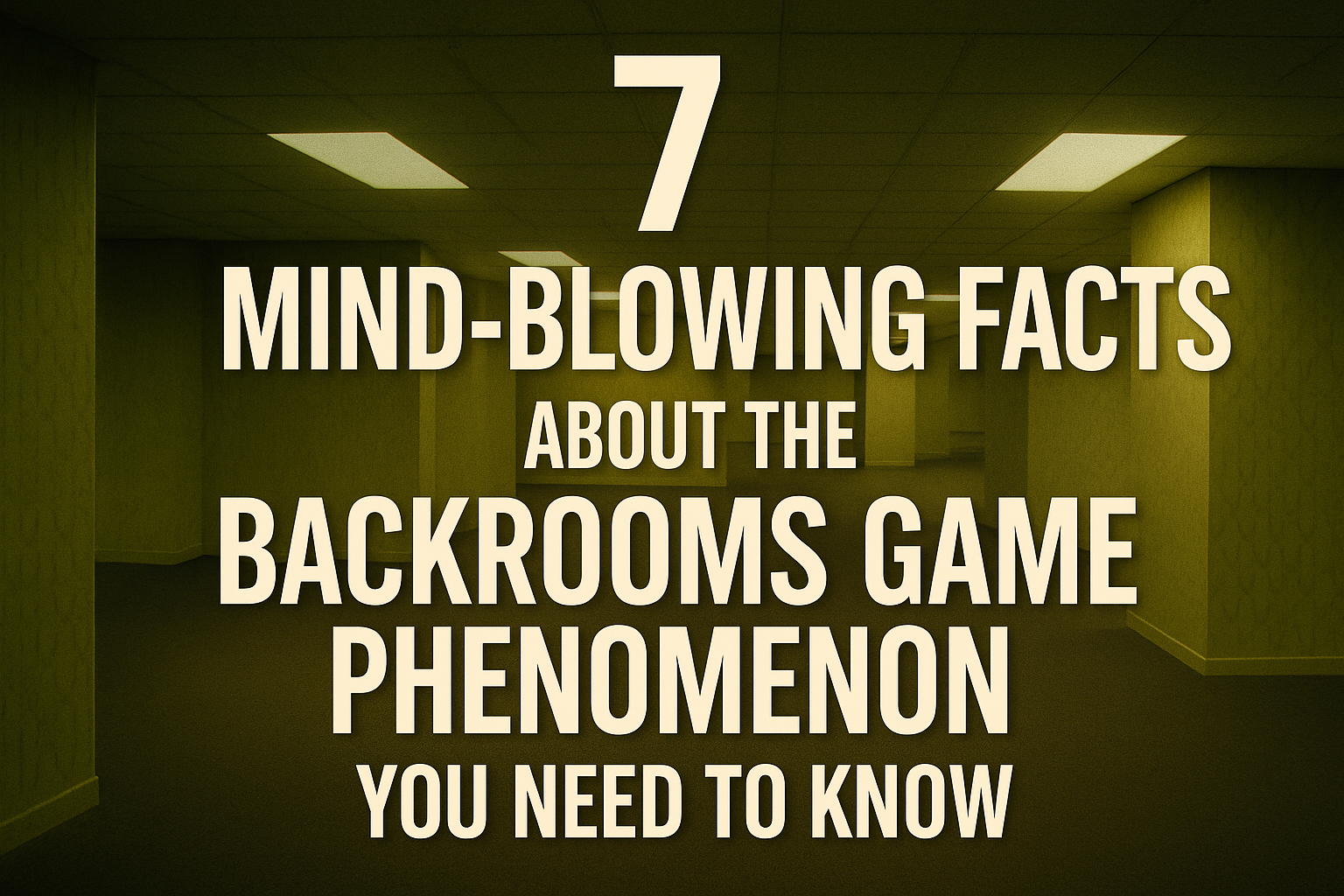

The Backrooms game has recently surged in popularity, captivating the attention of gamers and internet users alike. This creepy concept, which originated from an internet meme, has swiftly crossed over into mainstream gaming culture, creating a unique blend of horror, mystery, and user-generated lore. The surge in interest has been reflected in search engines, with the Backrooms emerging as one of the most searched gaming-related topics of the week. In this article, we delve into seven fascinating aspects of the Backrooms game that explain its viral appeal and the reasons behind its growing dominance.
1. The Origins of the Backrooms
The Backrooms began as an internet meme in 2019, originating from a post on 4chan that featured a surreal image of an endless, monotonous yellow hallway. This image sparked a wave of creativity, leading to the development of a chilling backstory revolving around liminal spaces—areas that exist in between places, often associated with feelings of unease and isolation. The concept of the Backrooms resonates with the fear of the unknown, tapping into a primal instinct that draws viewers into its labyrinthine depths.
As the meme gained traction, users on various social media platforms started expanding the narrative, creating their own interpretations and stories about the Backrooms. This user-generated lore has become a cornerstone of the phenomenon, allowing individuals to engage with the concept on a personal level. As a result, these stories often include encounters with bizarre entities, survival scenarios, and the unfathomable nature of the Backrooms themselves, further fueling curiosity and intrigue surrounding the subject.
2. The Gameplay Experience
The Backrooms game captures the essence of the original meme by immersing players in a seemingly endless maze of yellow-tinted hallways. Players navigate through various levels, each designed to evoke a sense of dread and confusion. Often, the gameplay incorporates elements such as puzzles, resource management, and survival mechanics, requiring players to stay vigilant against the lurking threats that inhabit the Backrooms.
One of the most striking aspects of the gameplay is the atmosphere. Developers have crafted an unsettling environment that is both familiar and alien. The use of ambient soundscapes—such as the buzzing of fluorescent lights and distant echoes—adds to the psychological horror of the experience. Players often find themselves questioning their own reality as they traverse this bizarre landscape, heightening the emotional stakes and encouraging repeated exploration.
3. The Role of FOMO in Its Popularity
The phenomenon of Fear of Missing Out (FOMO) plays a significant role in the surge of interest surrounding the Backrooms game. As social media users stumble upon clips or references to the Backrooms, they become intrigued and compelled to delve deeper into the concept. This urgency to understand what others are experiencing leads to a rapid increase in searches and discussions about the Backrooms.
Additionally, the viral nature of the content shared on platforms such as TikTok and YouTube has contributed to the FOMO effect. Reaction videos, gameplay walkthroughs, and theories about the Backrooms are shared widely, enticing more viewers to partake in the phenomenon. This cycle of sharing and engagement reinforces the meme’s presence in the digital landscape, solidifying its status as a dominant topic in gaming culture. (See: Understanding internet memes.)
4. User-Generated Theories and Lore
The collaborative aspect of the Backrooms has fostered an environment rich in user-generated theories and lore. Fans of the meme frequently share their interpretations on forums like Reddit, leading to an expansive universe where the Backrooms morph into various interpretations. This collaborative storytelling allows for a dynamic evolution of the narrative, as each contribution adds depth to the already complex mythology surrounding the Backrooms.
Some users theorize the existence of hidden entities that inhabit the Backrooms, while others postulate on the rules governing these endless mazes. This engagement not only cultivates a community of like-minded individuals but also serves as a creative outlet for those looking to explore their fears and curiosities. As more players delve into the Backrooms game, the lore continues to grow, enticing newcomers to contribute their perspectives and stories.
5. The Horror Factor: What Makes It Scary?
The Backrooms game is frightening not just in its visuals but also in its psychological implications. The horror element is deeply rooted in the notion of being trapped in an infinite space devoid of clear escape routes. This confinement leads to feelings of isolation, anxiety, and dread that resonate with players on a personal level. Many gamers have noted that the atmosphere alone is enough to induce real fear, as the environment triggers innate survival instincts.
Furthermore, the ambiguity surrounding the Backrooms adds to the terror. Players are often left to speculate about the rules of the Backrooms and what might be lurking around the corner. This uncertainty fuels paranoia and amplifies the sense of dread, making the gameplay experience all the more intense. The fear of the unknown can be far more powerful than any jump scare, and the Backrooms capitalize on this psychological horror.
6. Cultural Impact and Meme Status
The Backrooms have transcended their origins as a mere internet meme to become a cultural phenomenon. As aspects of the game continue to infiltrate mainstream media, references to the Backrooms can be found in various formats, including art, music, and literature. This widespread recognition further solidifies the Backrooms’ status and keeps it relevant in contemporary discussions about horror and gaming.
Moreover, the Backrooms have sparked conversations around the nature of fear and reality in modern gaming. By challenging conventional narratives and gameplay structures, the Backrooms game encourages players to reconsider their preconceptions about the horror genre. As more creators explore this unsettling realm, the potential for innovative storytelling and gameplay experiences continues to expand.
7. The Future of the Backrooms Game
As the Backrooms phenomenon continues to grow, the future of the Backrooms game appears bright. With an increasing number of developers drawn to the concept, we are likely to see more variations and adaptations of the Backrooms in both indie and mainstream games. This could lead to even richer narratives and more complex gameplay mechanics designed to evoke fear and intrigue.
Furthermore, the community surrounding the Backrooms is likely to thrive as fans continue to share their theories and experiences. Online platforms will serve as venues for collaboration and discussion, fostering a vibrant ecosystem where creativity and horror coincide. As long as players remain captivated by the eerie allure of the Backrooms, this phenomenon will likely persist, evolving and adapting to the changing landscape of gaming culture. (See: Impact of trauma and isolation.)
8. Comparative Analysis: Backrooms vs. Other Horror Games
When evaluating the Backrooms game alongside other popular horror titles, several distinctive elements emerge that set it apart. While traditional horror games like *Resident Evil* or *Silent Hill* often rely on narrative-driven experiences and character development, the Backrooms focus primarily on environmental horror and atmospheric tension. The minimalistic approach in storytelling means players are not guided by a linear narrative but are instead left to build their own interpretations through exploration.
In contrast to games that feature overt antagonists, the Backrooms introduce the concept of unseen threats. The horror is not from a single monster but rather the dread of the environment itself—an endless labyrinth that might hide malevolent beings. This unique characteristic draws players who appreciate a more cerebral form of horror, where the real terror lies in what is not seen.
Moreover, the procedural generation of levels in the Backrooms game adds another layer of unpredictability. Unlike static horror games where players can memorize strategies and routes, the Backrooms offer an ever-shifting environment, ensuring that each playthrough feels fresh and horrifying. This factor significantly contributes to replayability, as players never quite know what to expect next.
9. Expert Perspectives on Horror Game Design
Industry experts have begun to take notice of the Backrooms game phenomenon, discussing its implications for future horror game development. Dr. Linda Hartman, a psychologist specializing in media influences on behavior, notes that “the Backrooms effectively taps into our intrinsic fear of isolation and the unknown, something that hasn’t been explored deeply in many contemporary horror titles.” She emphasizes that the psychological components of horror are often neglected in favor of jump scares and gore.
Game designer Mark Thompson adds that the Backrooms represent a shift towards more abstract horror experiences. “As technology evolves, so does our understanding of fear. The Backrooms redefine horror by focusing on atmospheric dread rather than relying solely on characters or narratives. The game encourages players to confront their own fears, making the experience highly personal.” This perspective highlights the potential for the Backrooms to influence not only its genre but also the broader landscape of game design.
10. Frequently Asked Questions (FAQ)
What platforms can I play the Backrooms game on?
The Backrooms game is primarily available on PC, with various indie developers creating their own versions. Some adaptations may also appear on consoles in the future as the phenomenon continues to grow.
Is the Backrooms game suitable for all ages?
Due to its psychological horror elements and potential for intense atmospheres, the Backrooms game may not be suitable for younger audiences. It’s recommended for players aged 16 and older, depending on individual comfort levels with horror experiences. (See: Cultural phenomenon of the Backrooms.)
How can I get involved in the Backrooms community?
Engaging with the Backrooms community can be done through forums like Reddit, Discord servers, and social media platforms. Many fans share their theories, experiences, and artwork related to the Backrooms, creating a vibrant space for discussion.
Are there any plans for official expansions or sequels to the Backrooms game?
While no official announcements have been made regarding expansions or sequels, the growing interest in the Backrooms suggests that developers may explore future projects inspired by its concept. Fans are encouraged to keep an eye on indie game platforms for updates.
What are some popular adaptations of the Backrooms?
Various adaptations of the Backrooms have emerged, including fan-made games that explore different themes and mechanics. Some notable examples include *Backrooms: The Game*, which emphasizes survival horror, and *The Backrooms: Found Footage*, a narrative-driven experience that immerses players in a cinematic horror scenario. These adaptations showcase the versatility of the Backrooms concept and the creativity of the gaming community.
Can I create my own Backrooms game?
Absolutely! Many developers have taken inspiration from the Backrooms to create their own versions. Game engines like Unity or Unreal Engine provide the tools needed to design levels and mechanics. Engaging with the community can also provide insight and support as you develop your unique take on this captivating concept.
In conclusion, the Backrooms game represents a remarkable convergence of various elements—horror, mystery, and community. Its unusual origins and the collaborative lore have positioned it as a major player in today’s gaming conversation. As interest continues to grow, the Backrooms have become a testament to the power of internet culture and its ability to transform a simple meme into an engaging and multifaceted experience.
Trending Now
Frequently Asked Questions
What is the Backrooms game phenomenon?
The Backrooms game phenomenon originated from a 2019 internet meme featuring an eerie image of endless yellow hallways. It has evolved into a popular gaming concept that combines horror and user-generated lore, captivating players with its unsettling atmosphere and mysterious backstory.
How did the Backrooms start?
The Backrooms began as a meme on 4chan in 2019, featuring a surreal image that inspired a community of creators. This led to the development of a chilling narrative about liminal spaces, which resonate with feelings of unease and isolation, contributing to its viral appeal.
What makes the Backrooms game so popular?
The Backrooms game captivates players with its immersive gameplay set in a labyrinth of yellow hallways. The combination of horror, mystery, and user-generated stories creates a unique experience that draws players into its unsettling world, encouraging exploration and engagement.
What are the main features of the Backrooms gameplay?
In the Backrooms game, players navigate through various levels of endless, yellow-tinted hallways designed to evoke dread and confusion. The gameplay often incorporates survival scenarios and encounters with bizarre entities, enhancing the sense of mystery and fear.
Why is the Backrooms significant in gaming culture?
The Backrooms have become significant in gaming culture due to their blend of horror, mystery, and user-generated lore. The community-driven nature of the concept allows for diverse interpretations and stories, making it a captivating topic for gamers and internet users alike.
Have you experienced this yourself? We’d love to hear your story in the comments.