
“`html
Scaffolding in education is a pivotal concept, particularly in the realm of competency-based education (CBE). At its core, scaffolding is about providing structured support to students as they navigate complex learning tasks. It serves as a bridge that allows learners to build on their previous knowledge while acquiring new skills and competencies. In this article, we’ll explore what scaffolding in education entails, its importance in competency-based learning, and practical strategies that educators can implement to enhance their teaching practices.
Understanding Scaffolding in Education
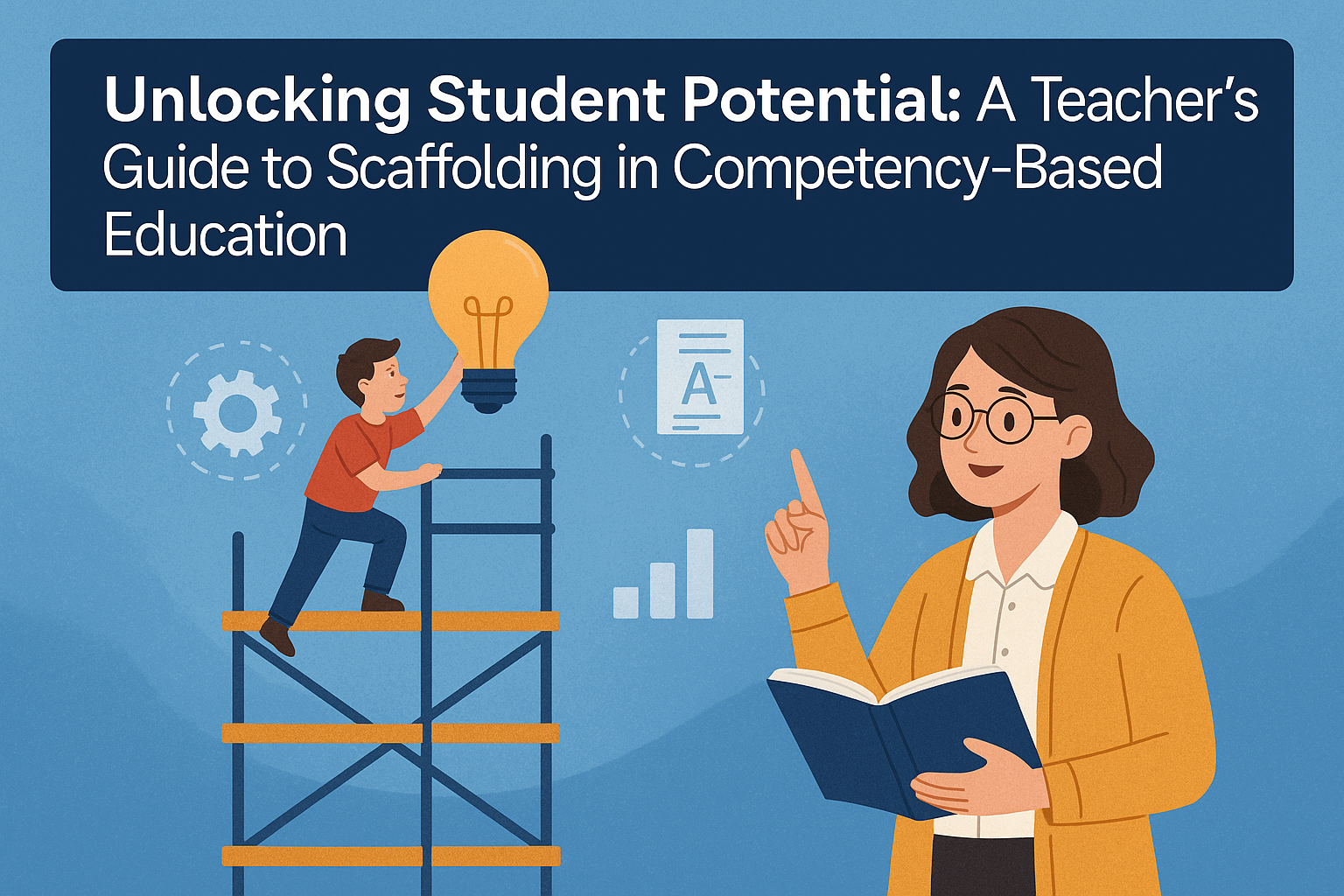
Scaffolding involves a variety of instructional techniques used to move students progressively toward stronger understanding and greater independence in the learning process. The term originates from the construction industry, where scaffolds provide temporary support for workers. Similarly, in an educational context, scaffolding provides temporary support for learners to help them achieve their learning objectives.
The theory behind scaffolding stems from the work of educational psychologists such as Lev Vygotsky, who emphasized the importance of social interaction and cultural tools in learning. Vygotsky introduced the concept of the Zone of Proximal Development (ZPD), which represents the difference between what a learner can do independently and what they can achieve with guidance. Thus, scaffolding aims to fill this gap.
The Role of Scaffolding in Competency-Based Education
Competency-based education focuses on equipping students with specific skills and knowledge rather than relying solely on traditional grade systems. This approach recognizes that learners progress at different paces and should demonstrate mastery of skills before advancing. Here, scaffolding plays a crucial role in helping students achieve the competencies required for success.
In a CBE framework, scaffolding involves designing learning experiences that facilitate mastery of competencies. It includes breaking down complex tasks into manageable components, providing resources, and offering support based on individual student needs. This tailored approach ensures that all students, regardless of their starting point, can achieve the desired outcomes.
For instance, suppose a student struggles with writing paragraphs. A teacher might scaffold this by first teaching them how to write a topic sentence, then guiding them through adding supporting details, and finally helping them to conclude their thoughts. This step-by-step method allows the student to gradually develop their writing skills without becoming overwhelmed.
Key Strategies for Implementing Scaffolding
Implementing effective scaffolding strategies requires careful planning and a keen understanding of students’ needs. Here are several key strategies that educators can employ to foster effective learning environments:
1. Chunking Information
Breaking information into smaller, digestible sections is one of the most effective ways to facilitate learning. Chunking helps students process information more easily and reduces cognitive overload. For example, when teaching a complex math concept, an educator might introduce the concept in stages, ensuring that students grasp each part before moving on to the next. (See: Scaffolding in learning.)
2. Using Graphic Organizers
Visual tools such as graphic organizers can aid in understanding and retention. These tools help students organize their thoughts and make connections between concepts. For instance, a Venn diagram can be used to compare and contrast two ideas, while a concept map can illustrate the relationships among various concepts within a unit.
3. Modeling and Demonstration
Educators can provide demonstrations of tasks or concepts they expect students to master. By modeling the thought process involved, teachers can illuminate the pathways to understanding. Think of a science teacher conducting an experiment while verbalizing their thought process; this not only clarifies the procedure but also encourages students to think critically about the steps involved.
4. Gradual Release of Responsibility
The Gradual Release of Responsibility framework is a strategic approach that transitions instructional support from the teacher to the student. Initially, the teacher takes on the bulk of the cognitive load, modeling and guiding students. As students gain confidence and competence, the responsibility shifts gradually to them, allowing for increased independence.
5. Providing Feedback
Feedback is vital in scaffolding. It helps students understand where they are in their learning journey and what they need to improve. Constructive feedback should be timely, specific, and actionable. For example, rather than simply stating that an essay is “good,” a teacher might say, “Your thesis is strong, but consider adding more evidence to support your argument.” This type of feedback provides clear direction for improvement.
6. Encouraging Peer Collaboration
Peer collaboration can offer additional scaffolding opportunities. When students work together, they can share insights, clarify concepts, and support each other’s learning. Group activities or peer teaching sessions can enhance understanding and build a sense of community within the classroom.
The Impact of Technology on Scaffolding
With the rise of digital tools in education, technology has become a game changer for scaffolding in learning environments. Online platforms and software can provide real-time feedback to learners, enabling them to understand their progress instantly. Adaptive learning technologies can assess student performance and adjust the level of difficulty accordingly, offering a customized scaffolding experience that was hard to achieve in traditional classrooms.
For example, educational apps can deliver personalized practice problems based on a student’s performance, allowing them to focus on areas where they need more help. Additionally, virtual simulations can offer hands-on experiences in a controlled environment, letting students experiment without the fear of making irreversible mistakes. This technological integration complements traditional scaffolding methods and can lead to deeper engagement and understanding.
Current Relevance of Scaffolding in Education
The relevance of scaffolding in education is more pronounced than ever in today’s diverse learning environments. With the rise of personalized learning and technology integration, educators are finding new ways to implement scaffolding strategies effectively. In the context of CBE, these strategies are essential for helping learners achieve mastery.
Today’s classrooms are filled with students from various backgrounds, each with unique strengths and challenges. Scaffolding acknowledges this diversity by providing tailored support that meets learners where they are. This individualized approach can lead to greater engagement, motivation, and ultimately, success.
Challenges and Considerations
While scaffolding is an effective educational strategy, it isn’t without its challenges. Teachers may struggle with finding the right balance of support; too much assistance can hinder independence, while too little can leave students feeling lost. Moreover, educators must be trained to identify the appropriate scaffolding techniques for different learning scenarios. (See: Importance of education in youth.)
Another consideration is the necessity for ongoing assessment. Educators should continuously evaluate student progress to determine when a scaffold is no longer needed or when additional support is required. This dynamic assessment process is essential to ensure that students are not only progressing but are also mastering the competencies required in a CBE environment.
Examples of Successful Scaffolding Practices
To better understand how scaffolding can be effectively implemented in educational settings, it’s helpful to look at real-world examples.
One instance comes from a high school physics class where students struggled with the concept of force and motion. The teacher began by using interactive simulations that allowed students to manipulate variables and see the outcomes in real time. This initial exposure was followed by guided discussions, where students articulated their understanding and misconceptions. Finally, the teacher assigned a project where students had to design their own experiment to test a hypothesis about motion. By gradually increasing the complexity of tasks and providing continuous support, students were able to grasp challenging concepts effectively.
Another example can be seen in a literacy program for elementary students. Educators used shared reading strategies where the teacher read a book aloud, modeling fluency and expression. They then transitioned to guided reading sessions, where students practiced reading aloud in small groups with targeted feedback. Finally, students engaged in independent reading with chosen texts that matched their interests and reading levels, solidifying their skills while fostering a love for reading.
FAQs About Scaffolding in Education
What is the primary goal of scaffolding?
The primary goal of scaffolding is to support students as they learn new concepts and skills. It aims to provide assistance that enables learners to achieve a higher level of understanding and independence in their educational journey.
How can scaffolding benefit diverse learners?
Scaffolding can benefit diverse learners by providing tailored support that matches their individual needs. This approach ensures that all students, regardless of their background or learning style, have the opportunity to succeed in mastering competencies.
Can scaffolding be used in online learning environments?
Absolutely! Scaffolding is effective in both traditional and online learning environments. Online tools can provide scaffolding through interactive content, feedback mechanisms, and adaptive learning pathways that cater to students’ individual progress. (See: Educational strategies in news.)
What role does teacher training play in effective scaffolding?
Teacher training is crucial for effective scaffolding. Educators must be equipped with the knowledge and skills to implement scaffolding strategies appropriately, assess student needs, and adapt their teaching methods accordingly to maximize student learning.
How can I evaluate the effectiveness of scaffolding in my classroom?
To evaluate the effectiveness of scaffolding, educators can use various assessment methods, including formative assessments, student feedback, and observations of student engagement and independence during learning activities. Tracking progress over time can also provide insights into how well scaffolding strategies are working.
What kinds of assessments are best for scaffolding?
Formative assessments, such as quizzes, exit tickets, and peer assessments, are particularly effective for scaffolding. These assessments provide immediate feedback and help educators adjust their instruction based on student needs. Summative assessments, while important, are less suited for real-time scaffolding since they typically evaluate overall competency after instruction is complete.
How do I adapt scaffolding techniques for different age groups?
For younger learners, scaffolding should be more structured and guided, using clear examples and frequent check-ins. As students mature, scaffolding can gradually shift to encourage more independent problem-solving and self-assessment, allowing older students to take on more complex tasks with less direct guidance.
Conclusion: Empowering Learners Through Scaffolding
Scaffolding in education is a vital component of effective teaching, particularly within competency-based education. By providing structured support tailored to individual student needs, educators can empower learners to take ownership of their learning journeys. Through the implementation of strategic scaffolding techniques, teachers can create an environment where all students have the opportunity to succeed.
As you reflect on your own teaching practices, consider how you can incorporate scaffolding strategies into your lessons. Whether through chunking content, using graphic organizers, or fostering collaboration, these approaches can make a significant difference in student learning outcomes. The goal is to equip students with the skills and confidence they need to thrive in an ever-changing world.
“`
Trending Now
- our breakdown of mastering learning: the power of scaffolding in education and vygotsky’s insights
- 7 Essential Scaffolding Reading Strategies for…
- read the full story
- this guide on 9 essential strategies for scaffolding learning for students with ieps
- this guide on unlocking potential: effective scaffolding writing instruction for middle school students with learning disabilities
Frequently Asked Questions
What is scaffolding in education?
Scaffolding in education refers to instructional techniques that provide structured support to students as they navigate complex learning tasks. It helps learners build on prior knowledge while acquiring new skills, ultimately leading to greater independence in the learning process.
How does scaffolding support competency-based education?
In competency-based education (CBE), scaffolding is essential as it aids students in mastering specific skills and knowledge before advancing. It involves designing learning experiences that support students in achieving competencies at their own pace.
What is the Zone of Proximal Development?
The Zone of Proximal Development (ZPD), introduced by Lev Vygotsky, represents the gap between what a learner can do independently and what they can achieve with guidance. Scaffolding aims to fill this gap, facilitating learning and skill acquisition.
Why is scaffolding important in education?
Scaffolding is crucial in education as it provides temporary support that helps students develop a stronger understanding of concepts. This structured assistance enables them to become more independent learners and successfully navigate complex tasks.
What are practical strategies for scaffolding in the classroom?
Practical strategies for scaffolding in the classroom include breaking tasks into smaller, manageable parts, providing clear instructions, using visual aids, and encouraging collaborative learning. These techniques help support students as they work towards mastering new competencies.
Have you experienced this yourself? We’d love to hear your story in the comments.