

“`html
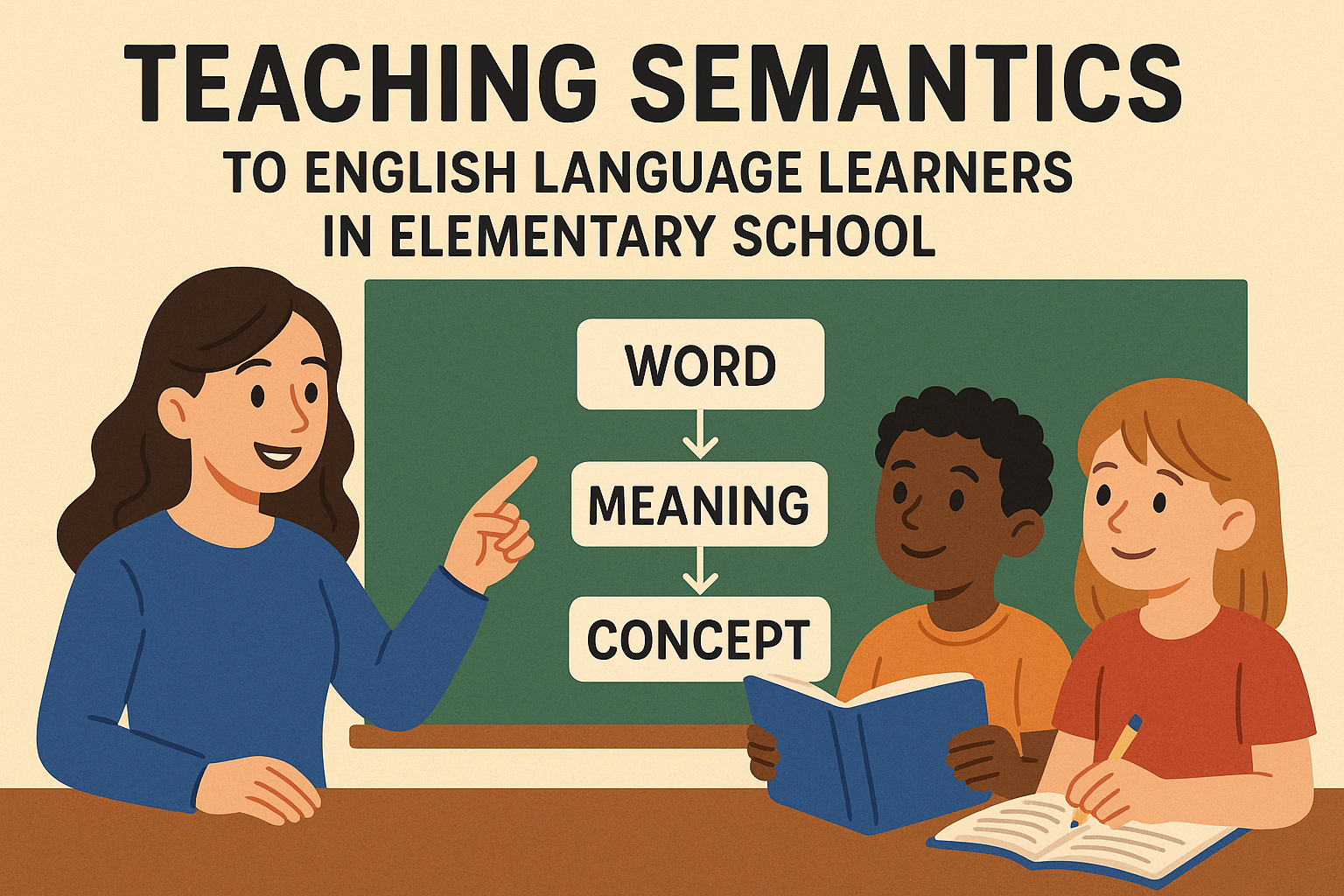
In the realm of education, particularly in teaching English as a second language (ESL), semantics plays a crucial role in building comprehension skills. Teaching semantics to English language learners (ELLs) is not just about vocabulary; it’s about helping students grasp the meanings behind words, phrases, and concepts. This article delves into the intricacies of semantics, its importance in language acquisition, and effective strategies for educators working with ELLs in elementary school.
Understanding Semantics: The Foundations
Semantics refers to the study of meaning in language. It encompasses how words, phrases, and sentences convey meaning, and how context influences that meaning. For ELLs, understanding semantics is essential because it enables them to connect words with their meanings, comprehend texts, and engage in conversations effectively.
One key aspect of semantics is the distinction between denotation and connotation. Denotation is the literal meaning of a word, while connotation refers to the emotional or cultural associations tied to that word. For instance, the word “home” denotes a physical structure but also connotes feelings of safety, comfort, and belonging. Teaching these nuances to ELLs can deepen their understanding of language and enhance their ability to communicate more effectively.
Why Semantics is Crucial for ELLs
Language acquisition is a complex process, and semantics plays a pivotal role in this journey for ELLs. Here’s why:
- Comprehension Skills: ELLs often struggle with reading comprehension due to their limited vocabulary and understanding of nuanced meanings. By focusing on semantics, educators can help students decode texts, grasp the themes, and analyze characters.
- Building Vocabulary: Teaching semantics is a powerful way to expand vocabulary. When students learn words in context and understand their meanings, they are more likely to retain them and use them appropriately in conversations.
- Effective Communication: Mastery of semantics enables ELLs to engage in meaningful dialogues. Understanding the subtleties of language helps them express themselves clearly and respond appropriately in various social situations.
In essence, semantics is not just an academic concept; it’s foundational for ELLs to thrive in their learning environments.
Strategies for Teaching Semantics to ELLs
Teaching semantics to English language learners involves a variety of strategies tailored to meet their unique needs. Here are some effective approaches:
1. Contextual Learning
Using context to teach semantics is invaluable. Provide ELLs with sentences or short stories where words are used in context. This approach helps students infer meanings rather than relying solely on definitions. For instance, instead of just defining the word “bark” as the outer covering of a tree, present a sentence: “The dog started to bark when the mailman approached.” This contextual approach allows students to grasp the meaning through usage.
2. Visual Aids and Graphic Organizers
Visual aids can significantly enhance understanding. Pictures, charts, and graphic organizers help students visualize relationships between words and meanings. For example, when teaching synonyms and antonyms, a Venn diagram can illustrate how words are similar or different, thereby strengthening semantic knowledge. (See: Importance of communication in education.)
3. Semantic Mapping
Semantic mapping is a technique that involves creating a visual representation of words and their meanings. This could be done through mind maps or word webs. For example, when teaching the word “animal,” students can branch out to related words such as “mammal,” “reptile,” and “bird,” along with characteristics of each. This method not only aids comprehension but also promotes critical thinking.
4. Interactive Activities
Engaging students in interactive activities fosters a deeper understanding of semantics. Role-playing, storytelling, and group discussions allow ELLs to practice using new vocabulary in meaningful contexts. For instance, students can act out a scene from a book, focusing on expressing emotions and contexts that change word meanings.
5. Incorporating Technology
In today’s digital age, technology can be a powerful ally in teaching semantics. There are numerous apps and online resources designed specifically for language learning. Tools like vocabulary games and interactive quizzes can make learning semantics fun and dynamic. Platforms like Quizlet allow students to create flashcards with definitions and examples, reinforcing their understanding.
6. Encouraging Conversations
Encouraging regular conversations in the classroom is essential. Promote a dialogue-rich environment where students can discuss their thoughts and ideas openly. Pairing students for peer discussions or using “think-pair-share” activities can enhance their ability to articulate their understanding of semantics.
Challenges Faced by ELLs in Understanding Semantics
Despite the effectiveness of various teaching strategies, ELLs still face significant challenges when it comes to understanding semantics. Here are some common hurdles:
- Diverse Backgrounds: ELLs come from various linguistic and cultural backgrounds, which can affect their understanding of certain concepts. A word that has a specific meaning in one culture may not translate directly into another.
- Limited Vocabulary: A limited vocabulary can hinder their ability to grasp complex ideas. ELLs may struggle to understand idiomatic expressions or phrases that don’t translate literally.
- Fear of Making Mistakes: Many ELLs may feel self-conscious about their language skills, which can prevent them from participating in discussions or asking questions about word meanings.
Recognizing these challenges is critical for educators who aim to create supportive learning environments that encourage exploration and growth. There’s a fuller look at top flashcard apps.
Current Relevance and Future Directions
The importance of teaching semantics to English language learners has gained attention in recent years, especially as the number of ELLs in schools continues to rise. According to the National Center for Education Statistics, over 5 million students in the United States were classified as ELLs in 2020, a number that is expected to grow. As the demographic landscape of classrooms changes, educators must adapt their teaching methods to address the diverse needs of their students.
Future directions in teaching semantics may involve more personalized learning experiences, where data-driven insights help tailor instruction to individual student needs. Additionally, incorporating culturally relevant materials into the curriculum can enhance the relevance of semantic instruction. By connecting lesson content to students’ lives, educators can make semantics more accessible and engaging. (See: Language acquisition and learning strategies.)
Expert Perspectives on Teaching Semantics
Incorporating expert insights can provide educators with valuable perspectives that enhance their understanding of teaching semantics. Dr. Maria Gonzalez, a linguistics professor at a prominent university, emphasizes the importance of contextualized instruction. “Students need to see how language functions in real-life situations,” she states. “When they understand context, they become more confident in using the language.” This highlights the need for teachers to create authentic learning experiences where students can apply their semantic knowledge.
Another expert, Dr. James Lee, a researcher in second language acquisition, points out the role of cultural relevance in semantics. “Words are not just about their definitions; they carry cultural significance,” he explains. “For ELLs, understanding these nuances can bridge the gap between their native language and English.” This insight encourages educators to incorporate cultural elements into their lessons, enriching students’ learning experiences and fostering a deeper connection with the language.
Practical Examples of Semantic Teaching
Implementing effective semantics instruction can be further illustrated through practical examples. Consider a lesson focused on the word “light.” Instead of merely providing a dictionary definition, an educator might explore various meanings:
- Literal Meaning: Discussing the electromagnetic spectrum and how light enables vision.
- Figurative Usage: Exploring phrases such as “light-hearted” or “light as a feather” to convey different emotional contexts.
- Cultural References: Highlighting expressions like “seeing the light,” which may resonate differently across cultures.
This multi-faceted approach not only enriches students’ vocabulary but also illustrates the complexity of language through real-life applications.
FAQ: Teaching Semantics to English Language Learners
What is semantics, and why is it important for ELLs?
Semantics is the study of meaning in language. For ELLs, understanding semantics is crucial because it helps them interpret words and phrases, enhancing their reading comprehension and communication skills.
How can I effectively teach semantics in a multilingual classroom?
In a multilingual classroom, use visuals, real-life contexts, and culturally relevant materials. Encourage peer interactions and discussions to promote a rich learning environment where students can share their linguistic backgrounds.
What are some effective tools for teaching semantics to ELLs?
Tools like graphic organizers, apps for vocabulary building, and interactive games can be very effective. Additionally, using authentic texts that resonate with students’ experiences can significantly enhance their understanding of semantics.
How can parents support their children’s understanding of semantics at home?
Parents can support their children’s semantic understanding by engaging in conversations about daily experiences, reading together, and encouraging their children to express their thoughts and opinions. Providing a rich language environment at home is key.
What role does cultural context play in teaching semantics?
Cultural context is essential in teaching semantics, as many words carry different meanings based on cultural backgrounds. Incorporating cultural references can help ELLs relate to the language and enhance their understanding. This builds on sneaking in vocabulary lessons.
Assessing Semantic Knowledge in ELLs
To ensure that ELLs are successfully grasping semantics, educators can employ various assessment methods. Formative assessments, such as observations during discussions and interactive activities, can provide insights into students’ understanding. Additionally, educators might integrate summative assessments that involve semantic mapping or contextual word usage in writing assignments. For instance, giving students a story to read and then asking them to underline words they find challenging can help educators identify specific areas needing more instruction.
Integrating Semantics Across the Curriculum
Teaching semantics shouldn’t be confined to language arts classes. Educators are encouraged to integrate semantic instruction across various subjects. For example, in science lessons, teachers can focus on terminology related to the scientific method while discussing the meanings behind terms like “hypothesis” and “experiment.” Similarly, in social studies, educators can explain the semantic differences in words like “revolution” and “rebellion,” emphasizing context. This cross-curricular approach reinforces students’ semantic understanding, demonstrating that language is a vital tool in all areas of learning.
Conclusion: The Path Forward
Teaching semantics to English language learners in elementary school is not merely an educational task; it’s an essential component in nurturing confident and competent communicators. By understanding the nuances of semantics, ELLs can unlock the meanings behind words, leading to improved comprehension, vocabulary expansion, and effective communication. As educators, it’s our responsibility to equip these learners with the tools they need to succeed in their academic journeys. With thoughtful strategies and a focus on context, we can pave the way for a future where every student, regardless of their background, can thrive.
“`
Trending Now
Frequently Asked Questions
What is semantics in language learning?
Semantics is the study of meaning in language, focusing on how words, phrases, and sentences convey meaning. For English language learners (ELLs), understanding semantics helps them connect words with meanings, comprehend texts, and engage in conversations effectively.
Why is teaching semantics important for English language learners?
Teaching semantics is crucial for ELLs as it enhances their comprehension skills, builds vocabulary, and improves their ability to decode texts. By grasping nuanced meanings, ELLs can communicate more effectively and engage with language in a deeper way.
How can teachers help ELLs understand semantics?
Teachers can help ELLs understand semantics by using context to teach words, exploring denotation and connotation, and employing strategies like visual aids and real-life examples. These methods enable students to grasp the deeper meanings behind words and phrases.
What are denotation and connotation?
Denotation refers to the literal meaning of a word, while connotation involves the emotional or cultural associations tied to that word. Teaching ELLs the difference helps them understand not just what words mean, but also how they are perceived in different contexts.
What strategies can improve vocabulary for ELLs?
Effective strategies to improve vocabulary for ELLs include teaching words in context, using semantic mapping, and incorporating interactive activities. These techniques help students understand meanings and retain vocabulary more effectively.
What’s your take on this? Share your thoughts in the comments below — we read every one.



