

“`html
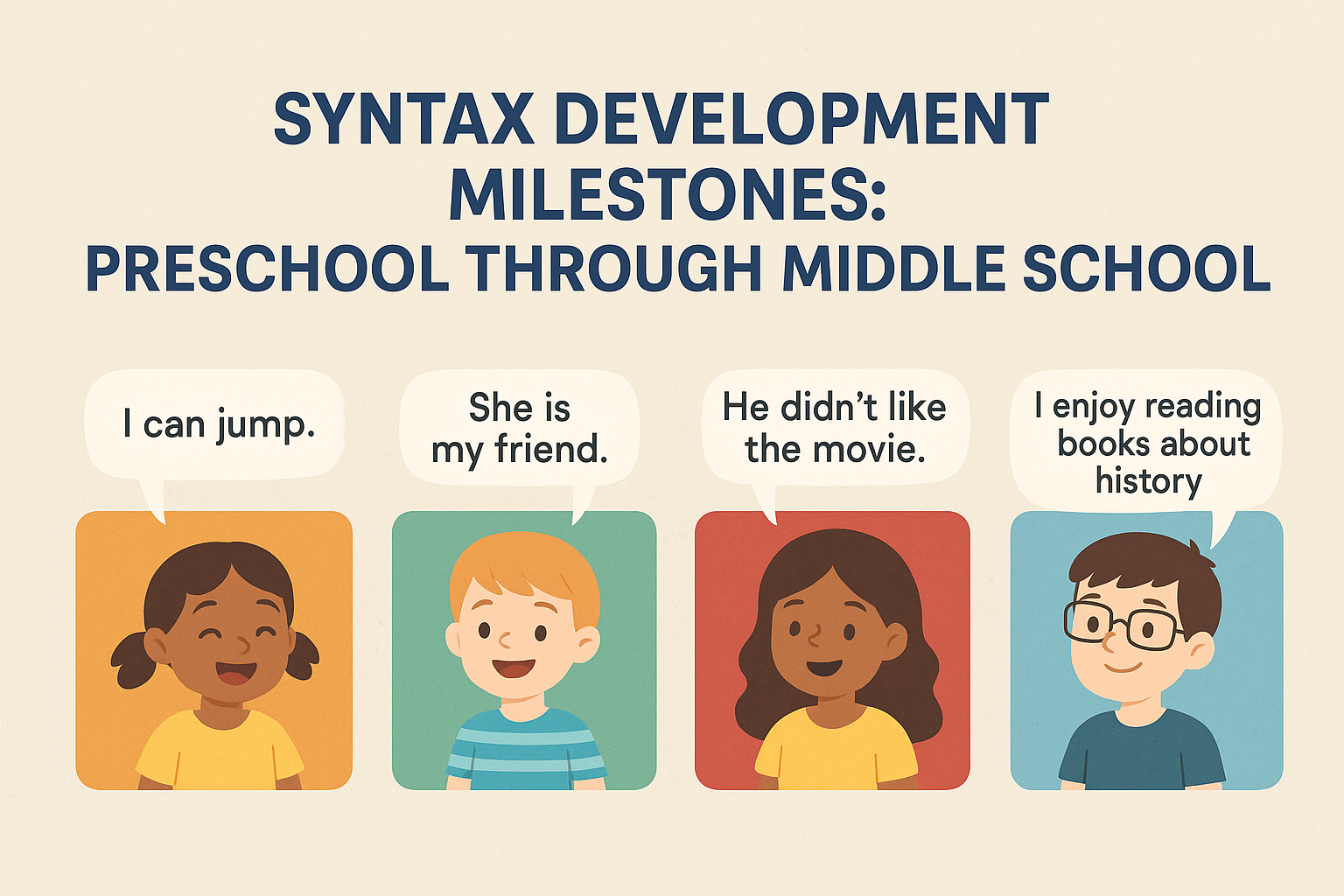
Understanding syntax development milestones is crucial for educators and parents navigating the complex landscape of child language acquisition. Syntax, the set of rules that governs sentence structure, evolves significantly from preschool through middle school, marking key stages in a child’s linguistic journey. Recognizing these milestones can aid in fostering effective communication skills and identifying potential challenges early on. top circle time books offers useful background here.
The Foundation: Preschool Syntax Development
During the preschool years, typically from ages 3 to 5, children experience rapid linguistic growth. This period is characterized by burgeoning vocabulary and the beginnings of complex sentence structures. At age three, children typically produce sentences that average three words in length, often combining nouns and verbs, such as “Mommy go” or “Daddy eat.” These simple structures serve as the building blocks for more sophisticated language use.
By the age of four, children expand their sentence length to four to five words. They start to grasp simple grammatical rules, incorporating adjectives and adverbs into their speech. For instance, a child might say, “The big dog runs fast.” This stage is crucial as it marks the emergence of basic syntactic patterns, including the use of subject-verb-object (SVO) constructs, which are foundational to English grammar.
Key Milestones in Early Syntax Development
Tracking syntax development milestones in preschool involves observing specific linguistic behaviors. Parents and educators should focus on the following key indicators:
- Sentence Length: Monitoring the increase in average sentence length can indicate a child’s syntactic growth. Children typically progress from two to three-word sentences at age three to five or more words by age four.
- Complexity of Structures: The introduction of conjunctions (and, but) in speech signifies an understanding of more complex ideas. By age five, many children begin to produce sentences that include subordinate clauses, such as “When I finish my snack, I will play.”
- Use of Pronouns: Children start using pronouns more frequently, which indicates an understanding of referential language. For example, they might say “I want it” or “She is nice.” This development is significant as it reflects a child’s ability to identify and replace nouns in conversation.
These milestones not only indicate verbal skill but also cognitive development, as language reflects a child’s understanding of the world around them.
The Transition: Syntax Development in Early Elementary School
As children transition from preschool to elementary school, typically around ages 6 to 8, they enter a phase of significant syntactic refinement. In this period, known as the early elementary years, children begin to produce more complex and varied sentence structures. Their average sentence length increases to six or more words, and they start to employ a wider array of grammatical forms.
By age six, children become comfortable with the basic rules of tense and plurality, often using past, present, and future forms correctly in their speech. For instance, a child might say, “I played outside yesterday” or “I will go to the park tomorrow.” This mastery of tense offers insight into their understanding of time and sequence, which is fundamental for effective communication. (See: language development in children.)
Practical Strategies for Supporting Syntax Development
Parents and educators can play a critical role in supporting children’s syntax development during these formative years. Here are some effective strategies:
- Engaging in Conversations: Regular dialogues with children encourage them to practice their syntax. Open-ended questions—like “What did you do today?”—prompt children to respond with more than just one-word answers, fostering rich language use.
- Reading Aloud: Reading books together exposes children to varied sentence structures and vocabulary. Picture books, in particular, are beneficial as they often contain repetitive phrases and rhymes that solidify syntactic understanding.
- Modeling Complex Sentences: When children make grammatical errors, gently correcting them by modeling the correct syntax can help reinforce proper structures. For example, if a child says, “I goed to the store,” a parent might respond, “Oh, you went to the store? That sounds fun!” This approach not only corrects but also encourages communicative interaction.
These strategies can create a stimulating language environment that nurtures syntax development milestones effectively.
Advancing to Middle School: The Complexity of Syntax
As children progress into middle school, around ages 11 to 14, their understanding of syntax undergoes a dramatic transformation. This period is characterized by the increased use of complex sentences and a deeper grasp of grammatical subtleties. Middle school students typically produce sentences that are longer and more intricate, often using embedded clauses and varied sentence structures to express nuanced ideas.
By this stage, students should be adept at using a variety of syntactic forms, including conditional clauses (e.g., “If it rains, we will stay inside”) and passive structures (e.g., “The book was read by the teacher”). Their writing assignments reflect this complexity, requiring them to employ a range of grammatical strategies to effectively convey information and argumentation.
Current Relevance: Technology and Syntax Development
Today’s digital landscape has added a new dimension to syntax development. With the rise of social media and instant messaging, children and adolescents are exposed to a broad array of syntactic styles. Texting and online communication often favor brevity and simplicity, which can impact their formal writing skills. However, it can also encourage creativity as students adapt their language to fit different contexts.
Educators are increasingly recognizing the dual role technology plays in language development. On one hand, it can detract from formal syntax; on the other, it provides unique opportunities for students to engage with language creatively. For example, platforms that encourage peer feedback and collaborative writing can foster an understanding of syntax in a more dynamic environment.
Identifying and Addressing Challenges
While many children develop syntactic skills at an expected rate, some may encounter challenges. Delayed syntax development can be indicative of broader language processing issues or learning disabilities. Educators and parents should be vigilant in recognizing signs such as: (See: child language acquisition milestones.)
- Limited Sentence Structure: A child who consistently uses short, simplistic sentences may struggle with complex syntax.
- Frequent Errors: Mistakes in verb tense, plurality, and sentence structure can be red flags indicating the need for additional support.
- Difficulty in Expressive Language: If a child has trouble articulating thoughts or organizing sentences coherently, it may signal a need for intervention.
If these issues are identified, consult with a speech-language pathologist or educational specialist who can provide targeted strategies and support for developing syntax skills. Early intervention can make a significant difference, ensuring that children acquire the necessary tools for effective communication.
Common Questions About Syntax Development Milestones
What are syntax development milestones?
Syntax development milestones refer to the key stages and indicators of a child’s ability to use and understand sentence structures as they grow. These milestones help parents and educators gauge a child’s linguistic progress.
At what age should a child start forming complex sentences?
By age four, many children begin to form simple complex sentences. As they approach ages 6-8, their ability to create more intricate sentences with subordinate clauses and varied structures typically develops.
How can I encourage my child to improve their syntax skills?
You can encourage syntax skills by engaging in conversations, reading aloud, and providing opportunities for creative writing. Asking open-ended questions and modeling complex sentences are also effective strategies.
What signs indicate a child may be struggling with syntax development?
Signs of struggle may include consistent use of very simple sentences, frequent grammatical errors, and difficulty expressing thoughts verbally. Early identification is key to providing support.
Are there any resources available for parents looking to support syntax development?
Many resources are available, including children’s books that emphasize varied sentence structures, educational apps designed for language development, and professional organizations that provide materials and guidance on child language acquisition.
Future Trends in Syntax Development Research
As our understanding of syntax development continues to evolve, researchers are exploring the effects of bilingualism on language acquisition. Studies suggest that bilingual children tend to have a more advanced understanding of syntax than their monolingual peers due to their exposure to multiple grammatical structures. This can lead to greater cognitive flexibility and improved problem-solving skills.
Another area of interest is the impact of screen time on language acquisition. While some studies indicate that excessive screen time may hinder language development, others argue that educational content can enhance learning. The challenge lies in finding a balance that promotes healthy language skills while leveraging technology’s benefits.
Comparative Analysis: Language Development Across Cultures
Language acquisition and syntax development can vary significantly across different cultures. For instance, children from cultures that prioritize storytelling may develop narrative skills earlier than those in cultures that emphasize direct communication. Understanding these cultural differences can provide valuable insights for educators and parents working with diverse populations.
In addition, some languages have more complex syntactic structures than English, requiring children to adapt to various grammatical rules. For example, languages like Finnish or Japanese have intricate case systems that influence sentence structure. Observing how children from different linguistic backgrounds navigate syntax development can inform best practices in teaching language skills.
Conclusion: Building a Foundation for Lifelong Communication
Understanding syntax development milestones is essential for promoting effective communication skills from preschool through middle school. By recognizing the key stages of development and employing supportive strategies, parents and educators can foster a rich linguistic environment that nurtures children’s language skills. As children progress through these milestones, they not only build the foundation for academic success but also develop the essential communication skills necessary for lifelong learning and interaction.
“` Related reading: favorite games for preschoolers.
Trending Now
Frequently Asked Questions
What are the key milestones in preschool syntax development?
Key milestones in preschool syntax development include the increase in sentence length from three words at age three to four to five words by age four. Additionally, children begin to grasp basic grammatical rules and incorporate adjectives and adverbs into their speech, marking the emergence of simple syntactic patterns.
At what age do children start using complex sentences?
Children typically begin using complex sentences around the age of four, when they expand their sentence length and start to include conjunctions like 'and' or 'but.' This development signifies an understanding of more complex ideas and the ability to form basic syntactic structures.
How can parents track their child's syntax development?
Parents can track their child's syntax development by monitoring sentence length and complexity. Observing the progression from simple two to three-word sentences at age three to longer and more complex structures by age four helps identify linguistic growth and potential challenges.
What is the significance of syntax development in children?
Syntax development is crucial as it lays the foundation for effective communication skills. Understanding the rules of sentence structure helps children express complex ideas, interact socially, and succeed academically. Recognizing developmental milestones allows for early identification of potential language challenges.
What are typical sentence structures for preschoolers?
Typical sentence structures for preschoolers include simple combinations of nouns and verbs, such as 'Mommy go' or 'Daddy eat' at age three. By age four, they begin forming more complex sentences, incorporating adjectives and adverbs, such as 'The big dog runs fast,' reflecting their growing linguistic abilities.
What did we miss? Let us know in the comments and join the conversation.



