

“`html
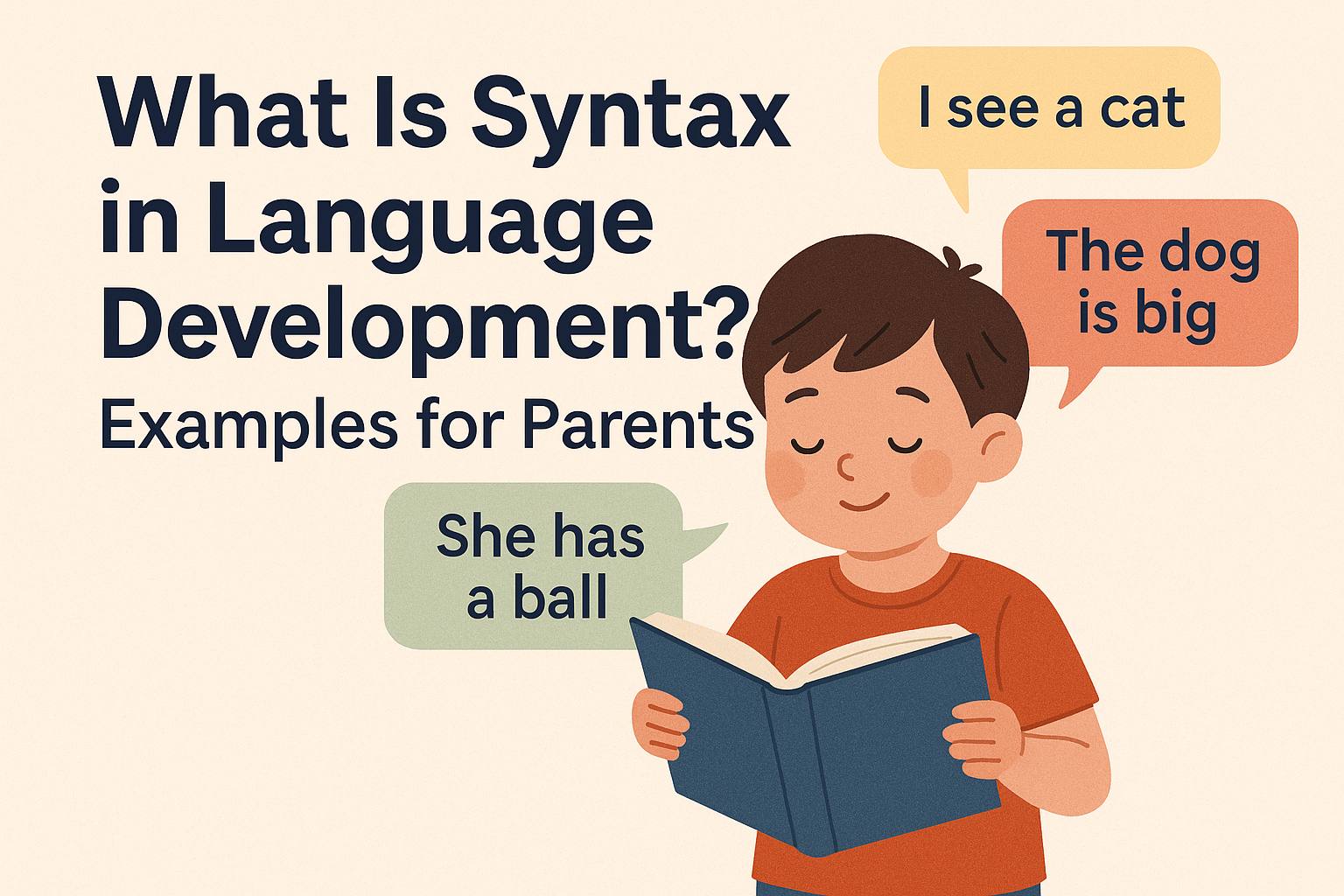
When it comes to grasping the essence of how children acquire language, one of the most critical, yet often overlooked, components is syntax in language development. Syntax refers to the set of rules, principles, and processes that govern the structure of sentences in any given language. For parents and caregivers, understanding how syntax develops in children can provide valuable insights into their overall language skills. In this article, we’ll explore what syntax is, how it develops, and offer practical examples for parents to foster their child’s language growth.
What is Syntax?
At its core, syntax is about the arrangement of words and phrases to create well-formed sentences. Think of syntax as the grammar of a language; it dictates the order in which words appear and how they interact with each other to convey meaning. For instance, in English, a typical sentence structure follows a subject-verb-object order, such as “The cat (subject) chased (verb) the mouse (object).” Deviating from this structure can lead to confusion or a change in meaning.
Syntax is not confined to mere sentence construction; it also includes the use of clauses, conjunctions, and punctuation that affect meaning. The development of syntax in children is a fundamental milestone in their language acquisition journey.
The Stages of Syntax Development
Children typically follow a predictable series of stages in their language development, with syntax evolving as they grow older. Here’s a brief overview of these stages:
- Single Words (12-18 months): Initially, children communicate using single words, often referred to as holophrases. For example, saying “milk” might mean “I want milk”.
- Two-Word Combinations (18-24 months): As children begin to combine words, syntax starts to take shape. Phrases like “want cookie” or “big truck” emerge, reflecting basic sentence structures.
- Multi-Word Utterances (2-3 years): At this stage, toddlers form simple sentences, often using a mix of nouns, verbs, and adjectives. Syntax gets richer as they begin to use more complex structures, such as “I want the big cookie”.
- Complex Sentences (3-5 years): Children start to use conjunctions (like ‘and’, ‘but’, or ‘because’) to link ideas. They may say things like, “I want to play outside because it’s sunny”.
- Advanced Syntax (5+ years): As children enter school, their syntax becomes increasingly complex. They can construct compound and complex sentences, understand tenses, and adjust their language for different contexts.
Understanding these stages helps parents recognize where their child stands in their language journey, allowing for targeted support.
Why is Syntax Important?
Syntax plays a crucial role in language development, not merely as a means of communication, but as a foundation for various cognitive skills. Here are a few reasons why syntax is significant:
- Clarity of Communication: Proper syntax allows children to express their thoughts clearly and accurately. As they learn to structure sentences, they become better at conveying their ideas and feelings.
- Reading and Writing Skills: A solid understanding of syntax is vital for literacy. Children who grasp sentence structure are better equipped to decode written language, which is foundational for reading comprehension and writing.
- Cognitive Development: Mastering syntax involves complex thinking processes, such as categorization and abstraction, which contribute to overall cognitive growth.
- Social Interaction: Effective communication is key to social interactions. Children who can use syntax appropriately are more likely to engage successfully with peers and adults.
In short, syntax is not just an academic concept; it’s fundamental to a child’s overall development.
How Parents Can Support Syntax Development
As a parent, you play an instrumental role in your child’s language development, particularly in enhancing their understanding of syntax. Here are some practical strategies to support this journey:
1. Engage in Conversations
Talking to your child is one of the most effective ways to foster language development. Engage them in conversations about their day, share stories, and ask open-ended questions. This exposure to varied sentence structures will help them learn. (See: Understanding syntax in linguistics.)
2. Read Together
Reading aloud to your child introduces them to complex syntax in a fun and engaging way. Choose books that feature rich language and varied sentence structures. Discuss the story and ask your child to predict what might happen next, prompting them to use more complex sentences.
3. Model Proper Syntax
Children are keen observers and often mimic the language they hear. Use correct grammar and varied syntax in your speech. Avoid simplifying your language excessively; instead, provide them with a model of richer language that they can learn from. This builds on understanding syntax for parents.
4. Encourage Storytelling
Encourage your child to tell their stories or recount events. This not only promotes creativity but also gives them practice in structuring sentences and using conjunctions. Start with prompts like, “Tell me about your favorite day” to get the ball rolling.
5. Play with Language
Incorporate fun language games that challenge your child’s understanding of syntax. For example, you can play rhyming games, or use picture cards to create sentences. These activities make learning syntax enjoyable and interactive.
6. Use Technology Wisely
In today’s digital age, there are many apps and educational programs designed to promote language skills. Select those that focus on grammar and sentence structure. However, ensure that screen time is balanced with real-life interactions.
By implementing these strategies, you’ll help your child develop a robust understanding of syntax, paving the way for effective communication skills.
Common Challenges in Developing Syntax
Even with support, some children may face challenges in syntax development. Recognizing these challenges early can help parents seek appropriate interventions or resources:
- Delayed Speech: Some children may take longer to start speaking or use fewer words. This can lead to difficulties in understanding syntax.
- Language Disorders: Conditions such as Specific Language Impairment (SLI) can hinder a child’s ability to grasp syntax. These children may struggle with forming grammatically correct sentences.
- Limited Exposure: Children who are not frequently engaged in conversations or who have limited access to books may lack exposure to varied syntactic structures.
If you notice any of these challenges, consulting with a speech-language pathologist can be invaluable. Early intervention is key to addressing difficulties and promoting healthy language development.
Current Research on Syntax Development
Research in the field of syntax and language development is ongoing and constantly evolving. Current studies delve into various aspects, including: (See: Language development and learning.)
1. The Role of Input Quality
Recent studies highlight the importance of the richness of linguistic input that children receive. Parents who offer diverse vocabulary and complex sentence structures contribute significantly to their child’s syntax development.
2. Multilingualism and Syntax
Research shows that children raised in multilingual environments often develop enhanced cognitive flexibility. They may exhibit a unique grasp of syntax as they switch between languages, which can promote a deeper understanding of sentence structures.
3. The Connection Between Syntax and Other Skills
Ongoing research continues to explore how syntax interacts with other cognitive domains, like mathematics and social skills. Understanding sentence structure may influence a child’s ability to solve problems or collaborate with peers.
4. The Impact of Socioeconomic Status
Recent studies suggest that a child’s socioeconomic status can significantly impact their exposure to language and thus their syntax development. Children from lower socioeconomic backgrounds may hear fewer complex sentences and less varied vocabulary, which can hinder their language acquisition process. For instance, a study by Hart and Risley (1995) found that children from more affluent families were exposed to millions more words than their less affluent peers, which correlated with larger vocabularies and better syntax understanding.
5. Technology and Language Acquisition
As technology increasingly becomes part of our lives, researchers are investigating its effects on language development. While educational apps and interactive games can promote syntax skills, excessive screen time has been shown to reduce face-to-face interactions, which are crucial for developing language skills. Striking a balance between digital and real-world learning experiences is essential.
By staying informed about current findings, parents can further enrich their approach to fostering syntax development.
Practical Examples of Syntax in Action
To further illustrate the importance of syntax in language development, let’s look at some practical examples:
- Story Retelling: A child might first say, “The dog big,” which lacks proper syntax. With encouragement, they could later tell a story such as, “The big dog chased the ball.” This shows an improvement not only in vocabulary but also in sentence structure.
- Question Formation: Initially, a child may ask, “Why it raining?” Over time, they learn to say, “Why is it raining?” which demonstrates their grasp of subject-verb inversion necessary for forming questions.
- Using Connectives: A child might start with simple sentences like, “I like ice cream. I like cake.” Eventually, they would learn to connect thoughts with a sentence like, “I like ice cream and cake,” showcasing their ability to use conjunctions correctly.
Frequently Asked Questions (FAQ)
1. At what age should I be concerned about my child’s syntax development?
Every child develops at their own pace, but if you notice that your child is not progressing through the typical stages of language development—especially after the age of 2—it may be beneficial to consult with a speech-language pathologist.
2. Can bilingualism affect my child’s syntax development?
Bilingualism can enhance cognitive abilities and flexibility in language use. However, it may also lead to mixing languages in early stages. With time and exposure, most bilingual children develop strong syntax skills in both languages.
3. What activities can I do to help my child with syntax?
Engaging in storytelling, playing language games, and reading together are great ways to support a child’s syntax development. Encouraging your child to express themselves in sentences during these activities can be particularly beneficial.
4. Are there specific books that can help with syntax development?
Look for books with rich language and varied sentence structures, such as classic children’s literature or modern picture books that emphasize storytelling. Authors such as Eric Carle, Mo Willems, and Julia Donaldson often incorporate playful language that can enhance syntax learning.
5. What should I do if my child has a speech delay?
If you’re concerned about a speech delay, seek advice from a speech-language pathologist who can provide guidance tailored to your child’s needs. Early intervention is crucial and can lead to significant improvements in language skills.
Conclusion: The Power of Syntax in Language Development
Understanding syntax in language development is essential for parents who wish to support their children’s growth. Syntax is more than just grammar; it’s a key to unlocking effective communication, literacy, and cognitive skills. By engaging in meaningful conversations, reading together, and modeling proper sentence structures, parents can create a rich linguistic environment that nurtures their child’s language abilities.
Every child is unique, and their language journey will differ. However, with attention and intention, parents can help their children thrive in their understanding of language and syntax, setting them on a path for successful communication and learning.
“`
Trending Now
Frequently Asked Questions
What is the role of syntax in language development?
Syntax plays a crucial role in language development as it dictates the structure of sentences, guiding how words and phrases are arranged to convey meaning. Understanding syntax helps parents support their child's language skills and enables clearer communication.
At what age do children start using syntax?
Children typically start using basic syntax around 18-24 months when they begin to combine two words. This marks the initial stages of their syntax development, leading to more complex sentences as they grow older. recommended grammar checkers offers useful background here.
How can parents help with their child's syntax development?
Parents can foster their child's syntax development by engaging in conversations, reading together, and encouraging the use of complete sentences. Providing examples of proper sentence structure and expanding on their child's phrases can also be beneficial.
What are the stages of syntax development in children?
The stages of syntax development in children include single words (12-18 months), two-word combinations (18-24 months), and multi-word utterances (2-3 years). Each stage marks significant milestones in how children learn to structure sentences.
Why is understanding syntax important for parents?
Understanding syntax is important for parents as it allows them to recognize their child's language milestones and provide appropriate support. It helps parents facilitate effective communication and enhance their child's overall language skills.
What did we miss? Let us know in the comments and join the conversation.



