
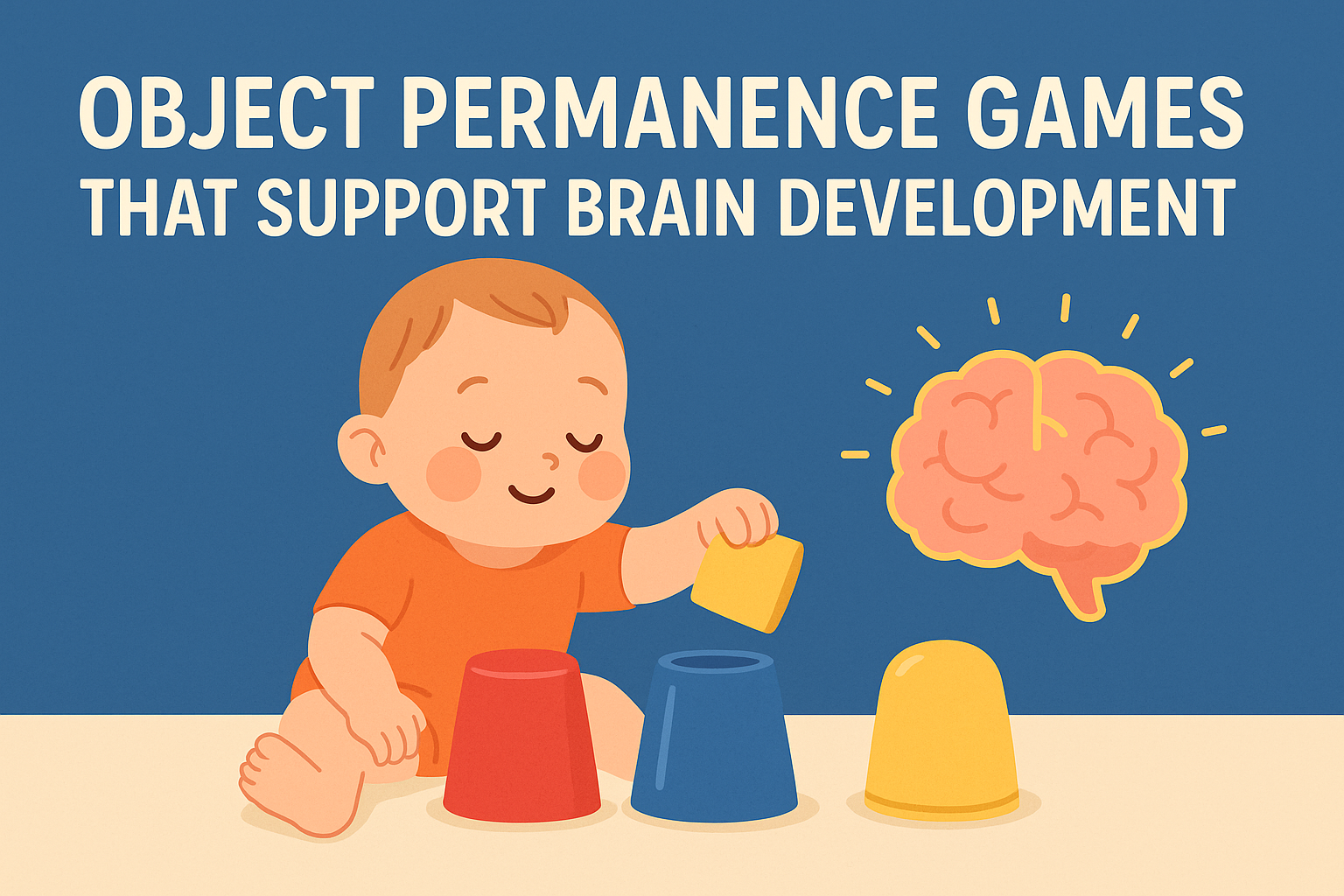

“`html
As parents, we constantly seek ways to nurture our children’s growth and cognitive abilities. One fascinating area of child development focuses on something called object permanence. Understanding this concept can open up a new world of engaging games that not only entertain but also bolster brain development. But what is object permanence, and why is it so crucial for your child’s cognitive skills?
Understanding Object Permanence
Object permanence is a developmental milestone that typically begins to emerge in infants around the age of 4 to 7 months. It refers to the ability to understand that objects continue to exist even when they cannot be seen or heard. This concept is vital for a child’s cognitive growth, as it lays the foundation for complex thinking and memory.
Before they grasp object permanence, infants may become distressed when a toy is taken out of sight. They believe that the object has ceased to exist. However, as they develop this understanding, they start to engage in more complex play, problem-solving, and exploration of their environment. Jean Piaget, a renowned psychologist, indicated that mastering object permanence is a key part of the sensorimotor stage of cognitive development, which typically spans from birth to around two years of age.
The Importance of Object Permanence in Child Development
Grasping the concept of object permanence is not just an intellectual milestone; it impacts various facets of a child’s development. Children who achieve this understanding can begin to form mental representations of the world, which is crucial for later learning. Here are several reasons why developing object permanence is essential:
- Enhanced Memory Skills: Children learn to remember where objects are hidden, fostering better memory.
- Improved Problem-Solving: Understanding object permanence encourages exploration and experimentation as children learn to overcome obstacles to access hidden objects.
- Social Skills Development: As they learn that people and objects are still there even when not visible, children become more comfortable with separation from caregivers.
- Language Development: The interaction between the child and caregiver during object permanence games promotes language use, as caregivers often describe actions and objects during play.
Types of Object Permanence Games
Now that we appreciate the significance of object permanence, let’s explore some engaging games that can help cultivate this skill in your child. These activities can be easily integrated into daily routines, making learning both fun and effective.
1. Peek-a-Boo
This classic game is a favorite among infants and parents alike. Peek-a-boo helps reinforce the idea that even when you can’t see someone, they still exist. As you hide your face behind your hands or a blanket and then reveal yourself, your child learns about anticipation and surprise. This simple act significantly impacts their understanding of object permanence.
To take this further, you can vary the game by using toys instead of your face. For instance, hide a favorite toy under a blanket and then reveal it. This reinforces the concept with tangible objects and is often met with delightful giggles.
2. Hide and Seek with Toys
As your child grows, you can evolve the peek-a-boo game into a more intricate version of hide and seek. Use a few favorite toys and hide them around the room while your child is distracted. Once the hiding is done, invite them to find the toys. This activity not only strengthens their understanding of object permanence but also encourages movement and exploration.
To make it more challenging, you can gradually increase the difficulty by hiding toys in less obvious places. This encourages critical thinking, as your child will need to recall where each item might be hidden. (See: Wikipedia article on object permanence.)
3. The Blanket Game
In this game, you can take a few of your child’s toys and cover them with a blanket. Then, engage your child by asking them to lift the blanket to find the toys. This simple action reinforces the idea that the toys are still there, even if they can’t be seen. You can make this game more exciting by counting down before unveiling the toys, building anticipation.
Variations can include using different types of coverings, such as scarves or boxes, to provide a different sensory experience while still maintaining the same underlying concept.
Benefits of Object Permanence Games
Engaging in object permanence games offers a plethora of developmental benefits for children. These games do not just serve as a source of entertainment; they provide a structured way for your child to interact with, understand, and explore their environment. Here are some key benefits:
1. Cognitive Development
Playing these games enhances cognitive skills by encouraging children to think, remember, and problem-solve. They learn to associate actions with outcomes, improving their mental processing abilities.
2. Emotional Security
As children become more comfortable with the idea that loved ones and objects do not disappear, they develop a sense of security. This emotional stability is essential for building trust in relationships.
3. Language Skills
Object permanence games often involve interaction and communication. As parents explain the games, ask questions, or express excitement, children are exposed to new vocabulary and phrases, enhancing their language acquisition.
4. Social Interaction
Many of these games are inherently interactive, whether it’s playing alongside a parent or with other children. This social engagement is crucial for developing social skills, including cooperation, sharing, and empathy.
Current Relevance of Object Permanence Games
As technology advances, the landscape of childhood play has shifted dramatically. Today’s children are often exposed to digital devices from a young age, which can impact cognitive development in various ways. While there’s a place for educational apps and digital games, there’s nothing like hands-on, interactive play to foster brain development.
Research indicates that physical play and face-to-face interaction remain critical for healthy brain development. The stimulation from real-world experiences cannot be replicated in virtual environments. Therefore, object permanence games hold essential relevance even in our increasingly tech-driven society.
Incorporating Object Permanence Games into Daily Life
Incorporating object permanence games into your child’s routine doesn’t have to be time-consuming or complicated. Here are some practical tips to seamlessly weave these activities into everyday life:
- Use Everyday Moments: Utilize mundane activities, such as cleaning or cooking, as opportunities for play. For instance, while putting away toys, invite your child to help find and hide them.
- Be Creative with Objects: Use various toys or household items to keep games fresh and exciting. Changing the objects used can renew interest and engagement.
- Engage with Your Child: Make the play interactive. Your enthusiasm will encourage your child to engage more fully with the activity.
- Consistency is Key: Integrate these games regularly into your day to reinforce the concepts of object permanence. Regular repetition is essential for learning.
Exploring Variations of Object Permanence Games
While the core idea behind these games remains constant, introducing variations can keep your child engaged and excited. Here are some creative twists you can add: (See: CDC milestones in child development.)
1. Nature Treasure Hunts
Take the concept of hide and seek outdoors. Hide small natural objects like pine cones, leaves, or rocks in your backyard or a nearby park. Your child can search for these items and talk about them when found, helping to reinforce object permanence in a new environment.
2. Sensory Bins
Create a sensory bin filled with rice, beans, or sand and hide small toys within. As your child digs through, they’ll uncover the toys, reinforcing the idea that the objects were always present, just buried beneath the surface. This method also provides a tactile experience that promotes sensory awareness.
3. DIY Puzzle Games
Use simple puzzles that require your child to complete a picture of a hidden object. Start with fewer pieces and gradually increase the complexity. As they fit the pieces together, they learn that the object exists in parts until they reveal the whole picture, reinforcing object permanence in a fun way.
Expert Perspectives on Object Permanence
Child development experts emphasize the significance of play in learning, particularly concerning object permanence. Dr. Amanda Smith, a child psychologist, notes, “Play is the language of children. Through these games, they not only learn but also express their emotions and thoughts. Object permanence games offer a wonderful way for them to understand their world.”
Moreover, early childhood educators encourage parents to consider the individual pace of their children. “Every child develops at their own speed,” says educator Lisa Brown. “It’s important to observe your child’s reactions during games and adjust accordingly, ensuring a supportive and engaging environment.”
FAQ About Object Permanence Games
What age should my child start playing object permanence games?
Children typically begin to grasp object permanence around 4 to 7 months, but you can start playing simple games like peek-a-boo even earlier to encourage engagement.
How can I tell if my child understands object permanence?
If your child actively searches for a toy that’s out of sight or shows excitement when you reveal hidden objects, they likely have developed an understanding of object permanence.
Can object permanence games be played with older children?
Absolutely! While younger children grasp the basics, older children can enjoy more complex variations and games that challenge their memory and problem-solving skills.
Are there digital games that teach object permanence?
Yes, many educational apps focus on cognitive development and include elements of object permanence. However, balance digital play with hands-on activities for optimal development. (See: NIH article on cognitive development.)
How can I encourage my child if they struggle with these games?
Be patient and provide guidance. Simplify the games or provide cues and support as they play. Celebrate their efforts, no matter how small, to build confidence.
The Long-Term Impact of Object Permanence Games
Understanding and nurturing object permanence is vital for your child’s development, impacting memory, problem-solving, and emotional security. By incorporating object permanence games into your daily routine, you’re not just playing — you’re actively participating in your child’s cognitive growth. This approach not only fosters their understanding of the world but also strengthens the bond between you and your child. So, grab a toy, cover it with a blanket, and get ready to explore the exciting world of object permanence together!
Comparative Analysis of Object Permanence Games
To truly appreciate the value of object permanence games, it’s helpful to compare them to other types of play that promote cognitive and emotional development. For instance, consider traditional board games. While these games develop critical thinking and strategy skills, they often require a level of understanding and patience that younger children may not possess. Object permanence games, on the other hand, are inherently intuitive and adaptable, making them accessible to infants and toddlers.
Additionally, physical play, such as running or climbing, provides essential physical benefits but may not directly address cognitive skills in the same way that object permanence games do. By focusing on developing memory and understanding, these games bridge the gap between physical and cognitive play, creating a well-rounded developmental experience.
The Role of Play in Developmental Milestones
Research shows that play is fundamental in achieving various developmental milestones, including language acquisition, social skills, and emotional regulation. Object permanence games serve as a foundational block for these milestones. For example, as children learn to search for hidden objects, they also practice patience and frustration tolerance — skills that will serve them well as they navigate social situations and language learning challenges later on.
Moreover, specialists argue that play should be viewed as a holistic experience rather than a series of isolated activities. The skills gained through object permanence games often overlap with other essential developmental areas. For instance, the anticipation built during peek-a-boo can enhance a child’s understanding of cause and effect, which is crucial for later learning experiences in math and science.
“`
Trending Now
Frequently Asked Questions
What is object permanence in child development?
Object permanence is the understanding that objects continue to exist even when they cannot be seen or heard. This developmental milestone typically emerges in infants around 4 to 7 months and is crucial for cognitive growth, laying the groundwork for complex thinking and memory.
Why is object permanence important for children?
Understanding object permanence is vital as it enhances memory skills, improves problem-solving abilities, and fosters exploration. It allows children to create mental representations of the world, which is essential for later learning and cognitive development.
How does object permanence affect memory skills?
Children who grasp object permanence improve their memory skills by learning to remember where objects are hidden. This ability to recall the existence of hidden items fosters better cognitive functions and paves the way for more complex thought processes.
What games can help develop object permanence?
Games that involve hiding and revealing objects, such as peek-a-boo or hide-and-seek, are excellent for developing object permanence. These activities encourage children to explore and understand that objects still exist even when they are out of sight.
At what age do children develop object permanence?
Object permanence typically begins to develop in infants between 4 to 7 months of age. This milestone is part of the sensorimotor stage of cognitive development, which lasts until around two years of age.
Have you experienced this yourself? We’d love to hear your story in the comments.



