

“`html
Understanding Multiple Learning Styles
In the realm of education, the concept of multiple learning styles in education has gained significant traction over the past few decades. The premise is simple yet profound: students learn in different ways. This idea, popularized by educational theorists like Howard Gardner with his Theory of Multiple Intelligences, suggests that tailoring teaching methods to accommodate varied learning styles can enhance comprehension, retention, and engagement.
Gardner identified eight distinct intelligences, including linguistic, logical-mathematical, spatial, bodily-kinesthetic, musical, interpersonal, intrapersonal, and naturalistic. Each intelligence reflects a way individuals process information, and understanding these differences can aid educators in developing effective teaching strategies. When teachers recognize that children might not all learn the same way, they can better meet the educational needs of their diverse student population.
The Importance of Recognizing Learning Styles
Why does recognizing multiple learning styles in education matter? The answer lies in the diversity of the classroom. In any elementary school, you might find students with varying strengths, challenges, and preferences. Using a one-size-fits-all approach to teaching can leave many students behind, particularly those who may struggle in traditional learning environments.
For instance, a child who excels in visual learning might grasp mathematical concepts more quickly through diagrams and visual aids than through rote memorization. Similarly, a kinesthetic learner may find it easier to engage with lessons through hands-on activities rather than passive listening. By acknowledging and incorporating different learning styles into lesson plans, educators can help each child thrive.
Key Learning Styles in the Classroom
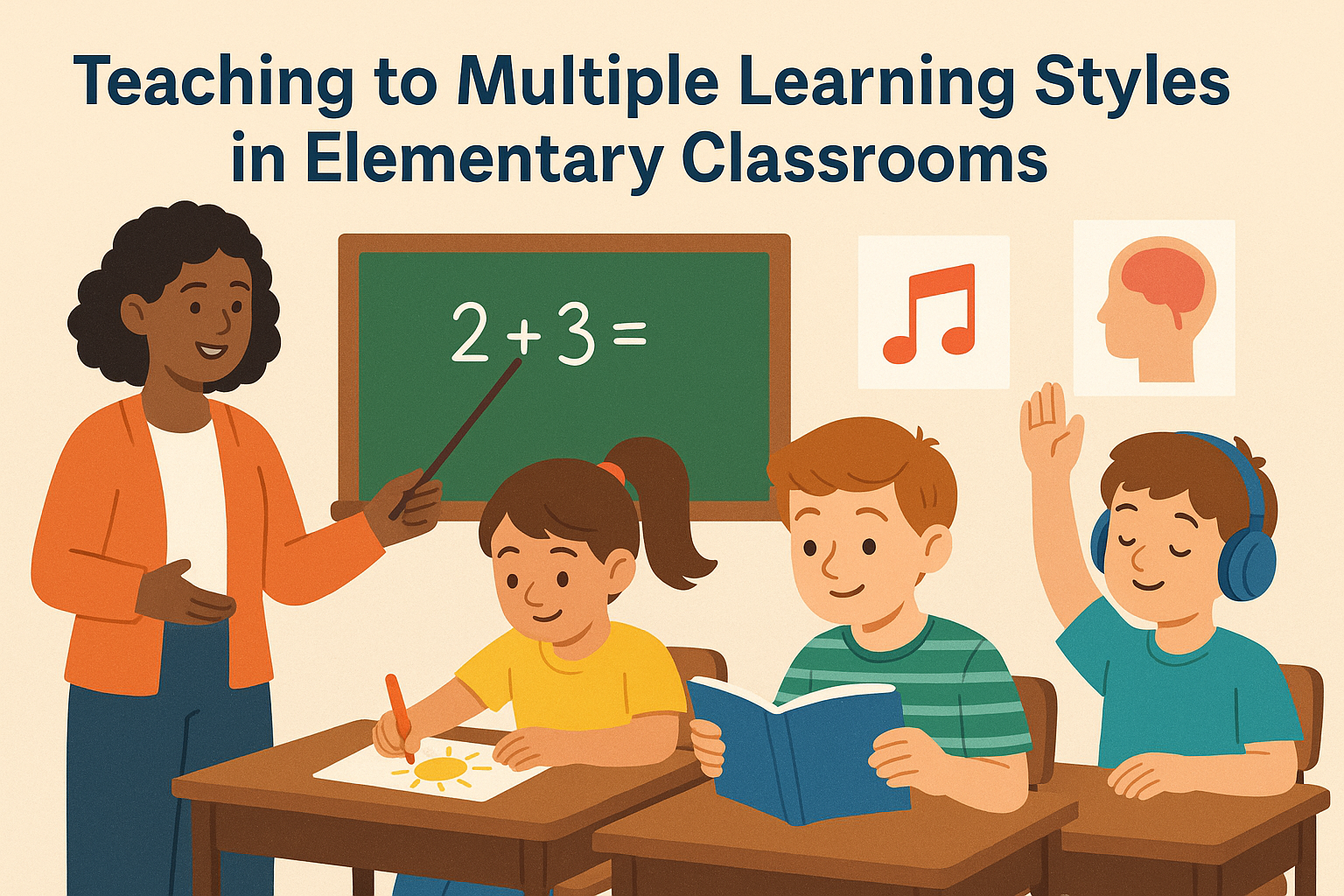
Understanding the primary learning styles can empower educators to create a more inclusive and effective learning environment. Here’s a breakdown of the major learning styles relevant in elementary education:
- Visual Learners: These students comprehend best when information is presented in a visual format—charts, graphs, and images are their best friends. Lessons that incorporate colorful visuals or diagrams can resonate well with them.
- Auditory Learners: This group thrives on listening. They benefit from discussions, lectures, and audiobooks. For them, teaching that includes storytelling or rhythmic elements can enhance understanding.
- Kinesthetic Learners: Hands-on activities are crucial for these learners, who grasp concepts through movement and touch. Incorporating activities like role-playing or experiments can help solidify their understanding.
- Read/Write Learners: These students excel when engaging with written words. They typically prefer reading texts and writing assignments over other forms of learning. Incorporating written instructions and encouraging note-taking can significantly benefit them.
- Interpersonal Learners: Collaboration is key for these students. They thrive in group settings and learn best through social interaction, thus group projects can be highly effective.
- Intrapersonal Learners: Reflective and self-aware, these learners prefer solitary study and need time to process information. Journaling and personal projects can cater to their needs.
Implementing Learning Styles in Lesson Planning
Knowing the different learning styles is one thing; effectively implementing them in lesson planning is another. Here are some practical strategies for teachers to consider:
1. Diverse Instructional Methods
To cater to the various learning styles, educators should employ a mix of instructional strategies. For example, a science lesson could start with a short video (visual), followed by a group discussion (auditory), and an experiment (kinesthetic). This way, all students have the opportunity to engage with the material in a way that suits them.
2. Flexible Grouping
Teachers can create groups based on learning styles for specific activities. For instance, during a reading lesson, visual learners might work on a project that involves creating visual representations of the text, while auditory learners can engage in a group discussion about the story’s themes. This flexibility allows students to collaborate and learn from each other, while also engaging in tasks that align with their learning preferences. (See: Theory of Multiple Intelligences.)
3. Assessment Variety
In traditional education settings, assessments often focus on written exams. However, this approach may not reflect the true understanding of all students. Incorporating a variety of assessment methods—such as presentations for visual learners, group projects for interpersonal learners, and written reflections for intrapersonal learners—can provide a more comprehensive picture of student learning.
The Current Relevance of Learning Styles in Education
As we progress further into the 21st century, understanding multiple learning styles in education remains as relevant as ever. With advancements in technology and online learning, educators are presented with new tools and platforms to address diverse learning needs. For example, educational apps and interactive software can cater to various styles by incorporating visuals, sounds, and interactive tasks.
Moreover, the shift towards personalized learning is gaining momentum. With this approach, educators tailor education to fit each student’s unique learning style, interests, and pace. This not only enhances student engagement but also fosters a deeper understanding of material.
Challenges and Criticisms of Learning Styles
Despite the benefits, the concept of learning styles is not without its challenges and criticisms. Some researchers argue that there isn’t strong empirical evidence to support the widespread implementation of learning styles in teaching practices. Critics suggest that while students may have preferences, these do not necessarily dictate how they learn best. Instead, they argue for a more integrated approach, focusing on teaching methods that work for all students rather than strictly adhering to learning styles.
Furthermore, the actual application of learning styles can sometimes lead to pigeonholing students. Labeling a student as a “visual learner” might inadvertently limit their exposure to other effective methods of learning. Teachers must balance the recognition of learning preferences with the understanding that flexibility is key. Encouraging students to engage with different methods can cultivate well-rounded learners.
Moving Forward: Best Practices for Teachers
So, how can educators effectively implement the concept of multiple learning styles in education while avoiding the pitfalls? Here are some best practices to guide teachers:
- Integrate: Rather than focusing solely on one style, integrate various methods into each lesson. Use visuals, discussions, hands-on activities, and writing to create a more holistic learning experience.
- Assess: Regularly assess students to understand their evolving learning preferences. Conduct surveys or informal assessments to gather feedback on what methods resonate best with them.
- Encourage Flexibility: Help students understand their own learning preferences but also encourage them to step outside of their comfort zones. Introduce them to different methods and strategies, allowing them to discover new ways of learning.
- Professional Development: Stay informed about the latest research and practices in education. Attend workshops or collaborate with colleagues to share effective strategies for addressing multiple learning styles.
- Engage with Parents: Communication with parents can be vital. Sharing insights into their child’s learning style and suggesting ways they can support their learning at home can create a consistent educational experience.
Success Stories: Real-World Applications of Learning Styles
When schools actively implement strategies that honor multiple learning styles, the results can be transformative. For instance, a school district in Minnesota adopted a comprehensive curriculum that integrates various teaching methods. They reported significant increases in student engagement and test scores across diverse groups of learners. Teachers noted that students who previously struggled in traditional settings began to excel when lessons incorporated a mix of visual, auditory, and kinesthetic approaches.
Another success story comes from a high school in California that employed project-based learning to cater to different learning styles. Students worked on community service projects, which allowed them to engage with the material in a way that resonated with their preferred learning style. Visual learners created promotional materials, auditory learners conducted interviews, and kinesthetic learners engaged in hands-on service. Feedback from students highlighted increased motivation and a stronger connection to their learning. (See: Learning Styles in Education.)
Statistics on Learning Styles in Education
Multiple studies have sought to quantify the impact of recognizing learning styles on educational outcomes. For example, a research study conducted by the University of California found that students who received instruction tailored to their learning styles performed 20% better on standardized tests compared to those who received traditional instruction. Another study published in the Journal of Educational Psychology showed that classrooms that incorporated a variety of instructional strategies saw a 15% increase in overall student engagement. (Howard Gardner's insights on AI)
Moreover, a survey by the National Education Association found that 72% of teachers believe that understanding students’ learning styles is crucial for effective teaching. This statistic indicates a growing awareness among educators of the need to adapt their teaching strategies to meet diverse learner needs.
Best Practices for Supporting Diverse Learning Styles
To create an effective educational environment, it’s essential to implement practices that support multiple learning styles actively. Here are some strategies teachers can employ:
1. Utilize Technology
Incorporating tools such as interactive whiteboards, educational apps, and online resources allows teachers to present information in various formats. For instance, platforms like Kahoot and Nearpod can engage auditory and visual learners simultaneously through interactive quizzes and presentations.
2. Create a Multi-Sensory Learning Environment
Design classrooms that stimulate multiple senses. For example, using scented markers or textured materials in art projects can cater to kinesthetic learners while also engaging visual learners through color and design.
3. Encourage Peer Teaching
Peer teaching can be particularly effective in mixed-ability classrooms. When students explain concepts to their classmates, they reinforce their understanding and cater to different learning styles. It promotes social interaction, which can be beneficial for interpersonal learners.
FAQ about Multiple Learning Styles in Education
What are the most common learning styles?
The most commonly recognized learning styles include visual, auditory, kinesthetic, and read/write learners. Each style represents a different way that students prefer to engage with and process information. (See: Impact of Learning Styles on Education.)
How can teachers identify students’ learning styles?
Teachers can identify learning styles through a combination of observations, questionnaires, and informal assessments. Engaging in conversations with students about their preferences can also provide insight into how they learn best.
Can students have more than one learning style?
Absolutely! Many students exhibit strengths in multiple learning styles, often depending on the subject matter or context. It’s beneficial for educators to recognize this fluidity and provide varied instructional methods.
Is it necessary to adapt teaching methods for every learning style?
While it’s not feasible to cater to every single style in every lesson, integrating a variety of teaching methods can help reach a broader range of students. The goal is to create an inclusive learning environment that acknowledges and values diverse learning preferences.
How does technology support different learning styles?
Technology offers numerous tools that cater to multiple learning styles, such as interactive simulations for kinesthetic learners, videos for visual learners, and podcasts for auditory learners. These resources can enhance engagement and provide alternative ways for students to access content.
Conclusion: Embracing Diversity in Learning
Incorporating multiple learning styles in education is not merely an educational trend; it’s a necessary evolution in how we approach teaching and learning. By recognizing and addressing the diverse needs of students, educators can create an environment where every child is empowered to thrive. As classrooms become increasingly diverse, the ability to adapt and tailor educational experiences will serve as a catalyst for fostering engaged and successful learners.
“`
Trending Now
Frequently Asked Questions
What are the different learning styles in education?
Different learning styles in education include linguistic, logical-mathematical, spatial, bodily-kinesthetic, musical, interpersonal, intrapersonal, and naturalistic. Each style represents a unique way individuals process information, allowing educators to tailor their teaching strategies to meet the diverse needs of students.
Why is it important to recognize multiple learning styles?
Recognizing multiple learning styles is crucial because it addresses the diversity of students in the classroom. Different learners may excel under various teaching methods, and by accommodating these styles, educators can enhance comprehension and retention, ensuring that all students have the opportunity to succeed.
How can teachers accommodate different learning styles?
Teachers can accommodate different learning styles by incorporating a variety of teaching methods into their lesson plans. This may include using visual aids, hands-on activities, group discussions, and auditory materials to engage students with different strengths and preferences effectively. There’s a fuller look at tips for inspiring students.
What is Howard Gardner's Theory of Multiple Intelligences?
Howard Gardner's Theory of Multiple Intelligences proposes that individuals possess various types of intelligences, including linguistic, logical-mathematical, spatial, bodily-kinesthetic, musical, interpersonal, intrapersonal, and naturalistic. This theory emphasizes the importance of recognizing and nurturing these diverse capabilities in educational settings.
How do learning styles affect student engagement?
Learning styles significantly affect student engagement because when teaching methods align with a student's preferred style, they are more likely to participate actively and retain information. By catering to various learning styles, educators can create a more inclusive environment that fosters greater interest and involvement in lessons.
Agree or disagree? Drop a comment and tell us what you think.



