

“`html
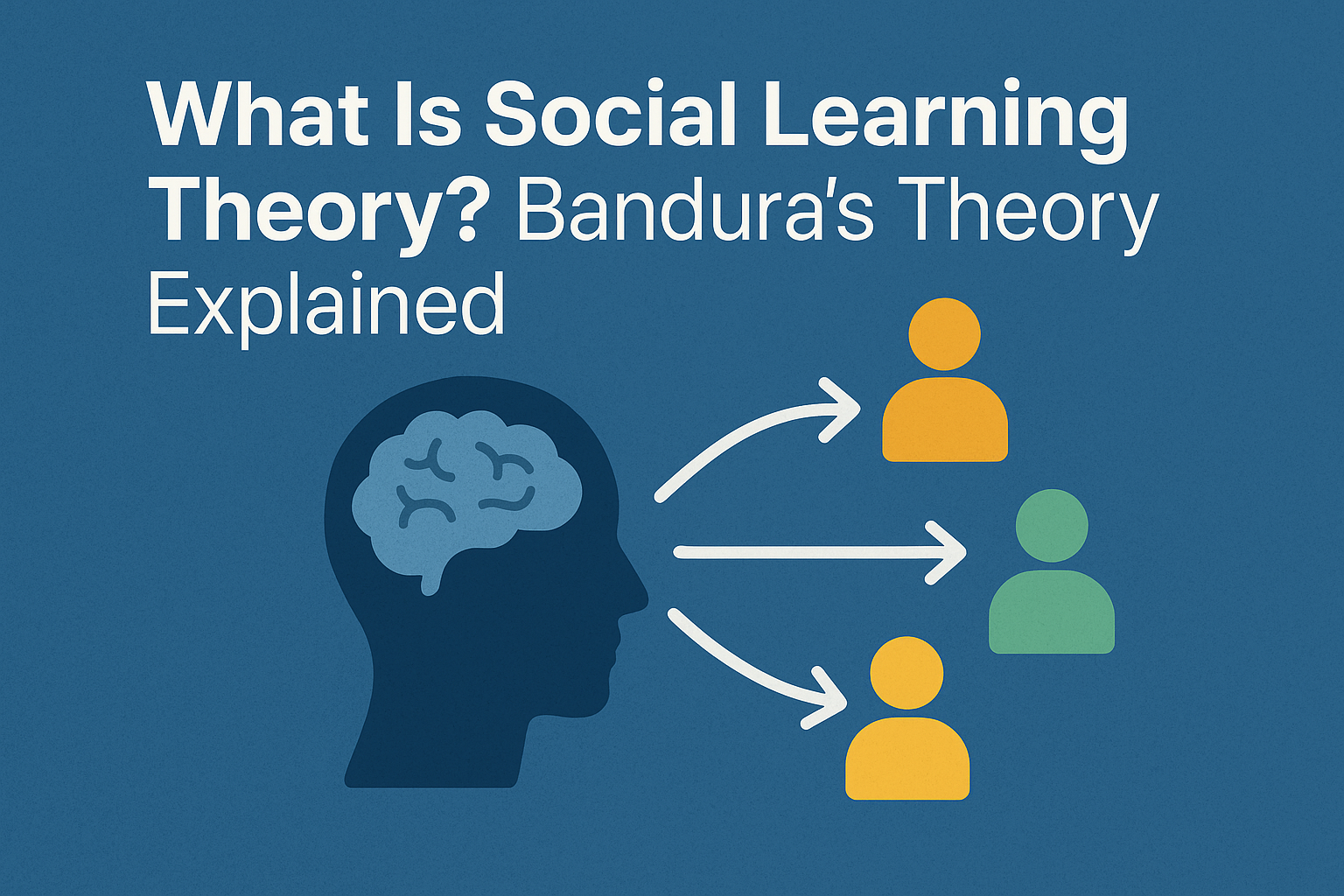
Social learning theory, a concept pioneered by psychologist Albert Bandura, has reshaped our understanding of how individuals learn through observation and imitation. This theory emphasizes the significant role that social interaction and environmental influences play in shaping behaviors, attitudes, and beliefs. In this article, we’ll explore the origins of social learning theory, its key components, practical applications, and the contemporary relevance of Bandura’s insights.
Understanding Social Learning Theory
At its core, social learning theory posits that learning occurs not just through direct experiences but also by observing others. Bandura’s seminal work in the 1960s, particularly his famous Bobo doll experiment, demonstrated how children learn aggressive behaviors through the observation of adults. This transformative perspective shifted the focus from traditional behaviorism, which emphasized reinforcement and punishment, to a more comprehensive understanding of the social context in which learning occurs.
Bandura defined three main components of social learning theory: attention, retention, and reproduction. To learn from a model, you first need to pay attention to their behavior. Next, you must retain this information in memory. Finally, you need to reproduce the observed behavior, which could be influenced by your own motivation and the perceived rewards or consequences of that behavior.
The Bobo Doll Experiment: A Case Study
The Bobo doll experiment is perhaps the most iconic demonstration of social learning theory. In a series of studies conducted in 1961 and 1963, Bandura observed children interacting with an inflatable doll, known as Bobo. The children who witnessed an adult behaving aggressively toward the doll were more likely to imitate that behavior when given the opportunity to play with the doll themselves. This experiment provided compelling evidence that learning can occur merely through observation, without any direct reinforcement.
What makes the Bobo doll experiment particularly fascinating is the variety of factors that influenced the children’s behavior. For instance, children were more likely to imitate the aggressive model if they perceived them as similar to themselves or if the model was rewarded for their aggression. This insight highlights the importance of social context and individual differences in learning processes. Bandura’s work suggests that the models we choose to imitate—whether they are parents, peers, or media figures—significantly impact our development.
Four Key Processes of Social Learning
Bandura identified four key processes essential for social learning to occur: attention, retention, reproduction, and motivation. Each of these processes plays a critical role in determining whether an individual will learn from an observed behavior.
- Attention: For learning to take place, an individual must first pay attention to the behavior being modeled. Factors that influence attention include the model’s attractiveness, the observer’s level of interest, and the complexity of the behavior.
- Retention: Once attention is captured, the behavior must be stored in memory for later retrieval. This can involve mental rehearsal and the use of cognitive strategies to enhance memory retention.
- Reproduction: The individual must then have the ability to reproduce the observed behavior. This can be influenced by physical capabilities and the practice of the behavior.
- Motivation: Finally, motivation plays a crucial role in determining whether the learned behavior will be enacted. If an individual believes that performing the behavior will lead to positive outcomes or rewards, they are more likely to imitate the behavior.
Practical Applications of Social Learning Theory
Understanding social learning theory has practical implications across various domains, including education, therapy, and workplace training. Here are a few ways this theory is applied:
1. Education
In educational settings, teachers can leverage social learning theory by modeling desired behaviors and encouraging peer learning. Group projects and collaborative learning environments allow students to observe and emulate their peers, fostering a rich learning experience. Additionally, educators can use role-playing and simulations to help students practice new skills in a supportive environment. (See: Social Learning Theory on Wikipedia.)
2. Therapy
In therapeutic contexts, social learning theory informs approaches such as cognitive-behavioral therapy (CBT). Therapists often utilize modeling techniques to demonstrate coping strategies and behaviors that clients can adopt. For example, a therapist might model assertiveness skills during a session, allowing the client to observe and learn before practicing those skills in real-life situations.
3. Workplace Training
Organizations can enhance employee training programs by incorporating social learning principles. For instance, mentorship programs allow seasoned employees to model effective behaviors for newcomers. Additionally, training sessions that include role-playing and observational learning can significantly improve skills and confidence among employees.
The Role of Media in Social Learning
In today’s media-saturated environment, social learning theory takes on new significance. The influence of television, social media, and online platforms can shape behaviors and attitudes in profound ways. Bandura himself highlighted the potential impact of media in his later work, noting that individuals could learn both positive and negative behaviors through exposure to various forms of media.
Consider the proliferation of social media influencers who often showcase lifestyle choices, fashion trends, and even political ideologies. Young audiences may find themselves mimicking behaviors exhibited by these figures, leading to real-world consequences. This underscores the need for critical media literacy, allowing individuals to discern which behaviors are worth emulating and which are detrimental.
Social Learning Theory in the Digital Age
With the rise of technology, social learning theory has evolved to incorporate online learning environments. eLearning platforms, webinars, and virtual classrooms have made it easier for individuals to learn from one another across geographical boundaries. The increased interactivity of these platforms fosters engagement, allowing learners to observe and imitate peers in real-time.
Moreover, the emergence of online communities and forums allows individuals to share knowledge and skills, further reinforcing the principles of social learning theory. Whether through video tutorials, live demonstrations, or collaborative projects, the online landscape provides numerous opportunities for observational learning. (apply social learning in classrooms)
Challenges and Critiques of Social Learning Theory
While social learning theory has garnered extensive support over the years, it is not without its criticisms. Some argue that the theory oversimplifies the complexities of human behavior by emphasizing observational learning. Critics contend that individual cognitive processes and intrinsic motivations also play a vital role in the learning experience, which may not be fully accounted for in Bandura’s framework.
Additionally, the theory has faced scrutiny for its reliance on external models. Some researchers argue that it may not sufficiently address the internal psychological factors that influence learning, such as beliefs, emotions, and personal experiences. As a result, a more holistic approach that combines social learning with cognitive and developmental theories may be necessary to fully understand the learning process.
Real-World Examples of Social Learning Theory in Action
The implications of social learning theory can be seen in various real-world contexts, from parenting to marketing. Here are some examples: (See: CDC on Social Learning in Health.)
1. Parenting Styles
Parents often model behaviors for their children, whether consciously or unconsciously. A parent who exhibits patience and empathy is likely to have a child who learns these traits through observation. Conversely, a parent who reacts with aggression or impatience may inadvertently teach their child to respond similarly in stressful situations. This illustrates how social learning theory plays a crucial role in child development, where the home environment becomes a critical space for observational learning.
2. Marketing Strategies
Brands increasingly utilize social learning theory in their marketing strategies by showcasing relatable influencers or endorsers who model the desired behaviors associated with their products. For instance, fitness brands often partner with influencers who demonstrate healthy lifestyles through workout videos and nutrition tips. This strategy not only promotes the product but also encourages consumers to emulate the behaviors displayed, showcasing the powerful connection between observation and consumer behavior.
3. Public Health Campaigns
Public health campaigns often employ social learning principles to change behaviors. Campaigns that highlight positive role models engaging in healthy habits, such as regular exercise or healthy eating, can motivate individuals to adopt similar behaviors. The success of such campaigns lies in their ability to utilize the observational learning process, showing people that change is possible and desirable.
Expanding on Motivation in Social Learning Theory
One of the critical components of social learning theory is motivation. Bandura suggested that the likelihood of imitating a behavior is heavily influenced by the expected rewards or consequences. This has been supported by various studies in fields ranging from psychology to economics. For instance, individuals are more inclined to imitate behaviors that they see rewarded, whether through social approval or tangible benefits. Understanding what motivates individuals can provide insights into how to effectively model behaviors in educational and professional settings.
Frequently Asked Questions (FAQ)
What is social learning theory?
Social learning theory is a psychological concept that emphasizes how people learn new behaviors through observation and imitation of others, rather than just through direct experiences or reinforcement.
Who developed social learning theory?
Social learning theory was developed by psychologist Albert Bandura in the 1960s, marking a significant shift from traditional behaviorist approaches to understanding learning.
What are the key components of social learning theory?
The key components include attention, retention, reproduction, and motivation. Each plays a crucial role in determining whether an individual will learn from an observed behavior. compare social learning and behaviorism offers useful background here.
How does social learning theory apply to education?
In education, teachers can model desired behaviors and create environments where students can learn from each other through group activities, role-playing, and collaborative projects.
How can social learning theory be observed in media?
Media influences behavior by providing models that individuals can observe and imitate. This can include both positive behaviors, like community service, and negative behaviors, such as aggression.
What are some criticisms of social learning theory?
Critics argue that social learning theory may oversimplify human behavior by focusing too much on observational learning and not enough on internal cognitive processes, emotions, and individual motivations.
How can organizations implement social learning theory?
Organizations can implement social learning theory by creating mentorship programs, encouraging collaborative projects, and providing environments where employees can observe and learn from each other effectively.
Conclusion: The Enduring Legacy of Bandura’s Work
Albert Bandura’s social learning theory continues to resonate in various fields, from education to therapy to workplace training. By emphasizing the power of observation and social context, Bandura opened doors to new methods of learning and behavioral change. As we navigate an increasingly interconnected world, the principles of social learning theory offer valuable insights into how we learn and grow from one another.
Understanding social learning theory not only enhances our ability to teach and learn but also equips us to critically evaluate the influences around us—whether they stem from peers, mentors, or media figures. In a society where social interactions are facilitated by technology, embracing the essence of Bandura’s work remains more important than ever.
“`
Trending Now
Frequently Asked Questions
What is social learning theory in psychology?
Social learning theory, developed by Albert Bandura, explains how individuals learn behaviors, attitudes, and beliefs through observation and imitation of others. It emphasizes the importance of social interaction and environmental influences in the learning process.
How does Bandura's Bobo doll experiment demonstrate social learning?
Bandura's Bobo doll experiment showed that children who observed adults behaving aggressively towards the doll were more likely to imitate that behavior themselves. This highlighted the concept that learning can occur through observation, not just direct experience.
What are the key components of social learning theory?
The key components of social learning theory, as defined by Bandura, are attention, retention, and reproduction. To learn from a model, one must first pay attention, then retain the information, and finally reproduce the observed behavior based on motivation and perceived outcomes.
Why is social learning theory important?
Social learning theory is important because it shifts the focus from traditional behaviorism to understanding the social context of learning. It emphasizes how observation and imitation play critical roles in shaping behaviors, which has implications for education, parenting, and socialization.
How does social learning theory apply in real life?
Social learning theory applies in real life through various contexts such as education, where teachers model behaviors, and in media, where individuals learn from characters and influencers. It underscores the influence of role models on behavior and decision-making.
What’s your take on this? Share your thoughts in the comments below — we read every one.



