
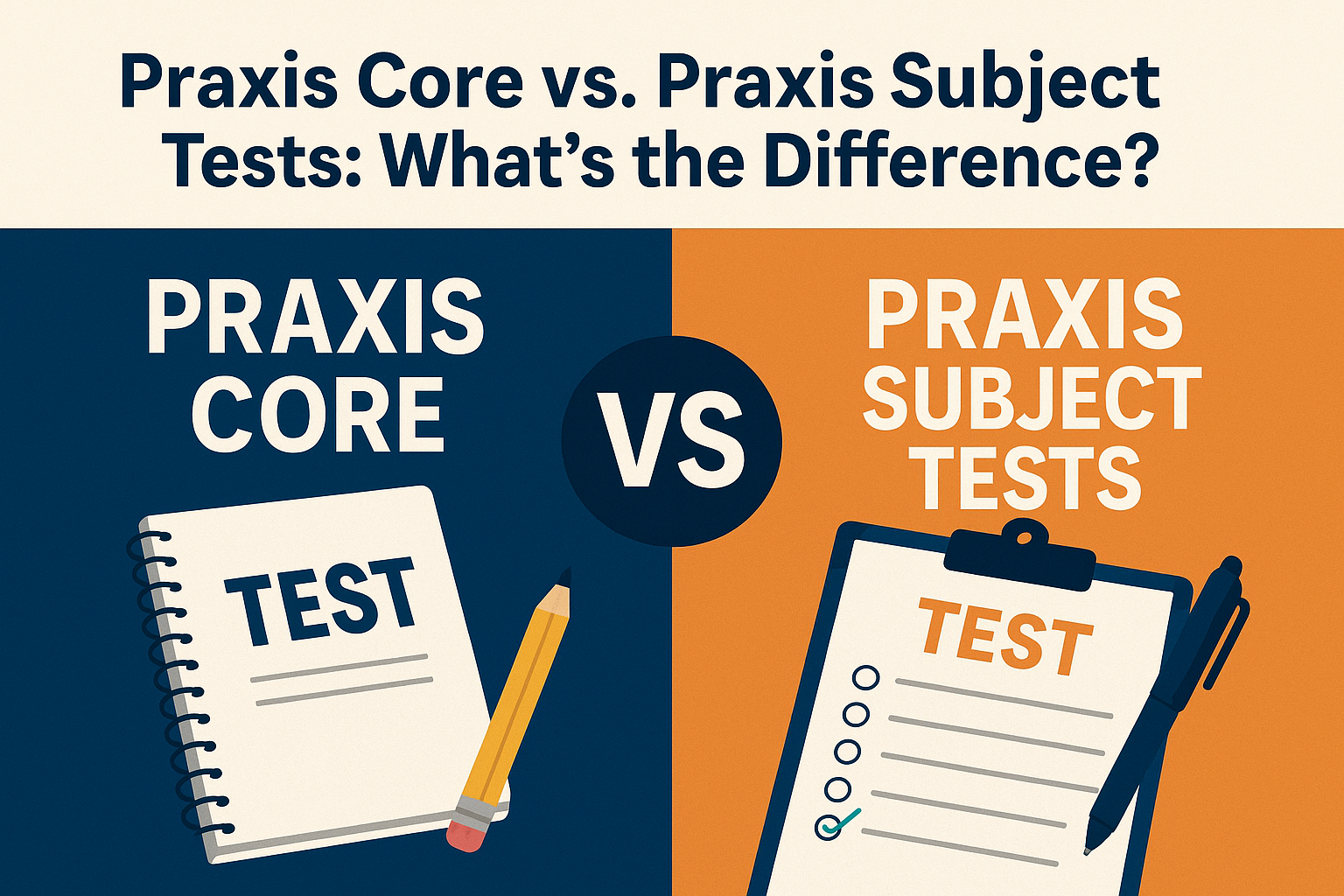

The educational landscape is constantly evolving, and for aspiring teachers, understanding the various assessments is crucial for success. Among these assessments, the Praxis Core and Praxis Subject Tests stand out as key components of the certification process. But how do they differ, and what implications do those differences have for your teaching career? Let’s dive deep into the nuances of Praxis Core vs Praxis Subject Tests and discover what you need to know.
1. What are the Praxis Tests?
The Praxis tests are a series of exams administered by the Educational Testing Service (ETS) to measure the knowledge and skills of prospective educators. These assessments are widely used across the United States to ensure that teacher candidates possess a solid foundation in both general and subject-specific content. The Praxis series consists of various tests, but two primary categories dominate: the Praxis Core and the Praxis Subject Tests.
The Praxis Core is designed to evaluate basic skills in reading, writing, and mathematics. This test serves as a prerequisite for many teacher education programs, providing institutions with a benchmark to assess candidates’ readiness for teaching coursework. In contrast, the Praxis Subject Tests focus on specific subject areas, assessing candidates’ knowledge and understanding of the content they will be teaching.
2. The Purpose of Each Test
Understanding the purpose of each test is essential for prospective educators. The Praxis Core serves as an initial screening tool that evaluates fundamental skills necessary for success in a teacher preparation program. It ensures that candidates can comprehend complex texts, write clearly, and perform basic mathematical operations. Pass rates for the Praxis Core vary depending on the state and institution, but generally, a good score is considered crucial for admission into teacher training.
On the other hand, the Praxis Subject Tests evaluate candidates’ mastery of the content they aim to teach. These tests are specific to various subjects and grade levels, including mathematics, science, social studies, and English language arts. They are often required for teacher licensure, and passing these exams demonstrates a candidate’s readiness to teach specific content areas effectively. Understanding these distinctions helps candidates prepare strategically for each assessment.
3. Test Structure and Format
The structure and format of the Praxis tests differ significantly. The Praxis Core consists of three separate sections: reading, writing, and mathematics. Each section tests particular skills with a combination of multiple-choice questions and essays (for writing). The test can be taken either on a computer or in a pencil-and-paper format, depending on the testing location. Candidates typically have around four hours to complete all sections.
In contrast, the Praxis Subject Tests vary widely in structure depending on the subject. Some tests consist solely of multiple-choice questions, while others may include essays or constructed-response questions. The time allocated for these tests also varies, with most lasting between two to four hours, depending on the subject matter. This variation necessitates that candidates familiarize themselves with the format of their specific subject test to perform optimally. (See: Teacher certification requirements.)
4. Scoring and Passing Rates
Understanding scoring is paramount for candidates planning to take the Praxis assessments. For the Praxis Core, scores range from 100 to 200, with a passing score determined by each state’s requirements. Generally, scores of around 150 are considered passing, but this can differ from state to state. It’s crucial for candidates to check their state’s specific requirements to ensure they meet the necessary benchmarks.
For the Praxis Subject Tests, scoring also varies based on the subject. Most subject tests score on a scale of 100 to 200, similar to the Praxis Core, but the passing score varies more widely. Some subjects may require scores as low as 150, while others may require scores closer to 165. The variability in passing scores means that candidates should review the requirements for their intended teaching area thoroughly.
5. Preparation Strategies for Each Test
Preparation is key for success on both the Praxis Core and the Praxis Subject Tests. For the Praxis Core, candidates should focus on strengthening their foundational skills in reading, writing, and mathematics. Engaging in practice tests, reviewing educational materials, and using study guides specifically designed for the Praxis Core can enhance readiness. Numerous online platforms offer practice questions and test-taking strategies that can help demystify the exam experience.
When it comes to the Praxis Subject Tests, preparation should be tailored to the specific subject area. This may involve reviewing subject-specific content, exploring state standards, and taking practice exams. Joining study groups or seeking out mentoring from educators in the field can also provide invaluable insights. Utilizing resources from state education departments or the ETS website can help ensure candidates are well-prepared for the content they will encounter.
6. Current Relevance in Teacher Certification
The relevance of the Praxis tests in the current educational climate cannot be understated. As educational standards evolve, so do the requirements for teacher certification. The Praxis Core continues to serve as a critical metric for evaluating candidates’ readiness for teacher preparation programs, while the Praxis Subject Tests ensure that teachers are well-equipped to handle their specific subject matter. Understanding the differences between Praxis Core and Subject Tests is vital for aspiring educators who want to ensure they are taking the right steps towards certification.
Moreover, as discussions around educational equity and access become increasingly prominent, the role of standardized testing like the Praxis series is being scrutinized. Advocacy groups are pushing for more holistic approaches to teacher assessment that consider diverse experiences and backgrounds. Whether or not changes to the Praxis tests will materialize remains to be seen, but for now, prospective teachers must navigate these assessments with care.
7. Expert Opinions on the Praxis Tests
Educational experts have varied opinions on the effectiveness and necessity of the Praxis tests. Dr. Jane Smith, an education professor at a prominent university, argues that while the Praxis Core provides a necessary baseline for candidates, it may not accurately reflect a candidate’s potential as an educator. “Standardized tests can often be limiting,” she notes. “They measure a specific set of skills but don’t account for creativity, empathy, and other crucial traits that contribute to a successful teacher.”
On the other hand, Dr. Michael Johnson, a researcher in educational assessments, believes that standardized tests like the Praxis are essential for maintaining quality in the teaching profession. “These tests ensure that all educators meet a certain level of competency before entering the classroom,” he asserts. “While they are not perfect, they act as a safeguard for the education system.” (See: Learning disabilities and assessments.)
8. Statistics Surrounding Praxis Test Outcomes
Examining the statistics surrounding the Praxis tests provides valuable insight into their impact on aspiring teachers. According to recent data from ETS, about 80% of test-takers pass the Praxis Core on their first attempt, which suggests that most candidates are adequately prepared for the foundational skills assessed. However, when it comes to the Praxis Subject Tests, pass rates can differ significantly depending on the subject. For instance, the pass rate for Mathematics tests hovers around 60%, while subjects like English Language Arts boast pass rates above 90%.
Additionally, a study by the National Council on Teacher Quality (NCTQ) found that states with more rigorous Praxis Subject Test requirements tend to have higher-performing teachers in those subjects. This correlation raises important questions about the relationship between standardized testing and long-term teacher effectiveness. (comparing learning theories)
9. Frequently Asked Questions (FAQ)
Q1: How long do I need to prepare for the Praxis Core?
A1: Preparation time can vary based on individual skill levels and study habits, but most candidates spend between four to eight weeks studying for the Praxis Core. Creating a study schedule that includes daily practice can be beneficial.
Q2: Are the Praxis Subject Tests the same in every state?
A2: While the structure and content of the Praxis Subject Tests are standardized, many states have different passing requirements. It’s essential to check your state’s specific guidelines to understand the expectations.
Q3: Can I take the Praxis tests online?
A3: Yes, the Praxis Core and many Praxis Subject Tests can be administered in an online format at designated testing centers. However, not all locations may offer online testing, so check with ETS when scheduling.
Q4: How often can I retake the Praxis tests if I don’t pass?
A4: Candidates can retake the Praxis tests as often as they wish; however, there is a waiting period of 21 days between attempts. This allows candidates time to prepare and improve their skills before retaking the exam.
Q5: Are there resources available for Praxis test preparation?
A5: Yes, there are numerous resources available, including official ETS study guides, online practice tests, and preparation courses offered by various educational organizations. Joining study groups can also enhance your preparation experience.
10. Key Differences between Praxis Core and Praxis Subject Tests
When considering the Praxis Core vs Praxis Subject Tests, it’s essential to recognize their distinct objectives. The Praxis Core focuses on assessing skills necessary across all teaching environments, while Praxis Subject Tests dive deeply into specific content areas. This means that a teacher who excels in overall pedagogy might still need targeted study for the subject-specific tests to ensure they are fully equipped to handle their chosen discipline. For instance, a candidate who passes the Praxis Core with flying colors may still need to invest time in understanding advanced mathematical concepts if they wish to teach high school math.
11. Comparative Outcomes and Job Readiness
Another key area of exploration is how these assessments impact job readiness and long-term effectiveness in the classroom. Some studies suggest that teachers who pass their Praxis Subject Tests tend to feel more confident in their teaching abilities and subject matter expertise. This confidence translates into better classroom management and instructional strategies, which ultimately leads to improved student outcomes. According to a survey conducted by the Teacher Preparation and Effectiveness Institute, 75% of teachers who felt prepared by their Praxis Subject Test experience reported higher student engagement in their classes.
12. Future Trends in Teacher Assessments
Looking ahead, the educational landscape continues to evolve. As teaching methodologies evolve and the needs of students change, the Praxis assessments may undergo modifications to remain relevant. There’s ongoing discussion regarding the incorporation of performance-based assessments, which aim to evaluate teaching practices in real classroom settings rather than solely relying on standardized tests. This shift could better reflect the everyday challenges teachers face and the skills they need to foster effective learning environments.
13. Conclusion: Making Informed Decisions
In the landscape of teacher certification, understanding the distinctions between Praxis Core vs Praxis Subject Tests is crucial for aspiring educators. Each assessment serves a unique purpose, from assessing basic skills to evaluating subject mastery. By comprehensively preparing for both, candidates can set themselves up for success in their teaching careers. Always stay informed about the latest developments in educational assessments and state requirements, as this knowledge will empower you to make informed decisions on your journey to becoming a licensed educator. See also top math worksheets online.
Trending Now
Frequently Asked Questions
What is the difference between Praxis Core and Praxis Subject Tests?
The Praxis Core assesses basic skills in reading, writing, and mathematics, serving as a prerequisite for teacher education programs. In contrast, Praxis Subject Tests focus on specific subject areas, evaluating a candidate's knowledge and understanding of the content they will teach.
What is the purpose of the Praxis Core test?
The Praxis Core test serves as an initial screening tool that evaluates fundamental skills necessary for success in a teacher preparation program, ensuring candidates can comprehend texts, write clearly, and perform basic math operations.
Who administers the Praxis tests?
The Praxis tests are administered by the Educational Testing Service (ETS), which conducts assessments to measure the knowledge and skills of prospective educators across the United States.
Do I need to take both Praxis Core and Praxis Subject Tests?
Whether you need to take both tests depends on your state's requirements and the specific teacher education program you are applying to. Generally, the Praxis Core is required for admission, while Subject Tests are needed for licensure in specific subject areas.
What skills does the Praxis Core test measure?
The Praxis Core test measures fundamental skills in reading, writing, and mathematics. It assesses candidates' abilities to comprehend complex texts, communicate effectively in writing, and perform essential mathematical operations.
Have you experienced this yourself? We’d love to hear your story in the comments.



