

“`html
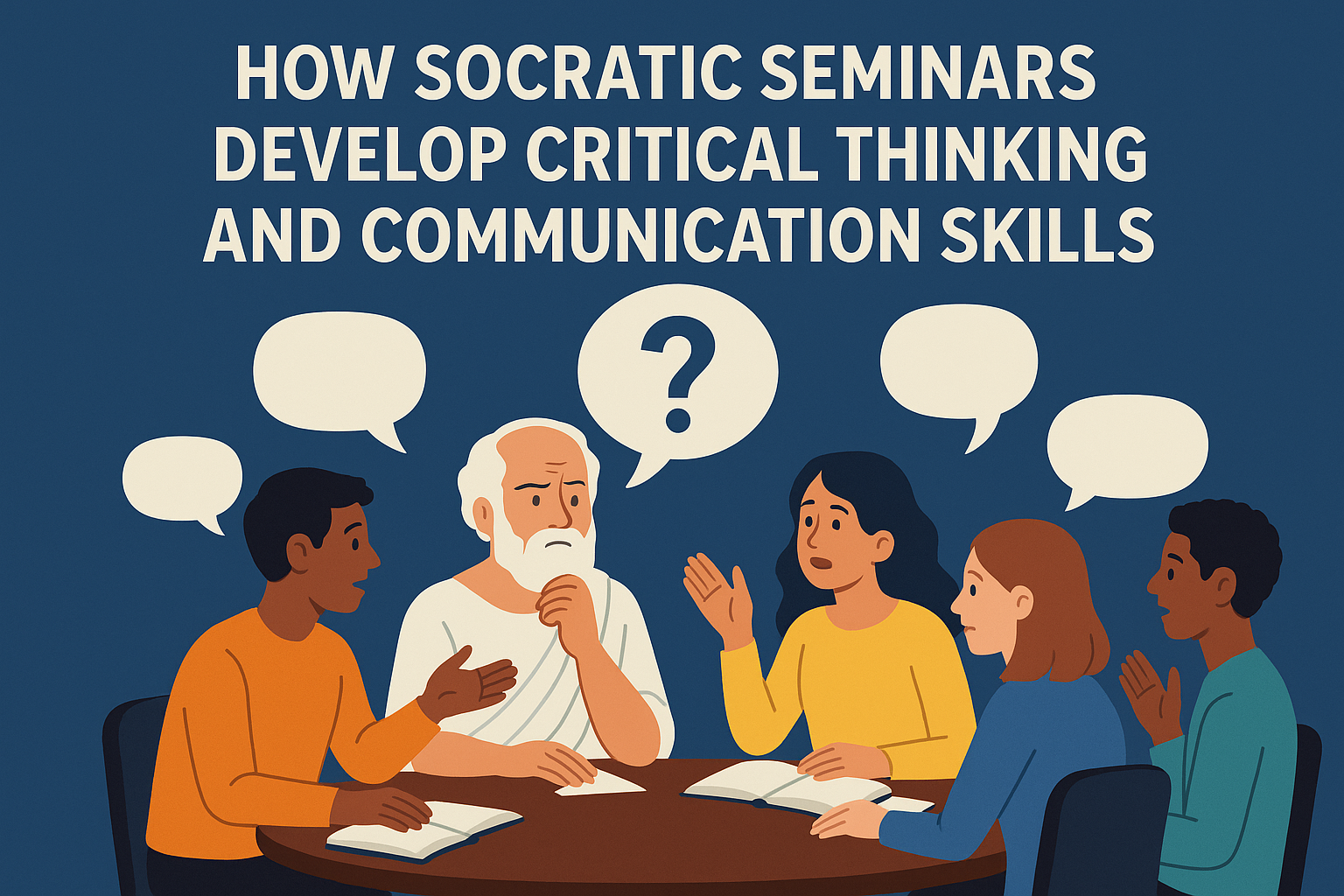
The Socratic seminar is more than just a classroom activity; it’s a powerful tool designed to foster critical thinking and enhance communication skills. Originating from the ancient Greek philosopher Socrates, this method emphasizes dialogue over debate, encouraging participants to explore ideas through questioning rather than merely answering. This article will delve deep into how Socratic seminars can transform your critical thinking abilities and communication prowess.
Understanding the Socratic Method
The Socratic method is rooted in the art of questioning. Socrates believed that asking questions was far more beneficial than providing answers. This fundamental principle underpins the structure of Socratic seminars, where students engage in a collaborative discussion rather than a traditional lecture format. In these seminars, participants are tasked with dissecting complex texts, ideas, or theories through a series of open-ended questions.
What distinguishes Socratic seminars from standard discussions is their emphasis on dialogue. Each participant’s contribution is valued, and the goal isn’t to arrive at a definitive answer but to explore varying interpretations and perspectives. This leads to richer discussions and a deeper understanding of the material. The facilitator’s role is crucial in guiding these conversations, making sure that everyone has the chance to speak and that the discussion stays focused.
Developing Critical Thinking Skills
Critical thinking is an essential skill in today’s fast-paced world, and Socratic seminars provide an ideal environment for its development. The process begins with participants analyzing texts and formulating questions that challenge assumptions. Here’s how this method specifically enhances critical thinking:
- Encourages Deep Analysis: Instead of just skimming the surface, participants must examine arguments critically, identifying premises and conclusions and evaluating their validity.
- Fosters Open-Mindedness: Engaging with differing viewpoints encourages participants to consider perspectives outside their own, promoting flexibility in thought and argumentation.
- Promotes Reflective Thinking: Participants must reflect on their own beliefs and the reasoning behind them, leading to a deeper understanding of their thought processes.
- Stimulates Intellectual Curiosity: The need to ask and answer questions cultivates a sense of curiosity, pushing participants to seek additional knowledge beyond the seminar.
Research shows that students who engage in regular Socratic seminars demonstrate improved critical thinking skills on assessments compared to those who don’t. This is partly because the method compels students to articulate their thoughts clearly and logically, leading to an enhanced ability to evaluate arguments and make sound judgments.
Enhancing Communication Skills
Communication is at the heart of Socratic seminars. By participating in discussions, students sharpen their ability to convey ideas effectively. Here’s how these seminars contribute to communication skill enhancement:
- Active Listening: To respond meaningfully, participants must listen carefully to their peers. This practice nurtures their ability to engage fully with the conversation and understand different viewpoints.
- Effective Articulation: Students learn to express their ideas clearly and succinctly, which is vital in both academic and professional settings.
- Constructive Feedback: Participants practice giving and receiving feedback in a respectful manner, helping them develop a constructive dialogue that values differing opinions.
- Non-Verbal Communication: Body language, eye contact, and other non-verbal cues play a crucial role in communication. Socratic seminars provide a platform to refine these aspects as participants engage with each other.
These skills aren’t just useful in academic settings; they are transferable to various aspects of life, including personal relationships and future professional endeavors. In a world where clear communication is essential, Socratic seminars can lay the groundwork for success.
Practical Insights for Implementing Socratic Seminars
While the benefits of Socratic seminars are clear, implementing them effectively can be challenging. Here are some practical insights for educators and facilitators looking to integrate this method into their classrooms: (See: Socratic method on Wikipedia.)
- Choose the Right Text: Select texts that are rich in themes and questions. Literature, philosophy, and current events often provide ample material for discussion.
- Create a Safe Environment: Make sure that participants feel comfortable sharing their thoughts. Establish ground rules that promote respect and open-mindedness.
- Facilitate, Don’t Dominate: The facilitator’s role is to guide the conversation, not to lead it. Encourage participation from all students and avoid imposing your views.
- Incorporate Reflection: After the seminar, allow students to reflect on what they learned. This could be through journaling or group discussions, reinforcing the skills they practiced.
By adopting these strategies, educators can create an enriching Socratic seminar experience that maximizes critical thinking and communication skills among participants.
Challenges and Solutions in Socratic Seminars
Like any educational method, Socratic seminars come with their own set of challenges. Recognizing these obstacles can help facilitators prepare effective strategies to overcome them:
- Student Reluctance: Some students may feel intimidated by the idea of speaking in front of their peers. To address this, start with smaller group discussions or partner shares to build confidence.
- Dominance by Vocal Students: In some cases, more outspoken participants may dominate the conversation, overshadowing quieter students. Implementing a speaking order or using a “talking stick” can ensure that everyone gets a chance to contribute.
- Off-Topic Discussions: Discussions can drift off course, making it challenging to stay focused. Set clear objectives for each seminar and gently redirect conversations when they stray too far.
By being proactive about these challenges, facilitators can create a more inclusive and productive seminar environment.
Current Relevance of Socratic Seminars
In the age of rapid information dissemination and digital communication, the relevance of Socratic seminars is more pronounced than ever. They offer a counterbalance to the often superficial engagement found in online platforms. The skills cultivated in these seminars prepare participants for real-world applications, such as:
- Engaging in Civic Discourse: As society grapples with polarizing issues, the ability to engage in respectful, thoughtful dialogue is crucial for democratic engagement.
- Enhancing Workplace Collaboration: In the professional realm, the ability to communicate effectively and think critically can significantly impact teamwork and problem-solving.
- Promoting Lifelong Learning: The habits developed in Socratic seminars—curiosity, reflection, and critical analysis—are vital for ongoing personal and professional development.
As we navigate a complex world filled with diverse perspectives, the methodologies employed in Socratic seminars can provide a framework for better understanding and collaboration.
Examples of Successful Socratic Seminars
Real-world examples help illustrate the effectiveness of Socratic seminars in various settings. For instance, schools across the United States have implemented this method to engage students in literature studies. One notable example is a high school in New York where students analyzed Shakespeare’s “Hamlet.” The seminar encouraged students to question the motivations of characters and the moral implications of their actions. The varied interpretations sparked lively discussions, and students left with a deeper understanding of the text.
Another effective use of Socratic seminars can be seen in a college ethics class, where students discussed contemporary moral dilemmas. By examining real-life scenarios, students were encouraged to apply philosophical theories to modern issues, such as technology’s impact on privacy. This practice not only developed their critical thinking but also prepared them for ethical challenges in their future careers.
In both instances, facilitators reported that students showed remarkable improvements in their ability to express ideas and engage with complex materials, reflecting the power of Socratic seminars to create impactful learning experiences.
Expert Perspectives on Socratic Seminars
Educators and researchers have weighed in on the benefits of Socratic seminars, emphasizing their importance in modern education. Dr. David K. McCarthy, an education specialist, notes that “Socratic seminars cultivate the skills necessary for students to navigate an increasingly complex world. They don’t just learn content; they learn to think critically and communicate effectively, two skills that are indispensable in any career.”
Similarly, Dr. Linda E. Johnson, an expert in pedagogy, argues that “the ability to question and engage deeply with material is a hallmark of educated individuals. Socratic seminars provide a unique space for that engagement, instilling a sense of confidence and competence in students that traditional lectures often overlook.” (See: Harvard University resources.)
These perspectives highlight that Socratic seminars are not merely academic exercises; they are essential practices for preparing students for the future, where critical thinking and communication are paramount.
FAQs About Socratic Seminars
What is the main goal of a Socratic seminar?
The main goal is to foster a deeper understanding of a topic through dialogue and questioning, rather than simply arriving at the correct answer. See also critical thinking through Socratic seminars.
How do I prepare for a Socratic seminar?
Preparation includes reading the assigned text thoroughly, noting down any questions or comments, and being ready to discuss your views with others.
Can Socratic seminars work in virtual settings?
Absolutely! With the right tools, such as video conferencing platforms, Socratic seminars can be effectively conducted online, encouraging discussion and engagement among remote participants.
What age group is best suited for Socratic seminars?
Socratic seminars can be adapted for various age groups. While they are commonly used in high school and college settings, younger students can also benefit with simplified texts and guidance.
What subjects are best for Socratic seminars?
Any subject that encourages discussion and interpretation works well. Literature, history, philosophy, and current events are particularly effective, as they often involve complex themes and questions. Related reading: tips for teaching thinking skills.
Common Misconceptions About Socratic Seminars
Despite their effectiveness, there are several misconceptions about Socratic seminars that can deter educators and students from utilizing this method: (See: CDC on critical thinking in education.)
- It’s Just a Discussion: Many think Socratic seminars are the same as casual discussions. However, they are structured dialogues with a clear focus on critical questioning and reflection.
- Only for Advanced Students: Some believe that Socratic seminars are only suitable for advanced or older students. In reality, they can be tailored for all age groups and learning levels, promoting engagement and critical thinking in young learners as well.
- Requires Extensive Preparation: While preparation can enhance the experience, Socratic seminars can be effective even with minimal prep, as the focus is on spontaneous dialogue and exploration of ideas.
By dispelling these myths, more educators can feel empowered to implement Socratic seminars in their teaching practices.
The Future of Socratic Seminars
Looking ahead, the role of Socratic seminars in education is likely to evolve, influenced by technological advancements and changing pedagogical theories. As classrooms increasingly incorporate digital tools, Socratic seminars may adapt to include multimedia resources, allowing students to explore topics more interactively. For example, using videos or online articles could provide a wider range of perspectives and stimulate richer discussions.
Furthermore, as the importance of social-emotional learning gains traction, Socratic seminars can contribute to building empathy and emotional intelligence. By discussing diverse viewpoints and experiences, students can develop a greater understanding of their peers and the world around them.
Ultimately, Socratic seminars are set to remain a vital component of education, promoting skills that are essential for personal growth and societal engagement.
Conclusion: The Lasting Impact of Socratic Seminars
The impact of Socratic seminars extends far beyond the classroom. By developing critical thinking and communication skills, participants equip themselves for a lifetime of learning and engagement. As they explore ideas through dialogue, they cultivate habits of mind that are essential in today’s world.
Whether you’re an educator, student, or simply someone interested in improving your thought processes and communication abilities, embracing the Socratic method can provide transformative benefits. In a society that thrives on dialogue, the ability to think critically and communicate effectively is invaluable.
“`
Trending Now
- this guide on unlock your potential: senior ai engineer education opportunities with a.team
- our breakdown of conservation vs. irreversibility: understanding piaget’s concepts
- this guide on how to use bloom’s taxonomy for differentiated instruction
- this guide on irreversibility vs. conservation: key differences in child development
- the complete explanation
Frequently Asked Questions
What is a Socratic seminar?
A Socratic seminar is a collaborative discussion method rooted in the art of questioning, where participants explore complex texts and ideas through open-ended questions. This approach emphasizes dialogue over debate, allowing students to engage deeply with the material and each other's perspectives.
How do Socratic seminars improve critical thinking?
Socratic seminars enhance critical thinking by encouraging participants to analyze texts, formulate challenging questions, and examine arguments critically. This method promotes deep analysis, helping individuals identify assumptions and evaluate the validity of various interpretations.
What are the benefits of using the Socratic method in education?
The Socratic method fosters critical thinking and communication skills by promoting dialogue, encouraging participants to express their views, and exploring diverse perspectives. It transforms traditional learning into an interactive experience, enhancing understanding and engagement with the material.
What role does the facilitator play in a Socratic seminar?
In a Socratic seminar, the facilitator guides the discussion, ensuring that all participants have the opportunity to speak and that the conversation remains focused. Their role is crucial in fostering an environment where dialogue thrives and diverse viewpoints are explored.
Can Socratic seminars be used in any subject?
Yes, Socratic seminars can be applied across various subjects, including literature, history, philosophy, and social sciences. This versatile method encourages deep engagement with content, making it suitable for any discipline that values critical thinking and communication.
Have you experienced this yourself? We’d love to hear your story in the comments.



