

“`html
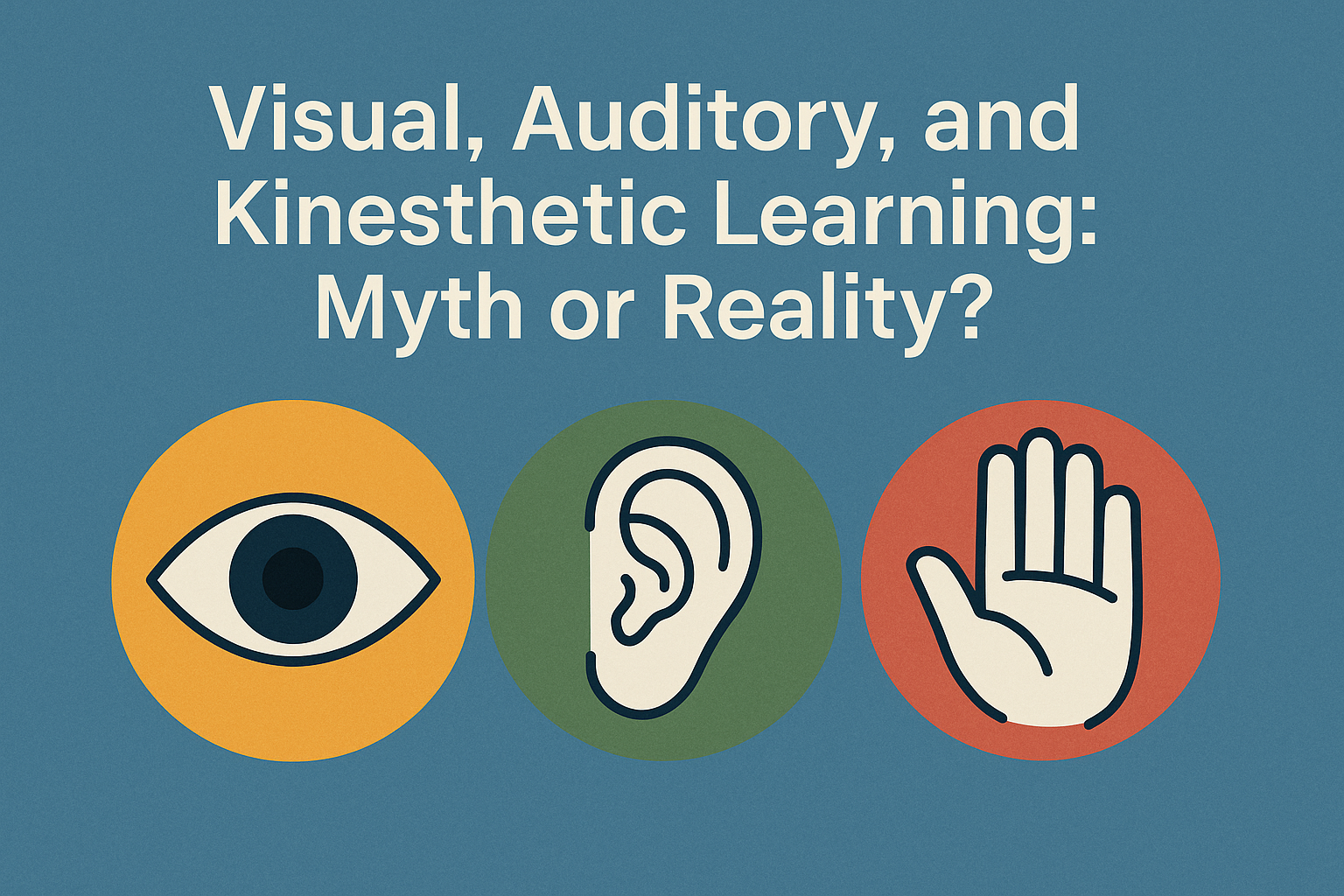
The concept of learning styles—specifically visual, auditory, and kinesthetic—has been a prominent topic in educational psychology for decades. It suggests that individuals have preferred ways of absorbing information, and tailoring education to these preferences could enhance learning outcomes. However, a critical examination of the validity of these styles suggests that the reality may not align with popular belief.
Understanding Learning Styles
Learning styles refer to the idea that people learn more effectively when information is presented in a way that aligns with their individual preferences. The most commonly referenced categories include:
- Visual learners: Prefer to see and visualize information, utilizing diagrams, charts, and images.
- Auditory learners: Learn best through listening, benefiting from lectures, discussions, and audio materials.
- Kinesthetic learners: Prefer hands-on experiences, learning through movement and physical activities.
These categories are often presented in educational settings to help teachers tailor their lessons. The notion is intuitive; it feels natural to want to adjust teaching methods to fit individual preferences. However, the underlying science shows a more complicated picture.
The Origins of Learning Style Theories
The learning styles theory gained traction in the 1970s, primarily through the work of psychologist Howard Gardner and his theory of multiple intelligences. Gardner’s framework expanded the understanding of intelligence beyond traditional metrics, suggesting that individuals excel in various areas, such as linguistic, logical-mathematical, spatial, musical, and bodily-kinesthetic intelligences. This spurred a wave of interest in identifying ways to categorize learners and optimize their educational experiences.
Further development led to models like Neil Fleming’s VARK (Visual, Auditory, Reading/Writing, Kinesthetic) model and the Dunn and Dunn learning styles model, which identified several types of learners based on sensory input preferences. The idea quickly permeated educational institutions, where teachers started to implement different strategies to match students’ learning styles.
The Evidence Against Learning Styles
Despite the initial enthusiasm for learning styles, recent research has raised significant questions about their efficacy. A comprehensive review published in 2018 in the journal Psychological Science in the Public Interest analyzed over 15 years of studies on the effectiveness of tailoring instruction to individual learning styles. The findings indicated a lack of substantial evidence supporting the idea that matching teaching methods to a student’s learning style improves educational outcomes.
One critical issue is that the concept of learning styles may oversimplify the complex nature of how individuals process information. Research suggests that effective learning often involves multiple cognitive processes, including attention, memory, and critical thinking—all of which are engaged regardless of a learner’s preferred style. Moreover, people may adapt their learning strategies depending on the type of material being studied. For instance, it’s common to use visual aids in a lecture while also benefiting from auditory explanations.
Practical Insights for Educators
Given the skepticism surrounding learning styles, what should educators do? The key lies in employing a more flexible approach to teaching that incorporates various methods rather than rigidly adhering to specific styles. Here are some practical strategies: (See: Learning styles overview on Wikipedia.)
- Diverse Teaching Methods: Incorporate a mix of visual, auditory, and kinesthetic elements into lessons. For example, a science lesson could involve a lecture (auditory), visual diagrams (visual), and hands-on experiments (kinesthetic).
- Active Learning: Encourage student engagement through interactive activities. Group discussions, problem-solving tasks, and project-based learning can cater to different preferences and promote collaboration.
- Feedback and Reflection: Allow students to reflect on their learning processes and provide feedback on what methods help them understand materials best. This practice fosters self-awareness and helps students develop adaptive learning strategies.
- Focus on Metacognition: Teach students how to think about their own thinking. Understanding their learning processes can empower them to choose strategies that suit the task at hand, rather than relying solely on a predetermined style.
These strategies emphasize that teaching should not be about fitting students into boxes but rather about expanding the methods used to reach all learners.
The Changing Landscape of Education
The conversation around learning styles also intersects with broader trends in education technology and pedagogy. As online learning environments become more prevalent, educators have more tools at their disposal to create customized learning experiences. Platforms can integrate multimedia content, gamification, and analytics to track student engagement and performance, allowing for more dynamic and responsive educational approaches.
Moreover, the rise of personalized learning is reshaping how we think about education. Rather than adhering strictly to learning style categories, personalized learning focuses on the unique needs, interests, and abilities of each student. This approach encourages educators to draw from various teaching styles while also incorporating student agency and choice.
Expert Perspectives on Learning Styles
Many education experts advocate for moving beyond the learning styles framework, emphasizing the importance of evidence-based practices in teaching. Cognitive psychologist Daniel Willingham argues that although students may have preferences, the best approach to learning typically involves diverse methods that engage multiple senses.
Willingham, along with other researchers, suggests that more attention should be paid to the content and context of learning rather than solely on the learner’s style. For instance, a history lesson may be more engaging and impactful with storytelling techniques combined with visual timelines, regardless of whether students identify as visual or auditory learners. This builds on learning styles research.
In a similar vein, Dr. Barbara Oakley, an expert in educational psychology, challenges the notion of strict learning styles, advocating for methods that leverage cognitive science principles. She encourages students to develop a range of strategies to tackle different types of information and skills, fostering greater adaptability and resilience in their learning journey.
Current Relevance of Learning Styles
As education continues to evolve, the debate surrounding learning styles remains significant. While the idea of tailoring education based on individual preferences is appealing, the emerging consensus among researchers suggests a need for a more nuanced perspective. The focus is shifting toward creating inclusive environments that offer diverse methods, actively engage students, and emphasize cognitive strategies.
Ultimately, the goal should be to develop learners who can thrive in varied contexts, equipped with the tools to adapt their learning approaches as needed. By moving beyond the rigid structure of learning styles, educators can foster environments that nurture curiosity, critical thinking, and lifelong learning skills.
Critiques and Limitations of Learning Styles
While the theory of learning styles has been widely adopted, it has faced several critiques over the years. One major critique is the lack of empirical support for the idea that teaching according to a student’s preferred learning style leads to better outcomes. Critics argue that while individuals may prefer to learn in different ways, this does not necessarily mean that they will perform better when taught in a style that matches their preference. The belief in learning styles might even hinder the development of students’ versatility in learning. (See: CDC document on learning styles.)
Another limitation is that categorizing students into fixed learning styles can be restrictive. It can lead educators to pigeonhole students, potentially overlooking the fact that most people are capable of learning in multiple ways. This can also perpetuate a fixed mindset, where students may believe they can only learn in one particular way, limiting their growth and adaptability as learners.
Examples of Effective Teaching Strategies
To illustrate the effectiveness of diverse teaching strategies, let’s consider a few examples. Take a history lesson on World War II. An educator might start with a multimedia presentation (visual), followed by a podcast interview with a historian (auditory), and then conclude with a simulation activity where students role-play decision-making as leaders during that time (kinesthetic). This approach engages various learning preferences while emphasizing that knowledge can be acquired through multiple avenues.
Another example could be in teaching mathematical concepts. A teacher might use visual aids like graphs and charts, provide auditory explanations of problem-solving strategies, and then have students physically manipulate objects to understand abstract concepts. This method promotes a deeper understanding of math rather than limiting students to just one way of learning.
The Role of Technology in Learning Preferences
With technology continuously evolving, the way we approach learning is also changing. Digital tools allow for the creation of personalized learning experiences that can accommodate various preferences. For instance, educational apps often combine visual elements such as animations with auditory instructions and interactive tasks to engage students. This multifaceted approach not only appeals to different learning styles but also fosters an interactive and engaging learning environment.
Additionally, online platforms can offer adaptive learning experiences that respond to a student’s performance in real-time, adjusting content and difficulty based on their needs. This ability to customize learning paths further supports the idea that education should meet students where they are, rather than forcing them into predefined categories.
Frequently Asked Questions About Learning Styles
What are the different types of learning styles?
The most commonly recognized learning styles include visual, auditory, and kinesthetic. However, there are other models, such as the VARK model, which adds reading/writing as a separate category.
Is it beneficial to teach according to students’ learning styles?
Current research suggests that there isn’t sufficient evidence to support the idea that teaching in alignment with a student’s preferred learning style enhances learning outcomes. Instead, a more effective approach may involve using a combination of teaching methods to engage all learners.
How can teachers accommodate different learning preferences in their classrooms?
Teachers can employ a variety of instructional strategies, including using multimedia resources, encouraging group work, and integrating hands-on activities to ensure that they cater to the diverse preferences of their students. (See: AP News article on learning styles research.)
What is personalized learning, and how does it relate to learning styles?
Personalized learning focuses on tailoring education to meet the unique needs, interests, and abilities of each student, rather than strictly adhering to learning style categories. This approach encourages flexibility and adaptability in teaching methods.
Can understanding learning styles help students become better learners?
Understanding one’s learning preferences can promote self-awareness, helping students to identify strategies that work best for them. However, it’s also crucial for students to develop a range of learning strategies that transcend their preferred styles.
What are the benefits of using varied teaching strategies?
Using varied teaching strategies helps engage a wider range of learners, fosters a more inclusive classroom environment, and enhances critical thinking skills. It also encourages students to be more adaptable and resourceful, as they learn to select appropriate strategies for different tasks.
Are there any risks associated with strictly adhering to learning styles?
Yes, strictly adhering to learning styles can lead to a fixed mindset, where students may feel limited in their ability to learn and adapt. It could stifle their potential to explore and utilize multiple methods of learning, which are essential for success in diverse situations.
In closing, while the idea of visual, auditory, and kinesthetic learning styles offers a comforting framework for understanding differences in students, the reality is far more complex. The challenge for educators is to embrace this complexity and cultivate a rich tapestry of learning experiences that engage all students, regardless of how they may label their preferences.
“`
Trending Now
Frequently Asked Questions
What are the different types of learning styles?
The three primary learning styles are visual, auditory, and kinesthetic. Visual learners prefer to see information through diagrams and images, auditory learners benefit from listening to lectures and discussions, while kinesthetic learners thrive on hands-on experiences and physical activities.
Is the learning styles theory valid?
While the learning styles theory suggests that tailoring education to individual preferences can enhance learning, recent research indicates that the validity of these styles may not be as strong as commonly believed, and a more nuanced understanding of learning processes is necessary.
Who developed the learning styles theory?
The learning styles theory gained prominence in the 1970s, largely due to psychologist Howard Gardner's work on multiple intelligences, which expanded the understanding of intelligence and learning preferences beyond traditional metrics.
How can educators use learning styles in the classroom?
Educators can use learning styles by incorporating various teaching methods that address visual, auditory, and kinesthetic preferences. This approach aims to engage students more effectively by presenting information in multiple formats, although the effectiveness of such strategies is debated.
What is the VARK model of learning styles?
The VARK model, developed by Neil Fleming, categorizes learners into four types: Visual, Auditory, Reading/Writing, and Kinesthetic. It emphasizes the importance of presenting information in ways that align with these preferences to enhance learning outcomes.
Have you experienced this yourself? We’d love to hear your story in the comments.



