
“`html
When it comes to education, traditional methods often emphasize reading, writing, and arithmetic, leaving little room for movement and hands-on experience. However, kinesthetic learning activities offer a refreshing approach, particularly for elementary school students who thrive on interaction and physical engagement. This article delves into the importance of kinesthetic learning, explores practical activities that educators can implement, and highlights their current relevance in a digital age where attention spans are shorter than ever.
Understanding Kinesthetic Learning
Kinesthetic learning, often referred to as tactile learning, is a style of learning where individuals learn best through physical activities. Unlike visual or auditory learners, kinesthetic learners absorb information through doing. According to educational psychologist Howard Gardner, who proposed the theory of multiple intelligences, bodily-kinesthetic intelligence is one of the key types of intelligence. This intelligence allows individuals to express themselves through physical activities, making it crucial for children who are naturally energetic and curious.
The concept of kinesthetic learning is particularly relevant to elementary education. Young children typically have high energy levels and shorter attention spans, making traditional learning methods challenging. By incorporating kinesthetic activities into the classroom, teachers can cater to these energetic learners, allowing them to channel their energy into productive learning experiences.
Benefits of Kinesthetic Learning Activities
Integrating kinesthetic learning activities in the classroom offers numerous benefits:
- Enhanced Engagement: Physical activities keep students engaged and interested in the material. Rather than sitting passively at desks, students are more willing to participate when learning involves movement.
- Improved Retention: Research suggests that children retain information better when it is coupled with physical activity. Engaging multiple senses can help solidify concepts in a child’s memory.
- Development of Fine and Gross Motor Skills: Kinesthetic activities not only promote cognitive development but also help strengthen children’s fine and gross motor skills through active participation.
- Social Learning Opportunities: Many kinesthetic activities encourage collaboration, which teaches students valuable social skills. Working together fosters teamwork and communication.
- Emotional Outlet: Movement can serve as an emotional outlet, especially for children who may feel anxious or restless. Kinesthetic activities provide a constructive way to manage these emotions.
- Inclusive Learning Environment: Different learning styles exist within any classroom. Kinesthetic activities can help create a more inclusive environment for students who may struggle with traditional learning methods.
Practical Kinesthetic Learning Activities
Now that we understand the benefits, let’s explore some engaging kinesthetic learning activities that can be easily integrated into the classroom:
1. Scavenger Hunts
Scavenger hunts are not just fun — they also promote critical thinking and problem-solving skills. Teachers can create scavenger hunts that align with the curriculum. For example, in a science class focusing on plants, students can search for different types of leaves, while in a math lesson, they can look for objects that represent various geometric shapes. This hands-on approach encourages movement and collaboration among students.
2. Learning Stations
Setting up learning stations around the classroom allows students to engage with different subjects through various hands-on activities. For instance, one station might have math games using physical manipulatives, while another could involve science experiments with simple materials. By rotating through the stations, students experience multiple learning styles and keep their energy levels high. (See: Harvard research on learning styles.)
3. Use of Technology and Movement
Incorporating technology into kinesthetic activities can enhance learning experiences further. For example, using tablets or interactive whiteboards, students can play educational games that require them to move to different areas of the classroom for different tasks. This not only integrates technology but also encourages physical engagement with the learning materials.
4. Drama and Role Play
Role-playing activities can bring history or literature to life. Students can act out scenes from a book or historical events, allowing them to embody the characters and understand their motivations. This immersive experience helps deepen comprehension and retention while engaging students physically and emotionally.
5. Math Through Movement
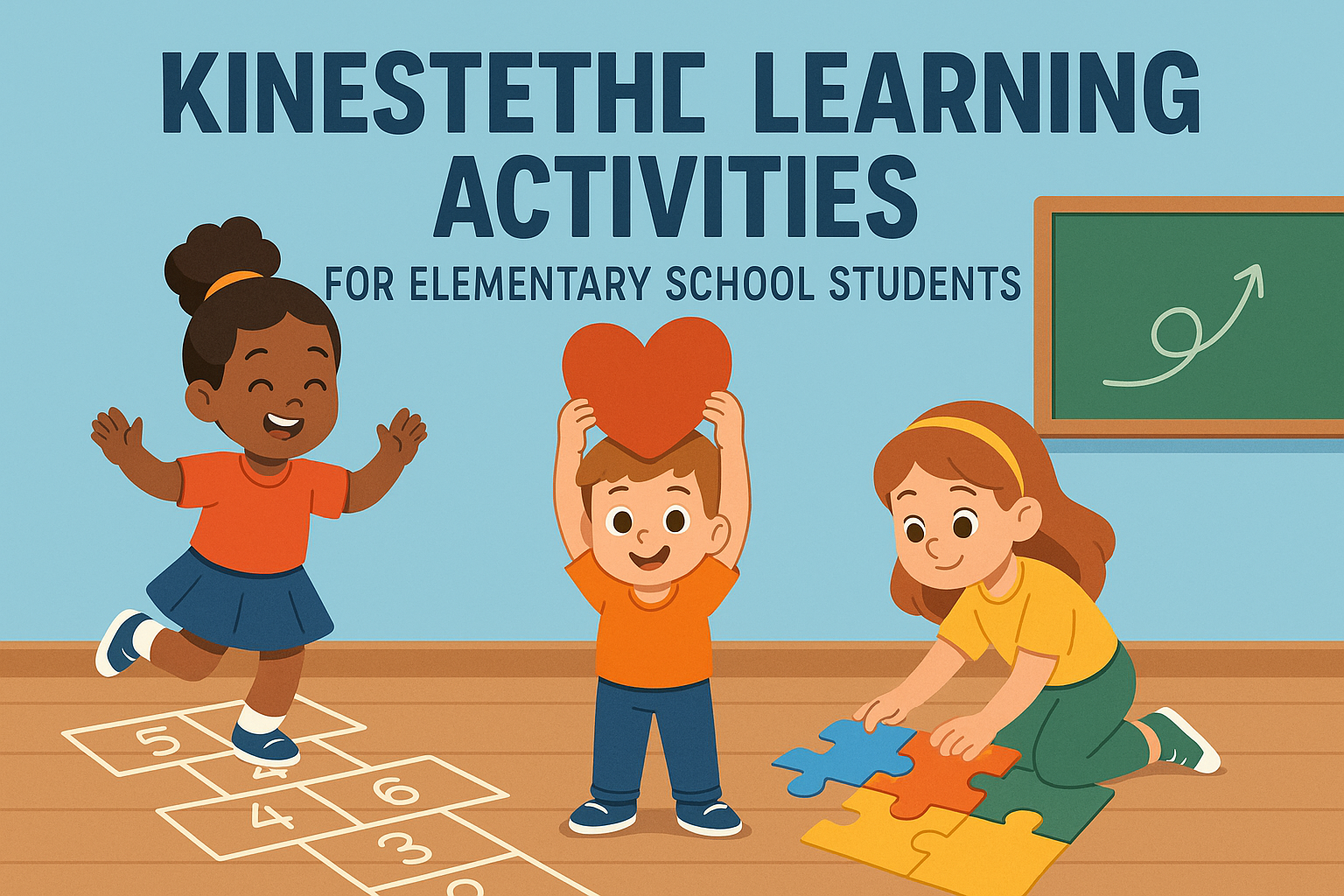
Math can be particularly challenging for kinesthetic learners, but incorporating movement can make it more accessible. For instance, teachers can create a number line on the floor and have students hop from number to number to solve addition or subtraction problems. Using large foam shapes for geometry lessons allows students to manipulate the shapes physically, reinforcing their understanding through motion.
6. Outdoor Learning Activities
The outdoors can serve as the perfect classroom for kinesthetic learning. Teachers can take students outside for nature walks, where they can observe and learn about their environment. Activities like measuring the height of trees or identifying different species help students connect with the material in a real-world context. Outdoor experiments, such as planting seeds or conducting science observations, can also reinforce concepts learned in class.
Incorporating Kinesthetic Learning into the Curriculum
While implementing kinesthetic learning activities is beneficial, it’s essential to effectively integrate them into the broader curriculum. Here are a few strategies:
- Align Activities with Learning Objectives: Ensure that every activity is connected to the learning outcomes. This could involve crafting specific assessment criteria to evaluate students’ understanding after engaging in kinesthetic activities.
- Flexible Lesson Plans: Be prepared to adapt your lesson plans to include spontaneous kinesthetic activities. If students seem restless or unfocused, consider shifting the class to a more active learning format.
- Use Multisensory Approaches: Combine kinesthetic activities with visual and auditory components. For example, when teaching new vocabulary, use physical gestures that correspond to each word. This multisensory approach can enhance understanding for all types of learners.
- Collaborate with Other Teachers: Work alongside colleagues to create interdisciplinary activities that incorporate kinesthetic learning. A project that combines science with art, for instance, can create a richer learning experience and foster collaboration among students.
Current Relevance of Kinesthetic Learning
In an era dominated by technology, where students often find themselves glued to screens, the importance of kinesthetic learning is more relevant than ever. The rise of digital devices in education, while beneficial in many ways, has led to a decrease in physical activity among children. With reports indicating that many young students do not meet the recommended daily physical activity levels, kinesthetic learning activities can serve as a remedy.
Furthermore, as schools increasingly adopt flexible classroom designs, incorporating movement into daily routines becomes simpler. By creating an environment that encourages physical engagement, educators can cultivate a dynamic atmosphere that facilitates learning. This shift not only benefits students academically but also promotes their overall health and well-being.
Expert Perspectives on Kinesthetic Learning
Educators and psychologists alike advocate for the incorporation of kinesthetic learning activities in educational settings. Dr. David Sousa, an educational consultant and author, emphasizes the importance of physical movement in learning, stating that “the brain is an active organ that thrives on movement.” He suggests that learners who are engaged physically are more likely to develop higher-order thinking skills and demonstrate better problem-solving abilities. (See: Study on kinesthetic learning effectiveness.)
Additionally, developmental psychologist Dr. Linda Kreger Silverman highlights that kinesthetic activities are particularly beneficial for children with learning differences, such as ADHD. She notes that these students often excel when they can move while learning, as it helps them focus and retain information better than through traditional lectures alone.
Statistics and Research Findings
Research supports the effectiveness of kinesthetic learning activities. A study published in the journal Educational Psychology found that students engaged in kinesthetic activities had a 30% increase in information retention compared to their peers who were taught using traditional methods. Another study demonstrated that classrooms implementing movement-based learning saw a 15% improvement in overall academic performance.
Furthermore, the Centers for Disease Control and Prevention (CDC) reports that only 24% of children aged 6-17 meet the recommended guidelines for physical activity. Kinesthetic learning activities can play a significant role in combating this trend by seamlessly integrating movement into the learning process.
Comparing Kinesthetic Learning to Other Learning Styles
While kinesthetic learning activities are highly effective, it’s important to note how they compare to other learning styles. Visual learners, for instance, benefit from diagrams, charts, and images, while auditory learners excel with lectures and discussions. Kinesthetic learners, however, require movement and hands-on engagement.
Blending these approaches can create a more enriched learning environment. For example, a lesson on ecosystems could involve visual aids such as videos or diagrams, auditory components like discussions, and kinesthetic activities where students create models of food chains using physical objects. This combination addresses the diverse needs of all students and enhances overall comprehension.
Kinesthetic Learning Activities FAQ
What are some easy kinesthetic learning activities for parents to do at home?
Parents can engage their children in kinesthetic learning at home through simple activities. Cooking can teach math and science concepts, while arts and crafts can foster creativity and fine motor skills. Outdoor games, such as scavenger hunts or nature walks, also promote learning through exploration.
How do kinesthetic learning activities benefit children with learning disabilities?
Children with learning disabilities often struggle with traditional teaching methods. Kinesthetic learning activities provide them with alternative ways to grasp concepts, allowing them to engage physically and emotionally, which can enhance understanding and retention. These activities create a more inclusive learning environment that caters to their unique needs.
Can kinesthetic learning activities be adapted for older students?
Absolutely! While many kinesthetic activities are designed for younger students, older students can also benefit. High school science labs, physical education classes, and even interactive history presentations can incorporate movement, making learning more dynamic and enjoyable.
How can teachers assess the effectiveness of kinesthetic learning activities?
Teachers can assess the effectiveness of kinesthetic learning activities through both formative and summative assessments. Observations during activities, student reflections, and performance on related assessments can provide insights into how well students understand and retain information learned through these interactive methods.
Conclusion
Kinesthetic learning activities represent a vital aspect of modern education, particularly for elementary school students. By engaging children through movement and hands-on experiences, educators can deepen understanding, improve retention, and foster a love of learning. As we continue to explore innovative educational approaches, the integration of kinesthetic strategies stands out as a powerful tool to cater to diverse learning styles and create an inclusive and effective learning environment.
Ultimately, embracing kinesthetic learning activities is more than just a teaching tactic; it’s about recognizing the unique ways children learn and providing them with the opportunities they need to thrive. As educators, parents, and community members, we must advocate for active learning strategies that will prepare our students not just for tests, but for life.
“`
Trending Now
Frequently Asked Questions
What are kinesthetic learning activities?
Kinesthetic learning activities are hands-on experiences where learners engage physically to absorb information. These activities cater to students who thrive on movement, helping them understand concepts better through interaction and physical engagement.
How does kinesthetic learning benefit elementary students?
Kinesthetic learning benefits elementary students by enhancing engagement and improving information retention. By incorporating movement into lessons, students are more motivated to participate and can channel their energy into productive learning.
What are some examples of kinesthetic learning activities?
Examples of kinesthetic learning activities include role-playing, building models, interactive games, and outdoor experiments. These activities allow students to learn through doing, making the learning process more dynamic and memorable.
Why is kinesthetic learning important in the digital age?
Kinesthetic learning is crucial in the digital age because it addresses shorter attention spans by keeping students actively engaged. As traditional methods may fail to capture interest, movement-oriented activities help maintain focus and enthusiasm for learning.
How can teachers implement kinesthetic learning in the classroom?
Teachers can implement kinesthetic learning by incorporating movement into lessons, using hands-on materials, organizing educational games, and encouraging physical activities that relate to the curriculum, thereby catering to energetic and curious learners.
What did we miss? Let us know in the comments and join the conversation.