
“`html
As students transition from elementary school to the bustling halls of middle school, they encounter a complex social environment that demands more than just academic skills. One critical factor that often goes unnoticed is nonverbal communication. This form of interaction, which includes facial expressions, body language, posture, and gestures, plays a significant role in shaping relationships and social dynamics among adolescents. In this article, we’ll explore how nonverbal communication affects social success in middle school, providing insights and practical advice for students, parents, and educators alike.
Understanding Nonverbal Communication
Nonverbal communication encompasses a variety of signals that can convey meaning without words. According to research, up to 93% of communication is nonverbal, which reveals just how essential these cues are in our daily interactions. In middle school, where social hierarchies and status are constantly evolving, understanding nonverbal signals can help students navigate friendships and group dynamics more effectively.
Adolescents are particularly attuned to nonverbal cues, as they are at an age where peer acceptance and social belonging are paramount. A raised eyebrow, a shrug, or crossed arms can communicate volumes about a person’s feelings, intentions, or attitudes. For middle schoolers, mastering these subtle signals can be the difference between feeling included or ostracized.
The Impact of Body Language
Body language is a prominent aspect of nonverbal communication. It includes posture, gestures, and spatial distance, all of which can significantly influence how one is perceived by peers. For instance, standing tall with an open stance can project confidence, while slouching or shrinking into oneself can signal insecurity.
- Posture: Good posture not only shows confidence but also affects how students feel about themselves. When they stand tall, they may feel more assertive and ready to engage with others.
- Gestures: Subtle gestures, like nodding or using hand movements while speaking, can make conversations more engaging and help convey enthusiasm or interest.
- Proxemics: How close students stand to one another can indicate their relationship. Standing too close may invade personal space, while too much distance can signal disinterest or discomfort.
By being mindful of their own body language and the cues from others, middle school students can develop stronger connections and avoid miscommunications.
Facial Expressions and Emotional Intelligence
Facial expressions are one of the most powerful forms of nonverbal communication. They can convey a wide range of emotions, from happiness and excitement to sadness and frustration. In middle school, where emotional experiences can be intense, being able to read and respond to facial expressions is crucial for social success.
Research suggests that developing emotional intelligence—recognizing and managing one’s own emotions while also empathizing with the emotions of others—can enhance social relationships. Middle schoolers who can interpret and respond appropriately to facial cues are often more successful in forming friendships and navigating social challenges.
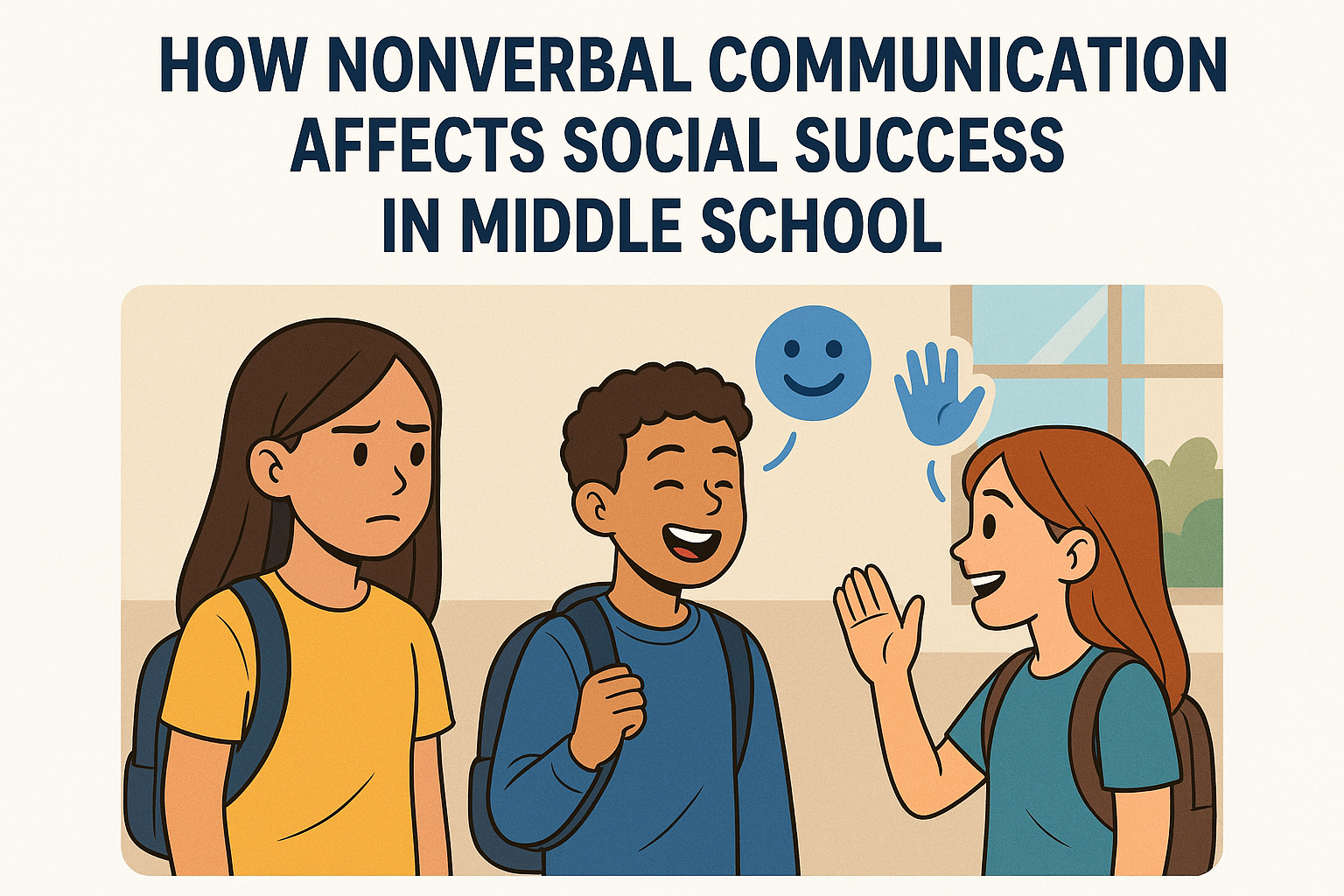
For example, a smile can invite inclusion, while a frown may indicate someone is upset and needs support. In fostering emotional awareness, students not only improve their communication skills but also create a more supportive social environment. (See: nonverbal communication in adolescents.)
Nonverbal Communication and Peer Relationships
In the intricate social web of middle school, nonverbal communication can heavily influence peer relationships. Students are constantly assessing each other’s body language, expressions, and gestures to gauge acceptance or rejection. This can lead to misunderstandings, especially in groups where individuals may not feel comfortable expressing their feelings verbally.
Consider the scenario of a student trying to join a group during recess. If their body language appears open and inviting, they are more likely to be welcomed. Conversely, if they stand off to the side with closed-off posture, they may inadvertently signal disinterest or rejection, making it harder for them to connect with others.
Furthermore, peer pressure can amplify the significance of nonverbal cues. Students might feel compelled to conform to group norms, often expressed through body language and nonverbal behavior. This pressure can impact their self-esteem and overall social health, especially if they struggle to read or respond to the nonverbal signals around them.
Practical Strategies for Improving Nonverbal Communication
For middle schoolers looking to enhance their nonverbal communication skills, there are several practical strategies to consider. Developing an awareness of their own body language, as well as learning to read the signals of others, can significantly improve their social interactions.
- Practice Active Listening: Encourage students to maintain eye contact, nod, and use facial expressions that align with what they are hearing. This not only shows engagement but also helps in understanding the speaker’s emotions.
- Role-Playing Exercises: Parents and educators can create scenarios where students practice different nonverbal cues. For instance, acting out various emotions or practicing how to initiate a conversation can help students become more adept at using body language.
- Self-Reflection: After social interactions, students can reflect on how their body language may have influenced the outcome. Were they closed off? Did they miss cues from others? This reflection can facilitate growth.
By actively working on these strategies, students can foster healthier peer relationships and enhance their overall social success.
The Role of Technology in Nonverbal Communication
In today’s digital age, technology influences how nonverbal communication is expressed and interpreted. With the rise of social media and texting, many traditional nonverbal cues are lost or misinterpreted. Emojis, GIFs, and memes have emerged as modern replacements for nonverbal signals, but they don’t always capture the nuances of in-person interactions.
Furthermore, the prevalence of video calls, especially post-pandemic, has redefined how students experience nonverbal cues. While video can capture facial expressions and some body language, it often lacks the full spectrum of interaction that occurs face-to-face. Students may need to adapt their nonverbal communication skills to suit these new formats, learning to convey emotions through the camera effectively.
As technology continues to shape communication, educating students about the importance of maintaining strong nonverbal skills, both online and offline, becomes essential. Equipping them with the tools to navigate both realms can lead to greater social competency.
How Nonverbal Communication Affects Academic Performance
Surprisingly, nonverbal communication doesn’t only play a role in social contexts; it can also influence academic performance. Research has shown that students who effectively use nonverbal communication in classroom settings are often more engaged and participative. (See: role of body language in social success.)
For instance, a student who maintains eye contact with the teacher and uses positive body language during discussions is likely to be perceived as more confident and engaged. This kind of active participation can lead to better academic outcomes, as teachers are more inclined to offer support and encouragement to those who seem invested in the learning process.
Furthermore, nonverbal cues can also help students better understand classroom dynamics. Recognizing when a teacher is enthusiastic about a topic—indicated by their animated gestures or facial expressions—can signal to students when to engage more deeply or ask questions. Understanding these cues can create a more enriching educational experience.
Common Misunderstandings in Nonverbal Communication
It’s important to acknowledge that nonverbal communication can often be misunderstood, leading to conflicts or social awkwardness. Here are a few common misconceptions that middle schoolers might have:
- Crossed Arms Indicate Disinterest: While crossed arms can signal defensiveness or discomfort, it can also simply mean someone is cold or thinking deeply. Students should be careful not to jump to conclusions based on limited cues.
- Avoiding Eye Contact Means Disrespect: Some students may have cultural or personal reasons for not making eye contact. It’s crucial to consider individual differences when interpreting nonverbal signals.
- Facial Expressions Are Universal: While many facial expressions do convey similar emotions across cultures, the context and interpretation can vary significantly. Understanding cultural nuances is critical in effectively reading nonverbal cues.
Educating students about these misunderstandings can help create a more empathetic and aware social environment.
Frequently Asked Questions about Nonverbal Communication in Middle School
Why is nonverbal communication important in middle school?
Nonverbal communication is crucial during middle school because this is a time when students are forming new friendships and navigating complex social dynamics. Mastering nonverbal cues can help them build better relationships and avoid misunderstandings.
How can I improve my nonverbal communication skills?
Improving nonverbal communication skills can be achieved by practicing active listening, being aware of your own body language, and reflecting on your interactions. Role-playing and receiving feedback from peers can also be beneficial.
What are some examples of nonverbal cues to be aware of?
Some nonverbal cues include facial expressions (like smiling or frowning), body posture (standing tall vs. slouching), gestures (waving, pointing), and eye contact (making or avoiding eye contact). Each of these can convey different meanings in social interactions.
Can nonverbal communication vary by culture?
Yes, nonverbal communication can vary widely across cultures. What is considered polite in one culture may be perceived differently in another. It’s important to be aware of cultural differences and adapt your approach accordingly.
How does technology affect nonverbal communication?
Technology can both enhance and hinder nonverbal communication. While video calls can convey facial expressions, many cues are lost in text messaging or social media. Understanding how to communicate effectively in both digital and face-to-face environments is essential.
Additional Strategies for Parents and Educators
Parents and educators can play a significant role in helping middle schoolers develop their nonverbal communication skills. Here are some additional strategies to consider:
- Model Positive Nonverbal Communication: Adults can serve as role models by demonstrating effective nonverbal communication in their interactions. This includes making eye contact, using open body language, and showing appropriate facial expressions.
- Encourage Group Activities: Organizing team-building exercises or group projects can provide students with opportunities to practice nonverbal communication in a supportive environment. Such activities foster collaboration and teach students to read each other’s cues effectively.
- Discuss Real-Life Scenarios: Engage students in discussions about situations they encounter in daily life. Analyzing scenarios from popular movies or TV shows can help students identify nonverbal cues and their meanings in a relatable context.
How Nonverbal Communication Can Shape Future Interactions
The skills students develop regarding nonverbal communication in middle school can have lasting impacts on their future. As they transition into high school and beyond, the ability to read and respond to nonverbal cues will be crucial in various settings—be it in further education, workplaces, or personal relationships. Students who are adept at nonverbal communication tend to be more successful in forming professional connections and navigating social situations throughout their lives.
Conclusion: A Path to Social Proficiency
In conclusion, nonverbal communication is a pivotal aspect of social success in middle school. By understanding and mastering the nuances of body language, facial expressions, and gestures, students can enhance their relationships and navigate the often-tumultuous social landscape of adolescence. As they practice these skills, they not only improve their social interactions but also foster emotional intelligence, setting a foundation for future communication success.
Ultimately, as students become more adept at reading and responding to nonverbal cues, they will likely find themselves integrating more effectively into their peer groups and enjoying a richer middle school experience. Investing time and effort into understanding nonverbal communication can pay off in various areas of life, well beyond the school environment.
“`
Trending Now
Frequently Asked Questions
How does nonverbal communication impact social interactions in middle school?
Nonverbal communication significantly influences social interactions in middle school by conveying emotions and intentions without words. Students who understand and utilize nonverbal cues, such as facial expressions and body language, can navigate complex social dynamics more effectively, enhancing their relationships and peer acceptance.
What are examples of nonverbal communication in middle school?
Examples of nonverbal communication in middle school include facial expressions, gestures, posture, and body language. For instance, a smile can indicate friendliness, while crossed arms may suggest defensiveness. Recognizing these signals helps students interpret social situations and respond appropriately.
Why is body language important for middle school students?
Body language is crucial for middle school students as it affects how they are perceived by peers. Positive body language, like good posture and open gestures, can project confidence and approachability, while negative body language may lead to misinterpretations and social exclusion.
How can students improve their nonverbal communication skills?
Students can improve their nonverbal communication skills by practicing awareness of their body language, observing others, and seeking feedback. Engaging in activities like role-playing can also help them understand and express nonverbal cues more effectively in various social situations.
What role does nonverbal communication play in peer acceptance?
Nonverbal communication plays a vital role in peer acceptance by influencing how students are viewed by their peers. Mastering nonverbal cues can enhance social connections, making students feel more included, while misreading or misusing these signals can lead to feelings of isolation.
What’s your take on this? Share your thoughts in the comments below — we read every one.