

“`html
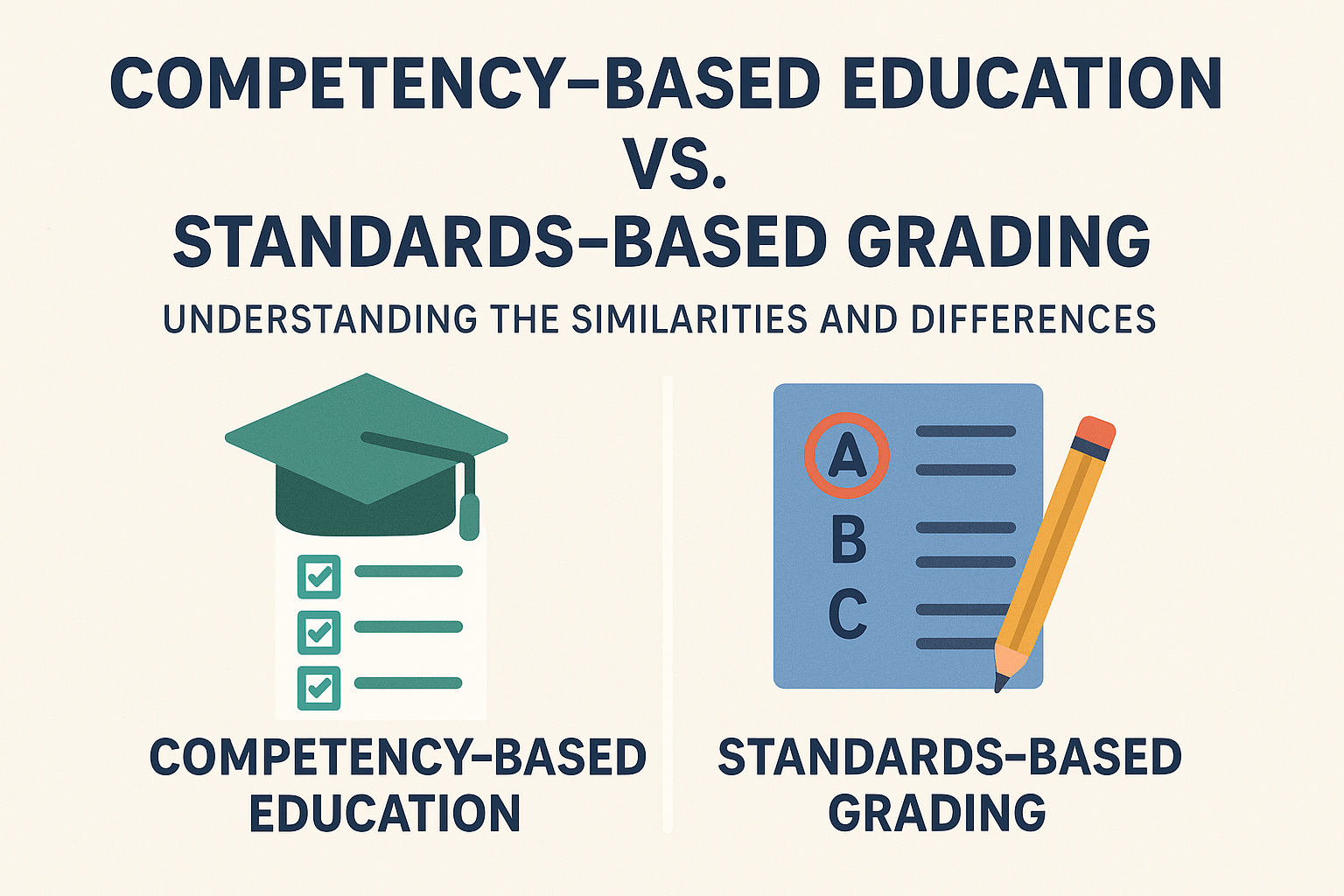
In the ever-evolving landscape of education, two concepts have taken center stage: competency-based education and standards-based grading. While both aim to enhance student learning and assessment, they do so through distinct frameworks. This article explores the nuances between these two approaches, shedding light on their similarities, differences, practical implications, and current relevance in education.
1. Defining Competency-Based Education
Competency-based education (CBE) is an instructional approach designed to ensure that students master specific skills and knowledge before moving on to more advanced topics. Rather than emphasizing time spent in a classroom or the completion of a set number of assignments, CBE focuses on the student’s demonstrated ability to apply what they’ve learned. Each student progresses at their own pace, which can result in a more personalized learning experience.
This model is particularly beneficial for learners who may require additional time to grasp concepts, as it allows for flexibility and individualized support. CBE aligns closely with workforce demands, equipping students with the practical skills they need for success in their careers. As the job market continues to evolve, this approach is becoming increasingly relevant.
2. Understanding Standards-Based Grading
On the other hand, standards-based grading is a method of evaluating student performance based on specific learning standards. Under this system, grades reflect a student’s proficiency in relation to predetermined criteria rather than comparing students to one another. Each standard is assessed individually, providing a clearer picture of where a student excels or may need improvement.
Standards-based grading promotes a more transparent and equitable grading system. By focusing on mastery of learning objectives, it encourages students to take ownership of their learning process. This approach can help eliminate the anxiety often associated with traditional grading systems, where a single test can disproportionately influence a student’s overall grade.
3. Key Similarities Between CBE and Standards-Based Grading
Despite their differences, CBE and standards-based grading share some common ground. Both approaches prioritize mastery of content over the time spent in class or the completion of assignments. They aim to provide students with a comprehensive understanding of material, fostering deeper learning. Related reading: modern assessment strategies.
Furthermore, both methods encourage feedback and continuous improvement. In CBE, students receive ongoing assessments and support to help them reach proficiency, while standards-based grading allows for reassessment and reflection on performance. Both frameworks aim to create a learning environment where students can thrive and develop their skills in a meaningful way.
4. Key Differences in Implementation
While CBE and standards-based grading share core principles, their implementation processes differ significantly. CBE typically involves a more radical restructuring of curricular and instructional practices. For example, schools may need to develop personalized learning pathways, integrate technology for tracking progress, and provide tailored support for students who may struggle with certain competencies.
In contrast, standards-based grading often requires less extensive changes to existing structures. Schools may simply need to adjust their grading policies and communicate the new standards to students and parents. Teachers can still use traditional teaching methods while adapting their assessment practices. This ease of implementation can make standards-based grading more appealing for some educators. (See: Competency-Based Education Overview.)
5. Practical Insights for Educators
For educators considering either approach, understanding the practical implications is essential. In a CBE environment, teachers act more as facilitators than traditional instructors. They provide resources and support that allow students to explore topics at their own pace. This shift can require significant professional development and a reevaluation of traditional teaching methods.
On the other hand, educators implementing standards-based grading should focus on creating clear, measurable learning objectives. These objectives should align with student assessments and be communicated effectively to students and parents. It’s vital for educators to ensure that students understand the grading system and how their performance will be evaluated.
6. Current Relevance and Future Trends
As we look to the future of education, both competency-based education and standards-based grading are gaining traction. The rise of personalized learning and a focus on preparing students for real-world challenges are driving schools to reconsider traditional models. Research indicates that schools adopting CBE see improved student engagement and outcomes, suggesting that this approach may be a critical component of future educational practices.
Moreover, standards-based grading is being embraced by districts and schools nationwide as a means to provide clearer insights into student performance. As educators seek to align their practices with current educational standards and workforce needs, both CBE and standards-based grading offer valuable frameworks for fostering student success.
7. Challenges and Considerations
Implementing either competency-based education or standards-based grading isn’t without its challenges. For CBE, one significant barrier is the need for extensive training for teachers and administrators. Without a solid understanding of how to implement these practices effectively, schools may struggle to achieve the desired outcomes.
Moreover, transitioning to a CBE model can be resource-intensive, requiring investments in technology and curriculum development. Schools must also grapple with how to assess competencies effectively and ensure that students receive adequate support throughout their learning journey.
8. Stakeholder Perspectives: Students, Parents, and Educators
The perspectives of various stakeholders play a critical role in the success of both CBE and standards-based grading. Students benefit from greater autonomy and personalized learning, though some may initially struggle with self-directed learning models. Parents often appreciate the transparency of grading systems, as they can understand exactly how their child is performing against specific standards.
Educators can find both systems liberating and burdensome. While they can foster a more engaging learning environment, they also require shifts in mindset and methodology. Open communication among all stakeholders is essential to ensure a smooth transition and effective implementation of either approach.
9. Real-World Applications: Case Studies
Several school districts have successfully implemented CBE and standards-based grading, yielding positive results. For instance, the New Hampshire Department of Education has been a pioneer in CBE, with various schools adopting personalized learning pathways tailored to students’ needs. Reports indicate that students have shown increased motivation and engagement in their learning.
Similarly, schools using standards-based grading have documented improvements in student performance and clarity in communication about academic expectations. Case studies reveal that when grading aligns with learning objectives, students gain a better understanding of their strengths and areas for growth. (See: Learning and Developmental Disorders.)
10. The Road Ahead: Integrating Approaches
Looking forward, educators may find value in integrating elements of both competency-based education and standards-based grading. By leveraging the strengths of each approach, schools can create a more holistic framework that prioritizes mastery while maintaining clear and equitable assessment practices.
This integrated model could foster a more supportive learning environment, where students are encouraged to achieve proficiency in a manner that aligns with real-world applications. As education continues to evolve, embracing flexibility and innovation will be key to meeting the diverse needs of learners.
11. Comparative Analysis: CBE vs. Traditional Education Models
When comparing competency-based education to traditional education models, several critical differences emerge. Traditional education typically operates on a set schedule where students move through the curriculum at the same pace, regardless of their understanding or mastery of the material. This can lead to gaps in knowledge and skills, as not all students learn in the same way or at the same speed.
In contrast, CBE emphasizes individualized pacing and mastery. For instance, in a traditional classroom setting, a student might receive a “C” on a math test and move on to the next unit, potentially leaving behind significant gaps in foundational skills. In a CBE framework, that student would have the opportunity to revisit and master the material before progressing, ensuring a more robust understanding.
According to a 2022 report by the Education Commission of the States, schools that implemented CBE reported a 25% increase in student retention rates and a 30% increase in graduation rates compared to traditional models. These statistics highlight the effectiveness of CBE in fostering student success.
12. Expert Perspectives on CBE
Educational experts are increasingly weighing in on the benefits of competency-based education. Dr. Sarah Baker, an education reform advocate, argues that CBE aligns closely with the skills needed in the 21st-century workforce. “Employers are looking for individuals who can demonstrate their abilities over mere time spent in a classroom,” she notes. “Competency-based education fosters these skills by placing the focus on real-world applications and measurable outcomes.”
Additionally, Dr. Mark Thompson, a professor of education at a leading university, points out that CBE offers a solution to the diverse needs of today’s learners. “With such varied backgrounds and learning styles, a one-size-fits-all approach simply doesn’t work. CBE allows for tailored instruction that meets students where they are,” he explains.
13. Frequently Asked Questions (FAQ)
What is the main goal of competency-based education?
The main goal of competency-based education is to ensure that all students achieve mastery of specific skills and knowledge before moving on to more complex topics. This approach promotes personalized learning and allows students to progress at their own pace.
How does standards-based grading differ from traditional grading?
Standards-based grading focuses on a student’s proficiency in meeting specific learning standards rather than ranking students against each other. This system provides a clearer understanding of a student’s strengths and areas needing improvement.
Can CBE be effectively implemented in all educational settings?
While CBE has shown to be effective in various settings, its implementation can be challenging. Factors such as resources, training, and support need to be considered. Schools with adequate infrastructure and commitment to personalized learning may find CBE particularly beneficial. top tech for assessments offers useful background here.
How do students and parents perceive standards-based grading?
Many students and parents appreciate the transparency and clarity that standards-based grading provides. It helps them understand exactly how students are performing against specific learning objectives, fostering better communication about academic expectations.
What future trends are expected in competency-based education?
As technology evolves and education continues to adapt, we can expect to see increased integration of CBE frameworks with digital learning platforms. This combination can enhance personalized learning experiences and make tracking student progress more efficient.
How can schools effectively assess competencies in a CBE framework?
Effective assessment in a CBE framework often involves a variety of methods, including project-based assessments, performance tasks, and portfolios that showcase student work over time. Continuous feedback loops and formative assessments can also help identify areas where students need additional support.
What role does technology play in competency-based education?
Technology plays a crucial role in CBE by enabling personalized learning pathways, tracking student progress, and facilitating communication between students and educators. Learning management systems and adaptive learning technologies can tailor assignments and resources to meet individual student needs, making mastery more attainable.
In summary, understanding the similarities and differences between competency-based education and standards-based grading is crucial for educators, students, and parents. Each approach offers unique benefits and challenges that can reshape the educational landscape. By keeping an open mind and striving for best practices, we can cultivate a learning environment that truly supports student success.
“`
Trending Now
Frequently Asked Questions
What is competency-based education?
Competency-based education (CBE) is an instructional approach where students must master specific skills and knowledge before advancing. It emphasizes demonstrated ability over time spent in class, allowing personalized learning experiences and flexible pacing, which is especially beneficial for learners needing extra support.
How does standards-based grading work?
Standards-based grading evaluates student performance based on specific learning standards. Instead of comparing students, grades reflect proficiency in relation to predetermined criteria, allowing for a clearer understanding of strengths and areas needing improvement.
What are the similarities between competency-based education and standards-based grading?
Both competency-based education and standards-based grading aim to enhance student learning by focusing on mastery of skills and knowledge. They promote personalized learning and encourage students to take ownership of their educational processes, fostering a more equitable learning environment.
What are the differences between competency-based education and standards-based grading?
The main difference lies in their focus: competency-based education emphasizes mastery before advancement at the student's pace, while standards-based grading assesses proficiency against specific criteria. CBE is more flexible, whereas standards-based grading provides a structured evaluation of individual learning standards.
Why is competency-based education becoming more relevant?
Competency-based education is increasingly relevant due to its alignment with workforce demands. It equips students with practical skills necessary for success in evolving job markets, allowing for personalized learning paths that cater to individual needs and pacing.
What’s your take on this? Share your thoughts in the comments below — we read every one.


