
“`html
In the classroom, communication goes far beyond just words. While verbal language is essential, cultural differences in nonverbal communication can significantly impact how messages are perceived. For teachers, especially those working in diverse environments, understanding these differences is crucial to fostering an inclusive and effective learning atmosphere. This article delves into the intricacies of nonverbal communication across cultures, providing teachers with the insights needed to navigate these complexities.
The Foundation of Nonverbal Communication
Before we dive into the cultural nuances, let’s establish what nonverbal communication entails. Nonverbal communication includes a range of behaviors beyond spoken or written language. Body language, facial expressions, gestures, posture, eye contact, and even the physical distance one maintains during conversations are all components. Researchers suggest that nonverbal cues often convey more information than verbal ones, with studies indicating that up to 93% of communication effectiveness can come from nonverbal elements.
Understanding how these elements vary from culture to culture is essential. For example, a gesture considered friendly in one culture might be offensive in another. This can lead to misunderstandings, which can adversely affect teacher-student relationships and the overall classroom environment.
The Impact of Culture on Nonverbal Communication
Culture shapes how we interpret nonverbal cues. High-context cultures, such as those found in Japan or Saudi Arabia, rely heavily on nonverbal communication. In these societies, the context surrounding a message, including tone, body language, and even silence, plays a significant role in meaning. Conversely, low-context cultures, like those in the United States or Germany, tend to focus on direct verbal communication, often valuing clarity and explicitness over subtleties.
This distinction is vital for teachers to grasp. For instance, a teacher in a high-context culture may expect students to express understanding through nods or attentive body language rather than verbal affirmations. A lack of these nonverbal cues could be misinterpreted as disinterest or confusion. Conversely, students from low-context cultures might respond with direct feedback, which could be perceived as disrespectful in a high-context environment.
Key Nonverbal Cues Across Cultures
Understanding specific nonverbal cues and their meanings across different cultures can enhance a teacher’s ability to connect with students. Here are some key differences to consider:
- Facial Expressions: While some expressions, like happiness and sadness, are universally recognized, the context can alter their interpretation. For instance, a smile can denote politeness in some cultures, while in others, it may suggest embarrassment or discomfort.
- Eye Contact: In Western cultures, maintaining eye contact is often associated with confidence and honesty. However, in many Asian cultures, too much eye contact can be seen as confrontational or rude, leading to a potential clash of perceptions in a classroom setting.
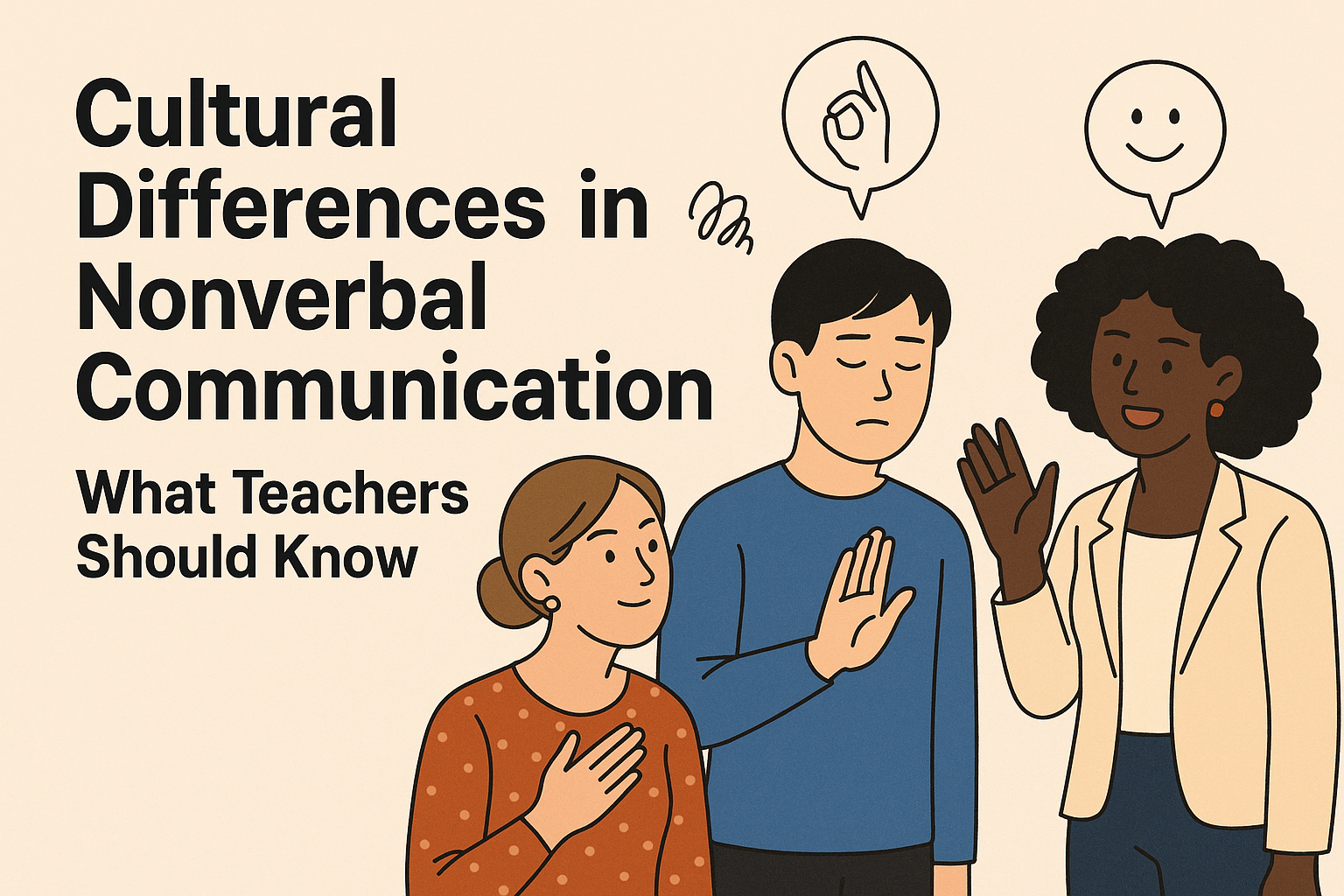
- Gestures: A simple thumbs-up can mean approval in some places, but in others, it’s a serious insult. Teachers should be mindful of the gestures they use, as well as those used by their students.
- Proxemics (Personal Space): Different cultures have varying comfort levels regarding personal space. For instance, Latin American and Middle Eastern cultures may be more comfortable with close proximity, while Northern Europeans might prefer a larger personal space.
Practical Insights for Teachers
So how can teachers incorporate this understanding of cultural differences in nonverbal communication into their everyday practice? Here are some actionable strategies: (See: Understanding nonverbal communication.)
- Observation: Pay close attention to your students’ nonverbal cues. Are they leaning forward when you speak, or do they seem closed off? These signals can provide insights into their engagement and understanding.
- Adapt Your Style: Be flexible in your communication approach. If you notice that certain gestures or tones aren’t resonating with your students, adjust accordingly. This adaptability will not only improve comprehension but also build trust.
- Encourage Open Dialogue: Create a classroom environment where students feel comfortable expressing their feelings and cultural backgrounds. This openness can lead to richer discussions and a better understanding of each other’s nonverbal cues.
- Educate on Cultural Awareness: Incorporate lessons on cultural differences in nonverbal communication into your curriculum. This not only heightens awareness among students but also promotes a more inclusive atmosphere.
Awareness of Cultural Contexts
It’s essential to recognize that nonverbal communication doesn’t exist in a vacuum. The same gesture can carry different meanings based on the context, including historical, societal, and familial backgrounds. For example, children from immigrant families may blend cultural communication styles, leading to unique expressions that may not fit neatly into one category.
Teachers should approach their students with an understanding of these backgrounds. By being sensitive to the various contexts in which their students operate, teachers can better guide their interactions and foster a more harmonious learning environment. For instance, a student who appears withdrawn might come from a culture where modesty and respect for authority are emphasized, affecting their willingness to engage openly in class discussions.
Case Studies and Real-Life Examples
Illustrating the impact of cultural differences in nonverbal communication can be achieved through real-life examples. Take, for instance, a classroom with students from diverse cultural backgrounds. A teacher might notice that students from collectivist cultures (e.g., many Asian countries) seldom raise their hands to answer questions, instead waiting for a direct invitation from the teacher. This could be mistaken for a lack of interest or understanding, when in reality, it is a sign of respect towards authority and an emphasis on group harmony.
Another example can be seen in gestures. A teacher might use a gesture to signal for silence, such as raising a finger to the lips. This might be customary in some cultures, whereas in other contexts, it could be interpreted as dismissive or even aggressive. By being aware of these cultural nuances, teachers can adjust their methods to effectively reach their students.
The Current Relevance of Nonverbal Communication in Education
In our increasingly globalized world, understanding cultural differences in nonverbal communication has never been more relevant. As classrooms become more diverse, teachers are likely to encounter students from a wide array of cultural backgrounds. This diversity is a tremendous asset but also presents challenges if not understood properly.
Recent events, including shifts towards remote learning during the COVID-19 pandemic, have heightened the importance of nonverbal cues in virtual classrooms. Video calls may eliminate some traditional nonverbal communication methods, such as proximity or physical gestures, but they present new opportunities for understanding. For instance, facial expressions and eye contact become even more critical in a video setting, as they can convey engagement or disinterest more prominently than in a physical classroom.
Additionally, technology allows for broader communication with parents and guardians, who may also have cultural backgrounds that influence their nonverbal communication. Teachers should be prepared to engage with families in ways that respect and acknowledge these differences. (See: Effective communication in diverse settings.)
Strategies to Improve Nonverbal Communication Skills
To navigate the complexities of nonverbal communication, teachers can take proactive steps to improve their own skills. Here are a few strategies:
- Participate in Workshops: Attending professional development workshops focused on cultural competence and nonverbal communication can provide valuable insights and skills that can be applied in the classroom.
- Practice Active Listening: This involves not only hearing what students say but also observing their body language and emotional cues. Responding appropriately to both verbal and nonverbal signals fosters a deeper connection.
- Seek Feedback: Encourage students to share how they perceive your nonverbal communication. This can be done through anonymous surveys or open discussions, allowing for constructive feedback that can lead to personal growth and improved teaching practices.
- Engage in Role-Playing Activities: Simulating different cultural scenarios in role-playing exercises can enhance your understanding of how nonverbal cues function in various contexts.
Frequently Asked Questions (FAQ)
What are some common misinterpretations of nonverbal communication?
Common misinterpretations can include assuming that a lack of eye contact indicates dishonesty or disinterest when it may simply be a cultural norm. Similarly, gestures that convey approval in one culture can be offensive in another, leading to confusion.
How can teachers address misunderstandings related to nonverbal communication?
Teachers can address misunderstandings by fostering an open dialogue about cultural differences and encouraging students to share their perspectives. This creates a safe environment where students feel comfortable discussing and clarifying nonverbal cues.
Is it possible to learn nonverbal communication skills?
Yes, nonverbal communication skills can be learned and improved through practice and awareness. Engaging in self-reflection, seeking feedback, and observing interactions can help individuals become more attuned to nonverbal cues.
How does nonverbal communication affect student engagement?
Nonverbal communication plays a crucial role in student engagement. Positive nonverbal cues, such as smiling and open body language, can encourage students to participate more actively in class discussions and feel more connected to their peers and teachers.
Bridging the Gap: Engaging with Cultural Differences
Bridging the gap that cultural differences create is essential for effective teaching. One effective way to address these gaps is to facilitate activities that encourage students to share their cultural backgrounds, such as cultural days or presentations. These activities not only allow students to express their identities but also help their peers understand and appreciate the diverse nonverbal communication styles that exist.
For example, a student from a culture that values indirect communication might present on how their family communicates during important discussions. This could include stories about how they utilize silence or subtle body language to convey messages, providing their classmates with real-world examples of nonverbal cues that differ from their own experiences. Such sharing fosters empathy and a deeper understanding of the nuances of communication within diverse groups.
Importance of Self-Awareness in Nonverbal Communication
Self-awareness plays a crucial role in mastering nonverbal communication. Teachers should regularly reflect on their own body language and how it may be perceived by students from various backgrounds. For instance, a teacher who tends to cross their arms may come across as defensive or closed off to students who interpret that gesture negatively. Being aware of one’s own nonverbal signals can help teachers create a more welcoming and inclusive environment.
Additionally, teachers can strive to adjust their own nonverbal communication to better resonate with their students. This might involve adopting a more open posture, using gestures that are culturally neutral, or even modifying facial expressions to align with the emotional tone of the classroom. Self-reflection and adaptation can significantly enhance the teacher-student dynamic.
Conclusion: Empowering Teachers through Understanding
Understanding cultural differences in nonverbal communication is not merely an academic exercise; it’s a vital tool for teachers seeking to create supportive and effective learning environments. By acknowledging and embracing these differences, teachers can foster an atmosphere of respect, understanding, and collaboration. Ultimately, this awareness empowers educators to not only communicate more effectively with their students but also to cultivate a richer educational experience that respects and celebrates diversity.
Investing time in understanding nonverbal communication across cultures will pay dividends in the classroom, leading to improved student engagement, better relationships, and a more harmonious educational environment. As teachers strive to meet the diverse needs of their students, this knowledge is not just beneficial; it is indispensable.
“`
Trending Now
- this guide on explore your potential with lawnstarter: a staff product engineer education opportunity in são paulo
- this guide on “developmentally appropriate practice in kindergarten: balancing academic standards with child development”
- this guide on “understanding attachment theory: how early bonds shape children’s development”
- our breakdown of “why neuroscientists say learning styles theory lacks scientific evidence”
- the complete explanation
Frequently Asked Questions
What is nonverbal communication in the classroom?
Nonverbal communication in the classroom encompasses various behaviors such as body language, facial expressions, gestures, posture, eye contact, and physical distance. These elements play a crucial role in how messages are perceived and can often convey more information than spoken words.
How do cultural differences affect nonverbal communication?
Cultural differences significantly influence nonverbal communication, as various cultures interpret gestures, facial expressions, and body language differently. For instance, a gesture seen as friendly in one culture may be offensive in another, leading to misunderstandings in diverse classroom environments.
Why is understanding nonverbal communication important for teachers?
Understanding nonverbal communication is essential for teachers because it helps foster an inclusive learning environment. By recognizing the cultural nuances of nonverbal cues, teachers can enhance their communication effectiveness and build better relationships with students from diverse backgrounds.
What are high-context and low-context cultures?
High-context cultures, like Japan and Saudi Arabia, rely heavily on nonverbal cues and the surrounding context to convey meaning. In contrast, low-context cultures, such as the United States and Germany, prioritize direct verbal communication, valuing clarity and explicitness over subtlety.
How can teachers navigate cultural differences in communication?
Teachers can navigate cultural differences in communication by educating themselves about the nonverbal cues specific to their students' cultures. This awareness can help prevent misunderstandings and create a more inclusive classroom atmosphere that respects and values diverse communication styles.
What’s your take on this? Share your thoughts in the comments below — we read every one.