
“`html
When we think about cognitive development in infants, one of the most fascinating concepts that comes to mind is object permanence stages. These stages, formulated by the Swiss psychologist Jean Piaget, provide a framework for understanding how infants perceive the world around them. Piaget’s work has revolutionized our understanding of childhood development, shedding light on how children come to understand that objects continue to exist even when they cannot be seen. In this article, we will explore the nuances of these stages, their implications for child development, and their relevance in today’s parenting practices.
Understanding Object Permanence
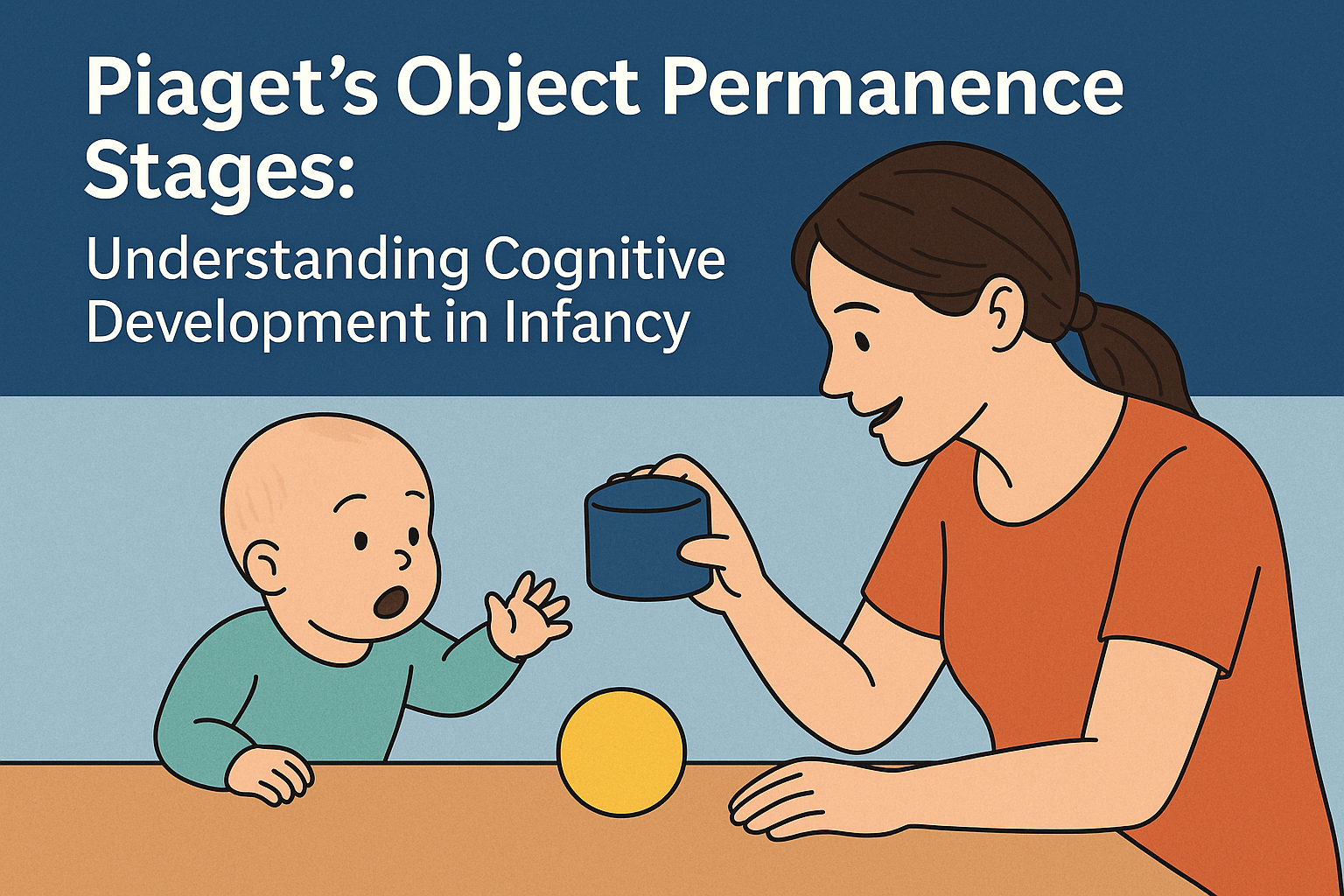
Object permanence is essentially the understanding that objects continue to exist even when they are not directly observed. For instance, if a toy is hidden under a blanket, a child who has grasped this concept will seek the toy, believing it still exists, while a child who has not yet developed this understanding may think the toy has disappeared altogether. This cognitive milestone is crucial for various aspects of child development, including memory, cognitive skills, and attachment behaviors.
Theoretical Background: Piaget’s Cognitive Development Theory
Jean Piaget, who is often regarded as the father of developmental psychology, proposed a theory of cognitive development that consists of four stages: the sensorimotor, preoperational, concrete operational, and formal operational stages. His work on object permanence falls primarily within the first stage, the sensorimotor stage, which spans from birth to approximately two years of age. During this time, infants learn about the world through their senses and motor actions, gradually moving from reflexive responses to more intentional behaviors.
According to Piaget, the development of object permanence occurs as infants progress through various sub-stages within the sensorimotor phase:
- Sub-stage 1 (0-1 month): Reflexive Schemes — Infants use reflexes such as sucking and grasping to interact with the world.
- Sub-stage 2 (1-4 months): Primary Circular Reactions — Infants begin to repeat pleasurable actions, such as sucking their thumb.
- Sub-stage 3 (4-8 months): Secondary Circular Reactions — Infants engage in oriented actions, such as shaking a rattle to make a sound.
- Sub-stage 4 (8-12 months): Coordination of Secondary Circular Reactions — This is where true object permanence begins to develop, as infants start to understand the relationship between actions and outcomes.
- Sub-stage 5 (12-18 months): Tertiary Circular Reactions — Infants experiment with new behaviors to see their effects, such as dropping objects to study how they fall.
- Sub-stage 6 (18-24 months): Mental Representation — Infants develop the ability to form mental images of objects, which solidifies their understanding of object permanence.
The Stages of Object Permanence
Understanding the object permanence stages begins with recognizing that it is not a binary concept; rather, it unfolds gradually through several important milestones:
Stage 1: Lack of Object Permanence
This stage typically occurs from birth to around 4 months of age. Infants in this stage do not yet have a clear understanding of object permanence. If an object is removed from their line of sight, they often believe it has ceased to exist. For instance, if a parent plays peek-a-boo, the infant may genuinely appear surprised when the parent reappears, as they have not yet developed the cognitive framework to understand that the parent was simply hidden. (See: Wikipedia article on object permanence.)
Stage 2: Beginning of Object Permanence
Between 4 to 8 months, infants begin to show signs of understanding that objects continue to exist even when they are out of view. However, their comprehension is still limited. They might search for a toy if it’s partially hidden but may not look for it if it’s completely concealed. This indicates a nascent awareness that the object remains but a struggle to fully grasp its permanence.
Stage 3: Developing Object Permanence
Around 8 to 12 months, infants start to exhibit a more sophisticated understanding of object permanence. They can search for objects that are entirely hidden, although they may still struggle if the hiding location changes. For example, if a toy is hidden under a blanket and then moved to a box, the infant may continue to look under the blanket, demonstrating their reliance on memory and their understanding of the object’s last known location rather than a complete grasp of its permanence.
Stage 4: Mastery of Object Permanence
By the time infants reach 12 months of age, most have developed a solid understanding of object permanence. They will look for objects in a variety of locations and understand that objects will still exist even when out of sight. This mastery enables them to engage in more complex play and interactions with their environment. They begin to develop anticipatory skills, such as expecting a parent to return after leaving the room.
Implications for Cognitive Development
The development of object permanence is a significant milestone in cognitive development. It lays the groundwork for more advanced thinking skills and social interactions as children grow. Here are a few key implications:
- Memory Development: As infants learn that objects persist even when unseen, their memory capabilities begin to grow. This is critical for understanding sequences and narratives.
- Social Skills: Understanding object permanence aids in the development of attachment. Children begin to form bonds and understand that caregivers will return, which is essential for developing trust.
- Problem-Solving Skills: Knowledge that objects still exist allows children to experiment and engage in more complex problem-solving activities. For instance, they may figure out how to retrieve a toy that is just out of reach.
Real-World Applications and Current Relevance
The concept of object permanence stages is not merely academic; it has practical applications in education and parenting. Understanding these stages can help caregivers better support their children’s developmental needs:
- Playtime Activities: Engaging in games that encourage searching or hiding objects can reinforce the concept of object permanence. Simple activities like hide-and-seek or placing toys under cups can be both fun and educational.
- Responsive Interactions: Being responsive to an infant’s cues helps reinforce a sense of security and understanding of object permanence. When caregivers consistently return, infants learn that their objects of attachment (like parents or caregivers) are reliable.
- Developmental Milestones: Parents can use knowledge of object permanence stages to gauge their child’s progress. If a child appears to be lagging in this area, they might benefit from additional cognitive play activities.
Challenges and Critiques of Piaget’s Theory
While Piaget’s research has laid the foundation for our understanding of cognitive development, it has also faced various critiques over the years. Some researchers argue that Piaget underestimated infants’ abilities. For instance, modern studies have suggested that even very young infants may have some understanding of object permanence earlier than Piaget proposed. Experiments using advanced technology, like eye-tracking, have shown that infants as young as three months may look longer at unexpected outcomes, hinting at an awareness of object permanence.
Additionally, Piaget’s theory has been criticized for its rigid stage structure. Development is often viewed as more fluid and variable across different cultures and individual experiences. This has led to calls for a more nuanced understanding of cognitive development that takes into account the influence of socio-cultural factors. (See: NIH article on cognitive development.)
Object Permanence and Language Development
A fascinating aspect of object permanence is its connection to language development. As infants gain a better understanding of object permanence, they also begin to develop language skills that allow them to label and describe the objects they understand to exist even when they are not present. Research indicates that infants who exhibit strong object permanence skills often show advanced language acquisition abilities as they grow. This is largely because recognizing objects and their permanence enhances their capacity to form concepts, which is foundational for effective communication.
Object Permanence and Emotional Development
Emotional development is another critical area influenced by the understanding of object permanence. When children understand that their caregivers exist even when they can’t see them, it contributes to their ability to form secure attachments. This understanding helps infants cope with separation anxiety, as they realize their primary caregivers will return. This emotional security is essential for children to explore their environment confidently, knowing that they have a safe base to return to.
Expert Perspectives on Object Permanence
Experts in child development emphasize the importance of fostering activities that promote the understanding of object permanence. Dr. Sarah Jones, a child psychologist, states, “Encouraging play that involves hiding and revealing objects can significantly enhance an infant’s comprehension of their surroundings.” She advocates for creating a rich, interactive environment where infants can play with toys that allow for exploration and discovery.
Additionally, Dr. Michael Lee, a developmental neuroscientist, highlights the implications of object permanence on long-term cognitive skills. “The early understanding of object permanence not only shapes immediate interactions but lays the groundwork for critical thinking and problem-solving later in life,” he explains.
Frequently Asked Questions (FAQ)
What age do infants typically develop object permanence?
Infants typically start to develop object permanence around 4-8 months, but it becomes solidified by the time they reach 12 months of age.
How can parents encourage the development of object permanence?
Parents can encourage this development through interactive play, such as hide-and-seek, peek-a-boo, or hiding toys under cups and encouraging their child to find them. Engaging in these activities reinforces the understanding that objects still exist even when they are out of sight.
What are some signs that my child is developing object permanence?
Signs include searching for hidden objects, showing surprise when a hidden object reappears, and displaying anxiety when separated from caregivers. As these signs emerge, it generally indicates that the child is beginning to grasp the concept of object permanence.
Can culture affect the development of object permanence?
Yes, cultural differences can impact how and when children develop object permanence. Environments that emphasize interactive play and exploration may promote earlier understanding, whereas more restrictive environments may lead to delayed development in this area.
Conclusion: The Lasting Impact of Object Permanence
The exploration of object permanence stages offers valuable insights into how infants understand their world and lays the foundation for their future cognitive and social development. While Piaget’s framework is not without its critiques, it remains a critical part of our understanding of child development. As we continue to study and learn, adapting our approaches to parenting and education can help foster the cognitive growth of infants. Whether through play or responsive caregiving, helping children navigate their understanding of object permanence will ultimately contribute to their overall development and learning.
“`
Trending Now
Frequently Asked Questions
What is Piaget's theory of cognitive development?
Piaget's theory of cognitive development outlines four stages: sensorimotor, preoperational, concrete operational, and formal operational. His work emphasizes how children learn and understand the world, with object permanence being a key concept in the sensorimotor stage, where infants begin to realize that objects continue to exist even when not visible.
What is object permanence in infants?
Object permanence refers to the understanding that objects continue to exist even when they cannot be seen. This cognitive milestone is crucial for infants as it influences their memory, cognitive skills, and attachment behaviors, marking an essential step in their overall cognitive development.
What are the stages of object permanence according to Piaget?
Piaget identified several sub-stages of object permanence within the sensorimotor stage. These include reflexive schemes in the first month, followed by the development of intentional actions as infants begin to understand that hidden objects still exist, gradually enhancing their cognitive abilities.
How does object permanence affect child development?
Object permanence significantly influences various aspects of child development, including memory, cognitive skills, and social interactions. When infants understand that objects exist even when out of sight, it aids in their ability to explore, learn, and form attachments, laying a foundation for future learning.
Why is object permanence important in parenting?
Understanding object permanence is crucial for parents as it helps them recognize developmental milestones in their infants. By engaging in activities that promote this understanding, such as peek-a-boo games, parents can support their child's cognitive growth and foster a sense of security and attachment.
Have you experienced this yourself? We’d love to hear your story in the comments.