

“`html
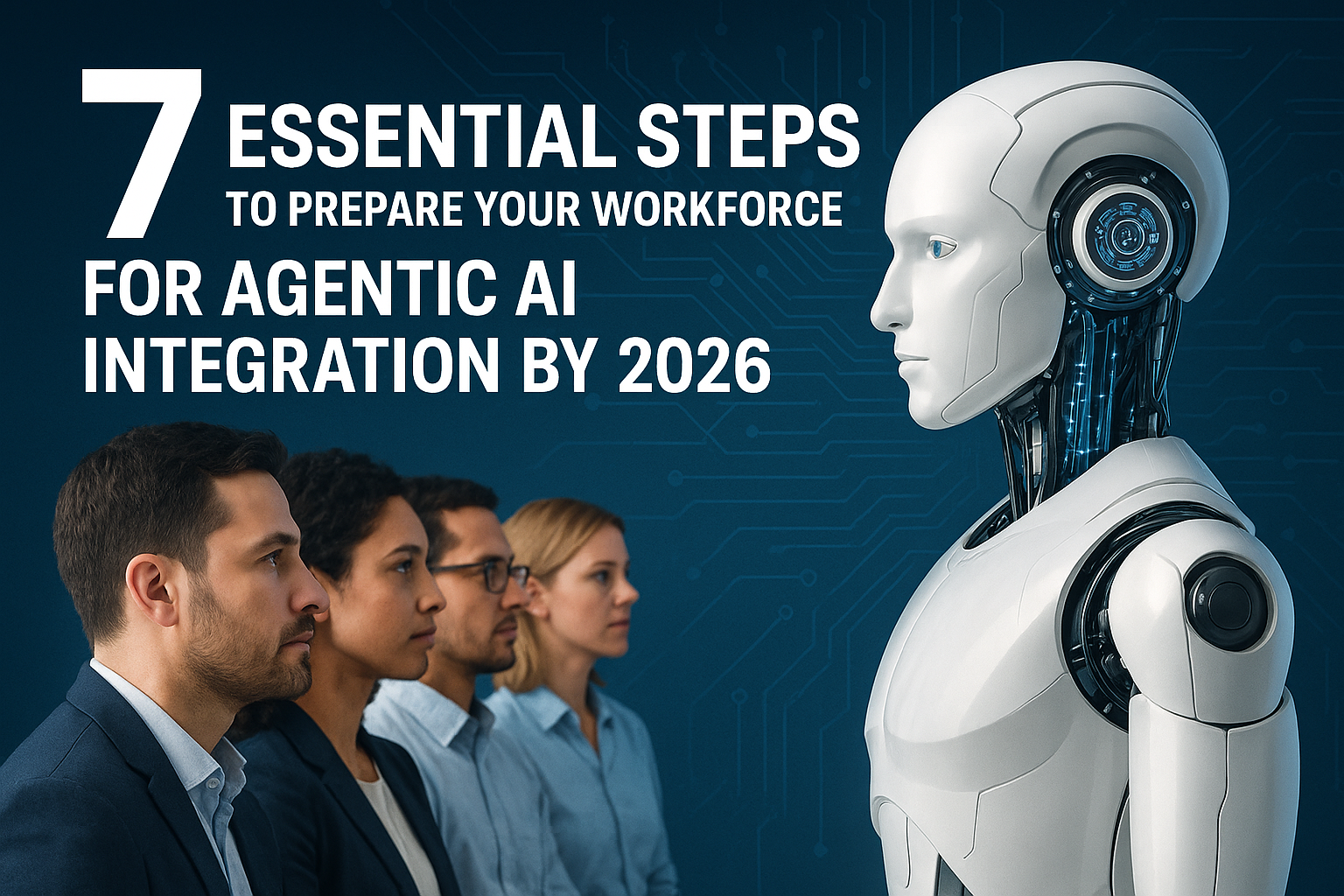
The landscape of technology is shifting rapidly, and by 2026, businesses will find themselves at the forefront of a transformational change: the integration of agentic AI and AI agent automation. As organizations pivot towards these innovations, the urgency to adapt the workforce becomes paramount. Concern about job displacement and the necessity for upskilling is prevalent, making it essential for companies to implement strategic measures to prepare their teams. In this article, we’ll explore how to prepare your workforce for agentic AI integration through seven actionable steps.
1. Embrace Continuous Learning and Upskilling
The first step in preparing your workforce for agentic AI is to foster a culture of continuous learning. With AI technology rapidly evolving, traditional training methods may not suffice. Companies should invest in ongoing educational programs that teach employees about AI technologies, cloud computing, and cybersecurity. This isn’t merely about keeping up with tech; it’s about empowering your employees to become proficient in the tools that will define their roles in the near future.
For example, offering workshops or online courses on AI engineering or cloud platform engineering can help employees adapt to new roles that demand higher technical expertise. Consider partnerships with educational institutions or platforms like Simplilearn, which provide structured learning paths in these fields. This kind of investment not only prepares your team for future challenges but also enhances employee satisfaction and retention.
2. Develop an AI-Native Mindset
Moving towards an agentic AI environment requires more than just skills; it necessitates a shift in mindset. Employees must be encouraged to view AI as a partner rather than a competitor. This paradigm shift can be fostered through leadership initiatives that promote collaboration between human workers and AI systems. Workshops aimed at changing perceptions about AI can help demystify the technology. top employee training programs offers useful background here.
Encouraging a culture where employees are excited about AI can lead to innovative ideas and improvements in workflows. When team members see AI as a tool that can amplify their capabilities rather than a replacement for their jobs, they are more likely to embrace the transition. Communication plays a critical role in this; regularly addressing fears and misconceptions about AI can significantly reduce anxiety among employees.
3. Focus on Governance and Ethical AI Practices
As companies begin to utilize agentic AI, the need for governance and ethical practices becomes increasingly important. Employees should be trained on the principles of ethical AI use, ensuring they understand the implications of AI decisions and the importance of data integrity. This training can help cultivate a workforce that prioritizes responsible AI deployment, mitigating risks associated with data breaches and ethical dilemmas.
Incorporating a governance framework that outlines best practices for AI usage promotes transparency and accountability. Businesses can also establish cross-functional teams to oversee AI projects, ensuring diverse perspectives are considered during decision-making processes. This approach not only promotes trust within the organization but also builds confidence among clients and stakeholders regarding the ethical use of AI technologies.
4. Build Digital Trust Within the Workforce
Fostering digital trust is essential as companies integrate agentic AI into their workflows. Employees need to feel confident that the AI systems they work with are secure and reliable. This trust can be built through proper training on cybersecurity measures, data protection policies, and the importance of identity-first security practices. (See: AI workforce training insights.)
Regularly updating your workforce on potential risks, such as cloud misconfigurations and identity breaches, can enhance their awareness and preparedness. Simulate scenarios where AI could either prevent or exacerbate security breaches, allowing employees to understand the stakes involved. By addressing these concerns, organizations can cultivate a proactive culture where employees take ownership of digital security alongside AI integration.
5. Redefine Job Roles and Responsibilities
As agentic AI begins to automate traditional tasks, redefining job roles is imperative. Businesses must assess which positions may be impacted by AI and adapt accordingly. This could mean reskilling employees for entirely new roles or enhancing their current responsibilities with AI support.
Create a framework that outlines the evolving job landscape, highlighting how AI will augment specific tasks. For instance, roles in customer service may transform to focus more on strategic decision-making and less on routine inquiries, thanks to AI-driven chatbots. By clearly communicating these changes and the associated benefits, organizations can help alleviate concerns about job displacement while emphasizing the opportunities for professional growth.
6. Foster Collaboration Between Humans and AI
To effectively prepare your workforce for agentic AI, fostering collaboration between employees and AI systems is key. Establishing environments where humans and AI work in tandem can enhance productivity and innovation. Encourage teams to explore how they can leverage AI tools to improve their workflow, whether through automating repetitive tasks or analyzing data for better decision-making.
Workshops that focus on practical applications of AI within their specific roles can be invaluable. For example, a marketing team could use AI to analyze consumer behavior and tailor campaigns accordingly, while a finance department could implement AI for predictive analytics. When employees see practical applications of AI in their daily work, they are more likely to embrace the technology and see it as a valuable asset.
7. Prepare for the Future: Emphasize Flexibility and Adaptability
Finally, as you prepare your workforce for agentic AI integration, instilling a sense of flexibility and adaptability is crucial. The technology landscape is ever-changing, and your employees must be equipped to pivot as needed. Encourage a mindset of adaptability by promoting innovative thinking and a willingness to embrace change.
Consider implementing regular feedback loops and open communication channels where employees can voice their concerns and suggestions regarding AI integration. This not only provides valuable insights for management but also empowers employees to take an active role in shaping the future of their work environment. Flexibility and adaptability will be key assets in navigating the challenges and opportunities presented by agentic AI.
8. Invest in Technology Infrastructure
Preparing your workforce for agentic AI isn’t just about training and mindset; it also involves investing in the right technology infrastructure. The tools and platforms that your employees will use should be robust and capable of supporting AI functionalities. This means upgrading current systems, choosing scalable cloud solutions, and integrating AI tools that fit your business needs.
For instance, organizations can adopt AI-driven analytics platforms that allow employees to access insights quickly, fostering data-driven decision-making. According to a report by McKinsey, companies that leverage AI tools can achieve up to a 30% increase in productivity. This shows that the right technology, paired with a skilled workforce, can lead to substantial benefits. (See: importance of upskilling in workforce.)
9. Engage in Industry Collaborations
Engaging in partnerships with other companies, educational institutions, and AI experts can create a rich ecosystem of learning and innovation. Collaborations can take many forms, from joint research initiatives to shared training programs. This approach allows your workforce to gain insights from a variety of perspectives and stay ahead of industry trends.
For example, tech giants such as Google and IBM often collaborate with universities to develop AI research initiatives that benefit both students and professionals. By participating in these collaborations, your team can not only enhance their skills but also contribute to the broader conversation around AI ethics and development.
10. Create a Feedback-Driven Culture
A feedback-driven culture ensures that employees feel heard and valued, especially during significant transitions like AI integration. Establishing regular check-ins and feedback sessions can help identify areas where additional training or support may be needed. This proactive approach can minimize resistance to change and foster a sense of ownership among employees.
For instance, companies can use tools like anonymous surveys or suggestion boxes to gather input on AI tools and processes. Actively addressing this feedback not only improves employee morale but also enhances the effectiveness of AI implementations by aligning them more closely with real-world applications within the workforce.
11. Frequently Asked Questions (FAQ)
What is agentic AI?
Agentic AI refers to artificial intelligence systems that can operate autonomously and make decisions without human intervention. These systems are designed to interact with their environment, learn from experiences, and adapt to new information, making them a valuable asset in various business processes.
How can I identify which roles are at risk of automation?
To identify roles susceptible to automation, analyze job functions to determine which tasks are repetitive and rule-based. Collaborate with department heads to assess workflows and look for areas where AI can add value while potentially displacing certain functions.
What skills will be most valuable in an AI-driven workplace?
Skills such as data analysis, AI literacy, critical thinking, and emotional intelligence will be increasingly important as AI tools become integrated into everyday business processes. Employees should also develop soft skills that complement AI capabilities, such as creativity and interpersonal communication.
Can small businesses implement agentic AI effectively?
Yes, small businesses can effectively implement agentic AI by starting with pilot projects and gradually scaling up. Leveraging cloud-based AI solutions can also minimize costs and provide access to advanced tools that were previously only available to larger organizations. (See: Harvard's research on continuous learning.)
How do I measure the effectiveness of AI training programs?
To measure the effectiveness of AI training programs, track key performance indicators (KPIs) such as employee engagement scores, job performance metrics, and the number of successful AI-related projects. Surveys and feedback can also provide insights into how well employees have adapted to AI tools.
What are the common challenges in integrating agentic AI?
While integrating agentic AI can lead to significant benefits, it’s not without challenges. Some common issues include resistance to change among employees, lack of understanding of AI technologies, and concerns over job security. Addressing these challenges requires clear communication, comprehensive training, and support throughout the transition process.
What role does leadership play in preparing the workforce for agentic AI?
Leadership is crucial in setting the tone for AI integration. Leaders should communicate the vision for AI adoption, engage employees in discussions about the benefits and challenges, and model a positive attitude towards change. Strong leadership fosters a culture of trust and openness, making it easier for employees to adapt to new technologies.
Can agentic AI be used to enhance employee well-being?
Absolutely! When implemented thoughtfully, agentic AI can free employees from mundane tasks, allowing them to focus on more engaging work. AI can also be used to analyze employee feedback and well-being metrics, helping organizations create a more supportive work environment that prioritizes mental health.
As businesses gear up for the transformative changes that agentic AI will bring by 2026, the steps outlined above provide a roadmap for effective preparation. By focusing on continuous learning, governance, digital trust, and collaboration, companies can ensure their workforce is ready to thrive alongside AI technologies. The future of work may be uncertain, but with the right strategies in place, your team can lead the charge into this exciting new era.
“`
Trending Now
Frequently Asked Questions
What are the essential steps to prepare for AI integration in the workplace?
To prepare for AI integration, companies should focus on continuous learning and upskilling, developing an AI-native mindset, fostering collaboration between human workers and AI, and investing in ongoing educational programs. These steps ensure that employees are equipped with the necessary skills and attitudes to thrive alongside emerging technologies.
How can companies address job displacement due to AI?
Companies can address job displacement by implementing strategic upskilling initiatives, encouraging continuous learning, and creating new roles that leverage AI technologies. By investing in employee education and fostering a culture of adaptability, organizations can help their workforce transition smoothly into an AI-integrated environment.
What is an AI-native mindset and why is it important?
An AI-native mindset encourages employees to view AI as a collaborator rather than a competitor. This shift in perception is crucial for fostering effective human-AI partnerships, which can enhance productivity and innovation within the workplace, ultimately leading to successful AI integration. This builds on transformative AI in education.
How can businesses implement continuous learning for AI skills?
Businesses can implement continuous learning by offering workshops, online courses, and partnerships with educational institutions that focus on AI technologies, cloud computing, and cybersecurity. This approach not only keeps employees up-to-date with industry advancements but also boosts job satisfaction and retention.
What role does leadership play in preparing for AI integration?
Leadership plays a critical role in preparing for AI integration by promoting a culture of collaboration and continuous learning. Leaders should initiate workshops and training programs that encourage employees to embrace AI, helping to shift perceptions and foster an environment where humans and AI can work together effectively.
Have you experienced this yourself? We'd love to hear your story in the comments.



