
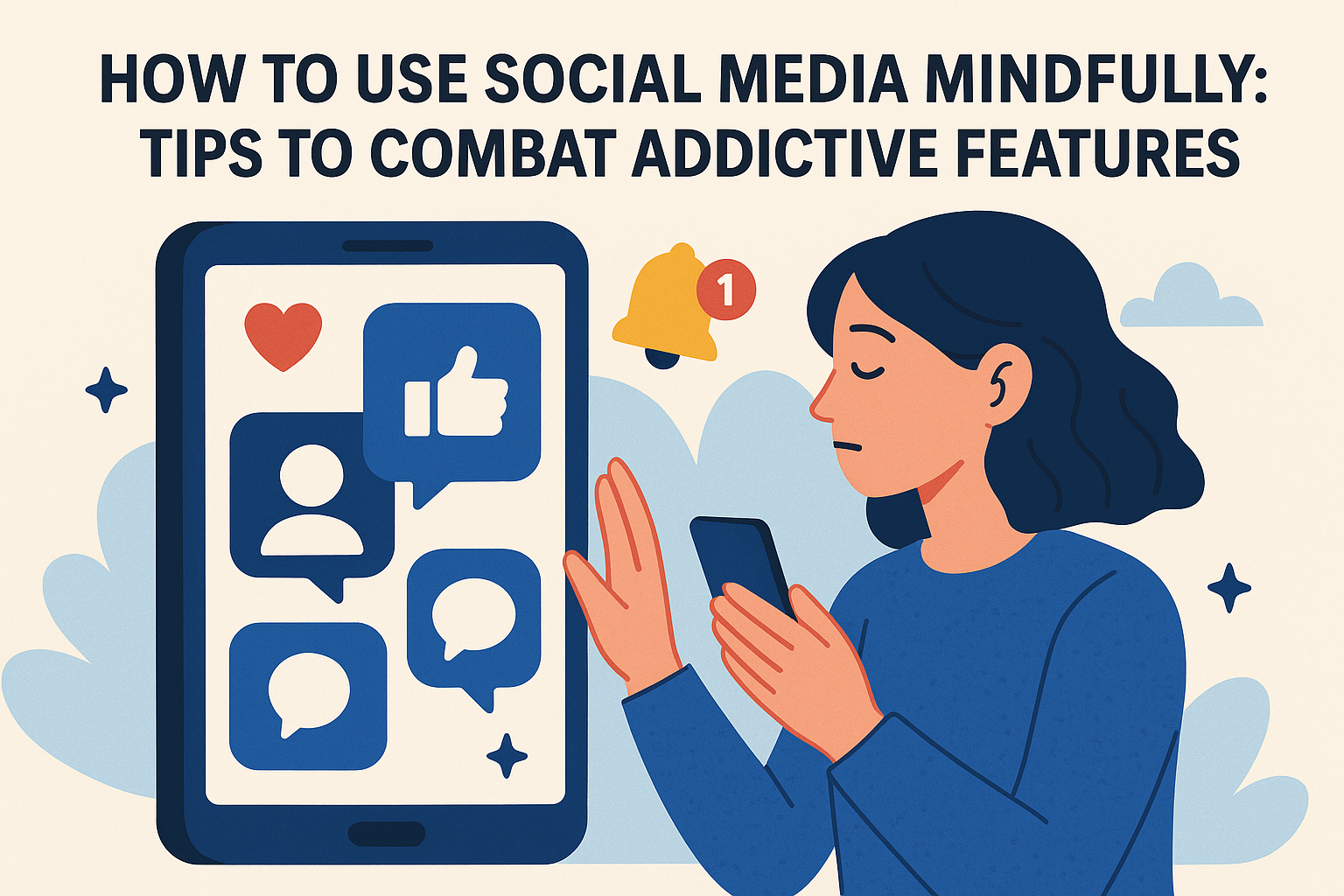

“`html
The Silent Battle: How Addictive Social Media Features Are Costing You — And 7 Ways to Fight Back
It’s no secret that social media has a grip on us. We reach for our phones almost instinctively, scrolling through feeds, watching videos, and checking for notifications. But what if I told you that this isn’t just a habit, it’s by design? The European Union certainly thinks so, and they’re not holding back. In a pretty unprecedented move, the European Commission, the EU’s executive arm, formally accused Meta – the company behind Facebook and Instagram – of intentionally engineering its platforms with features that are flat-out addictive. This isn’t just about bad business practices; it’s about real, tangible harm to our mental and physical well-being, especially for younger users.
The core of the accusation, which dropped on July 10, 2026, zeroes in on features like infinite scrolling and autoplay videos. Ever found yourself lost in a never-ending feed, hours slipping away without you even noticing? That’s infinite scrolling doing its job. And those videos that just start playing one after another, pulling you deeper into the rabbit hole? That’s autoplay. The EU is demanding that Meta dismantle these ‘key addictive features,’ arguing they contribute to significant health risks. This isn’t a slap on the wrist; we’re talking about potential fines up to 6% of Meta’s global annual revenue if they don’t comply. That’s a staggering amount, underscoring just how seriously regulators are taking the question of how to use social media mindfully. So, what can you do in the meantime to reclaim your attention and protect your peace of mind?
1. Turn Off Autoplay Videos: Reclaim Your Gaze
Let’s start with a big one: autoplay videos. You know the drill. You’re innocently scrolling through your feed, and suddenly a video starts playing – maybe it’s a funny animal clip, a dramatic news segment, or an influencer hawking a product. Before you know it, another one starts, then another, and another. It’s a designed distraction, a subtle way to keep your eyes glued to the screen and your thumb from moving on.
This isn’t just annoying; it’s a massive time sink and a mental energy drain. Each autoplay video pulls your attention, even if just for a second, disrupting your focus and making it harder to disengage. Think about how many times you’ve gone to check one thing and ended up watching a string of unrelated videos. Disabling autoplay is one of the simplest, yet most effective, steps you can take to control your social media experience. Most platforms offer this option in their settings – dig around, you’ll find it. It’s a small change that yields big results when you’re trying to figure out how to use social media mindfully. pros and cons of social media offers useful background here.
2. Set Time Limits for Apps: Your Digital Stopwatch
If you’ve ever thought, ‘I’ll just check it for a minute,’ only to look up an hour later wondering where the time went, you’re not alone. The infinite scroll, the constant stream of new content, the fear of missing out – it all works together to keep you tethered. This is where setting strict time limits for your social media apps becomes invaluable. Many smartphones now have built-in features that allow you to do exactly this.
Whether it’s iOS’s Screen Time or Android’s Digital Wellbeing, these tools can track your usage and, more importantly, enforce limits. You can decide you’ll only spend 30 minutes a day on Instagram, for example. Once that time is up, the app locks you out until the next day. It sounds harsh, but it’s a powerful way to break the automatic habit loop. You’ll be surprised how much extra time you suddenly have for other activities, or even just for quiet reflection. It’s about consciously deciding when and how much you engage, rather than letting the algorithms decide for you. (See: Mental health and social media impact.)
3. Curate Your Feed Aggressively: Less Noise, More Signal
Your social media feed should be a reflection of what genuinely interests and benefits you, not a chaotic jumble of algorithmically-generated suggestions and distant acquaintances. One of the most impactful ways to use social media mindfully is to become a ruthless curator of your own feed. Unfollow accounts that make you feel bad, stressed, or envious. Mute accounts that post too frequently or spread negativity. Block profiles that are outright toxic.
Think of your feed as your mental diet. Are you consuming junk food or nutrient-rich content? Actively seek out and follow accounts that inspire you, educate you, make you laugh in a good way, or connect you with communities you value. It’s not about avoiding different viewpoints, but about eliminating the noise that doesn’t serve your well-being. The less irrelevant or harmful content you see, the less time you’ll spend scrolling aimlessly, and the more positive your overall experience will be.
4. Disable Notifications: Break the Pavlovian Bell
Ping! A new like. Buzz! A comment. Vibrate! A message. Those little red dots and incessant alerts are the digital equivalent of a Pavlovian bell, training us to react instantly. Each notification is a tiny interruption, a pull on our attention, and a reminder that there might be something new – something we might be missing. This constant state of alert keeps our brains in a low-level stress mode, always anticipating the next ding. (comprehensive strategies for learning)
Disabling most, if not all, social media notifications is a game-changer. It means you check your apps when *you* decide to, not when the app demands your attention. You can still open the app and see what’s new, but you won’t be constantly interrupted throughout your day. This simple act gives you back control over your focus and reduces the urge to constantly check your phone. Try it for a week; you’ll likely feel a significant reduction in digital anxiety and a greater sense of autonomy over your time.
5. Schedule Your Social Media Time: Intentional Engagement
Instead of mindlessly grabbing your phone whenever you have a spare moment, try scheduling specific times for social media. Treat it like any other appointment in your day. Maybe you dedicate 15 minutes in the morning with your coffee, and another 20 minutes in the evening after dinner. Outside of these designated slots, the apps remain closed and off-limits. This strategy transforms social media from an omnipresent distraction into a conscious activity.
When you approach social media with intention, you’re more likely to engage meaningfully rather than just passively consume. You might check in on specific friends, respond to messages, or look for particular information. This structured approach helps combat the aimless scrolling that often leads to wasted time and mental fatigue. It’s about being in charge of your usage, not letting your usage be in charge of you. This is a core tenet of how to use social media mindfully.
6. Embrace ‘Digital Sabbaths’ or Detoxes: The Power of Disconnection
Sometimes, the best way to recalibrate your relationship with social media is to step away entirely. A ‘digital sabbath’ involves taking a full day, or even just a few hours, completely offline. No social media, no emails, no non-essential screen time. Use that time to reconnect with the real world, pursue a hobby, spend time with loved ones, or simply enjoy some quiet solitude. This builds on dos and don'ts for educators.
For a more intense reset, consider a full digital detox for a weekend, a week, or even longer. It might sound daunting, but the clarity and peace of mind you gain can be profound. You’ll likely discover how much mental space social media was occupying and how much richer your life feels when you’re fully present. These periods of disconnection aren’t about deprivation; they’re about giving yourself the gift of presence and perspective, reminding you that there’s a vibrant world beyond the screen.
7. Understand the Business Model: Knowledge is Power
Finally, and perhaps most importantly, understanding *why* these platforms are designed the way they are can be incredibly empowering. Social media companies like Meta are not selling you a service; they are selling your attention to advertisers. Every scroll, every like, every video watched is data that helps them keep you engaged and show you more targeted ads. The addictive features aren’t accidental; they’re meticulously engineered to maximize your time on the platform, because more time equals more ad revenue.
Knowing this fundamentally shifts your perspective. When you see an infinite scroll, you’re not just seeing content; you’re seeing a carefully constructed funnel designed to keep you hooked. When a video autoplays, you understand it’s a tactic to grab your attention. This awareness creates a buffer between you and the platform’s manipulative design. It helps you recognize when you’re being manipulated and gives you the agency to resist. Armed with this knowledge, you’re better equipped to make conscious choices about how to use social media mindfully, rather than simply reacting to its prompts.
The European Union’s actions against Meta highlight a growing global recognition of the pervasive, often negative, impact of social media’s design. While regulators push for systemic changes, we as users have a responsibility to protect ourselves. Implementing these strategies won’t just reduce your screen time; they’ll help you foster a healthier, more intentional relationship with technology, giving you back control over your attention, your time, and ultimately, your well-being.
The Psychological Toll: Beyond Just Time
It’s easy to focus on the time lost to social media, but the harm extends much deeper, touching our psychological well-being. Constant comparison, for instance, is a silent thief of joy. When you’re perpetually scrolling through curated highlight reels of others’ lives, it’s natural to feel like your own life falls short. This can fuel feelings of inadequacy, envy, and even depression. Research, including studies by the American Psychological Association, has shown a clear link between increased social media use and higher rates of anxiety and depression, particularly in adolescents.
Then there’s the impact on our attention spans. The rapid-fire content, designed for quick consumption and instant gratification, trains our brains to expect constant novelty. This makes it harder to focus on tasks that require sustained attention, like reading a book, working on a complex project, or even having a deep conversation without feeling the urge to check your phone. Our brains are literally being rewired by these platforms, making it crucial to learn how to use social media mindfully to counteract these effects. See also using social media in class.
The Future of Regulation: A Global Shift?
The EU’s bold move against Meta isn’t an isolated incident; it’s part of a broader global trend towards regulating tech giants and their impact on user well-being. We’re seeing similar discussions and legislative efforts in the United States, the UK, Australia, and Canada, often focusing on child safety, data privacy, and the addictive nature of platforms. For example, some U.S. states are exploring laws that would require parental consent for minors to use social media or mandate age-appropriate design. While the pace varies, the consensus is growing: tech companies can’t operate unchecked. These regulatory pressures could lead to significant platform redesigns, giving users more control and less exposure to intentionally addictive features. It’s a hopeful sign that the collective push for more ethical design might actually succeed.
Expert Perspectives: What Psychologists Say
Psychologists and neuroscientists have been sounding the alarm about social media’s impact for years. Dr. Jean Twenge, a professor of psychology, has extensively researched the ‘iGen’ generation and observed significant increases in mental health issues correlated with smartphone and social media adoption. She often points to the displacement hypothesis: time spent on screens displaces time spent on activities known to improve mental health, like face-to-face social interaction, exercise, and sleep.
Another perspective comes from addiction specialists who note the striking similarities between behavioral addictions, like problem gambling, and excessive social media use. The variable reward schedules, the constant pursuit of likes and validation, and the fear of missing out all tap into the same neurological pathways that drive other addictive behaviors. Understanding these expert insights reinforces why a mindful approach to social media isn’t just a good idea, but a necessity for our collective mental health.
Frequently Asked Questions About Mindful Social Media Use
- Q: What does “mindful” social media use actually mean?
- A: Mindful social media use means engaging with platforms intentionally and consciously, rather than habitually or reactively. It’s about making deliberate choices about when, why, and how you use social media, ensuring it serves your well-being and goals, instead of allowing it to control your attention and time.
- Q: Will I miss out on important updates if I disable notifications?
- A: It’s unlikely you’ll miss truly important updates. For urgent communications, people typically use direct messaging, phone calls, or emails. Social media notifications are mostly for engagement metrics (likes, comments) or non-critical updates. You can still check your apps at scheduled times, ensuring you catch up on what matters without constant interruption.
- Q: How do I know if my social media use is becoming unhealthy?
- A: Signs of unhealthy social media use include feeling anxious or irritable when you can’t check it, neglecting responsibilities or real-life relationships in favor of online activity, experiencing sleep disturbances due to late-night scrolling, feeling constantly inadequate or envious, or attempting to cut down your use but failing. If social media negatively impacts your mood, productivity, or relationships, it’s time to re-evaluate.
- Q: Is it realistic to completely quit social media?
- A: For some, a complete quit (a “digital detox”) can be incredibly beneficial, especially if their use has become severely problematic. For others, a more balanced approach – like the mindful strategies discussed here – is more sustainable and realistic. The goal isn’t necessarily to quit entirely, but to build a healthier, more controlled relationship with these platforms.
- Q: What are some alternative activities I can do instead of scrolling?
- A: There’s a whole world out there! Consider reading a book, going for a walk, pursuing a hobby (like painting, playing an instrument, or gardening), spending quality time with friends and family face-to-face, learning a new skill, exercising, meditating, or simply sitting in quiet reflection. The possibilities are endless when you free up your attention.
“`
Trending Now
Frequently Asked Questions
How can I use social media mindfully?
To use social media mindfully, turn off autoplay videos, limit your scrolling time, and set specific usage goals. Being aware of the addictive features, like infinite scrolling, can help you reclaim your attention and improve your mental well-being.
What are the addictive features of social media?
Addictive features of social media include infinite scrolling, autoplay videos, and notifications that trigger compulsive checking. These elements are designed to keep users engaged longer, often at the expense of mental health.
Why is social media considered addictive?
Social media is considered addictive because platforms utilize features that exploit psychological triggers, such as instant gratification and fear of missing out. This design encourages users to spend excessive time online, impacting their productivity and well-being.
What are the health risks of excessive social media use?
Excessive social media use can lead to various health risks, including anxiety, depression, and sleep disturbances. The constant engagement with addictive features can also contribute to decreased attention span and overall mental fatigue.
What actions are being taken against social media companies for addictive practices?
Regulatory bodies, like the European Commission, are taking action against social media companies for addictive practices. They have accused companies like Meta of intentionally designing platforms to be addictive and are pushing for changes to protect users' mental health.
What did we miss? Let us know in the comments and join the conversation.






