
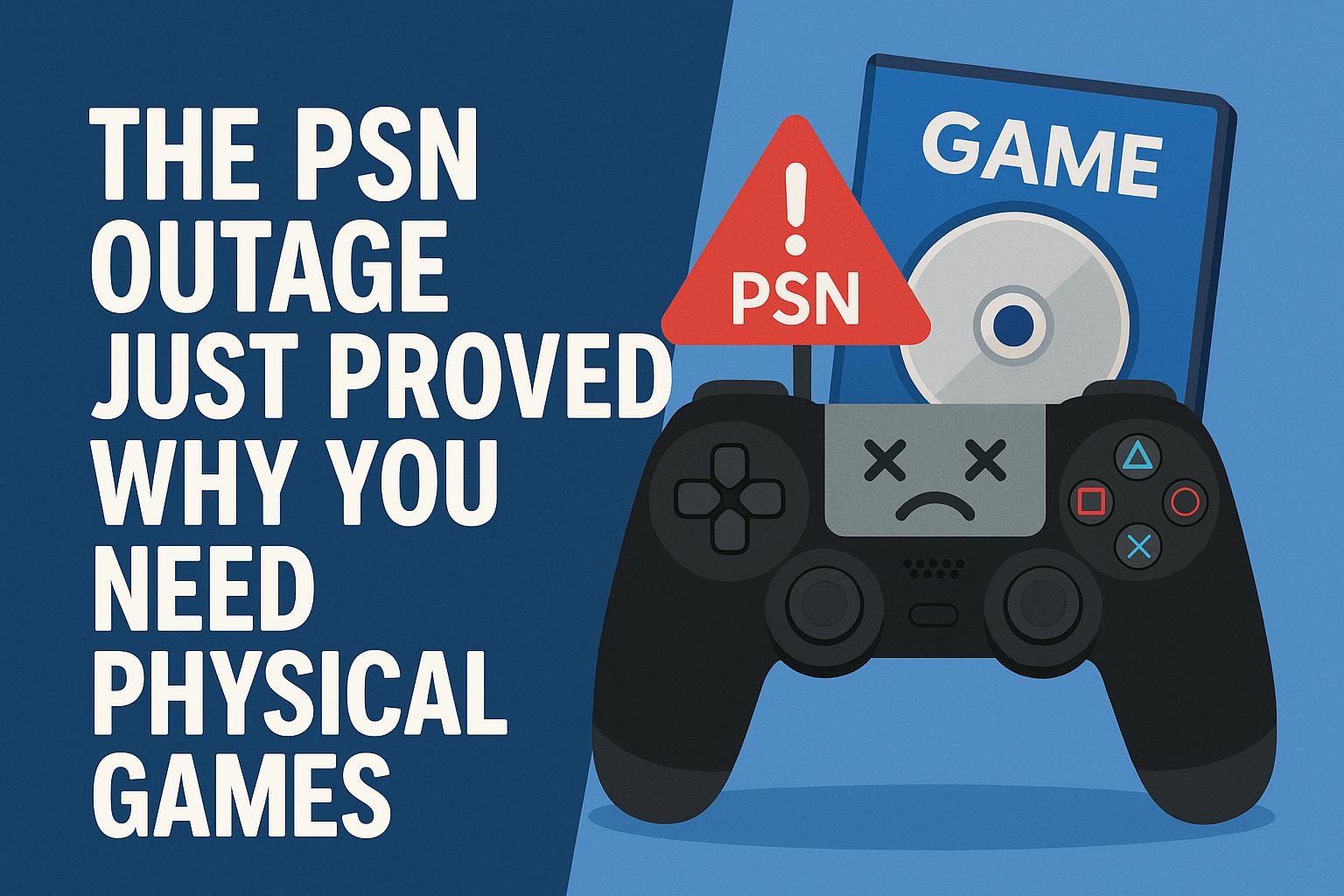

Remember the collective groan, or perhaps outright rage, that swept through the gaming community on July 24, 2026? That day, the PlayStation Network (PSN) went down, leaving millions of players staring at error messages instead of their beloved digital game libraries. For hours, access to purchased games, online multiplayer, and even basic account features simply vanished. This wasn’t just an inconvenience; it was a stark, real-world demonstration of a fear many gamers have harbored for years: what happens when your entire game collection lives solely in the cloud, at the mercy of a server farm somewhere?
This particular outage hit at a truly volatile time, right in the middle of Sony’s controversial announcement to stop producing physical PlayStation 5 game discs starting January 2028. The backlash against that decision was already immense – we’re talking enormous petitions, a torrent of angry social media posts, and even former PlayStation developers voicing their dismay. The PSN going dark just poured gasoline on an already raging fire. It amplified the arguments for the importance of physical game discs after PSN outage, turning a theoretical debate into an undeniable reality for countless players. Suddenly, that shiny disc on your shelf didn’t just feel like a collectible; it felt like a lifeline.
1. The Uninterrupted Play Guarantee: When Servers Fail, Discs Prevail
Let’s be honest, we’ve all been there: you’ve finally got a free evening, snacks are ready, and you’re hyped to dive into your favorite game. You fire up your console, only to be greeted by a network error. If your game is digital, that’s often the end of your plans. You can’t even launch a single-player campaign without the system verifying your license through an online connection. The July 2026 PSN outage was a brutal reminder of this fragility.
Physical game discs, on the other hand, offer an immediate antidote to this digital vulnerability. Pop the disc in, and you’re good to go. Yes, some modern games still require day-one patches or online components for full functionality, but the core game data is right there, etched onto the plastic. This means that even if the entire internet goes dark, or Sony’s servers decide to take an unscheduled nap, you can still play the game you bought. It’s a tangible form of ownership that grants you a level of autonomy simply not possible with purely digital purchases.
2. True Ownership and Archival Preservation: Holding Onto History
When you buy a physical game, you genuinely own it. It’s yours to keep, display, lend to a friend, or even resell. This concept of ownership is becoming increasingly blurry in the digital age. With digital games, you’re often not buying the game itself, but rather a license to access it. That license can be revoked, altered, or become inaccessible if a platform shuts down, a company changes its terms of service, or, as we saw, the servers go offline.
The importance of physical game discs after PSN outage extends beyond immediate playability; it’s about preserving gaming history. Imagine a future where classic titles are lost because the digital storefronts that hosted them no longer exist, or the companies decided they weren’t profitable enough to maintain. Physical discs, much like books or films on physical media, serve as an archive. They ensure that generations to come can still experience these artistic achievements, independent of corporate whims or technological obsolescence. (See: PSN outage impact on gamers.)
3. Resale Value and Lending: The Economic Freedom of Physical Media
One of the most significant advantages of physical games, which digital platforms actively seek to eliminate, is the ability to resell them. Finished with a game? You can trade it in at a store, sell it online, or pass it on to a friend. This creates a secondary market that benefits consumers, allowing them to recoup some of their initial investment and fund new purchases. It also makes gaming more accessible for those on tighter budgets.
Digital games offer no such flexibility. Once you buy it, it’s tied to your account forever, with no option to resell or even legally lend it out. The PSN outage vividly demonstrated that even access to these non-resalable digital assets can be temporarily (or potentially permanently, in a worst-case scenario) removed. This lack of economic freedom and transferability is a major point of contention for many players who feel that digital-only futures diminish their consumer rights.
4. Independent of Internet Connectivity: Gaming Off-Grid
While high-speed internet is practically ubiquitous in many parts of the world, it’s far from universal. Even in well-connected regions, outages happen – whether it’s your ISP having issues, a local power cut, or a widespread service disruption like the PSN event. For digital games, no internet often means no play, even for single-player experiences that theoretically shouldn’t need a connection.
Physical discs liberate you from this constant tether. They allow you to play your games offline, wherever and whenever you choose. Heading to a cabin in the woods with no Wi-Fi? No problem if you’ve got a stack of discs. The importance of physical game discs after PSN outage isn’t just about protecting against platform-specific failures, but also about offering a robust gaming experience that isn’t beholden to the whims of your internet service provider or general infrastructure stability. It’s about true portability and reliability.
5. The Collector’s Appeal and Tangible Value: More Than Just Bits and Bytes
For many gamers, collecting physical editions is a significant part of the hobby. There’s a joy in displaying a curated collection, admiring the box art, and holding a tangible piece of the gaming world in your hands. Limited editions, steelbooks, and special packaging add an extra layer of appeal that simply can’t be replicated by a digital download.
The PSN outage underscored the intangible nature of digital ownership. When the servers went down, all those digital purchases became invisible, inaccessible data points. Physical games, however, maintain their tangible value. They exist independently of a network connection or a company’s database. This isn’t just about nostalgia; it’s about the inherent value and satisfaction derived from owning something concrete, something that can’t simply disappear with a flick of a digital switch.
6. Protection Against Delisting and Censorship: A Game’s Lifespan
Digital storefronts have a habit of delisting games. Sometimes it’s due to licensing issues, other times a developer or publisher might go out of business, or perhaps a game is simply deemed no longer profitable enough to maintain. When a digital game is delisted, it often becomes impossible to purchase or even re-download, effectively vanishing from existence for new players and potentially existing owners alike if their console fails and they need to re-download their library. (See: gaming community response to outages.)
Physical discs offer a strong defense against this digital evaporation. Once a game is pressed onto a disc, it exists. It can’t be delisted from a server. This also offers a degree of protection against potential censorship or post-launch alterations that might occur in digital versions. The importance of physical game discs after PSN outage is also about ensuring that games, as cultural artifacts, have a sustained lifespan beyond the immediate commercial interests of their publishers.
7. Reduced Reliance on External Servers: Minimizing Points of Failure
Every digital transaction, every license check, every game download relies on a complex chain of servers, databases, and network infrastructure. Each link in that chain represents a potential point of failure. The July 2026 PSN outage was a prime example of how a single point of failure (in this case, Sony’s network) can bring an entire ecosystem to a grinding halt for millions.
Physical games significantly reduce this reliance. While they may still require initial patches or online components for certain features, the core game data is self-contained. This means fewer external dependencies, fewer potential points of failure, and ultimately, a more robust and reliable gaming experience. It shifts the power back to the player, away from the server farms and internet backbone.
8. The Fight for Consumer Rights: A Voice Against Digital Lock-In
The move towards digital-only gaming isn’t just about convenience for publishers; it’s about control. It allows companies to dictate pricing, remove secondary markets, and control access to content in ways that are impossible with physical media. The backlash against Sony’s decision to cease physical PS5 discs, amplified by the PSN outage, is fundamentally a fight for consumer rights.
Players are advocating for the right to truly own their games, to have options, and not be locked into a single digital ecosystem that can be disrupted by technical issues or corporate policy changes. The importance of physical game discs after PSN outage has become a rallying cry for gamers who want to maintain a say in how they consume and interact with their entertainment, demanding a balance between digital convenience and fundamental consumer freedoms. (Enshrouded's release controversy)
9. Offline Play for Future Generations: The Long-Term View
Think about the classic games from past eras. Many are still playable today because they existed on cartridges or discs. Emulation helps, but nothing beats the original hardware and media. A purely digital future casts a shadow over this long-term accessibility. Will digital-only games from today be playable in 50 years if the platforms are gone and the servers are shut down?
Physical discs offer a promise of continuity. They are a time capsule, preserving games for future generations to discover and enjoy, regardless of technological advancements or corporate decisions. The PSN outage highlighted that even in the present, digital access can be fleeting. For the sake of gaming’s enduring legacy, physical media remains an invaluable asset.
10. Lesson Learned by Developers and Publishers?: The Power of Player Demand
The sheer scale of the negative reaction to Sony’s physical disc announcement, combined with the immediate, real-world impact of the PSN outage, sends a powerful message to developers and publishers. Gamers are not uniformly ready to embrace a purely digital future, especially when it comes at the cost of ownership, reliability, and consumer choice.
This incident, and the ongoing petition and social media outcry, could serve as a wake-up call. It demonstrates that there’s significant demand for physical media, and ignoring it risks alienating a substantial portion of the player base. The importance of physical game discs after PSN outage might just be the catalyst needed for companies to re-evaluate their digital-only strategies, recognizing that a balanced approach, offering both physical and digital options, ultimately serves the diverse needs and desires of the gaming community best.
The July 2026 PSN outage wasn’t just a blip; it was a loud, undeniable alarm bell. It underscored, with painful clarity, that our digital lives are far more fragile than we often assume. For many, that day cemented the belief that keeping physical game discs alive isn’t just about nostalgia or collecting; it’s about safeguarding our ability to play, own, and preserve the games we love, independent of the internet’s whims or corporate control. It’s a reminder that sometimes, the old ways offer the most reliable path forward.
Trending Now
Frequently Asked Questions
What happened during the PSN outage in July 2026?
On July 24, 2026, the PlayStation Network (PSN) experienced a significant outage, preventing millions of players from accessing their digital game libraries, online multiplayer, and account features. This disruption highlighted concerns about relying solely on digital games and emphasized the value of physical game discs.
Why are physical games important after the PSN outage?
The PSN outage underscored the vulnerability of digital game collections, as players faced inaccessibility to their purchased games. Physical game discs provide a reliable alternative, allowing gamers to play without needing an internet connection or server access, ensuring uninterrupted gaming experiences.
How did the PSN outage affect gamers' opinions on digital vs. physical games?
The outage intensified the debate over digital versus physical games, leading to increased support for physical discs. Many gamers realized that owning a physical copy offers security and immediate access to games, especially during network failures, making them feel more like essential items than mere collectibles.
What was Sony's announcement regarding physical game discs?
In July 2026, amid the PSN outage, Sony announced plans to discontinue the production of physical PlayStation 5 game discs starting January 2028. This controversial decision faced backlash from gamers, who expressed concerns about the future of gaming and the implications of digital-only collections.
How can physical game discs serve as a backup during outages?
Physical game discs act as a safeguard against online service failures like the PSN outage. With a physical copy, players can simply insert the disc into their console and play without needing an internet connection, ensuring they can enjoy their games regardless of server availability.
What did we miss? Let us know in the comments and join the conversation.






