
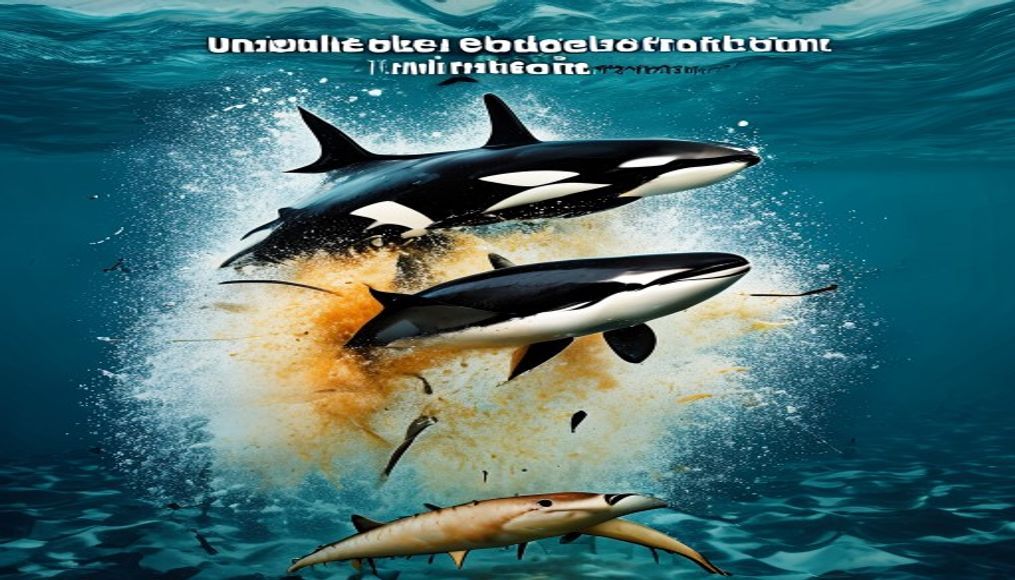

Imagine witnessing something so bizarre, so utterly unexpected, that it fundamentally shifts your understanding of marine predation. That’s precisely what a team of scientists experienced off the sun-drenched coast of Cabo San Lucas. They documented a hunting behavior by orcas that sounds more like something out of a sci-fi blockbuster than a nature documentary: one orca holding a massive sunfish steady, while another slams into it at blistering speed, causing the unfortunate fish to literally explode into thousands of pieces. Yes, you read that right – an orcas sunfish explosion. It’s a gruesome, astonishing spectacle, and it’s completely changed how we view these apex predators.
This isn’t just a fleeting observation; this “stabilize-and-ram” technique was captured not once, but twice, providing undeniable evidence of a previously undescribed hunting strategy. The details are laid out in a new study co-authored by Kathryn Ayres of Beneath The Waves and Erick Higuera of Conexiones Terramar. The scientific community is buzzing, and it’s easy to see why. We’re talking about sunfish that can weigh thousands of pounds, often mistaken for sharks due to their sheer size and distinctive dorsal fins. To see such a colossal creature dismantled with such violent precision is, frankly, mind-blowing. It’s a testament to the orca’s intelligence, power, and perhaps, a darker, more playful side of their predatory instincts.
The Jaw-Dropping Discovery: An Orcas Sunfish Explosion
The incident that has everyone talking unfolded in the deep blue waters near Cabo San Lucas, a region known for its rich marine biodiversity. Researchers were out observing orcas, as they often do, when they stumbled upon a scene that defied all prior knowledge. An adult orca was seen grasping a sunfish, holding it firmly in place. Then, with a surge of power, another orca, likely a younger or less experienced member of the pod, charged forward and delivered a devastating blow. The impact was so severe, so perfectly aimed, that the sunfish didn’t just die; it disintegrated.
This isn’t a gentle dismemberment or a quick bite. This is an all-out, high-impact demolition. The resulting shower of sunfish fragments wasn’t just a byproduct; it appeared to be the goal. The sheer force required to achieve such an outcome is staggering. Sunfish, or Mola mola as they’re scientifically known, possess a unique, tough, leathery skin, and a cartilaginous skeleton, making them surprisingly resilient despite their rather ungainly appearance. Yet, against the focused power of an orca, even this robust structure proved no match. The footage and subsequent analysis have confirmed that this wasn’t a fluke; it was a deliberate, coordinated act, a true orcas sunfish explosion that leaves little to the imagination about the sheer power involved.
The visual impact of this discovery is immense. In an age where nature documentaries often present a sanitized version of predation, this raw, explosive event offers a stark reminder of the brutal realities of the marine food web. It’s the kind of footage that goes viral, sparking both awe and a touch of horror. It forces us to confront the fact that even the most well-studied creatures still hold secrets, especially when it comes to their more inventive and violent hunting methods. This observation isn’t just a footnote in marine biology; it’s a headline, rewriting our understanding of orca capabilities.
Unpacking the “Stabilize-and-Ram” Technique
The term “stabilize-and-ram” perfectly encapsulates the essence of this novel hunting strategy. It speaks to a level of coordination and tactical thinking that further elevates our appreciation for orca intelligence. One orca, presumably the more dominant or experienced hunter, takes on the role of anchor. This individual must possess not only strength but also precision, ensuring the sunfish is held in an optimal position for the incoming strike. Holding a large, struggling sunfish in the open ocean is no small feat, requiring sustained effort and control. (See: Nature article on marine predation.)
Meanwhile, the second orca acts as the projectile, accelerating to maximum speed to deliver the decisive blow. This isn’t a random headbutt; the impact point seems strategic, targeting the sunfish’s body in a way that maximizes kinetic energy transfer. Think of it like a perfectly executed torpedo strike, but with a living, breathing torpedo. The combined force of the stationary orca’s grip and the ramming orca’s momentum creates a catastrophic shearing effect, leading to the observed orcas sunfish explosion. This cooperative hunting isn’t entirely new for orcas – they’re known for their coordinated efforts in corralling fish or creating waves to wash seals off ice floes – but this specific application is truly unprecedented.
What makes this technique particularly intriguing is its efficiency. While gruesome, the instantaneous disintegration of the sunfish would undoubtedly create a cloud of edible fragments, making the meal accessible to all members of the pod, especially those who might struggle with tearing apart a large, intact fish. This could include younger orcas still learning the ropes of hunting, or older individuals with worn teeth, as suggested by experts like Robert Pitman from Oregon State University. It’s a pragmatic solution to a dietary challenge, turning a large, unwieldy meal into a communal feast.
The Potential Advantages of This Brutal Method
Why develop such an extreme hunting method? The advantages, while macabre, are compelling. First, consider the size of the prey. Sunfish can be enormous, with some individuals reaching over 5,000 pounds and spanning more than 10 feet. Taking down such a massive creature with conventional biting and tearing could be a lengthy and energy-intensive process, potentially exposing the orcas to risks or attracting other predators. The stabilize-and-ram technique offers a quick, decisive kill.
Second, the resulting fragmentation of the sunfish makes it far easier to consume. Imagine trying to eat a whole, intact sunfish. Its tough skin and bulky body would present a significant challenge. By essentially pulverizing the fish, the orcas create smaller, more manageable pieces that can be easily swallowed by all pod members. This democratizes the meal, ensuring that even the youngest or least capable hunters get their share, fostering communal feeding and skill transfer within the pod. This aspect alone makes the orcas sunfish explosion a fascinating case study in adaptive feeding.
Third, there’s the element of energy conservation. While the initial ramming requires a burst of energy, the overall effort might be less than a prolonged struggle to subdue and dismember a large sunfish. A quick, decisive strike minimizes the time spent in active pursuit and struggle, allowing the orcas to conserve energy for other activities or future hunts. It’s a brutal efficiency, but efficiency nonetheless, and it’s a testament to the orca’s evolutionary drive to optimize their hunting strategies.
Orca Intelligence and Predatory Play
Orcas, often called “killer whales,” are renowned for their intelligence and complex social structures. They exhibit culture, passing down hunting techniques and vocalizations through generations. This new stabilize-and-ram method is a powerful example of their adaptive intelligence. It demonstrates not only problem-solving skills but also a remarkable capacity for coordinated action and division of labor within a hunting party. (See: WHO fact sheet on orcas.) Orcas' shocking strategy offers useful background here.
Beyond pure efficiency, there’s also the intriguing possibility of a “playful” or even “tormenting” element to this behavior, as suggested by experts. Orcas are known to engage in behaviors with prey that go beyond mere killing for sustenance. They’ve been observed tossing seals into the air, playing with their food, and engaging in what appears to be recreational predation. Could the orcas sunfish explosion be a particularly extreme manifestation of this? It’s certainly a possibility that scientists are considering. The sheer drama and violence of the act might offer some form of stimulation or bonding experience for the pod.
This isn’t to say orcas are malicious in a human sense, but rather that their highly developed brains and social dynamics allow for a broader range of interactions with their environment, including their prey. The line between efficient predation and what appears to be a form of playful, albeit lethal, interaction can be blurry for creatures as intelligent as orcas. This discovery just adds another layer to their already complex and fascinating behavioral repertoire, further solidifying their reputation as the ocean’s most formidable and enigmatic hunters.
The Broader Implications for Marine Science
This observation of the orcas sunfish explosion isn’t just a sensational video clip; it has significant implications for marine science. For decades, scientists have been studying orca hunting behaviors, categorizing different ecotypes based on their diets and techniques. This new discovery adds a completely novel dimension to that understanding. It means there are still fundamental aspects of these well-known predators that we haven’t yet uncovered, even in relatively accessible coastal waters.
The study highlights the importance of continued, long-term observation in the wild. If such a dramatic and visually striking behavior could go undescribed until now, what else are we missing? It underscores the vast unknowns that persist in our oceans, even concerning the largest and most charismatic marine megafauna. This discovery will undoubtedly spur further research into orca hunting strategies, particularly in regions where they interact with large, slow-moving prey like sunfish. Are there other pods using similar techniques? Is this a newly developed behavior, or one that has simply gone unnoticed?
Furthermore, it prompts a re-evaluation of sunfish ecology. While sunfish are generally considered robust and capable of withstanding various environmental stressors, this new predator-prey dynamic reveals a vulnerability that wasn’t previously understood. The fact that a sunfish can be so utterly destroyed by a coordinated orca attack changes our perception of their place in the food web and the challenges they face in their marine environment. It’s a stark reminder that even the seemingly most innocuous or resilient creatures can fall victim to the ocean’s apex predators in unexpected ways. (See: ScienceDirect study on orca behavior.)
The Orcas Sunfish Explosion and Viral Culture
In today’s interconnected world, a discovery like the orcas sunfish explosion doesn’t stay confined to scientific journals. The visually striking and utterly counterintuitive nature of a fish exploding due to an orca’s ramming makes it prime material for social media. It’s a story that grabs attention, sparks conversation, and inevitably goes viral. The footage, while gruesome, is undeniably compelling, drawing in both scientific enthusiasts and the general public.
This viral spread, while sometimes sensationalized, can actually be a boon for scientific awareness. It brings marine biology into mainstream conversations, sparking curiosity about orcas, sunfish, and the intricate dynamics of ocean ecosystems. People who might never read a scientific paper are suddenly engaged, asking questions, and even seeking out more information. This public engagement is crucial for conservation efforts, as a more informed and interested public is more likely to support policies that protect marine life and habitats.
Of course, the challenge lies in ensuring that the sensationalism doesn’t overshadow the serious scientific implications. But for now, the sheer shock value of an orcas sunfish explosion is doing its job: it’s making people look, making them wonder, and making them talk about the incredible, often brutal, beauty of the natural world. It’s a powerful example of how a single, astonishing observation can ignite global interest and push the boundaries of our collective knowledge.
The ocean continues to hold countless mysteries, and the recent documentation of orcas employing a “stabilize-and-ram” technique to make a sunfish explode is a powerful reminder of that. It’s a testament to the complex intelligence of orcas, their adaptability, and the enduring capacity of nature to surprise us. This isn’t just a bizarre anecdote; it’s a significant contribution to our understanding of marine ecology, proving that even the most studied creatures still have a few wild cards up their sleeves.
Trending Now
Frequently Asked Questions
What new hunting tactic have orcas developed?
Orcas have developed a shocking new hunting tactic called 'stabilize-and-ram.' This technique involves one orca holding a sunfish steady while another orca charges at it with tremendous speed, ultimately causing the sunfish to explode into pieces. This gruesome behavior showcases the intelligence and power of orcas in marine predation.
Why do orcas target sunfish?
Orcas target sunfish due to their large size and weight, which can reach thousands of pounds. These fish, often mistaken for sharks because of their distinctive dorsal fins, represent a significant and challenging prey for orcas, making the new hunting technique particularly remarkable.
Where was the orca sunfish explosion observed?
The orca sunfish explosion was observed off the coast of Cabo San Lucas, a region renowned for its rich marine biodiversity. Researchers documented this extraordinary event while studying orcas in their natural habitat, leading to groundbreaking insights into orca hunting strategies.
What implications does this discovery have for our understanding of orcas?
This discovery fundamentally shifts our understanding of orca behavior, revealing their capacity for complex hunting strategies. The 'stabilize-and-ram' technique showcases not only their intelligence but also hints at a darker, more playful aspect of their predatory instincts, challenging previous notions of marine predation.
How many times was the orca sunfish hunting technique observed?
The orca sunfish hunting technique was observed twice by researchers, providing compelling evidence of this previously undocumented behavior. These sightings have sparked significant interest and discussion within the scientific community regarding orca hunting methods and their implications for marine biology.
Agree or disagree? Drop a comment and tell us what you think.






