
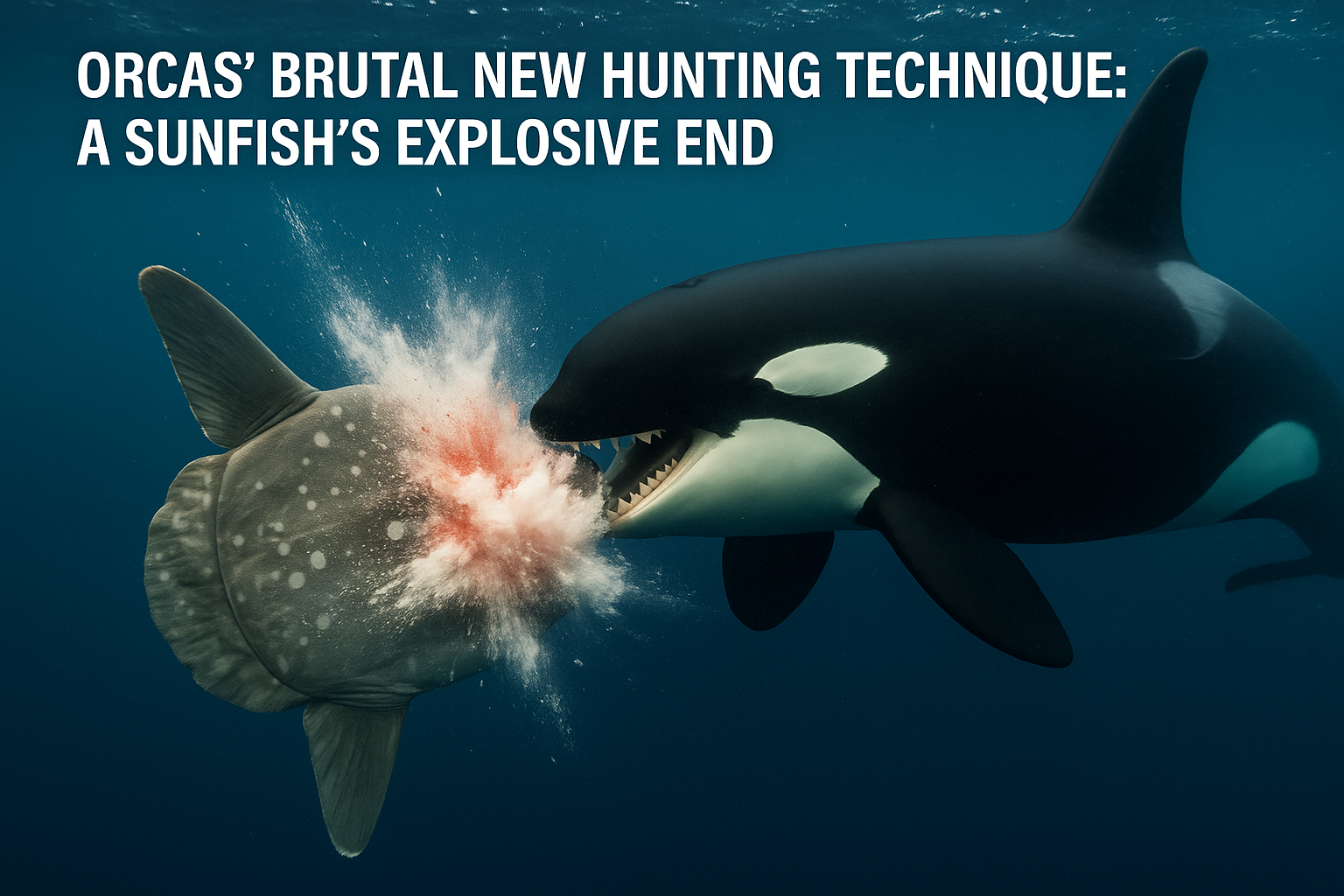

Imagine the serene blue waters off Cabo San Lucas, a place known for its vibrant marine life and breathtaking beauty. Now, picture something so unexpected, so visceral, it makes you question everything you thought you knew about apex predators. Scientists have recently documented a truly astonishing, and frankly, gruesome, new hunting behavior from orcas in these very waters. It involves a sunfish, an animal that can weigh thousands of pounds, being held in place by one orca while another rams it at high speed, with such force that the sunfish literally explodes into thousands of pieces. Yes, you read that right: explodes. This isn’t just a brutal attack; it’s a meticulously coordinated, high-impact maneuver that showcases a level of predatory sophistication that’s both awe-inspiring and a little terrifying. It’s a game-changer in understanding orcas hunting techniques explained, and it’s sending ripples through the marine biology community.
This “stabilize-and-ram” technique, as it’s been dubbed, was observed in two separate encounters and detailed in a new study co-authored by Kathryn Ayres of Beneath The Waves and Erick Higuera of Conexiones Terramar. Their findings aren’t just a footnote in a scientific journal; they’re sparking significant buzz and going viral across social media, and it’s not hard to see why. The visual of a massive fish disintegrating under the coordinated assault of these marine giants is certainly striking. But beyond the shock value, this discovery offers profound insights into the intelligence, adaptability, and social dynamics of killer whales, reminding us just how much we still have to learn about the ocean’s most formidable hunters. See also top marine biology programs.
The Mechanics of an Explosive Attack: How Orcas Hunting Techniques Explained This New Phenomenon
Let’s break down exactly what happened. The sunfish, specifically the ocean sunfish (Mola mola), is an enormous, flat, silvery fish, often described as looking like a giant swimming head. They’re not particularly fast or agile, making them a potential target, but their sheer size presents a challenge. What Ayres and Higuera observed was a synchronized effort: one orca would secure the sunfish, likely using its body to pin it or restrict its movement. Then, with precision and immense power, a second orca would accelerate, delivering a devastating blow. The impact was so violent that the sunfish’s tissues and organs couldn’t withstand the force, resulting in a catastrophic rupture – an explosion, essentially.
This isn’t a random act of aggression; it speaks to an intricate understanding of physics and anatomy on the part of the orcas. To generate enough force to cause such an outcome, the ramming orca must be traveling at considerable speed, and the point of impact must be strategic. We’re talking about a creature that can weigh up to 6,000 pounds launching itself with purpose. The coordination required between the two orcas suggests not just instinct, but a learned, collaborative hunting strategy. It pushes the boundaries of what we previously understood about orcas hunting techniques explained.
Think about it: most predators aim for a quick, debilitating bite to the neck or a vital organ. This ramming technique is different. It’s about kinetic energy transfer, a blunt force trauma so extreme it obliterates the prey. It’s almost surgical in its brutality. This kind of specialized behavior often evolves when a species faces particular prey challenges or when specific opportunities arise. The sunfish, with its unique body structure and lack of conventional defenses, might just be the perfect canvas for such a spectacular, albeit horrifying, display of predatory prowess. It’s a testament to the fact that even in well-studied species, nature always has more surprises up its sleeve. (See: Learn more about orcas.)
Why This Brutal Strategy? Unpacking the Potential Reasons Behind This Orca Behavior
So, why would orcas develop such a specialized and seemingly extreme hunting method? Robert Pitman, a marine mammal expert from Oregon State University, offers some compelling hypotheses. One significant possibility is that this behavior serves as a feeding strategy, particularly beneficial for certain individuals within the pod. Consider younger orcas or those with worn teeth. A traditional bite-and-tear approach might be difficult for them, especially with a large, tough-skinned sunfish. By effectively exploding the sunfish, the meal is instantly broken down into smaller, more manageable pieces, making it easier for all members of the pod to consume.
This isn’t just about ease of eating, though. It could also be a way to maximize nutritional intake. A sunfish is a large creature, and by pulverizing it, the orcas might be making more of its internal organs and tissues accessible, which might otherwise be difficult to extract efficiently. It’s a high-reward, high-impact strategy. Furthermore, orcas are known for their intelligence and social learning. If one orca discovers an effective, if brutal, way to secure a meal, it’s highly likely to be shared and replicated within the pod. This rapid dissemination of innovative orcas hunting techniques explained why we might be seeing this behavior emerge and spread.
Beyond pure sustenance, there’s another intriguing angle: the element of play and even torment. Orcas are incredibly intelligent and complex animals. They’ve been observed playing with their food, sometimes for extended periods, before consuming it. This isn’t just about hunger; it’s about interaction, exploration, and perhaps even practicing hunting skills. The sheer spectacle of a sunfish exploding could, in a twisted way, be a form of stimulation for these highly cognitive animals. While it sounds macabre to us, for an apex predator, the mastery over prey, even to the point of such a dramatic end, could be part of their behavioral repertoire, reinforcing social bonds and demonstrating skill. It’s a reminder that their world operates by different rules than ours.
Beyond the Explosion: Orca Intelligence and Adaptability
The discovery of the “stabilize-and-ram” technique isn’t an isolated incident when we consider the broader picture of orca behavior. These magnificent creatures are renowned for their incredible intelligence and adaptability, constantly developing new orcas hunting techniques explained by their environment and prey. From cooperative herding to wave-washing seals off ice floes, their strategies are as diverse as the environments they inhabit. This new sunfish technique simply adds another layer to their already impressive resume.
Their intelligence is evident in their complex social structures, their ability to communicate through a variety of vocalizations, and their capacity for cultural transmission – meaning they teach and learn behaviors from one another. This new hunting method almost certainly falls under the umbrella of cultural transmission. One orca, perhaps by accident or experimentation, stumbled upon this incredibly effective method, and others learned it. This is how innovations spread through an orca pod, much like cultural trends among humans. It underscores that orcas aren’t just instinct-driven machines; they’re problem-solvers, innovators, and learners, continuously refining their approach to survival.
Consider the logistical complexity of this maneuver: one animal needs to hold the prey, anticipating the arrival of another. The ramming animal needs to target precisely and deliver maximum force. This is not a haphazard attack. It suggests planning, communication, and a shared understanding of the objective. Such sophisticated behavior truly sets orcas apart in the marine kingdom, reinforcing their status as some of the most intelligent non-human animals on the planet. Their capacity for adaptive behavior ensures their survival across diverse marine ecosystems, from polar ice caps to temperate coastal waters. (See: Research on marine predator behavior.)
Ecological Ripple Effects: What an Exploding Sunfish Means for the Ecosystem
While the immediate focus is often on the dramatic nature of the hunt, it’s crucial to consider the broader ecological implications of such a behavior. Sunfish, while not typically a primary food source for many marine predators due to their tough skin and relatively low nutritional value compared to fattier prey, are still a significant component of the ocean’s biomass. If this “stabilize-and-ram” technique becomes more widespread, what impact could it have on sunfish populations?
Ocean sunfish, though large, have a unique life history. They produce an astonishing number of eggs – up to 300 million at a time – but very few survive to adulthood. They feed primarily on jellyfish, salps, and small crustaceans, playing a role in regulating these populations. A significant increase in their predation by orcas, especially through such an efficient and destructive method, could potentially alter local food webs. We’re talking about a large amount of organic matter suddenly being dispersed into the water column. This could attract scavengers, small fish, and even provide a nutrient boost for plankton, creating localized hotspots of activity.
It’s a complex web. The disappearance of large sunfish could have cascading effects, perhaps leading to an increase in jellyfish populations in certain areas, which could then impact other marine life. However, it’s also important to remember that marine ecosystems are incredibly resilient and dynamic. Orcas are apex predators, and their role is to regulate prey populations. This new hunting technique, while visually shocking, might simply be another facet of the natural predator-prey balance, a new equilibrium being established in response to available resources and evolving orcas hunting techniques explained by necessity or opportunity.
Comparing Orcas Hunting Techniques: A Spectrum of Strategies
This new sunfish behavior isn’t an anomaly in the world of orca predation; it’s another fascinating entry in their vast repertoire of orcas hunting techniques explained by their incredible versatility. Let’s look at how it compares to some of their other well-documented strategies:
- Wave-Washing: In the Antarctic, orcas famously cooperate to create powerful waves, washing seals and penguins off ice floes directly into the water, where they can be captured. This requires precise timing, coordinated swimming, and an understanding of hydrodynamics.
- Carousel Feeding: Off the coast of Norway, some orca populations herd schooling fish, like herring, into tight “bait balls.” They then use their powerful tails to stun the fish with a flick, picking off the disoriented prey.
- Beach Stranding: In Patagonia, a unique population of orcas intentionally and repeatedly strand themselves on beaches to snatch sea lion pups, a risky but highly rewarding strategy passed down through generations.
- Cooperative Hunting of Large Whales: Orcas, particularly transient ecotypes, are known to hunt much larger whales, like minke whales or even gray whale calves. This involves prolonged, coordinated chases, with different individuals taking on roles like tiring the prey, blocking its escape, and ultimately drowning it.
The “stabilize-and-ram” technique for sunfish fits into this pattern of specialized, cooperative, and often high-risk/high-reward hunting. What makes it stand out is the sheer destructive force involved and the counterintuitive outcome of an exploding fish. Most other techniques aim to incapacitate or isolate the prey. This one aims to atomize it, in a sense. It underscores that orcas don’t have a one-size-fits-all approach; instead, they tailor their methods to the specific prey and environmental conditions, showcasing an unparalleled level of predatory sophistication. Each of these different orcas hunting techniques explained a specific adaptation to their local environment and available prey. (See: Study on predatory techniques in marine life.)
The Future of Orca Research: Unanswered Questions and Ethical Considerations
The discovery of this new hunting behavior opens up a whole new avenue of research into orca biology and ecology. What other specialized techniques are out there, waiting to be observed? How widespread is this sunfish ramming behavior? Is it unique to the Cabo San Lucas population, or will we find it in other parts of the world where sunfish and orcas coexist? Researchers will undoubtedly be looking for more opportunities to document and analyze this behavior, perhaps even using advanced underwater imaging to capture the precise mechanics of the impact.
There are also ethical considerations for scientists observing such brutal events. While the instinct might be to intervene, the prevailing scientific consensus is to allow nature to take its course. These are wild animals engaging in natural predatory behavior, and interference, no matter how well-intentioned, can have unforeseen consequences for both the animals and the ecosystem. The role of the scientist is to observe, document, and understand, not to alter the natural order.
Ultimately, this shocking new insight into orcas hunting techniques explained by the stabilize-and-ram method reminds us that the ocean is a vast, mysterious place, teeming with life and behavior we’re only just beginning to comprehend. Every new discovery peels back another layer, revealing the incredible complexity and often brutal beauty of the natural world. It challenges our preconceptions and forces us to acknowledge that even the most well-studied animals can still surprise us with their ingenuity and power. The ocean’s apex predators continue to evolve, and we, as observers, must continue to learn from their incredible adaptations.
Trending Now
Frequently Asked Questions
What is the new hunting technique used by orcas?
The new hunting technique observed in orcas is called the 'stabilize-and-ram' method. One orca holds a sunfish in place while another rams it at high speed, causing the fish to explode into pieces. This coordinated attack showcases the advanced predatory skills of orcas and their ability to work together.
How do orcas hunt sunfish?
Orcas hunt sunfish using a sophisticated technique where they stabilize the fish and then ram it with great force. This method was detailed in a recent study, highlighting the orcas' intelligence and teamwork, as they can effectively disarm their prey before delivering a lethal blow.
What is the impact of orcas' hunting behavior on marine biology?
The revelation of orcas' brutal hunting technique is significant for marine biology, as it provides insights into the social dynamics, intelligence, and adaptability of these apex predators. It challenges previous understandings of orca behavior and emphasizes the complexity of their hunting strategies.
Why is the sunfish's explosive end significant?
The sunfish's explosive end during orca attacks is significant because it illustrates the extreme predatory capabilities of orcas. This behavior not only captivates attention but also forces scientists to reconsider the ecological roles of these marine mammals and their interactions with prey.
What does the new study on orcas reveal?
The new study co-authored by Kathryn Ayres and Erick Higuera reveals a previously undocumented hunting technique among orcas, showcasing their ability to coordinate attacks on large prey like sunfish. This discovery highlights the need for further research on orca intelligence and hunting behaviors.
Agree or disagree? Drop a comment and tell us what you think.






