
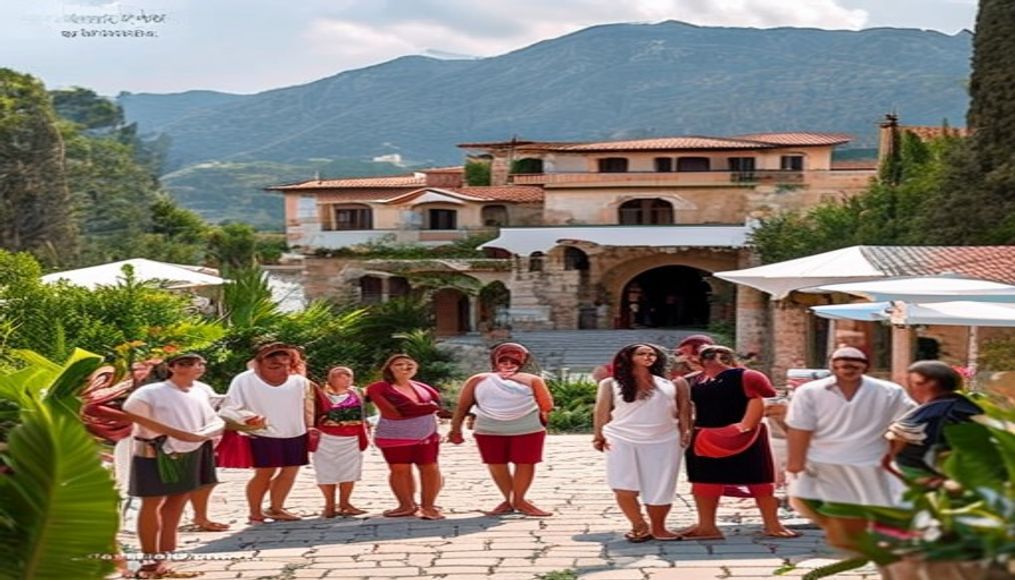

Sardinia, that jewel in the Mediterranean, is renowned for its pristine beaches, rugged coastlines, and a fiercely independent spirit. But recently, this idyllic island became the stage for a dramatic showdown between high-stakes luxury development and local environmental protection. The Tavolara Bay project, a proposed luxury resort Sardinia was eyeing, found itself at the center of a swirling controversy that ultimately led to its planning permissions being revoked. It’s a story that speaks volumes about the delicate balance between economic ambition and preserving natural heritage, and it’s one you absolutely need to hear.
Brazilian company JHSF had big plans: to transform a corner of this beautiful island into an exclusive ‘glamping site’ with around 20 cabins, alongside the renovation of an existing villa. Sounds appealing, right? Not to everyone. The proposed site was within a marine protected area, a detail that immediately raised red flags for many Sardinians and environmentalists. What unfolded next was a fascinating, and at times heated, battle that highlights the power of community activism and the complex web of local politics and environmental regulations. This isn’t just about one luxury resort; it’s a microcosm of global debates on sustainable tourism and the rights of local communities to dictate their own future.
1. The Tavolara Bay Project: An Ambitious Vision for a Luxury Resort Sardinia
Let’s set the scene. The Tavolara Bay project, spearheaded by the Brazilian firm JHSF, was envisioned as a high-end luxury resort Sardinia could be proud of, at least from a developer’s perspective. The core of the plan involved renovating an existing villa, presumably to serve as a central hub or a more traditional accommodation option. But the real buzz, and arguably where much of the controversy stemmed, was the creation of a ‘glamping site.’ This wasn’t your typical tent in the woods; we’re talking about approximately 20 upscale cabins, designed to offer a luxurious, nature-immersive experience without sacrificing comfort.
The concept of glamping – glamorous camping – has exploded in popularity, appealing to travelers who seek unique, experiential stays that connect them with nature but still provide five-star amenities. For JHSF, this was likely seen as a clever way to blend luxury tourism with a perceived eco-friendly aesthetic. The location, Tavolara Bay, is undeniably stunning, making it a prime candidate for such a venture. Developers often scout for these ‘untouched’ or ‘less developed’ areas, seeing them as blank canvases for creating exclusive destinations. However, what one person sees as a blank canvas, another sees as a vital, protected ecosystem.
2. The 300-Meter Rule: Sardinia’s Coastal Protection Law
At the heart of the opposition to this luxury resort Sardinia faced was a specific piece of legislation: the 2006 directive enacted by former Sardinian President Renato Soru. This directive is a cornerstone of environmental protection on the island, explicitly outlawing new coastal development within 300 meters of the sea. Think about that for a moment. Three hundred meters isn’t just a number; it’s a line drawn in the sand, literally, designed to safeguard Sardinia’s breathtaking coastline from over-development and preserve its natural beauty for future generations. It’s a bold move, one that many other popular tourist destinations could learn from.
This law isn’t some obscure, rarely enforced regulation. It’s a well-known and deeply respected principle among Sardinians who care about their island’s ecological integrity. The intent is clear: prevent the kind of unchecked coastal sprawl seen in many other parts of the Mediterranean, where hotels and apartment blocks creep right up to the water’s edge, often at the expense of public access, natural habitats, and local charm. So, when a project like Tavolara Bay comes along, proposing development in such a sensitive area, it immediately clashes with this foundational protective measure. (See: Learn more about Sardinia's geography.)
3. The February 2026 Approval: A Scandal in the Making
Here’s where things get really contentious and, frankly, a bit scandalous. Despite the clear 300-meter rule, planning permission for the Tavolara Bay luxury resort Sardinia project was actually approved in February 2026. How could this happen? It seems the developers, or perhaps their local advocates, tried to use a loophole or a workaround: a special economic zone (ZES) request. ZES areas are typically designated to stimulate economic growth through relaxed regulations and incentives, often in areas needing investment. The idea here was presumably to classify the development under ZES, thereby circumventing the strict coastal protection laws.
However, the approval of the planning permission *before* the ZES request was officially rubberstamped created a significant political and ethical storm. It looked, to many, like the cart was being put before the horse, or worse, that powerful interests were attempting to force through a development by sidestepping established legal processes. This sequence of events ignited public outrage and fueled the backlash. It suggested a lack of transparency and a disregard for the very laws designed to protect Sardinia’s environment, prompting accusations of political maneuvering and favoritism.
4. Local Backlash and Protests: The People Speak
When news of the February 2026 approval broke, it wasn’t met with enthusiasm; it was met with fierce resistance. Local communities, environmental groups, and concerned citizens mobilized quickly. Protests erupted, highlighting the deep emotional connection Sardinians have to their land and sea. This wasn’t just about a luxury resort Sardinia might host; it was about defending their heritage, their environment, and their right to self-determination.
The protests weren’t just token gestures; they were significant, sustained, and highly visible. People took to the streets, organized campaigns, and used social media to amplify their voices. They pointed out the ecological damage a development in a marine protected area could cause, from disrupting fragile ecosystems to increasing human impact on sensitive wildlife. They also emphasized the potential loss of public access to parts of the coastline, a common complaint with exclusive luxury developments. This collective outcry demonstrated that the value of Sardinia’s natural beauty far outweighed the perceived economic benefits of the project for many locals.
5. The Victory for Sardinian Autonomy: Permits Withdrawn
The pressure from the local backlash proved to be immense, and ultimately, effective. In early July 2026, the planning permissions for the Tavolara Bay project were officially withdrawn. This wasn’t just a bureaucratic decision; it was a resounding victory for the people of Sardinia and a testament to the power of community action. Local politicians, who had initially been criticized for the approval, were quick to celebrate the withdrawal, framing it as a triumph for Sardinian autonomy and a reaffirmation of the island’s commitment to environmental protection.
The reversal sent a clear message: Sardinia would not compromise its environmental laws or its coastal integrity for the sake of luxury development, especially when those developments appeared to bend the rules. This outcome has resonated far beyond the island’s shores, becoming a significant case study in the global discussion about sustainable tourism, ethical development, and the importance of respecting local regulations and community sentiment. It truly shows that sometimes, the people can win against big money. (See: Research on sustainable tourism practices.)
6. Calls for Resignation and Political Accountability
While the withdrawal of the permits was a cause for celebration, it also brought calls for accountability. Local politicians, invigorated by the victory, didn’t shy away from demanding resignations from those they believed were responsible for the initial controversial approval. This aspect underscores the deeply emotional and political charge of the entire issue. It wasn’t just about a building project; it was about trust, governance, and the perception of who truly holds power – the local populace or external developers with deep pockets.
The demand for resignations highlights a critical element of democratic governance: the expectation that public officials act in the best interest of their constituents and uphold the law. When approvals appear to circumvent established legal frameworks, it erodes public trust and invites scrutiny. This entire saga serves as a potent reminder that even in an era of globalized investment, local politics and public opinion remain incredibly powerful forces that can shape the destiny of development projects.
7. Sustainable Tourism vs. Overtourism: A Global Debate in Sardinia
The Tavolara Bay controversy perfectly encapsulates a broader, global debate: how do we balance the economic benefits of tourism with the imperative to protect natural environments and local cultures? This isn’t unique to a luxury resort Sardinia almost had; it’s a challenge faced by popular destinations worldwide. The concept of ‘sustainable tourism’ advocates for development that meets the needs of present tourists and host regions while protecting and enhancing opportunities for the future. It’s about minimizing negative impacts and maximizing positive ones.
On the flip side, ‘overtourism’ describes situations where the number of visitors exceeds the capacity of the local infrastructure, environment, or community, leading to degradation, overcrowding, and a diminished quality of life for residents. Sardinia, with its finite resources and fragile ecosystems, is particularly vulnerable to the pitfalls of overtourism. The strong pushback against the Tavolara Bay project signals a clear preference among many Sardinians for a model of tourism that respects the island’s limits and preserves its unique character, rather than one that prioritizes rapid, large-scale development.
8. The Economic Angle: Luxury Travel, Real Estate, and Ethical Investments
From an economic perspective, this situation is incredibly interesting. The ‘luxury travel’ and ‘real estate’ niches are huge, attracting significant investment and high-spending clientele. The initial appeal of a luxury resort Sardinia would host, especially one targeting the ‘glamping’ trend, is obvious for investors. However, the outcome of the Tavolara Bay project introduces critical considerations for those in these sectors, particularly regarding ‘sustainable luxury travel’ and ‘ethical tourism investments.’ (See: CDC's guidelines on sustainable development.)
Developers and investors are increasingly under scrutiny to ensure their projects are not only profitable but also environmentally sound and socially responsible. This incident highlights the financial risks associated with ignoring local regulations and community sentiment. A project that faces such intense backlash and ultimately loses its permits can incur massive financial losses, not to mention reputational damage. It makes a strong case for thorough due diligence that goes beyond just financial projections and delves deep into local environmental laws, community engagement, and political landscapes.
9. The Future of Development in Sardinia and Beyond
So, what does this mean for the future of development in Sardinia and for other destinations grappling with similar issues? It sends a clear message: local communities and environmental protection are not to be underestimated. For developers considering a luxury resort Sardinia offers, or any significant project, genuine engagement with local stakeholders, rigorous adherence to environmental regulations, and a deep understanding of the political climate are paramount. Ignoring these factors can lead to significant setbacks, as JHSF discovered.
This episode will undoubtedly serve as a powerful precedent, empowering other communities to stand up against developments they deem inappropriate or harmful. It reinforces the idea that true sustainability in tourism isn’t just about marketing; it’s about genuine commitment to ecological preservation and respecting the rights and wishes of the people who call these beautiful places home. Sardinia has shown that preserving paradise sometimes means saying a firm ‘no’ to certain kinds of progress.
Trending Now
Frequently Asked Questions
What was the Tavolara Bay project in Sardinia?
The Tavolara Bay project was a proposed luxury resort plan by Brazilian company JHSF, which included renovating an existing villa and creating a 'glamping site' with about 20 upscale cabins. However, it sparked controversy due to its location within a marine protected area.
Why did locals oppose the luxury resort in Sardinia?
Locals opposed the luxury resort project primarily because it was situated within a marine protected area, raising environmental concerns. The controversy highlighted the tension between economic development and the preservation of Sardinia's natural heritage.
What impact did community activism have on the Tavolara Bay project?
Community activism played a crucial role in the Tavolara Bay project, as local residents and environmentalists rallied against the luxury development. Their efforts contributed to the eventual revocation of planning permissions, showcasing the power of grassroots movements in protecting local interests.
What are the environmental concerns related to luxury resorts in Sardinia?
Environmental concerns regarding luxury resorts in Sardinia include potential damage to protected marine areas, disruption of local ecosystems, and the threat to the island's natural beauty. These issues often fuel community opposition to such developments.
How does the Tavolara Bay project reflect global debates on sustainable tourism?
The Tavolara Bay project encapsulates global debates on sustainable tourism by illustrating the conflict between economic ambitions and environmental preservation. It raises questions about the rights of local communities to influence developments that affect their land and resources.
What's your take on this? Share your thoughts in the comments below — we read every one.






