
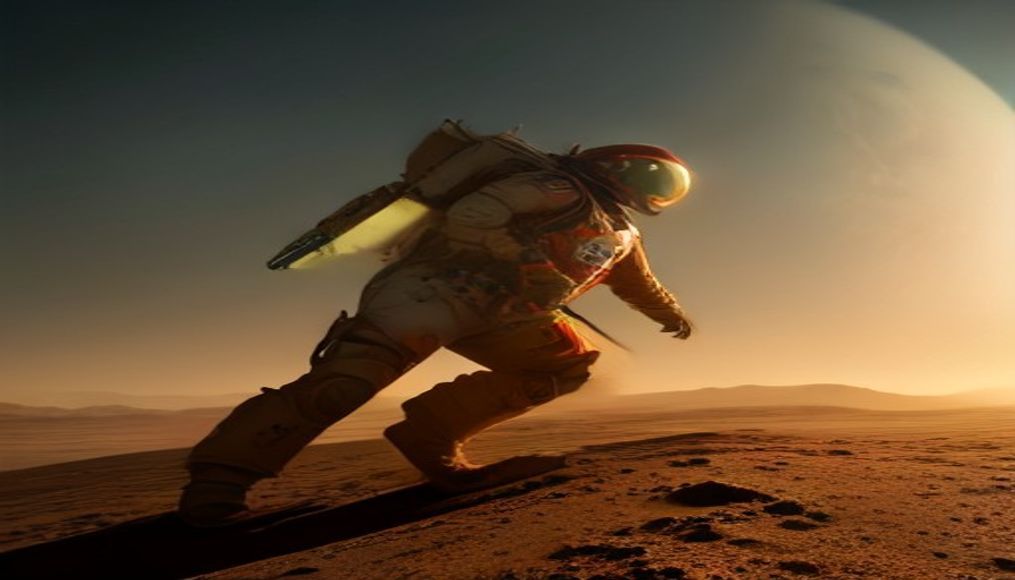

When we gaze up at the night sky, dreaming of astronauts stepping onto Mars or building lunar bases, it’s easy to get lost in the grandeur. We imagine groundbreaking discoveries, new frontiers, and humanity’s unstoppable march into the cosmos. But beneath that inspiring vision lies a sobering reality: space is an incredibly harsh environment, and one of its most insidious threats is radiation. We often hear about cosmic radiation, but how does it stack up against the radiation we encounter here on Earth? And what are the real, long-term implications, especially for the human brain, during extended voyages?
For decades, scientists have known that space radiation poses a significant hazard. What’s relatively new, and frankly, a bit unsettling, is a growing concern that even prolonged exposure to what were once considered ‘low doses’ of cosmic radiation could have meaningful neurological effects. This isn’t just about acute radiation sickness; it’s about subtle, progressive impairment that could impact a crew’s ability to perform complex tasks, make critical decisions, or even maintain their psychological well-being during missions lasting months or years. Understanding the nuances of cosmic radiation vs earth radiation risks is no longer an academic exercise; it’s a mission-critical challenge.
1. The Terrestrial Baseline: What We Face on Earth
Let’s start with what’s familiar: Earth radiation. We’re constantly bathed in it, whether we realize it or not. This isn’t some fringe conspiracy; it’s a fundamental part of our planet’s environment. The primary sources of terrestrial radiation are natural, stemming from radioactive elements in the Earth’s crust, like uranium and thorium, which decay into radon gas. This radon can accumulate in homes, especially basements, and contribute significantly to our annual radiation dose. Beyond geological sources, cosmic rays do penetrate our atmosphere, but they are dramatically attenuated by the time they reach sea level, adding a small but measurable component to our natural background exposure.
Then there are human-made sources. Medical procedures like X-rays, CT scans, and nuclear medicine are major contributors to our artificial radiation dose. While these are often medically necessary and carefully managed, they add to our lifetime exposure. Certain occupations, such as airline pilots and flight attendants, also face higher doses due to reduced atmospheric shielding at cruising altitudes, essentially getting a taste of the lower end of cosmic radiation exposure. The key takeaway here is that Earth’s atmosphere and magnetic field act as a remarkably effective shield, keeping our average annual doses relatively low and manageable, though not entirely negligible.
2. Cosmic Rays Unleashed: The Galactic Menace
Now, let’s pivot to cosmic radiation – the true adversary for deep-space explorers. This isn’t a single, uniform type of radiation; it’s a complex cocktail of high-energy particles originating from various cosmic phenomena. We generally categorize them into two main types: Galactic Cosmic Rays (GCRs) and Solar Particle Events (SPEs).
GCRs are the constant, pervasive threat. They’re high-energy protons and atomic nuclei (up to iron and beyond) that originate from outside our solar system, likely accelerated by supernova explosions and other violent astrophysical events. These particles travel at relativistic speeds and possess incredible penetrating power. Unlike SPEs, which are episodic, GCRs are a continuous shower. They’re particularly concerning because they’re difficult to shield against; when a heavy GCR particle slams into a spacecraft’s hull or an astronaut’s body, it can create a cascade of secondary particles, effectively multiplying the radiation dose and making traditional shielding less effective. This is where the long-term, low-dose exposure concern really comes into play, as these particles can ionize biological tissue, leading to DNA damage and cellular dysfunction.
3. Solar Particle Events: The Sudden Storms
While GCRs are the steady drizzle, Solar Particle Events (SPEs) are the sudden, torrential downpours. These are unpredictable bursts of high-energy protons and electrons ejected from the Sun during solar flares and coronal mass ejectons (CMEs). SPEs can deliver extremely high doses of radiation in very short periods – sometimes within minutes or hours. For astronauts caught unprotected during an SPE, the consequences could be catastrophic, leading to acute radiation sickness, severe tissue damage, or even death. Think of the Apollo missions; while they were relatively short, an ill-timed SPE could have spelled disaster. (See: Understanding radiation exposure risks.)
The good news about SPEs is that they are generally easier to shield against than GCRs. Since they are predominantly protons, a relatively thick layer of material, like water, polyethylene, or even the spacecraft’s fuel tanks, can provide significant protection. The challenge lies in predicting them accurately and providing astronauts with sufficient warning to take shelter in a ‘storm cellar’ or a heavily shielded compartment within the spacecraft. This unpredictability and the rapid onset of high doses make SPEs a distinct and immediate threat that requires robust mitigation strategies for any long-duration mission beyond Earth’s protective magnetosphere. Mars colony visa insights offers useful background here.
4. The Brain’s Vulnerability: A New Frontier of Concern
Here’s where the latest research truly raises eyebrows and focuses our attention on the specific dangers of cosmic radiation vs earth radiation risks. For a long time, the primary concerns regarding space radiation centered on cancer risk, cataracts, and degenerative tissue effects. While these remain critical, emerging studies, particularly from institutions like the University of California, Irvine, suggest that the brain might be far more vulnerable to even low doses of chronic cosmic radiation than previously understood.
These studies, often involving rodent models exposed to simulated cosmic radiation, indicate potential for long-term cognitive impairment. We’re talking about effects on memory, decision-making, spatial awareness, and even the brain’s ability to adapt and learn new information. The hypothesis is that these high-energy particles, even when not directly killing cells, can disrupt neural pathways, damage synapses, and induce inflammation within the brain. Such subtle yet pervasive damage could significantly compromise an astronaut’s performance on a multi-year mission to Mars, where critical decisions and complex problem-solving are daily necessities. Imagine an astronaut facing a complex engineering problem or a medical emergency with impaired cognitive function; the implications are chilling.
5. Shielding Strategies: Battling the Invisible Threat
Given the profound differences in the nature and intensity of cosmic radiation vs earth radiation risks, shielding in space is a monumental engineering challenge. On Earth, our atmosphere and magnetic field do most of the work for us. In space, particularly deep space, we’re on our own. Traditional materials like aluminum, commonly used in spacecraft, offer some protection, but they can also interact with GCRs to produce secondary radiation, sometimes making the problem worse rather than better.
Engineers are exploring advanced materials and innovative designs. Hydrogen-rich materials, like polyethylene and water, are considered promising because hydrogen nuclei are very effective at stopping protons and other light ions without generating as much secondary radiation. This is why some concepts for deep-space habitats include water walls or even using the spacecraft’s own waste water as shielding. Magnetic shielding, which would create a miniature artificial magnetosphere around a spacecraft, is another intriguing but technologically challenging concept. Ultimately, a multi-layered approach, combining material science with active or passive magnetic fields, might be necessary to adequately protect future Mars-bound crews from the full spectrum of cosmic radiation threats.
6. Mission Design and Mitigation: Beyond Just Shields
Protecting astronauts from cosmic radiation isn’t solely about brute-force shielding; it’s also about smart mission design and operational protocols. For example, scheduling missions during periods of solar minimum, when solar activity and thus the frequency of SPEs are lower, can reduce some of the risk. However, GCRs are actually *more* intense during solar minimums because the Sun’s magnetic field offers less protection against them. This creates a complex trade-off that mission planners must carefully balance.
Another crucial element is real-time radiation monitoring and warning systems. Being able to predict SPEs with greater accuracy and give crews sufficient time to move into heavily shielded ‘storm shelters’ within their spacecraft or habitat is vital. For Mars missions, this also means considering how much time astronauts will spend outside the protected habitat, perhaps in rovers or during spacewalks, where exposure will be higher. Developing pharmaceuticals that can mitigate radiation damage, either by protecting cells before exposure or aiding in repair afterward, is also an active area of research, offering a potential biological countermeasure to the physical shielding limitations. (See: NASA's overview of space radiation.)
7. The Human Factor: Balancing Risk and Reward
Ultimately, the challenge of cosmic radiation vs earth radiation risks boils down to a fundamental question: how much risk are we willing to accept for human space exploration? Every mission, every journey into the unknown, carries inherent dangers. On Earth, we have strict regulatory limits for radiation exposure for professionals like nuclear power plant workers or radiologists. These limits are based on decades of epidemiological data and are designed to keep lifetime cancer risk within acceptable bounds. Related reading: classroom activities for NASA.
However, applying these same terrestrial limits to deep-space missions is virtually impossible without revolutionary breakthroughs in shielding or propulsion. Astronauts on a Mars mission will inevitably exceed these limits. The conversation then shifts to understanding the specific long-term health impacts, particularly the neurological effects, and developing countermeasures that can keep these risks within a tolerable range. It’s a complex ethical and scientific dilemma, balancing the immense potential rewards of expanding humanity’s reach with the very real and personal risks to the brave individuals who volunteer to take us there. Our dreams of Mars depend not just on rockets, but on how well we can protect the most vital cargo: the human brain.
8. Expert Perspectives and International Collaboration: A United Front
The severity of cosmic radiation risks has united space agencies and scientific institutions worldwide. NASA, ESA (European Space Agency), Roscosmos, and others are actively collaborating on research and mitigation strategies. For example, NASA’s Human Research Program dedicates significant resources to understanding and countering the effects of space radiation, often funding studies at national laboratories and universities. These collaborations aren’t just about sharing data; they’re about pooling expertise and resources to tackle a problem that no single nation can solve alone. Experts in fields from astrophysics to neurobiology, materials science, and pharmacology are all contributing to this grand challenge. There’s a consensus among these experts that while the risks are substantial, they are not insurmountable. It requires a sustained, multidisciplinary effort, and the insights gained will benefit not only future astronauts but also potentially inform therapies for radiation exposure on Earth.
9. Long-Term Psychological Implications: Beyond Cognitive Function
While the focus on memory and decision-making is critical, we shouldn’t overlook the broader psychological effects of cosmic radiation. Prolonged exposure to even low doses of radiation might contribute to mood disorders, anxiety, or even personality changes. Imagine a small crew, isolated for years, facing these subtle psychological shifts on top of the immense stress of a deep-space mission. This isn’t science fiction; preliminary research suggests that radiation can affect neurotransmitter systems and inflammatory responses in the brain, both of which are strongly linked to mental health. The psychological resilience of astronauts is already a key selection criterion, but radiation could add an insidious layer of vulnerability. Understanding these potential impacts means developing not only physical countermeasures but also advanced psychological support systems and protocols tailored for radiation-exposed crews. It’s about ensuring the crew remains psychologically robust enough to handle the mission’s demands, keeping their spirits high and their focus sharp.
10. Future Directions and Breakthroughs: What’s on the Horizon?
The challenges of cosmic radiation vs earth radiation risks are pushing the boundaries of scientific innovation. Beyond the shielding materials and pharmaceutical interventions mentioned, scientists are looking at even more futuristic solutions. One intriguing concept is “active shielding” using powerful electrostatic or plasma fields to deflect charged particles. While incredibly complex and energy-intensive, the potential for comprehensive protection is immense. Another area of active research involves personalized medicine: understanding individual genetic predispositions to radiation damage and tailoring countermeasures accordingly. Perhaps in the future, astronauts will undergo gene therapy to enhance their cellular repair mechanisms before a deep-space journey. The development of advanced propulsion systems, like nuclear-thermal or nuclear-electric rockets, could also significantly reduce transit times to Mars, thereby lowering overall radiation exposure. These aren’t immediate solutions, but they represent the ambitious long-term goals of space radiation research.
Frequently Asked Questions About Cosmic Radiation vs Earth Radiation Risks
Q1: How much more radiation do astronauts receive in space compared to Earth?
A: It varies significantly depending on the mission. On the International Space Station (ISS), which is still within Earth’s protective magnetosphere, astronauts receive about 10 times more radiation than someone on Earth. For a deep-space mission like Mars, outside this protection, the dose rate could be hundreds of times higher, leading to total mission doses that greatly exceed terrestrial occupational limits. (See: Effects of cosmic radiation on health.)
Q2: What’s the biggest difference between GCRs and SPEs?
A: GCRs (Galactic Cosmic Rays) are a constant, low-level shower of very high-energy heavy ions from outside our solar system, difficult to shield against. SPEs (Solar Particle Events) are sudden, intense bursts of protons from the Sun, which can deliver high doses quickly but are generally easier to shield against with simpler materials.
Q3: Can we completely shield a spacecraft from cosmic radiation?
A: No, not with current or near-future technology. Heavy GCR particles are so energetic that complete shielding would require impractically massive amounts of material. The goal is to reduce exposure to acceptable levels, not eliminate it entirely, through a combination of physical shielding, operational protocols, and potentially biological countermeasures.
Q4: Are there any long-term health effects from Earth radiation?
A: Yes, even the relatively low doses we receive on Earth carry a small, cumulative risk, primarily an increased lifetime chance of developing cancer. This is why medical X-rays are only used when necessary, and radon mitigation is recommended for homes with high levels. However, Earth’s natural shielding keeps these risks very low for most people.
Q5: How does radiation affect the brain specifically?
A: Research suggests cosmic radiation can cause inflammation, disrupt neural pathways, damage synapses (connections between neurons), and impair neurogenesis (the creation of new brain cells). These effects can lead to cognitive deficits in memory, decision-making, and spatial awareness, as well as potentially impacting mood and psychological well-being.
Trending Now
Frequently Asked Questions
What are the risks of radiation exposure in space?
Radiation exposure in space poses significant risks, including potential neurological effects from prolonged exposure to cosmic radiation. Unlike acute radiation sickness, these effects can lead to subtle cognitive impairments, affecting decision-making and psychological well-being during long missions.
How does space radiation compare to Earth's radiation?
Space radiation differs from Earth's radiation in intensity and type. While terrestrial radiation comes from natural sources like uranium and radon, cosmic radiation is more penetrating and can have long-term neurological implications for astronauts, especially during extended space missions.
What sources contribute to radiation exposure on Earth?
On Earth, radiation exposure primarily comes from natural sources such as radioactive elements in the crust, including uranium and thorium. Radon gas, which can accumulate in homes, particularly basements, is also a significant contributor to our annual radiation dose.
What are the long-term effects of cosmic radiation on astronauts?
Long-term exposure to cosmic radiation can lead to progressive cognitive impairments, affecting astronauts' ability to perform complex tasks and make critical decisions. This is a growing concern as missions to Mars and beyond become a reality.
Why is understanding radiation risks important for space missions?
Understanding radiation risks is crucial for space missions because it directly impacts crew safety and mission success. As we plan for long-duration space travel, addressing these risks is essential to ensure that astronauts can function effectively and maintain their health.
Agree or disagree? Drop a comment and tell us what you think.






