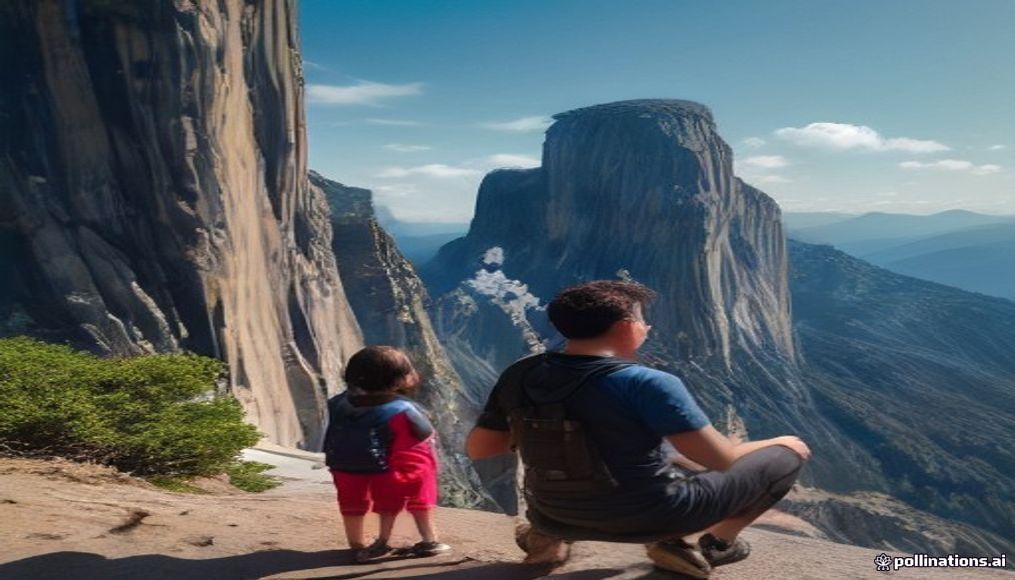

When you scroll through your social media feed, it’s easy to get swept up in the curated perfection of influencer culture. We see meticulously staged photos, aspirational travel, and often, what looks like idyllic family life. But what happens when the pursuit of viral content pushes the boundaries of common sense, especially when children are involved? That’s precisely the question at the heart of a recent, fiery debate sparked by influencer dad Joe Evermore, whose decision to take his very young sons on a multi-day ascent of El Capitan has ignited a massive influencer parenting backlash across the internet.
The controversy exploded after a video surfaced showing Evermore with his sons, Sylvan, aged 9, and Joey, who was just 6 when the climb began and 7 when he completed it. Their feat? Conquering El Capitan, a nearly 3,000-foot vertical rock formation in Yosemite National Park, a climb renowned for its extreme difficulty and danger. Joey, in particular, became the youngest person ever to achieve this monumental climb. While many might initially marvel at such an accomplishment, a significant segment of online commentators, particularly on platforms like Reddit, quickly shifted from awe to outrage, accusing Evermore of using his children as props for content, putting their safety at grave risk, and demonstrating a shocking lack of parental judgment.
The El Capitan Feat and The Initial Spark
Let’s set the scene. El Capitan isn’t just a big rock; it’s one of the world’s most iconic and challenging big-wall climbs. Its sheer granite face has tested the mettle of elite climbers for decades. Think about the sheer physical and mental endurance required for an adult, let alone a child who hasn’t even hit double digits in age. Joe Evermore, an experienced climber and influencer, embarked on this perilous journey with his two young boys. The climb itself stretched over five days, a grueling ordeal of scaling, hauling gear, and sleeping in portaledges suspended hundreds of feet above the valley floor.
When the video of their ascent began circulating, it initially drew a mix of admiration and disbelief. On one hand, the sheer audacity of a six and nine-year-old tackling such a challenge is undeniable. It speaks to an incredible level of physical conditioning, mental fortitude, and, of course, a father’s guidance. However, the initial spark of wonder quickly morphed into a raging inferno of criticism. The core of the anger wasn’t about the achievement itself, but rather the perceived motivations behind it and the potential risks involved for children who, by all accounts, are still very much in their formative years, reliant on adult judgment for their safety.
The internet, being the internet, didn’t hold back. Comments flooded in, dissecting every frame of the video and every detail of the story. While some applauded the family’s adventurous spirit, the dominant narrative quickly became one of alarm. People started asking tough questions: Is this truly for the children’s benefit, or is it for the clicks, the likes, and the validation that comes with viral content? This El Capitan saga quickly became a potent example of the growing influencer parenting backlash, forcing us to confront the ethical tightrope some content creators walk.
The Alarming Details and Joey’s Tears
The controversy intensified exponentially when specific details of the climb emerged, particularly those recounted by Joe Evermore himself. He openly shared that Joey, the then-six-year-old, cried “about once a day” during the five-day ordeal. For many parents, this single detail was a red flag the size of El Capitan itself. A child crying daily during an activity isn’t usually a sign of a joyful, enriching experience; it often points to distress, fear, or overwhelming difficulty. While some might argue that tears are a natural part of pushing boundaries, the context here – a multi-day climb of one of the world’s most dangerous rock faces – shifted the perception dramatically. (See: El Capitan information from National Park Service.)
Imagine being a small child, suspended hundreds of feet in the air, enduring physical exertion, exposure to the elements, and the constant threat of danger. To hear that this child was crying daily suggests a level of emotional and physical strain that many found deeply troubling. Critics seized on this, interpreting it as clear evidence that the children were not genuinely enjoying the experience, but rather enduring it, perhaps pressured by a parent intent on achieving a record or creating sensational content. This particular revelation fueled the influencer parenting backlash, transforming it from a discussion about extreme sports into a debate about child welfare and parental responsibility.
Furthermore, the sheer logistics of such a climb for young children raise numerous concerns. What about proper nutrition, hydration, sleep, and psychological well-being? While Evermore undoubtedly took safety precautions, the inherent risks of big-wall climbing are immense, even for highly trained adults. Introducing these risks to children so young, especially when they are visibly distressed, struck a raw nerve with a public increasingly wary of content creators who seem to prioritize engagement over the well-being of their most vulnerable subjects: their own kids.
The Reddit Firestorm and Public Outcry
It’s often on platforms like Reddit where the rawest, most unfiltered public opinions emerge, and the El Capitan story was no exception. The influencer parenting backlash exploded there, with threads dedicated to Evermore’s actions quickly garnering thousands of comments. Terms like “reckless and insane” became commonplace, reflecting the visceral anger many felt. Users debated the ethics of involving children in such extreme activities, especially when the parent has a clear incentive for generating viral content.
One common theme among the critics was the idea of “informed consent.” While a nine-year-old might express a desire to climb, do they truly comprehend the gravity, the risks, and the sustained discomfort of a five-day ascent of El Capitan? For a six-year-old, that question becomes even more pointed. Many argued that children of these ages simply lack the cognitive development and life experience to make such a profound decision, leaving their safety and well-being entirely in the hands of their parent. And when that parent is actively cultivating an online brand around their family’s adventures, the motives become inherently suspect.
The discussions weren’t just about the physical danger; they delved into the psychological impact. What does it do to a child’s development to be pushed to such extremes, to be in a situation where they are crying daily out of fear or exhaustion, all while being filmed? The public outcry highlighted a growing discomfort with the commodification of childhood experiences for social media, particularly when those experiences appear to cross a line into exploitation or endangerment. This digital firestorm served as a powerful reminder that while influencers might seek to control their narratives, the internet has a collective voice that isn’t afraid to challenge them.
Extreme Parenting vs. Child Safety: A Growing Tension
The Joe Evermore case isn’t an isolated incident; it’s a stark illustration of a broader, increasingly visible tension between what some might call “extreme parenting” and fundamental principles of child safety and well-being. We live in an era where parents are encouraged to be unique, to raise “resilient” children, and to push boundaries. For some, this translates into unconventional educational choices, radical dietary approaches, or, in Evermore’s case, high-stakes adventurous pursuits. But where is the line? (See: CDC resources on parenting and child safety.)
Many critics argue that pushing a child to achieve an “extreme” feat, especially one that carries significant risk and prolonged distress, shifts from fostering resilience to potentially inflicting trauma or placing them in undue peril. The influencer parenting backlash here isn’t against adventure itself, but against the perceived imbalance where a parent’s desire for an achievement (or content) seems to outweigh the child’s immediate comfort, safety, and emotional health. Is it truly about the child’s passion, or is it a projection of the parent’s ambition?
Child development experts often emphasize the importance of age-appropriate challenges, where children can experience success and learn from manageable failures without feeling overwhelmed or constantly fearful. While a parent might genuinely believe they are fostering courage and strength, the public often views these actions through the lens of protection. The El Capitan incident brought this debate to a head, forcing a collective re-evaluation of what constitutes responsible parenting in the age of viral content. It makes you wonder: when is an adventure truly for the child, and when does it become a parent’s pursuit, with the child as the unwilling co-star?
The Pursuit of Viral Content and Its Ethical Quandaries
At the heart of much of the influencer parenting backlash is the uncomfortable truth that social media has created a powerful incentive structure. Viral content can mean fame, lucrative sponsorships, and a career. For family influencers, their children are often central to their brand. This creates an inherent ethical quandary: how do you balance creating engaging content with protecting your children’s privacy, safety, and childhood itself?
The problem isn’t new. For years, debates have simmered about parents who share every detail of their children’s lives online, from embarrassing moments to private medical information, all for engagement. However, the El Capitan story elevates this concern to a new level, moving beyond privacy issues into the realm of physical endangerment. When the pursuit of a viral moment involves putting children in objectively dangerous situations, the line between content creation and exploitation becomes dangerously blurred.
Consider the pressure on influencers to constantly outdo themselves. What’s next after El Capitan? The Himalayas? The consequences of this relentless pursuit of virality can be profound. Not only does it expose children to physical risks, but it also creates a distorted sense of reality for them. Their childhood experiences become public spectacles, their emotions monetized, and their achievements inextricably linked to their parent’s online presence. This case serves as a critical warning shot, reminding us all that the quest for likes and shares should never come at the expense of a child’s fundamental right to a safe, private, and unburdened childhood. (See: Research on risks of extreme sports for children.)
Navigating the Future of Influencer Parenting
The Joe Evermore El Capitan saga is more than just a fleeting internet controversy; it’s a symptom of a larger cultural shift and a call for greater scrutiny of influencer parenting. As social media continues to permeate every aspect of our lives, including how families present themselves to the world, we, as consumers of content, have a role to play. We need to critically evaluate what we see, question motivations, and hold influencers accountable when their actions appear to compromise the well-being of children.
For parents who are also content creators, this incident offers a vital opportunity for self-reflection. Is the content truly beneficial for the child, or is it primarily serving the parent’s brand? Are children given a genuine voice and agency, or are they unwilling participants in a parent’s grand plan? Establishing clear boundaries, understanding the long-term impact of online exposure, and prioritizing a child’s safety and privacy above all else are not just good practices; they are ethical imperatives.
Ultimately, the influencer parenting backlash against Joe Evermore highlights a collective desire to protect children, even those we only know through a screen. It underscores the responsibility that comes with sharing one’s family life publicly, and the potential for public judgment when those responsibilities appear to be neglected. This story forces us to grapple with the complex intersection of extreme adventure, parental ambition, and the ever-present gaze of the internet, reminding us that some lines, especially those involving the safety and emotional health of children, simply shouldn’t be crossed for content.
As parents and as a society, we have to ask ourselves: are we okay with children being pushed to their emotional and physical limits, crying daily, all to achieve a record or generate a viral video? The overwhelming response to Joe Evermore’s actions suggests that, for many, the answer is a resounding no.
Trending Now
Frequently Asked Questions
Why did the dad face backlash for climbing El Capitan with his kids?
Dad Joe Evermore faced backlash after taking his young sons, aged 6 and 9, on a challenging multi-day ascent of El Capitan. Critics accused him of prioritizing viral content over his children's safety, arguing that such an extreme climb poses significant risks, especially for young children.
What is El Capitan and why is it significant?
El Capitan is a nearly 3,000-foot vertical rock formation in Yosemite National Park, known for its extreme difficulty and iconic status among climbers. It has posed challenges to elite climbers for decades, making it a notable achievement when summited, especially by a child.
How did social media react to the climbing incident?
Social media reactions were mixed, with many initially admiring the climbing achievement. However, the tone quickly shifted to outrage, as users on platforms like Reddit criticized the father's decisions, viewing the climb as reckless and irresponsible given the children's ages.
Who is Joe Evermore and what is his background?
Joe Evermore is an experienced climber and social media influencer known for sharing his outdoor adventures. His recent climb of El Capitan with his young sons sparked significant debate about influencer parenting and the responsibilities that come with showcasing children in extreme situations.
What are the dangers of climbing El Capitan?
Climbing El Capitan involves numerous dangers, including extreme heights, rockfall, changing weather conditions, and the physical demands of scaling a sheer granite face. These factors contribute to its reputation as one of the most challenging climbs in the world, particularly for inexperienced climbers.
What's your take on this? Share your thoughts in the comments below — we read every one.