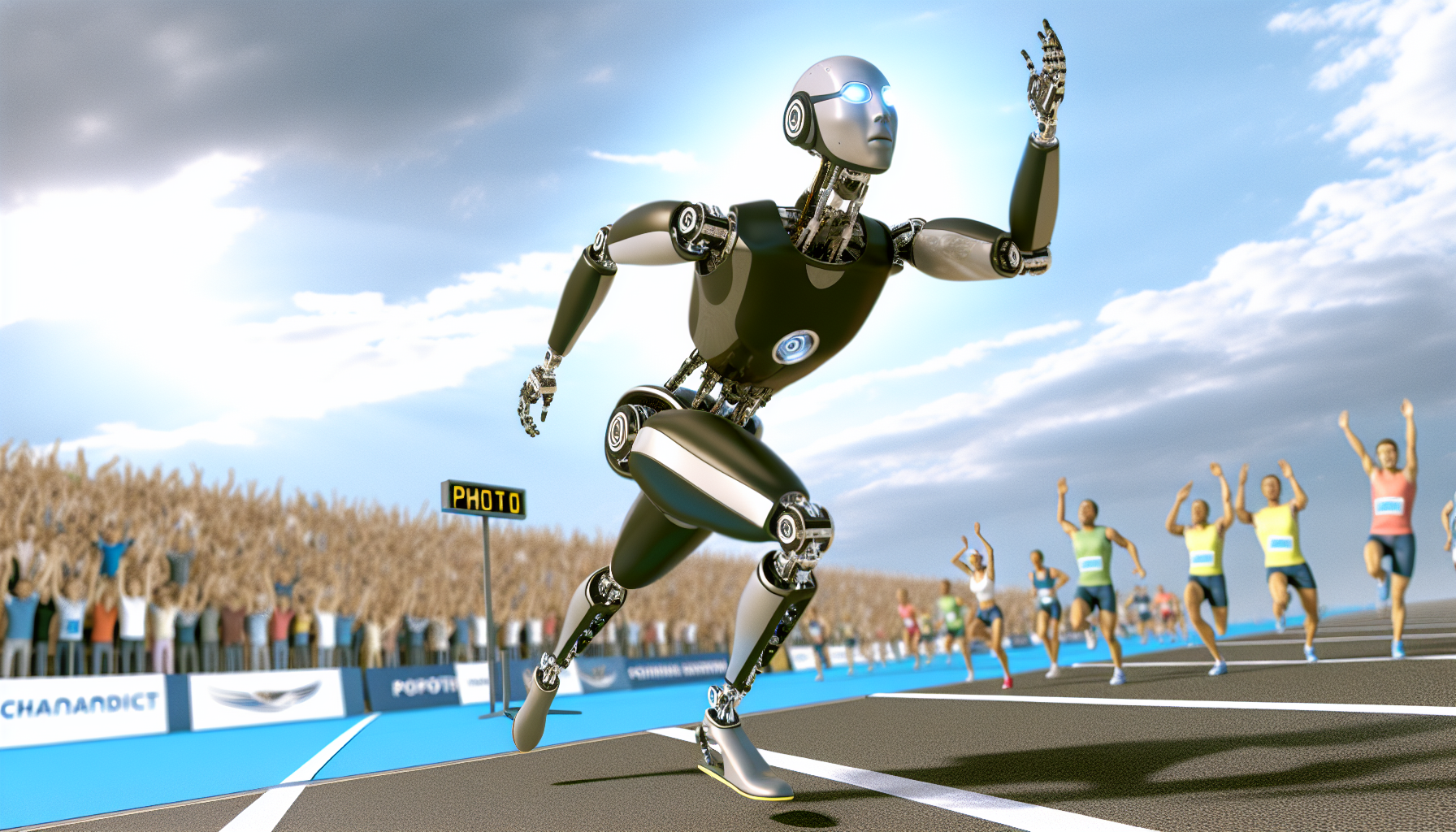

In a remarkable demonstration of technological prowess, a humanoid robot has achieved a stunning victory in a half-marathon race held in Beijing, outpacing the previous human world record. Developed by Honor, a prominent Chinese smartphone maker, the robot completed the 21-kilometer (13-mile) distance in an impressive time of 50 minutes and 26 seconds, underscoring the rapid advancements in the field of robotics and artificial intelligence in China.
The Race: A Test of Speed and Technology
The half-marathon event took place on a Sunday in the Beijing Economic-Technological Development Area (Beijing E-Town), a hub for innovation and development in the region. The race was not just a showcase of athleticism but also a testament to the capabilities of modern robotics.
According to reports from Global Times, the humanoid robot that triumphed in the race utilized autonomous navigation technology, allowing it to run without human intervention. This feat is particularly noteworthy given the complexity of navigating a dynamic environment, where factors such as terrain, obstacles, and weather conditions can significantly impact performance.
Two Robots, One Race
The competition featured not only the autonomous robot but also a separate remotely-controlled robot from Honor, which finished the race in an astonishing time of 48 minutes and 19 seconds. However, due to the event’s weighted scoring rules, it was the autonomous robot that was awarded the championship title. This decision highlights the emphasis on innovation and the potential for robots to operate independently in challenging conditions.
A New Era for Robotics
The success of the humanoid robot in the half-marathon is a significant milestone for the field of robotics, particularly in China, where there has been a concerted effort to push the boundaries of technology. The event not only showcased the capabilities of robotic design but also emphasized the increasing role of artificial intelligence in athletic performance.
As robotics technology continues to evolve, researchers and developers are looking at how these advancements can be applied beyond recreational activities, potentially impacting industries such as healthcare, manufacturing, and logistics.
The Human Factor
While the robot’s victory is impressive, it also raises questions about the future of human athletes in competitive sports. With technological advancements accelerating at an unprecedented pace, the line between human and machine performance is becoming increasingly blurred. This development invites a broader discussion on the implications of robotics in sports, including how it may redefine competition and athleticism.
China’s Technological Landscape
The half-marathon event is reflective of China’s broader ambitions in the field of technology and innovation. The country has been investing heavily in artificial intelligence and robotics, seeking to position itself as a global leader in these domains. Events like the half-marathon not only highlight the advancements made but also serve to inspire future generations of engineers and technologists.
Beijing E-Town, where the race took place, is a focal point for this technological push. The area is home to numerous tech companies and research institutions, fostering an environment ripe for innovation. The success of the humanoid robot is indicative of the collaborative efforts within this ecosystem to drive advancements in robotics.
The Future of Robotics Competitions
The half-marathon for robots could pave the way for more competitions and events specifically designed to test the limits of robotic capabilities. As these technologies continue to mature, we may see a rise in competitive events that not only focus on speed but also on agility, endurance, and decision-making—factors that are crucial for real-world applications.
Implications for Society
The implications of such advancements extend beyond the realm of sports. The ability of robots to navigate and perform autonomously has practical applications in various sectors, including:
- Healthcare: Robots can assist in surgeries, patient care, and rehabilitation, enhancing efficiency and precision.
- Manufacturing: Automation can streamline production processes, reduce human error, and increase output.
- Logistics: Autonomous robots can optimize supply chain management, improving delivery times and reducing costs.
As these technologies become more integrated into society, ethical considerations will also need to be addressed. Questions surrounding the impact on employment, privacy concerns, and the potential for misuse of technology will be paramount in shaping the future landscape.
Conclusion: Embracing the Future
The victory of the humanoid robot in the Beijing half-marathon not only sets a new benchmark in athletic achievement for machines but also serves as a harbinger for the future of robotics. As we stand on the brink of a new era where machines can compete—and potentially outperform—humans in various domains, it is essential to embrace these advancements while also considering the ethical and societal implications they bring.
As technology continues to advance, the relationship between humans and machines will undoubtedly evolve, prompting us to redefine what it means to compete and excel in both sports and beyond. This moment in Beijing serves as a powerful reminder of the incredible potential that lies ahead, as we continue to explore the boundaries of innovation and creativity.