
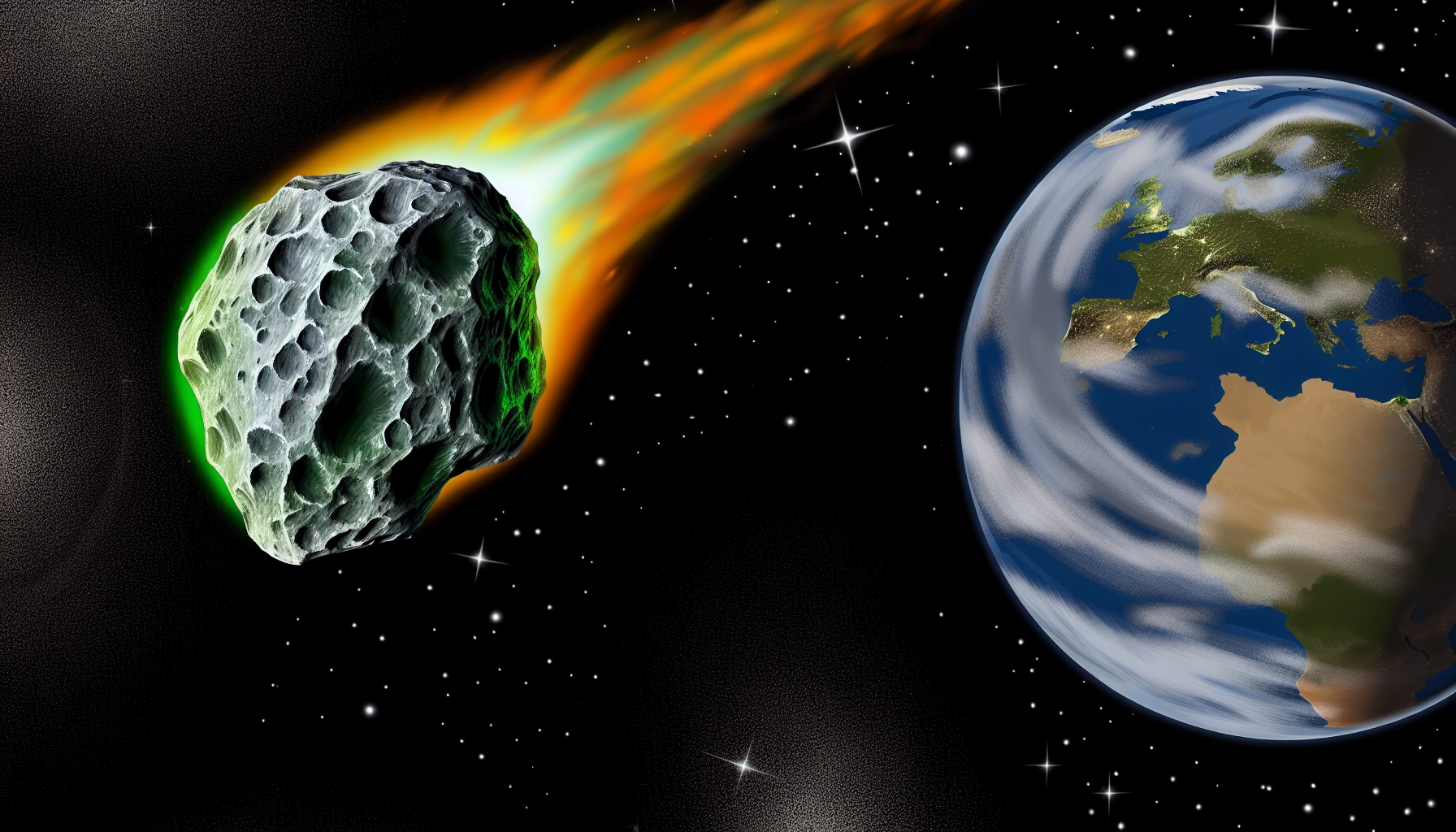

In an exciting cosmic event, a newly discovered asteroid designated 2026 EG1 is set to make a close flyby of Earth tonight, March 12, 2026. This bus-sized celestial body, measuring between 32 and 72 feet (approximately 10 to 22 meters), will pass by our planet at a safe distance of 197,466 miles (or 317,791 kilometers), which is less than one lunar distance. The encounter is expected to occur at 11:27 p.m. EDT (or 03:27 GMT on March 13).
Rapid Discovery and Tracking
Asteroid 2026 EG1 was discovered just a few days prior to its close approach, on March 8, 2026. This rapid identification underscores the advancements in observational technology and tracking systems that continue to enhance our understanding of near-Earth objects. With over 41,000 near-Earth asteroids currently being monitored, this number is expected to grow significantly as new telescopes, like the Vera Rubin Observatory, come online.
The Journey of 2026 EG1
The asteroid follows a 655-day elliptical orbit that takes it from within the Earth’s orbital path to beyond Mars. Its speed during the flyby will be remarkable, traveling at approximately 21,513 mph (or 34,621 km/h) relative to Earth. After its close pass, the next notable approach for 2026 EG1 will be to Mars on September 13, 2186, when it will come within approximately 7.5 million miles (or 12.1 million kilometers) of the Red Planet.
Safety Concerns and Monitoring
Despite its close proximity, experts assure that 2026 EG1 poses no risk to Earth. The asteroid’s trajectory has been carefully calculated, and it will safely pass beneath Antarctica during its flyby. This event serves as a reminder of the importance of tracking near-Earth objects (NEOs) as they can occasionally come close to our planet.
The monitoring of NEOs is critical for planetary defense. Organizations such as NASA and the European Space Agency (ESA) actively engage in tracking and characterizing these objects to ensure that any potential threats can be identified and mitigated well in advance.
The Role of Advanced Observatories
With the launch of the Vera Rubin Observatory, the ability to discover and track asteroids like 2026 EG1 will significantly improve. The observatory will utilize a wide-field survey telescope to capture images of the night sky, enabling astronomers to detect and analyze NEOs with unprecedented detail. This technological advancement is expected to lead to the discovery of many more asteroids, enhancing our understanding of these objects and their potential interactions with Earth.
Public Interest and Stargazing Opportunities
As the flyby of 2026 EG1 approaches, the event has sparked public interest in astronomy and stargazing. While the asteroid will not be visible to the naked eye, enthusiasts equipped with telescopes and binoculars may be able to spot it using tracking software that allows for precise location of celestial bodies.
- Time of Flyby: March 12, 2026, at 11:27 p.m. EDT
- Distance from Earth: 197,466 miles (317,791 km)
- Size: 32-72 feet (10-22 meters)
- Speed: 21,513 mph (34,621 km/h)
- Next Close Approach to Mars: September 13, 2186
What to Look For
If you’re interested in observing the asteroid, here are some tips:
- Use telescope apps or software that can help locate asteroids in real-time.
- Find a dark sky location away from city lights for better visibility.
- Check social media or astronomy websites for live streams or updates on the flyby.
Conclusion
The flyby of asteroid 2026 EG1 presents an excellent opportunity for space enthusiasts and the general public to engage with the wonders of our solar system. As we continue to monitor these fascinating celestial objects, events like tonight’s encounter remind us of both the beauty and the potential risks posed by asteroids. With advancements in technology and increased public interest, the future of asteroid observation looks promising, paving the way for a deeper understanding of our cosmic neighborhood.






