Pedagogue Blog

Standardized Testing for Colleges: A Necessary Evil?

Standardized testing in K-12 education is a perennial hot button issue. Proponents feel that measuring knowledge in these rigid ways helps lift the entire educational system. Critics say the measurements do nothing but encourage “teach to the test” methods and narrow the scope of what instructors are able to teach if they want to have acceptable test results. These arguments are nothing new, but they are now seeing a new audience.

What if the same principles of K-12 standardized testing were applied to colleges and universities? Americans spend over $460 billion on higher educational pursuits every year, yet there is no official worldwide system in place to determine whether students are learning what they should, compared to other schools. In June, the Organization for Economic Cooperation and Development unveiled research on whether a global testing system for college students is possible. The group will continue to review its findings and decide later this year if it wants to push for implementation of the Assessment of Higher Education Learning Outcomes test, abbreviated as AHELO.

Right now the comparison system for colleges and universities lies in the many rankings that are released each year by sources like U.S. News & World Report and hundreds of bloggers who weigh in on the topic. The AHELO would be a “direct evaluation of student performance at the global level…across diverse cultures, languages and different types of institutions.” It would provide institutions feedback meant to help them “foster improvement in student learning outcomes.” In a nutshell, the test would not actually measure student achievements as much as shine the light on instructors that need some improvement.

To K-12 students, this sounds familiar. To college faculty, the idea is fraught with landmines. How can one test take into account so many variables in higher education across the globe? Would instructors be punished by the institution, or even worse held to some misguided accountability scale by peers, if students did not rank highly enough on an AHELO, or some other test? If college is a time for fostering critical thinking skills, would a standardized test take away some of that freedom?

College instructors and administrators are right to have doubts, and particularly before any testing mandates go into effect. Take the classic college entrance exams – the SAT and the ACT. Though research has found little correlation between results on these tests and actual knowledge or intelligence, they are a standard part of college admissions. It is more difficult to reverse a testing mandate than to fight it off at the outset.

It is easy to see why colleges and universities are leery of standardized testing, but K-12 instructors should be too. Presently, K-12 instructors guide students through the formative education years, dealing with standardized tests and other demands of contemporary teaching. Success with those students is ultimately determined by two other numbers: graduation rate and college placement. At that point, a K-12 teacher’s job is done, at least in theory. Adding another layer of teacher testing (cleverly disguised as core knowledge testing) at the college level could have an impact on K-12 instructors too.
ideological

If the AHELO is designed to “foster improvement” in the higher education schools that are tested, who is to say that those ideals of improvement will not then be extended to the K-12 schools that came beforehand? A student who demonstrates below-college-level proficiency in language or math would in theory not be the product of college that failed him or her – that student’s incompetency would be a result of a previous school, or schools. Could a global test for college actually negatively impact the K-12 schools that preceded it?

As with any measurement of teaching and learning, the AHELO and other similar initiatives need close scrutiny before becoming global law. I am not sure of the necessity of such a system and it will take some hard arguing by the other side to convince me otherwise.

Are you in favor of standardized testing in colleges and universities?


How to Streamline Assignments for Teachers and Students

Educators – what is your system for assigning, grading, and giving feedback on work done in class and at home? Most contemporary educators have at least some digital elements involved in the process, whether they use an online planning application or just type up their notes on the computer.

How much time does your system actually take you to use? An hour per week? Two? More?

Teachers may not even realize how much time is poured into the logistics of planning, delivering, and grading assignments since it happens a little bit at a time. Those hours not only take away from free time but can impede what is actually dedicated to instruction in the classroom.

Technology is evolving with the power to change all of that, though. I recently had a chance to learn more about the Canary Learning system, a cloud service that allows teachers and students the ability to log in from any internet-connected device to see upcoming lessons, assignments, and due dates. Launched in early 2015, Canary Learning allows teachers to have all of their assignment details in one centralized spot – and allows them to grant access to students.


There are also native iOS and Chrome apps that allow educators and students to access a mobile-friendly version of the software. The best part? The individual teacher and student version are completely free. All of the synced changes are also available offline – which lends an equity of resources aspect for at-risk students who may not have the same internet access as peers.

So how does Canary Learning work exactly? First, it has two different experiences based on who is using it. A teacher, for example, has many more tools available for planning and grading while a student can only access his or her own classes and assignment details. The mobile versions of the software automatically sync anytime they are connected to Wi-Fi and the view is the same no matter what device is in use (mobile or PC). A teacher could create a lesson on his or her classroom desktop computer and then access it at home on a tablet and move items around. All of those changes save to the cloud and are visible on all devices immediately.

Teachers are shown a homework overview, like what you see below. Immediately they can see what homework they need to hand out, what homework they need to grade and what is overdue from students.

‘What we didn’t want was to make anything harder for kids or teachers,” Desiree Vogt, marketing communications for Canary Learning, said. “You don’t need to learn more than one version of this resource. It looks the same wherever you access it.”

For educators, the benefits of the Canary Learning cloud-based system go beyond the streamlining. There are collaborative elements that eliminate some steps when implemented among teachers. Teachers can share assignments with each other by granting access to each other. Each teacher can then tweak their own version of the assignment or exam without messing up the original. Those lesson materials are then saved in the system and can be tapped again the following year. Educators always have the option to edit the materials in their own profile meaning they never need to rewrite a class again.

“It’s sort of like reordering the scenes in a movie. Teachers can change the scenes individually, and move them around, without having to start over on the entire storyline,” Vogt said.

To sign up, visit Canarylearning.com to set up a free account. You can also use your Google sign-in to set it up more quickly.  For questions about the system or on implementation for schools and districts, contact Desiree Vogt at [email protected]. Follow @CanaryLearning on Twitter.


Read all of our posts about EdTech and Innovation by clicking here. 

3 Tips to Keeping Teacher Jobs in the Midst of School Reform

School reform is never easy. When sweeping changes are decided upon and implemented, everyone must fully participate in order for students to benefit from the changes and certainly not to suffer during the transition. Part of providing that stability for students is through a strong front of teachers that remain at the school during the sometimes turbulent reform process.

Here are some useful tips that will help you preserve teaching jobs while reforming schools:

  1. Remember – a high teacher turnover is expensive. It is a simple fact of life that high staff turnover can create instability and have a negative impact on efforts to establish a consistent learning environment for students. High staff turnover is also quite costly, particularly when the recruitment of teachers, and then the training of new teachers in the intricacies of the reform effort are considered.
  2. Pay attention to who you hire so that you can reduce teacher attrition. More effort and support needs to be given to the recruitment process for teachers at the outset as schools and districts initiate reform efforts. Hiring teachers who “fit” reform goals will likely reduce teacher attrition.  Still, more support needs to be available for new teachers. Even teachers who ostensibly have the skills and attitudes that align with reform goals will need mentoring and other supports as they begin their jobs. Every attempt must be made to reduce the debilitating rate of turnover.
  3. Become creative with spending on new resources. Inevitably, a major factor for sustaining reform is having the money to do so. Most efforts now are centered on how to make the most of current funding and utilizing money effectively in order to maximize the positive impact of reforms, rather than how to access untapped resources. Despite the dearth of new money, it is possible to free up cash through alternative means of spending.

An extreme proposal to accomplish this is to reduce staffing to the absolute minimum. For example, a school with 500 students would have 20 teachers and 1 principal. Approximately $1 million could become available, depending on how many education specialists (regular and categorical) and instructional aides worked within the school. This is radical option, and there are other, less extreme ways to change the way money is spent, to include increasing class sizes, spending less on upgrading technology, and eliminating some programs.

The key however is to look in detail at all financial outlays, measure them according to the extent to which they contribute to the goals of the school reform, and rank them according to how well they do this. This will enable schools to break down spending into its core components and work out what is necessary and what can be cut during the process of change in order to better implement their improvement strategy. This is particularly important in times of austerity, when elements that are not essential may have to be reduced or cut in order to help drive reform, no matter how popular or long-standing they may be.

Spending money on non-essential areas does support school reform efforts. Prioritizing what money is spent on does not automatically mean cutting all non-academic projects. What gets cut will depend on the goals of individual schools. This should be a workable situation, as long as the school is still accountable to the state and the district for shifts in expenditures. An understanding that cutting teaching jobs can actually be detrimental to reform is important though, instead of just looking at the numbers on a piece of paper.

Diverse Conversations: Staying Afloat in Financially Turbulent Times

In these increasingly uncertain times, colleges and universities are forced to come up with innovative ways to deal with funding cutbacks and revenue shortfalls. In this installment of “Diverse Conversations,” Lewis Duncan, President of Rollins College, dispenses advice on how higher education institutions can strategically manage their resources in a manner that can help them thrive during these financially turbulent times.
In the face of unprecedented fiscal challenges, how can colleges and universities maximize their increasingly scarce resources?

Most private liberal arts institutions are highly dependent on student revenue. At Rollins College, for example, 86 percent of our total annual operating budget is derived from student revenue.

One way to maximize increasingly scarce resources is to find innovative ways to supplement the operating budget. Our approach was The Alfond Inn, a boutique hotel that opened in August 2013. The Inn, located a block from campus, not only meets a community need for lodging and conference space, but also provides full scholarships (tuition, room and board) for top students through The Alfond Scholars program — the College’s premier scholarship fund. Net operating income from the Inn will be directed to the scholarship fund for the next 25 years or until the endowment principal reaches $50 million, whichever comes later. The allowable spending from the endowment will supplement the operating budget in the form of additional financial aid support.

Q: What’s the value of your school’s endowment now compared to last year? How has this impacted the way that you allocate your university’s resources?

A: The market value of our endowment on May 31, 2013 was $349.1 million, which is an increase of $17.6 million over the previous year. Currently, our endowment provides approximately 10 percent of our annual operating costs, and that percentage has held constant through market fluctuations.

In addition to our endowment, we have invested in commercial real estate in the Winter Park community, which annually provides more than $2 million in net return in support of our operations. The real estate is also increasing in value and could be sold at some point in the future, which would add to our endowment investments.

Q: Given the current economic climate, how have you addressed the fragile balance of maintaining high academic standards with the need to keep enrollment high enough to pay the bills?

A: Rollins has experienced record enrollment in our undergraduate day programs each year for the past three years. We are now nearing 1,900 students, which is close to capacity. We are land locked and do not have the opportunity to continue to expand enrollment, which makes it even more important to look towards other sources for funds to help pay for the increasing costs of operations.

Through this growth period, we have been able to maintain our high academic standards with a low faculty-to-student ratio and continued recognition as the #1 comprehensive private liberal arts institution in the South as rated by US News & World Report. We will not compromise academic standards.

Q: What do you think should be done in terms of reforming the way we fund higher education in the United States?

A: We might find better incentives for families to plan long term and save for college. The current federal grants and loan programs actually advantage families who have not saved. Perhaps we could consider a partial tax deduction for such educational savings plans at the federal (rather than state) level. We also support additional measures of educational accountability, but urge that such standards consider the lifelong and career-long benefits of higher education, not just a graduate’s entry-level job or pay.

Q: As you look to Rollins College’s future, what new directions do you see the university taking?

A: We will be seeking to run the College as efficiently as possible while preserving the special values of a liberal arts education. We will also be pursuing new revenue opportunities in both degree and non-degree programs, expanding partnerships with similar small colleges using online and blended learning cooperative programs and expanding our traditional student body to include additional non-traditional and international students.

Well, that concludes my interview with President Duncan. I would like to thank him for consenting to this interview and for his contributions to the field of higher education and humanity in general.


Educational Change Starts with Equality

By Matthew Lynch

Substantial educational change will never occur until we as a country decide that enough is enough and make a commitment to change, no matter what it takes. When America realizes all children deserve a stellar education regardless of who their parents are, their socioeconomic status or where they happen to live, we will be able to reform our education system. Specifically, Americans have to stop treating minority students in underperforming urban environments like collateral damage.

The disheartening reality is that America has billions of dollars to fight a two-front war, but cannot or will not properly educate its children. If a hostile country attacked the U. S., it would take less than 24 hours for American troops to be mobilized into battle. However, we seem unable to mobilize a sea of educated teachers and administrators to wage war against academic mediocrity, which is a bigger threat to our national security than Iran or North Korea.

Over the last century, many reform movements have come and gone, but in the end, it seems, there have been no substantial changes. Some might even believe the American educational system is now worse off than ever. That’s because the word “reform” is primarily used as campaign rhetoric, and when it comes time to take real action, the politicians simply unveil a grandiose plan with all the bells and whistles amounting to a dog and pony show. There has been a lot of talk about educating our kids, but not a lot of action. This is especially true when it comes to groups of at-risk or disenfranchised students, like minorities.

America’s schools were originally intended to ensure that all citizens were literate but it seems today that in some districts, and for some students, even this concept is not taking place. When you add on the additional constraints of K-12 education today, it becomes quickly clear why some students fall through the cracks and are not able to achieve the type of education that should be a right for all American children.

Americans must have the courage to realize that in order for us to remain a world power, we must institute change. It is not enough for just some of our kids to succeed; each one must make it across the high school graduation stage, knowing what their peers also across the country also learned during the journey. The risks have never been greater: the future of our country and its children is at stake.

Education reform is possible, but it depends on what the nation is willing to do to achieve its educational goals. Will America develop and pass effective educational legislation aimed at creating viable solutions to the problem at hand? Or will America continue to develop legislation, such as No Child Left Behind, that operates under the fallacy that 100% of our students will be proficient in their core subjects by the end of 2014? The bar for education should be set higher, but there has to be exceptions and differentiated goals in order to effectively accommodate all the differences among teachers, students, administrators, and school cultures.


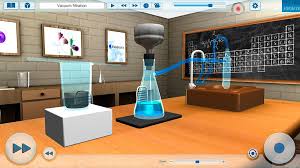
Virtual Laboratories – All Good?

It seems that there is nothing that cannot be done online anymore. On a personal level, we do everything from paying bills to scheduling entire vacations in a matter of minutes because of online access. Think about it for a moment: What daily online activities do you do today that were not an option 10 years ago? Five years ago? Last year?

Now consider classroom technology and how it is also evolving rapidly. Implementation of technology in the classroom goes beyond Google searches and reading apps. It stretches into every area of learning, including the sciences. Virtual laboratories are popping up in school districts and online learning curriculum across the country and making it easier and less expensive for students to do experiments remotely. Here are some of the benefits of virtual labs:

Flexible access. Perhaps the most often cited benefit of any online learning is that it can be done at the student’s convenience and when he or she learns best. The same is true of virtual laboratories if the experiments are on the student’s own time. In some cases, a virtual lab may be used during regular class time which narrows this benefit but still allows flexibility for the teacher who is not limited by using resources within a strict timeframe.

Instant feedback. Students can redo experiments on the spot while they are still in a critical thinking mode. All the results are recorded, making communication between teachers and students more efficient too. Experiments no longer have a “one chance” option and students can analyze what went wrong immediately and give it another shot.

Top-notch equipment. Schools and students that use virtual labs have access to cutting-edge technology when it comes to experimentation. Companies that build and maintain virtual labs must compete with each other to stay ahead of technology progression and that raises the quality of options for students. With a virtual lab, students do not have to settle on outdated, yet expensive, equipment because a school cannot afford to replace it consistently.

Lower costs. There is a fee associated with using virtual labs but the capital and maintenance costs are drastically reduced. Instead of one school footing the bill for resources, the cost is split among the clients of the particular virtual lab. This allows school to provide a better learning experience for students at a fraction of the cost.

Higher efficiency, lower costs, better equipment – is there a downside to virtual labs? I’d say it is too early to really see the effects, positive or negative, of science through virtual experimentation, but a few red flags pop into my own mind. I remember many of my in-class science experiments vividly. The sights, smells and sounds of biology and chemistry reactions at my own hand cemented the lessons into memory. It was real for me because it was right in front of my face and I was the one controlling the outcomes (or so I thought).

I wonder how much of that wonder is lost in a digital format? I can’t imagine the next generation of scientists will fall in love with their fields from watching experiments on a computer screen but I could be wrong. Even with the in-person science experimentation I did in school, I had no desire to enter those fields. So perhaps those with a predisposition for the true sciences will not be deterred by virtual experimentation. Perhaps even more students will find a love for those fields because digital lessons allow for more repetition and instant feedback.

Like all classroom technology, virtual labs need to be scrutinized to ensure that behind the flashy capabilities, their true purpose is being met. That will take some time and testing, of course, but I think it is possible with the right combination of in-person and remote lessons.

Do you use a virtual lab in your classroom? What do you think about its potential for learning?

Read all of our posts about EdTech and Innovation by clicking here. 

The Two Most Important Components of Your Teaching Job Application

When applying for a teaching position, in addition to your resume, you will need to include a cover letter (also called a “letter of introduction”) and at least one letter of reference. Many employers will require two or even three letters. Be sure you check with each employer on what their specific requirements are.

Cover Letter

While your résumé stays the same regardless of where you are submitting it, the cover letter should be personalized. Each of your cover letters can follow the same basic format in how it presents information, but the phrasing needs to be customized for the specific job or district. Remember to request an interview when writing your cover letter.

Letters of Reference

References are recommendations of employment that can be either written or spoken. References increase the potential employer’s confidence in your ability. Selecting appropriate references is a vital part of obtaining employment.

Each district differs in the method by which they obtain
references. Some require that you have the reference writers be teachers in your region of the country? Compose a letter and mail it directly to them; others prefer to
 e-mail a form and have writers submit it to them electronically. 
Some districts, however, simply call and speak directly with the person listed.

No matter how the reference is submitted, the same references can and should be used for each district to which you are applying. Select references that have direct knowledge of your academic performance, career objectives, and positive statements of support. Avoid using relatives and personal references who may be biased. College instructors or academic advisors, student teaching advisors, or mentoring teachers would all be excellent selections as resources. Be sure to ask their permission before using them.

While your recommendation writers may prefer to write the whole reference on their own, it is okay to provide a few introductory sentences or a sample letter for them to base their own reference on. Many recommenders appreciate the help getting started.

Remember to thank whoever helps you with your cover letter and letters of reference. Just as you want your recommenders to be professional, thoughtful, and timely in their assistance, you’ll want to follow suite in how you deliver your notes of thanks.

School Reform on a Budget

A major mistake made by reform groups is to table educational reform efforts because the expenditure does not fit into the school budget. If children are America’s most precious commodity and the focal point of the nation’s educational system, then the lack of funding is no excuse to forgo reform efforts. Many school reform efforts are cost-effective and can be implemented by resourceful educators. When there is a lack of money, reform is contingent upon the faith and commitment level of the faculty and staff.  Money should not be wasted on model programs and unsubstantiated trends. Reform groups will have to work diligently and efficiently to implement the chosen reform efforts properly and effectively.

When school reform is needed and schools have limited resources, spending money on curriculum can be intimidating. The curriculum chosen will need to be a good fit for both teachers and students. Math and reading should be the first concern, because they are the building blocks for other subject areas, as well the most frequent measure of future success. Success in these two areas bode well for success in other subjects at all grade levels.

Teachers’ professional development is a key factor for successful school reform as well. When analyzing reform budgets, it is important to set aside money to hire teachers with the ability to create and teach in-service professional development programs. The ability to train the staff and educators internally will save the school money, and will give the teacher/expert a feeling of usefulness.

For instance, a teacher with 30 years of experience and a demonstrated ability to obtain amazing results from her specific teaching strategies might create a professional development seminar to share her expertise. This saves the school an enormous amount of money, and saves the administrator the trouble and cost of hiring a consultant. Another low-cost/no-cost option is to hire professors from neighboring colleges and universities to provide professional development services to your district as a form of community service or to fulfill requirements to obtain or maintain tenure.

In the end, schools operating with limited funds to support reform efforts will need to be both resourceful and creative in order to effect positive change. Forward thinking leaders, committed and imaginative teachers, and a supportive community can contribute to change that improves the educational experiences of our children.


How an induction year can make all the difference to novice teachers

Maureen Robinson, Stellenbosch University

New teachers have several options once their degrees are finished. Some want to study further, whether in their subject area or cutting across to broader issues like special needs education or education policy. Others hope to travel, teach overseas and learn about different countries’ school systems.

In South Africa, according to an internal planning report by the Department of Higher Education, more than 15,000 new teachers are expected to graduate from universities in 2015.

Research shows that the first year at work is toughest for novice teachers. Some may be barely older than their learners, or daunted by having to manage large classroom groups. Some may feel intimidated that they have to master enough content knowledge to teach all the subjects in the primary school curriculum. Some may feel overwhelmed by the social problems in the community surrounding the school.

How best can the education system support these new teachers in such a way that they become competent and confident while also retaining their passion, enthusiasm and idealism? One possible intervention is induction, where novice teachers receive structured mentoring and support by more experienced teachers in their first year or two at work.

This has worked well in countries as diverse as Switzerland, France, China, New Zealand and Japan – and there is evidence to suggest it could be very useful in South Africa.

A long term investment

The South African Council of Educators has mooted the introduction of an induction year from 2017. The statutory body believes that induction can promote the image of teaching by helping to identify those who are not able to live up to the profession’s required ethical standards.

I recently attended a presentation by independent education specialist Martin Prew for the Centre of Development and Enterprise in Johannesburg. Prew argued that induction enhances teacher effectiveness, strengthens teaching skills, helps with professional socialisation and, most importantly, has been shown globally to lower teacher attrition.

Nobody will contest the value of providing support to novice teachers. But the nature of this support, and how best to implement it, still needs much discussion.

Stanford University’s Linda Darling-Hammond, who has researched the issue extensively, told the Centre of Development and Enterprise there were several key factors for effective induction. These include:

  • trained mentors who can give useful feedback;
  • opportunities to view and analyse good classroom practice;
  • a reduced load for beginner teachers;
  • shared planning time; and
  • additional learning experiences such as seminars about assessment, how to work with parents, and so on.

This is much more than the general orientation to school rules and policies that often goes under the guise of induction. It requires far more time and commitment than is often available to senior teachers in the busy school year.

What, then, are some of the issues that should be considered as South Africa sets about designing an induction programme for new teachers?

Time, training, cost and certification

The first issue is time. This must be built into the crowded school day so that new and experienced teachers can get together and talk in earnest and thoughtful ways about their challenges, interventions and suggestions. Those designing the induction system must ensure that the pressures of a full curriculum and a myriad of administrative tasks do not mean such talk remains perfunctory, without analysis and reflection.

The second issue is that of training. An experienced teacher is not the same as a good mentor. Once mentors are identified, they themselves may need guidance on how best to support new teachers. The question of who will provide this training is at this stage not clear.

Cost is the third issue. School-based mentoring, which is sensitive to the context of the individual teacher and school, and is grounded in practice, has been shown to be most effective in the long run. However, a standardised model of mentor training will be cheaper to implement, as one set of guidelines can be developed and teachers can be trained in a centralised venue.

Finally, there is the matter of certification. Presently it is universities which have the legal competence to provide qualified teacher status. If full qualification status becomes dependent on passing the induction year, a new framework of certification will need to be developed with its own rules and requirements, as well as its own bureaucracy and quality assurance mechanisms.

It is very doubtful that this is desirable in a system which already struggles with the capacity to carry out its work.

An important discussion

None of these considerations should detract from seriously considering the introduction of teacher induction. Any intervention that can support new teachers and add value to the teaching profession is worth exploring.

All those involved in teacher preparation should look forward to a deep discussion about the purpose and potential of induction, and careful planning as to how this might be achieved.

The Conversation

Maureen Robinson, Dean, Faculty of Education, Stellenbosch University

This article was originally published on The Conversation. Read the original article.

Why aren’t Most Minority High School Grads College-Ready?

It seems that graduating from high school is no longer the end goal of P-12 learning – earning a college degree has replaced it. By 2018, 60 percent of jobs will require a college degree. In a recent post, I wrote about the nationwide average high school graduation rate being 80 percent – which is admirable but also means that at least 1 in 5 kids won’t make it to college classes. When you factor in the high school graduates that bypass college completely, it seems that at some point America’s workforce will simply not be able to meet the demands of its employers.

When it comes to minorities who graduate high school and are ready for the rigor of college coursework, numbers are bleak. A new report from the College of Education at the University of Arizona found that less than 1 in 10 minority high school graduates in the state are adequately prepared for college. Non-minority students are not much better off though, with only 2 in 10 prepared for college after graduating from high school. A rise over the past 15 years in minority students in elementary and high school in state, as well as economic disparities between students of color and their white peers, are cited in the study as drivers behind the high school graduation-college readiness gap.

Arizona should not be singled out though. Of the 1.7 million high school graduates that opted for the ACT college entrance exam in 2012, only 60 percent were deemed “college-ready.”

Arizona is a standout example, though, of the way the changing landscape of the country is impacting P-12 education and the college demands that follow it. Childhood classrooms today look vastly different from the ones even 10 years ago and children, minority or white, come with different need sets. Teachers can learn only so much from textbooks and their own school experiences – they must have the resources to reach students from different backgrounds, and understand how those students will change over the course of the teachers’ careers.

In the case of Arizona, some mandatory Spanish-language education would be a start but the language barrier is only the tip of the iceberg. If students in Arizona classrooms are first-generation Americans, their own parents are not familiar on a firsthand basis with classrooms in America and certainly not the university system.

Even students who are academically ready for college may not be emotionally ready for the pressure and responsibilities of self-learning – both things that need to be taught before high school ends.

I also think that the assimilation mentally of generations-past needs to be forsaken. It seems to me that all of the energy that goes into trying to “change” minority students who enter the classroom would be better spent adjusting teaching methods to ones of inclusion. The global economy demands that students understand that the world is made up of diverse people with a variety of backgrounds, and languages. In order to succeed as a nation, that recognition must take place and those lessons must be included in the process of educating.

The “passing the baton” mentality also needs to be abandoned if students are truly expected to succeed academically after high school ends. If America truly wants to live up to its “Land of Opportunity” moniker, this generation of P-12 students needs to be viewed as a responsibility by their educators long after the high school graduation benchmark has been met. Instead of letting students make their own mistakes in early adulthood, at least when it comes to the future of their careers and livelihoods, educators should stay involved and help bridge the high school-college gap.

What programs do you think might help make this happen?

Read all of our posts about HBCUs by clicking here. 

Whose responsibility are sexual predators on college campuses?

Recently President Obama announced his “It’s On Us” campaign that calls on all college-aged men to step up their efforts when it comes to protecting women on campus. The program also calls on colleges that receive federal funding to take a tougher stance against sexual assault and to have prevention programs in place.

The President has the backing of some celebrity faces to bring his plan some attention, including Kerry Washington and Jon Hamm. It seems like a winning plan on its own, but set against the context of the changing college landscape, some people are crying foul.

Less men are enrolling in college classes than they did even five years ago, as the number of women continues to rise. Several lawsuits have been brought by young men against their colleges alleging discrimination when it comes to assault cases — and some young men have won. There are over 30 cases still in the court system now, which represents a 400% increase in just 4 years. Some are claiming that young men are the actual victims because they are facing unfair judgments from colleges that are afraid of losing funding without making an assault statement.

All sides of these issues should be considered of course, but I think that President Obama is on the right side of the debate with his new campaign. Asking peers to watch out for each other, and step up when something seems awry, is a smart way to prevent a lot of the lawsuits in the first place. Colleges cannot control their student body outside learning hours and drinking on campus is not going away any time soon. So placing the responsibility to prevent sexual assault on the students themselves is an effective solution.

What do you think? Are young men getting a bad end of the deal when it comes to increased anti-sexual assault policies on college campuses?

Learning vs. Testing: Can Tech Bridge the Gap?

**The Edvocate is pleased to publish guest posts as way to fuel important conversations surrounding P-20 education in America. The opinions contained within guest posts are those of the authors and do not necessarily reflect the official opinion of The Edvocate or Dr. Matthew Lynch.**

A guest column by Edgar Wilson

Somewhere over the last few decades, teaching and testing developed an adversarial relationship in America’s classrooms.

Public policy debates swarm like bees over sticky questions on the issue of assessment:

How much is too much?

How can we evaluate teachers without standardized measures of outcomes?

Are students under too much pressure from high-stakes testing?

Are teachers “teaching to the test” at the expense of more comprehensive instruction?

The conflict and controversy is damaging to everyone involved in education—students, teachers, administrators, employers; everyone has an interest in seeing America’s schools be the best they can possibly be, but there is a lot of opinion and disagreement over what “best” actually looks like. In part, this is because we can’t even agree on how to measure quality.

Taking Advantage of the Digital Future

This may be another area where the field of education can learn something from the healthcare world.

In a presentation on the future of healthcare, Northeastern University professor Carl Nelson drew parallels between the field of management, and the evolution occurring in healthcare.

“We have the Big Data movement and data analytics not only providing appropriate diagnoses, but also guiding us all,” explained Nelson. “It can be used appropriately to guide decision-making, to make judgements.”

In essence, this means best practices growing naturally from more robust data.

Data acquisition in business, as well as in medicine, is occurring right at the point of implementation: wearable sensors, product-trackers, and communication systems all connected through the growing Internet of Things (IoT) enable data scientists to watch, live, as people and organizations operate. By aggregating social media statistics, watching how customers (and potential customers) interact with a brand, and what life events, interests, and behaviors correlate with consumer activities, businesses learn both about their customers, and themselves.

Examining all the data—passively generated and actively gathered—allows analysts to then identify shortcomings, inefficiencies, bottlenecks, and missed opportunities.

“We have moved greatly in the field of management from management based on intuition certainly, over a long period of time, to a management based on evidence (evidence-based management),” Nelson said. “The same thing is happening and has been happening in the field of medicine—so-called ‘evidence-based medicine’.”

In education, the challenge has been—and in many respects, continues to be—reliable sources of “evidence” on which to base changes to best practices. As in management and medicine, intuition and expertise has an important role in education: teachers often remark at the rewards in witnessing “Ah-ha” moments in the classroom. It isn’t something measured or captured in a discrete assessment; it is an organic thing, the look on a student’s face when the elements of a lesson all click into place, that whirring of mental machinery once the fuel of understanding is suddenly injected.

Where’s the Evidence?

The trappings of business and healthcare have been upgraded to support Big Data’s newly prominent role. Analysts review measures of existing behaviors, collected and recorded on the spot, and use them to develop new, evidence-based best practices.

Tablets, laptops, mobile devices and other digital tools and toys are destined for a prominent role in America’s classrooms; that much seems safe to assume given current trends.

And just as the Internet of Things, applied in clinical settings and connected to individual patients, doctors, and institutions is providing new troves of real-time data feeds and outcomes patterns, so too can applications be deployed in classrooms and attached to individual students to give instructors a new, closer, quantifiable look into what drives learning outcomes.

Mark Oronzio, CEO of Ideaphora, is one of the innovators working to bring formative assessment—measuring the learning process as it happens—to a place of greater prominence in the classroom.

“What we’re looking to do is provide a more automatic assessment of a knowledge map,” says Oronzio.

His company’s product is based on an existing concept, knowledge maps, as a way to graphically represent and record the learning process.

When learning is captured as it happens—rather than by a summative assessment, which is aimed at determine outcomes following instruction—real-time data can be provided to both students, teachers, and even data scientists looking to correlate instructional methods with on-the-ground results.

“Aside from it being what we call an Authentic Assessment—it’s not a multiple choice quiz, where I got tricked, or because I’m not a good writer I didn’t do well on the essay—this is making connections and defining connections,” Oronzio explains. “We think it would be a more accurate assessment; it is actually a picture of what’s going on, and the connections going on in the learner’s mind. The other cool thing about it is, it is not a discrete test, it wouldn’t have to be administered necessarily.”

This is the essence of competency-based education (CBE), an ongoing method of assessment that, at best, might help displace some of the emphasis on standardized testing and high-stakes tests.

Snapshots of Learning

Abundant data makes a compelling argument.

Adding the capability to watch, measure, and analyze instruction leaves less room for politics and opinion to dictate changes to curriculum and assessment standards. By combining the principles of CBE with a method of visualizing and recording the associated data, education has an opportunity to launch into the Big Data playground.

Just as in business and healthcare, the educational revolution comes not just from the devices themselves gaining widespread adoption, but from the programs and applications whose use they make possible. It is far from a nail in the coffin of standardized testing, but it does demonstrate how technology can combine with traditional instruction to provide new windows into the academic environment.

__________

Edgar Wilson is an Oregon native with a passion for cooking, trivia, and politics. He studied conflict resolution and international relations and has worked in industries ranging from international marketing to broadcast journalism. He is currently working as an independent analytical consultant. He can be reached via email here or on Twitter @EdgarTwilson.

Read all of our posts about EdTech and Innovation by clicking here. 

Latest Posts