Pedagogue Blog

Ask An Expert: Taking the Stress Out of Teacher Evaluations

Question: I am a recent college graduate and I am gearing up for my first year of teaching. I was well trained by my professors, but the thing that scares me the most is being evaluated, mainly because so much depends on the personality of the evaluator. Can you shed some light on the teacher evaluation process? Veronica R.

Answer: First of all, thank you for your question and congratulations on landing your first teaching job. For many new teachers, the fear of being evaluated is a clear and present danger; not because they lack confidence, but because of the fear of the unknown. Hopefully, by explaining the process in depth, I can help alleviate some of your anxiety. Each school system has a process for measuring and evaluating their teachers. In most districts, all teachers are evaluated by an administrator and are given feedback at least once annually.  New teachers, however, typically have more than one evaluation. This section will give you an overview of what to expect before, during, and after an evaluation, as well as how to prepare for each.

Prior to an evaluation

Before an evaluation, most administrators will schedule a time with you, and some of those administrators will even let you choose the class that you know will be the most likely to shine the best light on your skills as a teacher. Here is a quick checklist of ways to prepare for the evaluation.

  • Ask for the rubric they will be using. The rubric allows the administrators to score each teacher equally and accurately by looking for specific skills and dispositions during the lesson.  Knowing what they will be looking for will allow you to cover all of your bases.
  • Consider the audience before choosing a topic. Know the educational interests of the administrator.  Were they a math teacher? Or a special needs teacher? Are they a proponent of technology? Think about what you know about them personally and professionally and consider their interests when selecting a subject, a topic, and a time of day.
  • Choose an easy topic.  You do not want to choose a topic that you know is difficult for some students to grasp.  For example, introduction to long division may not be the best topic, because you know that it is a multi-step process that is difficult to grasp for some students.
  • Prepare a detailed lesson plan. The lesson plan for an evaluation is not your typical everyday lesson plan. It is the extended version that includes details, commentary, and all of the bells and whistles that go along with it.  Be sure to include the objectives, materials needed, an introduction, developmental activities, a closing, accommodations, an assessment, etc.
  • Prepare your class. Talk to your students about what to expect.  Let them know who is coming and explain why.  Let them know that they will be rewarded for their good behavior. It might not be a bad idea to do a practice run and pretend that you are being evaluated prior to the scheduled evaluation. This may all seem like window dressing, but it will help to put your mind at ease.
  • Prepare your classroom.  De-clutter, decorate, and clean everything.  Be sure to have your desk cleared in case she wants to sit there to evaluate.
  • Be flexible.  Administrators are always busy. In addition, unexpected meetings come up, students misbehave and must be attended to at inopportune times, and some type of paperwork is always being thrown at them. If she must reschedule, just simply put aside your prepared lesson until another day.

During an evaluation

  • If you are thoroughly prepared for your evaluation as described above, the evaluation itself should be a breeze.
  • Remember that they have probably already figured out that you are an effective teacher.  They want you to do well.  They want the students to do well.  They are not out to get you or hurt your career.
  • Relax! Again, they are not looking for an excuse to fire you. Just relax and do the best you can do.
  • Write your objectives on the board.  Self explanatory.
  • Have fun!  Having fun yourself will engage the administrator and the students alike.
  • Discipline as you always would.  If a student misbehaves, be careful not to overreact.  You will not get a lower score because your students are children and occasionally misbehave.

After an evaluation

Be prepared for feedback and constructive criticism.  Administrators do not intend to tear you down and are not out to get you.

  • Thank them for their feedback and honesty.
  • Never argue!  It will only lessen their opinion of you.
  • Sincerely apply their suggestions to your teaching styles.

If you follow my advice, the teacher evaluation process will be a breeze. Remember, evaluations are meant to gauge your teaching effectiveness, not as a pretense to get rid of you. Even if you score poorly during your first year, your evaluations will be used by your administrator to help you create an improvement plan. Well, good luck to you and remember, relax!


 

The power of the iPad in Kindergarten

**The Edvocate is pleased to publish guest posts as way to fuel important conversations surrounding P-20 education in America. The opinions contained within guest posts are those of the authors and do not necessarily reflect the official opinion of The Edvocate or Dr. Matthew Lynch.**

By Kristi Meeuwse, ADE

Technology won’t replace teachers, but teachers who don’t teach with technology will be replaced. -unknown

Last week, our school iPads were replaced.  We were very excited to exchange our iPad 2’s for the new iPad Air.  Our old iPads served us well but were suffering from frequent app crashes. The replacement took about a week…no small feat when you are talking about over 800 iPads. The excitement over the idea of new iPads was suddenly replaced with the knowledge that we would be without iPads for a few days. My kids quickly realized this and asked, “Um, how will we do our work with no iPads?”  I responded, “I’m not sure…maybe we will do some worksheets.” Puzzled, the kids responded with, “What are worksheets?” You see, they had never completed one before.

It was definitely like going back in time and I’m certain I don’t ever want to teach again without having those devices. My students were used to having choices about their day and about demonstrating their learning. I was used to personalizing their learning and serving as a facilitator while they directed themselves. Student-centered and student-directed learning is one of the keys to educational change.

So, now we have our beautiful new devices and the kids immediately went to work. Their work. We have been working on number stories in their math journals. Even though I’m providing the number stories, there is still choice. For example, Sam had 7 buttons.  Some were blue and some were yellow.  How many of each were there?

Here are a couple of samples from my kids:

IMG_0003

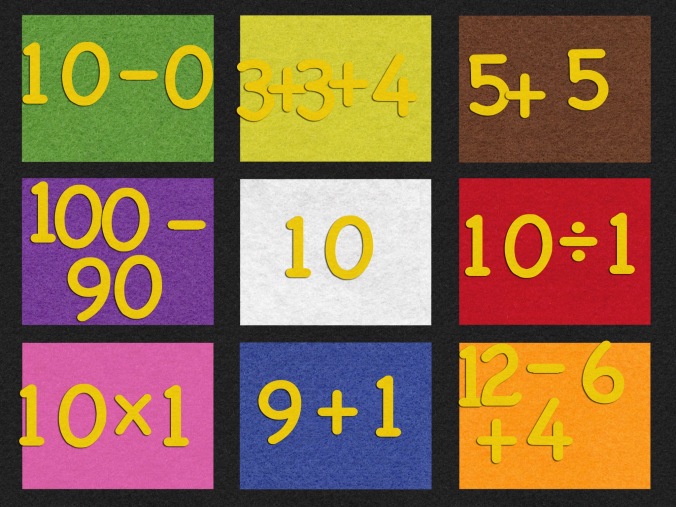
IMG_0004One was being a wise-guy, but still got the right number of buttons. By making these number stories open-ended, students have the ability to use multiple pathways to get to the answer. Another student and a partner, worked together to create what we call an “incredible equation”. One of the students was stronger in math (clearly, as he is able to multiply and divide at age 5) and the other was working on grade level. Together they made this:


 

IMG_0005

By letting my students work where they are, and not where a worksheet forces them to be, the sky is the limit. The iPads give my students the freedom to move on, to move up, and to be in charge of their learning.

So, yes, I am thrilled to have our iPads back. We saw first hand the power of the iPad in our classroom. Even though we have only 22 school days remaining, we are going strong to the end!

Today we will do exciting new things. Let’s get to it!

Read all of our posts about EdTech and Innovation by clicking here. 


Kristi Meeuwse teaches kindergarten in Charleston, South Carolina. In January, 2011, her kindergarten class started a 1:1 iPad pilot for the school district and the results so far have been very successful. You can read more about it on her blog iteachwithipads.net.

A mother’s view on cell phones in the classroom

**The Edvocate is pleased to publish guest posts as way to fuel important conversations surrounding P-20 education in America. The opinions contained within guest posts are those of the authors and do not necessarily reflect the official opinion of The Edvocate or Dr. Matthew Lynch.**

A guest column by Karen Bresnahan

In recent years, there has been a lot of chatter on the internet about why cell phones shouldn’t be allowed in classrooms. Some teachers and parents are dead set against the idea, while others think it could work.

Schools everywhere are busy making new rules about cell phones. Some schools allow students to carry their phones, but only use them at lunch or in between classes, while others have banned the phones altogether from the learning environment.

The debate, it seems, has centered more on the negative side of the argument which views cell phones as a distraction, a temptation, and a detriment to learning because students can use them to avoid paying attention in class by texting on social media or playing video games, or to cheat on tests, by looking up the answers on Google.

As a parent, I always try to use my common sense when thinking about what I should teach my children. It seems to me that cell phones can be a difficulty or a benefit, depending entirely on the attitude of the teacher. After all, they get to decide what happens in their classroom.

I know, as a mom, how important it is for my kids to know what good behavior and bad behavior is at home. At school, it is no different for the teacher who must show the students what is expected of them and to enforce the rules the same way a parent does. If my child uses a cell phone in the classroom to text their friends or play video games, I expect the teacher to do something about it.

But, cell phones don’t have to always be tied to the expectation of bad behavior or misconduct. There can be a positive side. There are many ways cell phones can actually help children learn. Our kids already use the phones every day and they enjoy using them.

Do we want to take technology away from them and punish them for using it, or should we motivate them to use it in good ways?

With or without technology, it is always important to make sure our children know how to learn. It is up to parents and teachers to show them how. The best teachers know all the different ways to motivate students to learn, so the attitude of the teacher is the most important thing when it comes to deciding about cell phones. There are many ways that cell phones can add to learning.

Students can use their phones to do Google searches about any subject. The cameras on phones make it possible for them to take photos and videos for a school project or record an important school event. Phones can be used in emergencies to call for help, or to text a parent about a problem. Phones can be used on field trips to find locations, or on a daily basis, to make communication easier between students and teachers. Cell phones are a way for teachers to make learning applicable to real life and to let students have fun while learning.

Teachers are already finding helpful ways to use technology in the classroom and cell phones are just another way for students to use the internet to connect them to educational resources. Cell phones have become like tiny computers in their hands because the phones are so much better than they used to be.

Computer applications and software are making it easier for students and teachers to share information. Things like Dropbox, Evernote, Schooltown, Socrative, Wiffiti, and Polleverywhere are helpful online resources that many teachers are using now. Cell phone use supports the popular concepts of flipped classrooms and blended learning.

We live in a technology abundant world and cell phones have become a way of life for families. Most children already use cell phones long before they come to school. As adults, we rely upon technology every day, and it makes no sense to discourage our children from using it productively at school.

As a parent, I expect my children to behave at home and I support what the teacher does in the classroom. If a teacher wants to use cell phone technology as a tool for learning in the classroom, I am all for it. But if a teacher wants to take my child’s phone away when he uses it to misbehave, I am in favor of that too.

I want school to be a fun and active learning environment for my children, where technology allows them to quickly access information, and stimulates them to find exciting new ways to learn anything they want to learn. As long as what they are doing in the classroom peaks their individual interests, I am happy.

Cell phones are just another form of technology that can be used to help students become better and faster at learning. Phones can also be used for group sharing and hands on learning that has been shown to have a 90 percent retention rate.

To me, the argument is not about why we shouldn’t use phones in the classroom, but how can we best use technology as a tool to make learning more exciting and more fun, so that students can learn and grow to be self-motivated learners for the rest of their lives.

__________

Karen Bresnahan is a professional writer, photographer and artist from Boise, Idaho. She has a Bachelor’s degree in Communications from the University of Idaho and is the mother of three children. She is a small business owner of Romantic Idaho Weddings, KBLifelines Positive Quotes, and Idaho Naturals Desertscapes artwork. She enjoys writing about education, parenting, health and fitness and positive thinking. Her goal is to motivate, educate and inspire others through her writing and photography. You can connect with her through email at [email protected] or on Twitter @idaho1111

Want black boys to stay in school? Improve income equality

Income equality is a hot political topic as of late. Politicians use it as a wedge issue on both sides to ensure that voters will flock to the polls. But its more than political as many Americans struggle to earn a decent living wage.

Income inequality impacts education as well.

By way of new information from the Brookings Institution, students who reside in low-income states are more likely to drop out of school than students in low-income inequality areas.

This is not necessarily earth shattering news, but noteworthy as we have conclusive evidence that shows a correlation between education and income inequality.

The areas with the highest income inequality are all in the south. States like Mississippi, Georgia, and Louisiana are where students face the toughest financial hurdles.

Moving farther north, states such as Wisconsin and Vermont are not under the same educational pressure as their economic outlook is much better.

Where the research becomes slightly heartbreaking is when it turns to why some low-income students choose to drop out.

The Brookings study concluded that it may be perception that causes students to leave school. Students likely feel that their chances of going to college — let alone afford it — are low, which in turn will severely limit their ability to attain a decent paying job.

Instead of continuing to face and experience the results of poverty as an adult, some students choose to drop out and find a way on their own.

To combat the problem, Brookings suggests policy initiatives such as mentoring and parenting programs. If these types of projects are already in place in the states where income inequality is a major issue, then politicians should focus more resources on them.

If our workforce is to remain strong and vital, then properly investing in areas where income inequality is prevalent is paramount.

Without attention, we risk losing a generation of students to poverty.

Diverse Conversations: College Life, Military Veterans, and Mental Illness

Thousands of veterans are returning home each month and transitioning back to civilian life. For many, this includes going back to college or taking college courses. As they reintegrate into the routines of civilian life, special attention should be paid to easing the transition process and providing a supportive environment.

Dr. Victor Schwartz, Medical Director of The Jed Foundation, a leading not-for-profit organization dedicated to promoting emotional health and preventing suicide among college students, answers a few questions regarding the mental health and transitional issues many U.S. veterans face and what college campuses are doing to address the issue.

Q: Is mental health and/or suicide an issue among military veterans returning to college?

A: Many veterans coming to college show great maturity, discipline, motivation and focus. Nevertheless a significant number of returning veterans have reported mental health challenges. These “hidden injuries of war” are not surprising given the challenges of serving in a combat zone. It is important that veterans struggling with emotional health issues get the support they need as unaddressed problems can lead to serious consequences like substance abuse or suicide. With the right support and treatment, veterans dealing with mental health issues can still have a smooth transition and a healthy future.

Q: What challenges do many veterans face when returning to daily life as a college student?

A: Challenges many veterans face can range from a missing the camaraderie from their troops or dealing with misunderstanding university faculty members and classmates to physical, mental or emotional wounds of war. These issues can magnify barriers and challenges that make earning a college degree difficult.

Q: What can the student body do to help a veteran acclimate back to daily life on campus?

A: There has been significant news coverage of the emotional and physical injuries that veterans deal with as a result of serving in a war zone. There are significant assets veterans bring because of their experience and training. If you know or attend school with a veteran, the best thing you can do is help them have a normal experience: let them decide how much they want to discuss or emphasize their service, and be patient as they acclimate to their new routine.

Q: What boundaries must we follow to respectfully communicate with student veterans?

A: It’s sometimes easier for veterans to talk to each other than to civilians who may not fully understand their experiences, however, on campus, it’s important that civilians and veterans communicate as members of the same college community. Sometimes, civilian students can feel uncomfortable talking to veterans because they don’t know what is appropriate and what is off limits to discuss. Below are some tips for respectful communication from the Jed Foundation’s Half of Us website:

• Welcome them home
• Offer to help with their transition to (or back to) campus
• Support with patience and listening
• Understand that the transition home is a process and can take time

Q: What signs should administrators or students be aware of regarding mental health of veterans?

A: Veterans who have experienced trauma in war and combat might suffer from Post-Traumatic Stress (PTS), depression, and suicidal thoughts. It is important to know the warning signs of these conditions and, if there’s a problem, how to get involved in order to help your friend or family member cope and begin to get well.

Common warning signs of a problem include:
• Hopelessness about the future
• Difficulty concentrating or making decisions
• Jumpiness and constant over-alertness
• Troubling dreams, memories or flashbacks
• Increased heart rate and rapid breathing
• Insomnia and constant exhaustion
• Increased smoking or alcohol, drugs and/or food consumption
• Feeling nervous, helpless, fearful, sad, shocked and numb
• Irritability or agitation
• Self-blame, negativity or withdrawal

Q: How can I become an advocate for the student veterans on my campus?

A: There are many organizations that focus on making sure student veterans succeed in post-secondary programs. The Jed Foundation and the Bob Woodruff Foundation have created a training tool that helps campus health professionals understand the student veteran perspective, engage with them on campus, and provide the resources they need to succeed. You can support our troops by participating in The Bob Woodruff’s ReMIND movement. You can also become an advocate by joining IAVA’s (Iraq and Afghanistan Veterans of America) action network. There are also great resources available from Student Veterans of America and American Council on Education’s website for military students and veterans.

Q: Where can I go for more information?

A: For more information, visit https://www.jedfoundation.org/professionals/programs-and-research/helping-our-student-veterans-succeed or http://www.halfofus.com/veterans/.

This article originally appeared on www.diverseeducation.com

3 reasons you should care about Hispanic Serving Institutions

Hispanic Americans with dreams of a college degree face different challenges than their white, and even black, peers. For those who hold English as a second language, there are some inherent communication obstacles. For those who are first-generation Americans (or first-generation college students, or both), extra guidance is needed to keep them from feeling overwhelmed by the college journey. Every college student faces obstacles but the challenges in front of Hispanic ones are unique, and growing in importance.

Some colleges and universities have recognized these specific struggles of Hispanic students and found ways to address them. These Hispanic Serving Institutions (or HSIs) don’t just have the rhetoric in place; to qualify for this distinction, a college must consistently have a 25 percent Hispanic student population. These schools must also be non-profit and offer at least two-year degree programs. In other words, HSIs must actually work to serve the Hispanic students they recruit, and not prey upon them.

As HSIs grow in number (in 2013, there were 431), it’s important for all college educators to realize the effect these schools will have on everyone else and why we should embrace Hispanic-friendly college policies.

Hispanic higher education impacts us all.

The U.S. Census reports that by 2060, the number of Hispanic Americans will reach 31 percent of the general population. That’s nearly a third of Americans who will work, study, spend money and live within our borders. Earning a college education for Hispanic students will in turn raise the quality of life for the rest of us, too. On a global scale, America could take a big hit in advancements and innovations if one-third of its population was not educated on a higher level (or even one-tenth of it). The colleges and universities that will succeed in recruiting and graduating large numbers of Hispanic students are the ones that recognize the extreme importance of doing such a thing. This is a not a charity case or a trend in college education. Creating pathways for Hispanic students to go to college and earn their degrees is SMART for the country as a whole.

We can learn, too.

When approaching the best ways to serve and educate Hispanic college students, it’s important to avoid an assimilation stance. Yes, there is a lot these students can learn from our traditional college canon, but there is so much we can learn from them too. This is true for Hispanic students as well as faculty members. As a greater college community, we should recognize that from an educational standpoint, increasing the number of Hispanic students who study on our campuses and graduate with our degrees will expand our own knowledge base too. We shouldn’t only accept Hispanic students but should encourage their viewpoints and allow those to influence our policies and the things we teach.

Change starts on college campuses.

Traditionally, colleges have been recognized as progressive places. Even if the administration of a particular school isn’t forward-thinking, the students usually are. I write a lot about the progressive changes that need to be made on college campuses but not because I think they are failing. I think college campuses hold the most potential of any type of entity to stimulate positive change. That potential is what pushes me to speak out when I think we could be doing more – as administrators, as faculty members, as students.

That is especially true when it comes to turning our campuses into Hispanic Serving Institutions. Critics can argue all they want for assimilation and shout for Hispanic children to “learn English” but the truth is that we all lose a little with that mentality. Colleges are the jumping off points. The policies we put in place and the students who we graduate matter to the rest of the country. We are being watched, if subconsciously, to see how situations ideally should be approached. If we truly want to embrace Hispanic culture as a major part of our American story, present and future, it needs to start in our colleges and universities.

What will our college campuses look like in 2060? How will the changes we make today regarding Hispanic students positively impact America’s future?

5 Reasons Why Teachers Can’t Do It All

You are probably familiar with the concept of the “superstar teacher,” particularly since it is perpetuated in popular culture through movies like the classic Edward James Olmos film “Stand and Deliver” and 2012’s “Won’t Back Down.” The idea is that with the right teacher – a committed, bright, in-tune, talented teacher – P-12 problems like the achievement gap and high dropout rates will cease to exist. If only every student had a standout teacher like the ones portrayed in these shows, the very P-12 system as we know it would be transformed for the better.

Seven Biggest Mistakes Parents Make in Saving or Paying for College

Note: The following guest post comes to us from Jack Schacht, the founder of www.MyCollegePlanningTeam.com, a Wheaton, Illinois based organization that brings together experts from both the academic and financial services communities who work in coordination to help families find the right college for the right price.  Contact him at  [email protected].

As tuition costs continue to skyrocket, families can no longer afford to make any mistakes when it comes to paying for college.

Making mistakes can drive up your Expected Family Contribution (EFC) causing some families to pay thousands more for college than necessary.   If they only knew the many rules that affect EFC, they could save money.

Here are the seven most common mistakes families can make when saving and paying for college:

1) Saving in a student’s name.

Not everyone knows that savings in a parent’s name (that is in excess of their asset protection allowance) is assessed at 5.64% in calculating the EFC.  The asset protection allowance for a typical college family is around $45,000.

Savings in a student’s name, however, are assessed at 20% or 25%, depending on the methodology the school uses to calculate EFC.  Accordingly, if Grandma gives your child $30,000 to put in his own college savings account, you have just added at least $6000 to your Expected Family Contribution.

To make matters worse, the student does not have an asset protection allowance.  So never have assets in the student’s name.

2) Paying for college with a Grandparent-owned 529

Some financial advisors  have actually recommended this as a strategy to reduce college costs. Make sense, right?  If neither the parent or the child are holding the asset, what could possibly be the problem?

While it may be true that there is no assessment on either the parent or student’s assets, there is still an assessment—and it’s much worse. According to FAFSA rules, money paid out of the Grandparent’s 529 is considered untaxed income to the student. And the assessment on student income is a whopping 50%

While students don’t have an asset protection allowance, they do have a small income protection allowance.  Currently, the student’s gross income protection allowance is about $6300. What this means, however, is that every dollar over the income protection allowance is assessed at fifty cents on the dollar.  Accordingly, if Grandma sends $16,300 dollars to the college   for your student’s first year’s tuition, you will be have raised your EFC by an additional $5000.

3) Using or borrowing Retirement Funds

Many parents make the mistake of thinking they are getting a break from the government when they pay for college out of their IRA funds.  After all, the government waives the 10% penalty for funds withdrawn that are used for college.

What parents forget, however, is they are adding to their income when they withdraw funds from an IRA and parent income is typically assessed at 47%.  It’s another very bad move.

4) Missing Important tax deductions & tax credits

Parents sometimes make an error in paying their entire college costs out of their 529s only to find out that they can no longer claim the American Opportunity Tax credit.

Because the parent has already received a tax benefit from the tax-free distribution from their 529, the federal government considers that claiming a $2500 tax credit would be “double-dipping” and that is not allowed.  So work with your tax advisor on this one.  You don’t want to miss $2500 in free money from the government.

5) Being unacquainted with EFC reduction strategies

Before parents figure out how they are going to pay for college, get a good book on the subject.  One of the best books out there dealing with EFC reduction strategies is written by Kalman Chany and called Paying For College Without Going Broke. 

 Knowing the material and implementing the strategies yourself, however, may not be a wise move for everyone.   Families are encouraged to seek the help of a college planning specialist .   Just using your regular CPA can hinder your chances for financial aid.

6. Knowing the different methodologies for calculating EFC

A parent recently followed his accountant’s advice to cash out his $150,000 in stock funds and pay down the mortgage.  He was told it would save a bundle on college.

While it’s true that this move could save him about $7500 a year in college costs, that’s not how it worked out.

Under the Federal Methodology, which most all public universities and a majority of private colleges use, this move could have achieved that result.  That’s because under FAFSA rules, the equity in one’s home is not used to determine EFC.

This was not true, however, with all three schools their daughter was interested in attending.  These particular schools used what is called the Institutional Methodology to determine EFC.  Under that method, home equity IS assessed.

Note only did this move do little to bring down EFC, but the stocks the man cashed out would have increased in value by about 25% if he  held on to them during that two year period!

7.  Not Understanding How to Use the Appeals Process

Again, many people do not understand that there is still money that can be saved even after their receive their final award letters.  Awards can be appealed.  Obvious examples would be when there has been a change in family income or if the family was suddenly incurring some unexpected medical expenses.

What really is news to parents, however, is that an appeal can also be made because another college, which is not your student’s first choice, made your student a better offer.  You do not want to try playing one school against the other, however, unless the other college has a similar ranking to the college to whom you are appealing.

Most important, read up on how to write a good appeals letter before you act.  You can also seek out of a college coach in your area who does this kind of work.

There is a lot to navigate out there when planning for college.  Next to your home, however, college is likely to be your second largest investment in your lifetime.  Take the time to do it right!


New Teacher Tip: Be a Superstar Teacher from Day One

Facing new students is challenging for the experienced teacher, let alone the new one who is just beginning their teaching career. So feel confident about your newly embellished classroom, review the “first day at school” checklist, take a deep breath, and tell yourself that all will be well. Get ready to make a great impression on your new students. Here are some tips that can help you be a star teacher from the very first day and win all your students over.

1. Establish the ground rules—Once you have introduced yourself, communicate the basic rules for behavior, policies, interactions and permissions that will be used throughout the year. By being clear about your expectations, you provide students with boundaries for class behavior. You might want to discuss polices for attendance, homework, passes to leave the classroom and the use of electronic devices. Detail the consequences for not following rules and policies, but make sure that you do so in a positive manner. You can even plan a quiz or classroom activity on the dos and don’ts in the classroom, just to make sure everyone understands your expectations. You may still have to reiterate these rules for the first couple of weeks for them to sink in completely.

2. Practice what you preach—Irrespective of how clearly you have stated the rules, some students are likely to test the limits. Be sure to be consistent in what you say and the manner in which you act. Handling students who wish to challenge you may get extremely difficult, because if other students see that you do not practice what you preach and that the consequences are not as stringent as you made them out to be, they will do the test the limits also.

3. Get to know your students—While this is a process that you can start on the first day, it will take you much longer to build a personal relationship with your students. This is something that you can achieve over a period of time. At the same time, making an initial effort to get to know your students can define how comfortable students will be in your class. In today’s online world it might be a good idea to make an initial contact with students by sending an email welcoming them to the new school year and to your class. Create ice breaking activities on the first day with the goal of learning something about each student, as well as to have them learn something about each other. Information such as favorite online activity, favorite books, places that they have visited and extracurricular interests can be generated from ice breaking activities. Avoid being a spectator in this process. Make sure that you share information about yourself too, but refrain from getting too personal.

4. Dress and act appropriately—You should dress in a manner that inspires confidence. Being in class on time sets an example for students. Also, never play favorites and always speak positively about other students and your colleagues. It is also important that you are always professional, and never talk badly about another class, student or teacher to students.

Follow the guidelines above and you are sure to become a role model for your class in no time!


Study: Narrowing achievement gap would add $10 trillion to GDP by 2050

One study after another has shown a wide educational achievement gap between the poorest and wealthiest children in the United States. This prompted researchers at the Washington Center for Equitable Growth, a group focused on narrowing inequality, to study and conclude that if America could improve education performance for the average student, everyone would benefit.

The U.S.  ranks behind more than 33 advanced industrialized countries that make up the Organization for Economic Cooperation and Development when it comes to math and science scores. The study used scores from the 2012 Program for International Student Assessment, a test used around the world to measure and compare achievement.

America ranks behind countries such as Korea, Poland and Slovenia in the 24th spot.

Elimination of the achievement gap in the U.S. will boost the economy — but this requires raising the country’s average score to 1,080.  The average combined score for the U.S. is 978, and the O.E.C.D average is 995.

If the U.S. could move up a few notches to number 19 – so the average American score would match the O.E.C.D. average – it would add 1.7 percent to the nation’s gross domestic product over the next 35 years, according to estimates by the Washington Center. This could lead to approximately $900 billion in higher government revenue.

If the U.S. scores matched Canada, number 7 of the O.E.C.D. scale, America’s gross domestic product would increase by 6.7 percent. After taking inflation into account, this is a cumulative increase of $10 trillion by 2050.

The achievement gap in America is a pressing issue, and it is certainly something we have to hone in on to eliminate. I hope to see our country’s O.E.C.D. ranking improve in the near future so we can narrow, and eventually close, the achievement gap and benefit from the boost in the economy too.

Click here to read all our posts concerning the Achievement Gap.

Math scores for 4th and 8th graders on the decline?

According to Edweek.org, math test scores for 4th and 8th grade students taking the NAEP (National Assessment of Educational Progress) exam might be on the decline.

The article notes that scores from the exam, which is taken every two years, are lower than they were in 2013.

“U.S. 4th and 8th grade students are performing worse in math, and somewhat worse in reading, than they were two years ago, according to new data from a national test.”

But Peggy Carr, commissioner of the organization that conducts the tests, said that the scores represented “an unexpected downturn.”

She also notes that the drop in scores isn’t considered to be a trend because the test is given every two years. In addition to the recent drop, EdWeek shows that math test scores are still higher than they were in the 1990s.

While the news isn’t all bad, it’s not necessarily all good. There is still an achievement gap between white and black students, and the majority of states saw a decline of some sort. The children who need the improvement the most are not seeing it, despite newer initiatives like those included in Common Core math.

So what does the drop in scores mean? That depends on how one looks at the scores and what they may represent. Perhaps this is just a temporary dip on the road to a rise overall. The test will be taken again in 2017, and if scores continue to decline, then we have a trend.

If the scores remain the same or increase, 2015 may be seen as an anomaly. Either way, its worth looking at what may have caused the drop this year.


Click here to read all our posts concerning the Achievement Gap.

The Urgency of Resolve for Low Performing Districts

In order to close the achievement gap, school districts need to participate as key players in reform. There are many questions and critical issues facing schools as districts evolve from their bureaucratic roots. These questions include the roles that should be kept at the district level, those that should be eliminated, or those that should be passed on to others. Districts also have to look at new functions they may wish to take on and the capabilities needed to assume these functions. At least initially, they will need to determine whether decisions should be made at district level, school level, or elsewhere.

There is also support for districts to take action to discover common interests between schools and the community, through ongoing outreach. Districts need to find ways for people to meet and discuss how to further common interests and work on them cooperatively in order to break down barriers. This type of outreach empowers families and communities, making them useful assets to school systems. Building relationships within the education system and holding open conversations are excellent ways to foster engagement.

Our political leaders have finally begun to recognize the importance of education to the survival of individuals and societies in the 21st century. The other aspect of this conversation is all too familiar: while our children do learn, not all of them are learning as much or as well as they should to meet the demands of the new century.

In the United States, there are low levels of achievement among students from low-income backgrounds and students of color. This is in contrast to the fact that students in educationally supportive states and those from advantaged backgrounds easily rival students from across the world. To put this into context, nine year-olds from White, advantaged backgrounds read as well as thirteen-year-old Black and Hispanic students. In addition, even though funding has increased, it has done so unequally and the achievement gap has grown.

Typically, schools that serve a large number of “minority” students face big issues, which put them at a disadvantage when compared to other schools. They have to deal with lower budgets, larger classes, and often less qualified teachers and school leaders. The effect of this has been to create an “educational debt” that negatively affects the students in these communities. Major efforts are needed to address this issue. Recruiting great teachers is important, but it is not the whole answer. Systemic elements are needed to support the work of talented educators. It is not the people who are at fault: it is the system that needs an overhaul.

As Ted Sizer once put it, “The people are better than the system.” We have come a long way in understanding how to create more effective school leaders and build a national commitment to educational leadership. However, we are not there yet. We need leadership to forge all of the various elements of school reform today into well-functioning systems that make sense for those working hard to achieve results for students.

Click here to read all our posts concerning the Achievement Gap.

Latest Posts