

“`html
The world of aerial robotics is buzzing with excitement, and the reason is as astonishing as it is simple. A recent study has unveiled a groundbreaking autonomous flight system that learns flight navigation strategies from honey bees. This development is not just a quirky nod to nature; it represents a significant leap forward for drones, especially in resource-constrained environments. By mimicking the unique navigation methods of bees, researchers have created an algorithm that allows drones to fly long distances without the need for GPS or cumbersome computing hardware.
The Ingenious Design of Bee Navigation
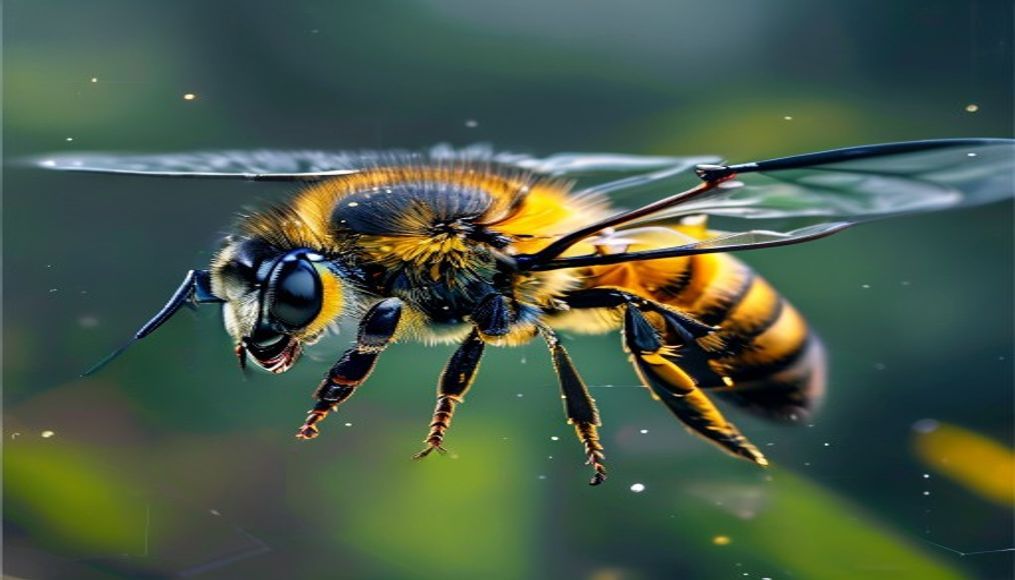
Honey bees have some impressive skills when it comes to navigation. Their ability to maneuver through complex environments is second to none, providing us with a valuable blueprint for aerial robotics. According to a study published by a team of robotics experts and biologists, bees utilize a sophisticated yet straightforward visual processing method that helps them orient themselves and find their way home, even in intricate landscapes.
What makes bee navigation particularly fascinating is the simplicity of their approach. Unlike conventional aircraft, which rely heavily on GPS and extensive computing power, honey bees navigate using their remarkable vision and innate understanding of their surroundings. They can recognize landmarks, gauge distances, and even use the position of the sun to aid their flight paths. This natural strategy has inspired engineers to devise a lightweight algorithm that mimics these methods for drones.
Transforming Drone Technology with Nature’s Wisdom
The implications of this research extend far beyond the lab. The new algorithm allows drones to operate effectively in remote or disaster-stricken areas, where traditional navigation systems may falter. In the face of emergencies—like natural disasters or search and rescue missions—this technology can save lives. Imagine drones that can autonomously navigate through wreckage to deliver supplies or gather data without relying on satellite signals. This capability is a game-changer.
Scientists working on this project argue that the simplicity of the bees’ navigation methods makes them ideal for situations where resources are limited. Drones equipped with this technology can use less power and require minimal processing capacity, making them cheaper and more efficient to operate. This contrasts sharply with existing UAVs (Unmanned Aerial Vehicles) that often come with hefty price tags and complex systems. With this new approach, we might see a democratization of drone technology, making it accessible to a broader range of applications.
The Collaborative Effort Behind the Breakthrough
Behind this remarkable advancement lies a collaboration between robotics experts and biologists, showcasing the importance of interdisciplinary research. By working together, these specialists could decode the intricacies of bee navigation and translate them into a functional algorithm for drones. This cooperation underscores a critical trend in modern science: the merging of biological research with technological innovation.
The team spent considerable time studying how bees perceive their environment, focusing on their ability to identify landmarks and use visual cues to navigate. They observed that bees can perform complex computations in their brains using relatively small amounts of energy. This efficiency inspired the development of a drone navigation system that operates on similar principles, enabling aerial robots to adapt and respond to real-time changes in their surroundings.
Practical Applications of Bee-Inspired Navigation
The potential applications for this innovative drone technology are vast. Environmental monitoring stands out as one of the most promising areas. Drones equipped with this bee navigation algorithm could survey forests, track wildlife, or monitor ecological changes more effectively than their predecessors. This could lead to improved conservation efforts and more accurate data collection in hard-to-reach areas. (See: study on bee navigation strategies.)
In addition to environmental monitoring, this technology can be invaluable in agriculture. Drones could help farmers assess crop health, monitor irrigation systems, and even assist in pollination. By adapting the navigation strategies of bees, which are essential for pollination in many ecosystems, we can enhance agricultural yields and promote sustainability.
Furthermore, the use of bee navigation in search and rescue operations presents an exciting avenue for application. Drones can quickly cover large areas, searching for survivors in disaster zones or locating lost individuals in remote areas. The ability to navigate autonomously without GPS allows for more rapid deployment and can be critical in life-threatening situations.
The Buzz Around the Technology
This biomimetic approach to drone navigation is generating buzz across social media and scientific communities alike. People are drawn to success stories that highlight how nature’s simple biological strategies can outperform complex human engineering. The notion that a tiny insect’s brain can inspire superior autonomous flight is not just fascinating—it’s a testament to the power of nature in technology development.
Experts believe that as more people become aware of this emerging technology, we might see a significant shift in how drones are designed and utilized. Early adopters could gain a competitive edge in fields ranging from disaster management to environmental science, making this a timely opportunity for innovation.
The Future of Flight: What Lies Ahead
Looking ahead, the future of drone technology could very well be intertwined with continued research into bee navigation. As scientists delve deeper into the cognitive functions of bees, we may uncover even more strategies that can be applied to aerial robotics. The development of smarter, more efficient algorithms could lead to drones that are not only capable of navigating but also making real-time decisions based on their environment.
Moreover, as the technology becomes more refined, we can expect to see drones that can operate in urban environments, where they face additional challenges, such as avoiding obstacles and navigating crowded spaces. The principles derived from bee navigation can help address these complexities, allowing drones to integrate seamlessly into human environments.
We’re also likely to see a push for regulatory adjustments. As drone technology advances, governments will need to adapt their policies to accommodate these new capabilities. With the potential for autonomous navigation and decision-making, discussions around safety, privacy, and airspace management will become increasingly important.
Comparative Analysis: Bee Navigation versus Traditional GPS Systems
When we look at the efficiency of bee navigation compared to traditional GPS systems, several key differences emerge. Bees navigate primarily through visual cues and their memory of landmarks, while GPS systems rely on satellite signals that can be obstructed by buildings, trees, or adverse weather conditions.
Statistics from recent studies indicate that while GPS can provide accurate positioning within about 5 meters, bees can locate their hive with an accuracy of just a few centimeters, thanks to their intricate visual processing and memory capabilities. This precision can be incredibly beneficial in environments like dense urban areas or forests where signal interference is common. (See: New York Times article on bee navigation.)
Additionally, GPS systems require significant power and complex hardware, while bees achieve their remarkable navigation feats using minimal energy. This efficiency can lead to longer operational times for drones, opening up possibilities for extended missions without the need for frequent battery changes or recharges.
Expert Perspectives on Bee Navigation Research
Many experts in the field believe that studying the navigation of bees can revolutionize not just drones but also robotics as a whole. Dr. Emily Carter, a leading researcher in biomimetic technologies, emphasizes the significance of this research: “By understanding how bees navigate, we’re not only unlocking the secrets of their remarkable capabilities but also paving the way for more adaptive and intelligent robotic systems.”
In addition, Dr. Mark Thompson, an ecologist, points out the ecological implications: “Using drones that can navigate autonomously like bees can enhance our ability to monitor wildlife and ecosystems with minimal human intervention, reducing our footprint on these environments.”
These expert insights highlight the multifaceted benefits of integrating natural navigation strategies into technology, suggesting a future where robotics and the natural world work hand-in-hand.
Frequently Asked Questions about Bee Navigation in Drone Technology
What is bee navigation?
Bee navigation refers to the method by which honey bees find their way to and from their hives using visual cues, memory of landmarks, and the position of the sun. Their ability to navigate complex environments has inspired new algorithms for drone technology.
How does bee navigation differ from GPS?
Bee navigation relies on visual recognition and memory, making it more reliable in environments where GPS signals may be obstructed. GPS systems depend on satellite signals and can be inaccurate in certain conditions, whereas bees can navigate with precision using their innate abilities.
What are the practical applications of drone technology inspired by bee navigation?
Practical applications include environmental monitoring, agricultural assessments, and search and rescue operations. Drones utilizing bee-inspired navigation can efficiently operate in areas where traditional navigation systems struggle, enhancing their effectiveness.
What advantages do drones have when using bee navigation algorithms?
Drones that use bee navigation algorithms can operate with less power, require minimal computing resources, and navigate more effectively in complex environments. This makes them cheaper, more efficient, and capable of performing tasks in challenging conditions. (See: BBC report on bees and technology.)
How might this technology evolve in the future?
As research continues, we expect improvements in navigation algorithms and the ability for drones to make real-time decisions. This evolution could lead to safer, more autonomous drones that integrate seamlessly into urban environments while complying with emerging regulations.
Potential Challenges and Considerations
While the advancements in drone technology inspired by bee navigation are promising, there are also challenges that need to be addressed. One major issue is the variability in environmental conditions. Bees are adept at adapting their navigation strategies based on changing weather patterns and light conditions. For drones to achieve similar adaptability, further research is needed to refine algorithms that can process and react to dynamic environments.
Another consideration is the legal and ethical implications of deploying drones in various settings. As drones become more autonomous, there will be ongoing discussions about privacy, surveillance, and regulations governing airspace. These issues will require careful navigation to find a balance between innovation and societal concerns.
Conclusion: Nature’s Lessons for Tomorrow’s Technology
The research into bee navigation reveals a compelling truth: sometimes, the most effective solutions come from the simplest of sources. By studying honey bees and their navigational prowess, scientists have unlocked a new realm of possibilities for drone technology. This innovation not only showcases the brilliance of nature but also highlights the importance of interdisciplinary collaboration in science.
As we stand on the brink of a new era in aerial robotics, the lessons learned from the flight strategies of honey bees may just be the key that propels us forward. Whether it’s for environmental monitoring, agricultural assistance, or emergency response, the future of drone technology is undeniably bright, and it’s all thanks to the buzz of honey bees.
“`
Trending Now
- Explore Your Potential with LawnStarter: A Staff Product Engineer Education Opportunity in São Paulo
- the complete explanation
- this guide on “understanding attachment theory: how early bonds shape children’s development”
- this guide on “what is developmentally appropriate practice in early childhood education?”
Frequently Asked Questions
How do bees navigate without GPS?
Bees navigate using their remarkable vision and understanding of their environment. They recognize landmarks, gauge distances, and utilize the sun's position to find their way home, allowing them to maneuver through complex landscapes without relying on GPS.
What is the significance of bee navigation in drone technology?
Bee navigation has inspired the development of a new algorithm for drones that allows them to fly autonomously in resource-constrained environments. This technology enables drones to operate effectively in remote areas or during emergencies where traditional navigation systems may fail.
Can drones use bee navigation methods?
Yes, researchers have created algorithms that mimic the navigation strategies of honey bees. These algorithms enable drones to navigate long distances without GPS, making them suitable for various applications, including search and rescue missions.
What are the benefits of using bee-inspired algorithms in drones?
Bee-inspired algorithms allow drones to operate in challenging environments without the need for complex hardware or GPS. This innovation enhances their capabilities in disaster-stricken areas and improves their efficiency in search and rescue operations.
How do honey bees find their way home?
Honey bees find their way home by using visual cues from their surroundings, recognizing landmarks, measuring distances, and leveraging the sun's position. This innate navigation ability enables them to return to their hive even in intricate landscapes.
Have you experienced this yourself? We’d love to hear your story in the comments.


