Math Education

Check Out These 30 Money Word Problems

Introduction:

Money is an essential part of our lives, and understanding how to manage it is a vital skill. Through the use of money word problems, you can enhance your financial literacy and problem-solving abilities. Whether you’re a student, teacher, or parent seeking to educate yourself or your children on the subject, these 30 money word problems will provide an excellent opportunity to test and improve your financial understanding.

1. Sara went to the store with $50. She bought snacks for $12, a book for $18, and a toy for $6. How much money does she have left?

2. John earned $200 from his part-time job this month. He saved 25% of his income and spent the rest on clothes. How much money did he spend on clothes?

3. Maria wants to buy a dress that costs $60. She has already saved $35. If she saves $5 per week, how many more weeks does she need to save for the dress?

4. An online store is offering a 10% discount on all items during their summer sale. If a shirt originally costs $45, how much will it cost after the discount?

5. Peter buys lunch at school every day for $3.50 per meal. How much does he spend on lunch this month if there are 20 school days in the month?

6. Lucy bought six pairs of socks for a total price of $18. What is the cost of each pair of socks?

7. Carlos wants to purchase a bicycle that costs $240 on installment over six months without interest charges. How much will he need to pay each month?

8. Chloe’s parents gave her an allowance increase of 15% starting this month due to her excellent performance at school. If her previous allowance was $65 per month, what is her new allowance?

9. An amusement park offers a group discount of 20% for parties of ten or more people. If a regular ticket price is $55, how much would each person pay in a group of twelve?

10. During a buy-one-get-one-free sale at the grocery store, Sam buys six packs of cookies priced at $3.50 each. How much does he pay for all the packages?

11. Jane spent one-third of her weekly allowance on movie tickets and the remaining amount on snacks. If she spent $30 this week, how much did she spend on movie tickets?

12. Paul wants to save up for a video game console costing $360 by doing odd jobs over the summer vacation. If he earns $10 per job, how many jobs will he need to do to afford the console?

13. A shop is having a 2-for-1 sale on T-shirts that usually cost $25 each. How much would one pay for four T-shirts during this sale?

14. Rebecca has five $1 bills, three $5 bills, and two $10 bills in her wallet. What is the total amount of money in her wallet?

15. Amy received a 5% raise in her annual salary this year. If she was making $40,000 before the raise, what is her new salary?

16-30: Complete these additional money word problems and check your answers.

[Insert additional problems here]

Conclusion:

These thirty money word problems provide an opportunity to practice and enhance your financial understanding and problem-solving skills. Solving these types of questions will help build essential life skills such as budgeting, saving, and spending wisely.

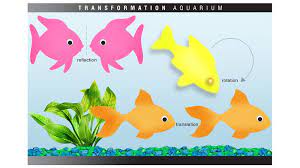
Geometry Transformation Activity: Transformation Aquariums

Introduction:

Dive into the world of geometry with an engaging and interactive activity that promises to make learning a fun experience for students: Transformation Aquariums! This activity is perfect for enhancing students’ understanding of transformations, including translations, rotations, reflections, and dilations. Gather your tools, gather your class, and get ready to explore the depths of transformation in a mesmerizing underwater setting.

Objective:

The Transformation Aquariums activity aims to help students expand their knowledge of geometric transformations while fostering creativity and critical thinking. By crafting their aquariums and applying various transformations on aquatic creatures, students will learn how these transformations affect the shapes’ properties, size, orientation, and position.

Materials Needed:

1. Grid paper

2. Colored pencils or markers

3. Scissors

4. Glue or tape

5. Ruler and protractor (optional)

6. Printed aquatic creature shapes or templates for students to draw or trace

Activity Instructions:

1. Distribute grid paper to the students and instruct them to create an underwater aquarium scene as their background.

2. Provide colorful printed aquatic creature shapes or templates for the students to draw, trace, and color on a separate sheet of grid paper.

3. Guide the students in learning about each type of transformation:

– Translations: moving a shape without changing its orientation

– Rotations: turning a shape around a fixed point by a specific angle

  – Reflections: flipping a shape over an axis creating its mirror image

  – Dilations: resizing a shape proportionally either enlarging or shrinking it

4. Encourage each student to choose at least one transformation type (translation, rotation, reflection, dilation) to apply to their aquatic creatures.

5. Demonstrate an example of how to perform each transformation on specific shapes using grid lines or tools (ruler and protractor).

6. Allow the students to cut out their transformed aquatic creatures and use glue or tape to attach them to their aquariums.

7. Once all transformed creatures are placed, have students present their Transformation Aquariums to the class and explain the type(s) of transformation they used.

8. As an extension, encourage students to practice multiple transformations on the same shape and explore the creative possibilities in designing their aquariums.

Closing:

This immersive activity will bring a splash of creativity and imagination to your classroom while helping students understand geometry transformations. Students will enjoy showcasing their work, fostering a sense of achievement and pride in learning mathematical concepts. Dive into the captivating world of transformation aquariums and watch your students’ understanding of transformations grow!

9 Fun Math Activities Kids in Grades 6-12 Can Do at Home

Math doesn’t have to be boring! When students participate in engaging activities, they can enjoy the process of learning while improving their math skills. Here are nine fun and educational math activities that kids in grades 6-12 can do at home.

1. Kitchen Measurements

Turn cooking or baking into a math lesson by asking your child to work with precise measurements, fractions, and conversions. Have them double or halve a recipe, or convert measurements between metric and imperial units.

2. Build a Bridge

Encourage your child to design and build a model bridge using toothpicks, popsicle sticks, or other materials. They can practice their geometry and engineering skills while also learning about weight distribution and spatial reasoning.

3. Math Puzzles

Word problems, Sudoku puzzles, logic riddles, and tangrams are excellent ways to challenge your child’s problem-solving skills. Find puzzles online or invest in a book with various levels to keep them engaged over time.

4. Geocaching

This outdoor treasure hunting game teaches kids about coordinates, mapping, and distance calculations while they search for geocaches hidden by others around their neighborhood. Sign up for free on geocaching websites or apps to get started.

5. Estimation Jar

Fill a jar with items like marbles, buttons, or candy. Have your child estimate the number of items in the jar and then count them after making their estimation. This activity helps sharpen their number sense and estimation skills.

6. Tessellations Art Project

Drawing tessellations – shapes that fit together without gaps or overlaps – allows your child to explore symmetry, patterns, and geometry concepts creatively. Provide them with graph paper, colored pencils, and examples of tessellations for inspiration.

7. Online Math Games

There are numerous free online math games designed for various grade levels that teach essential math concepts in entertaining ways. These games often provide immediate feedback, allowing kids to learn and progress at their own pace.

8. Probability Experiments

Use coins, dice, or playing cards to explore probability and statistics with simple at-home experiments. Have your child record the outcomes of each trial and analyze the results to learn about the likelihood of different events.

9. Create a Budget

Encourage your child to develop financial literacy by creating a mock budget for a household or fictional business. They can practice calculating expenses, income, and savings while learning about real-world financial concepts.

By incorporating these fun math activities into your child’s daily routine, you’ll make learning enjoyable and help them develop essential skills that will benefit them in the classroom and beyond.

8 Ways to Pose Better Questions in Math Class

Introduction:

Asking the right questions is essential for engaging students in math classes and helping them develop critical thinking skills. When students ask meaningful questions, they become more invested in the subject and take a more active role in learning. To encourage deeper understanding and foster a sense of curiosity in the classroom, here are eight ways to pose better questions in math class.

1. Open-ended questions:

Encourage students to explore various ways to solve a problem by asking open-ended questions that don’t have a single correct answer. This allows them to think creatively about different approaches and helps deepen their understanding of mathematical concepts.

2. Real-world connections:

Connect mathematical concepts to real-life situations by asking questions that relate to everyday experiences or practical applications. These types of questions help students see the relevance of math outside the classroom and improve their problem-solving abilities.

3. Encourage collaboration:

Allow students to share their ideas and build off each other’s suggestions by posing questions that require discussion or group work. This not only fosters teamwork but also exposes students to different perspectives on how a problem might be solved.

4. Scaffold questions:

Scaffold your questions so they progressively challenge students’ thinking, drawing them deeper into their understanding of the concept at hand. Start with simpler inquiries and gradually increase complexity as students become more competent.

5. Emphasize process over product:

Instead of focusing exclusively on correct answers, ask questions that reveal students’ thought processes to understand how they approach problem-solving. Encourage them to reflect on their strategies, highlighting what does or does not work.

6. Use “what if?” scenarios:

Invite exploration and creativity by posing hypothetical situations or making alterations to an existing problem. Ask them how a change in the given conditions might impact the outcome or solution, prompting them to think critically about multiple possibilities.

7. Avoid leading questions:

To ensure genuine understanding, frame questions neutrally and avoid inadvertently suggesting an answer. This enables students to think freely and challenges them to arrive at solutions independently.

8. Reflect and analyze:

Prompt students to self-evaluate their work by asking questions that encourage reflection on their progress, comprehension, and areas for improvement. This can help them gain insights into their strengths and weaknesses and become more independent learners.

Conclusion:

Asking better questions in math class can make a significant impact on students’ engagement, creative thinking, and problem-solving abilities. By implementing these eight strategies, educators can create an environment where critical thinking flourishes and students are inspired to deepen their understanding of mathematical concepts.

What Is Subitizing in Math? (Plus, Fun Ways to Teach and Practice It)

Introduction:

Subitizing is an essential skill in the early stages of mathematical development. It refers to the ability to quickly and accurately perceive the number of items in a group at a glance, without counting them one by one. This skill lays the foundation for more advanced mathematical concepts and is a critical component of number sense. In this article, we will delve into the process of subitizing, its importance in math education, and explore fun ways to teach and practice it.

What Is Subitizing?

Subitizing is derived from the Latin word “subitus,” which means sudden or immediate. It is the rapid and accurate judgment of small quantities without actually counting each individual item. The process of subitizing typically involves recognizing numbers within 5 or 6, though some individuals are proficient in recognizing higher quantities.

Importance of Subitizing in Math Education:

Subitizing plays a crucial role in early mathematical development as it helps children understand fundamental number concepts such as cardinality, comparison, and conservation. Developing strong subitizing skills contributes to a child’s ability to perform mental arithmetic and comprehend patterns within numbers. Moreover, a proficient subitizer can quickly develop number fluency and build mathematical confidence.

Fun Ways to Teach and Practice Subitizing:

1. Dot cards: Create dot cards with various patterns and quantities (up to 5 or 6). Show students the cards for only 2 to 3 seconds and ask them to identify the quantity represented on the card immediately. You can also use ten frames or dice patterns for variety.

2. Domino games: Students can play dominoes by matching numbers based on their ability to quickly recognize patterns on each domino piece without counting individual dots.

3. Quick images: Show students images of familiar arrangements like dice rolls, five frames, six-petal flowers, etc., for a brief moment. Afterward, ask them to identify the number of items in the image.

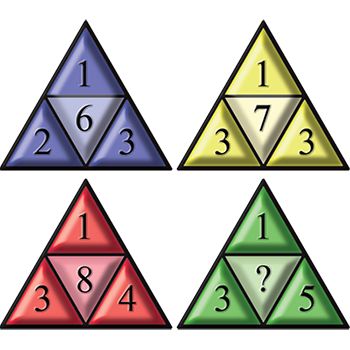
4. Finger flashing: Hold your fingers up for students to see and then quickly hide them behind your back. Have the students name how many fingers they saw without actually counting them.

5. Number splat: Draw different dot patterns on individual index cards and laminate them for durability. Place all the cards face down on a table and have students take turns to quickly flip two cards and announce their sum based on subitizing.

6. Five-in-a-row: Create a simple 5×5 grid with randomly distributed numbers from 1 to 6 inside each box. Students take turns rolling a die and must find and cover an identical number on the grid using a token or a counter. The first student to cover five numbers in a row wins.

Conclusion:

Subitizing is an essential skill that can greatly enhance early mathematical development by fostering number sense and fluency in students. By incorporating enjoyable teaching methods and games, you can make the process of learning subitizing both entertaining and effective, equipping children with a strong foundation for future mathematical success.

17 Anchor Charts to Teach Place Value

Introduction:

Place value is a fundamental concept in mathematics that helps children understand the numeric value of each digit within a number. This skill is crucial for mathematical reasoning, problem-solving, and overall development of mental calculation abilities. Anchor charts can serve as an excellent tool to teach and reinforce the understanding of place value to young learners. Here are 17 different anchor charts to effectively teach place value.

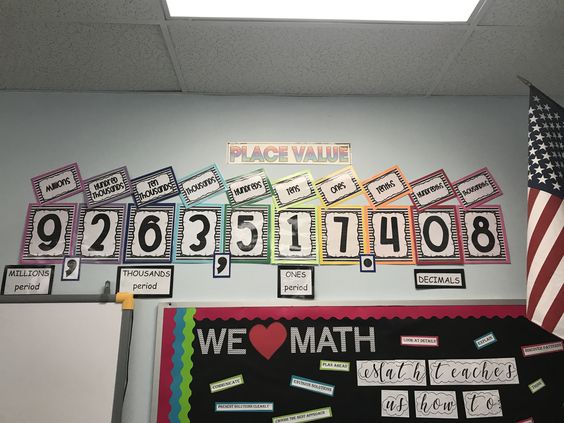
1. Place Value Chart:

Create a simple chart displaying units, tens, and hundreds columns, and provide examples of numbers broken down into their individual place values.

2. Expanded Form Representation:

Showcase how numbers can be represented in their expanded form by breaking them down into separate digits multiplied by their respective place values.

3. Base Ten Blocks:

Utilize base ten block visuals to demonstrate place values (ones, tens, and hundreds) in various numbers.

4. Number Lines:

Use number lines to help students visualize the position of numbers in relation to their place values.

5. Comparing Numbers:

Design a chart with various examples highlighting different ways to compare numbers based on their place values.

6. Rounding Numbers:

Explain rounding rules accompanied by illustrative examples that depict rounding up and down based on particular digits’ place values.

7. Decimal Place Value Chart:

Present decimal place values (tenths, hundredths, etc.) on a similarly structured chart as with whole number place values.

8. Adding & Subtracting:

Demonstrate examples of adding and subtracting numbers through adherence to proper alignment of similar place values.

9. Place Value Puzzles:

Incorporate puzzles where students match numbers with corresponding base ten block representations or written descriptions highlighting specific digit’s place value.

10. Greater Than, Less Than:

Teach the use of ‘greater than’ and ‘less than’ symbols when comparing digit values in specific places within a number.

11. Place Value Houses:

Create cute house illustrations, with each representing a place value. This engaging anchor chart helps students visualize the concept of ones, tens, and hundreds.

12. Multiply & Divide by Powers of 10:

Provide examples that demonstrate the connection between multiplying and dividing by powers of 10 and movement of digits within a number’s place values.

13. Identifying Digits’ Values:

Use arrows to pinpoint specific digits in numbers and identify their corresponding values based on their place value.

14. Place Value Relationships:

Explain patterns between various place values by comparing values of neighboring digits through examples.

15. Interactive Flip Chart:

Design a flip chart that allows students to manipulate digit cards to build numbers by placing them into appropriate place value columns.

16. Comprehensive Place Value Review:

Combine multiple concepts within a single anchor chart, covering both whole numbers and decimal place values, including expanded form representation and base ten blocks.

17. Scientific Notation:

Introduce scientific notation—especially valuable for large or small numbers—showing how to rewrite numbers using exponents and their relationship with place values.

Conclusion

No matter a child’s learning style or current understanding of place value, these 17 anchor charts provide engaging visuals and hands-on opportunities to teach critical numeracy skills effectively. As students progress through mathematical education, these foundational skills will serve as an essential building block for future mathematical success.

16 Catchy Number Songs for Kids: Making Math Fun and Engaging

Mathematics is an essential skill for children to learn in the early years. One fun and engaging way to teach number recognition and counting skills is through catchy number songs. Here are 16 fantastic songs that parents and educators can use to make learning math enjoyable for kids.

1. “Five Little Monkeys”: This classic counting song introduces children to the numbers one through five, as well as the concept of subtraction.

2. “Ten in the Bed”: A fun song about subtracting one until there are zero left in the bed, reinforcing subtraction concepts while counting from ten to zero.

3. “One, Two, Buckle My Shoe”: This timeless nursery rhyme helps practice counting from one to ten with a catchy tune that encourages kids to sing along.

4. “The Ants Go Marching”: This entertaining song narrates the journey of ants marching while children count them in multiples of one.

5. “Ten Little Fingers”: This interactive number song allows kids to use their fingers as they learn to count from one to ten.

6. “Five Little Ducks”: A lovely nursery rhyme where children count down from five as each duck goes out and then returns.

7. “The Counting Song”: A simple and upbeat tune by Hap Palmer, this track encourages children to count from one to twenty by singing along with the lyrics.

8. “One Potato, Two Potato”: This engaging chant helps young learners count from one to ten while also practicing basic addition skills.

9. “One Elephant Went Out to Play”: An enjoyable song for learning counting by ones together with a playful storyline about elephants on a spider’s web.

10. “Five Green and Speckled Frogs”: This lively number song teaches kids counting with a decreasing sequence from five frogs down to none.

11. “Ten Green Bottles”: An entertaining counting track based on the concept of subtraction, where children learn to count down from ten to zero.

12. “One, Two, Three, Four, Five”: This delightful song introduces kids to counting from one to five and gives them an opportunity to practice addition with a series of engaging verses.

13. “Five Little Speckled Frogs”: A charming nursery rhyme where children can count down from five as each frog jumps off the log.

14. “Ten Fat Sausages”: This amusing number song adds humor to a counting lesson and teaches kids subtraction concepts in an entertaining way.

15. “Ten Little Buses”: A catchy tune that teaches children how to count up to ten using the example of buses traveling through a town.

16. “One Hundred Bottles of Pop on the Wall”: This classic singalong gradually introduces children to counting by tens and offers an engaging way to practice counting from ten up to one hundred.

These 16 catchy number songs for kids are sure to delight and engage young learners as they develop their math skills. Whether played at home or in a classroom setting, these tunes provide the perfect soundtrack for making learning numbers enjoyable and memorable for children.

Revolutionizing Education: We Love This Math Fluency Program for In-Person and Virtual Teaching

Introduction:

In today’s fast-paced world of education, math fluency programs are an invaluable tool in helping students acquire mathematical skills. As technology continues to enhance learning, incorporating a highly effective math fluency program for both in-person and virtual teaching can profoundly impact students’ success. In this article, we will explore the benefits of one such program that stands out from the rest in providing extensive support to educators and students alike – a diverse and comprehensive program we know you’ll love too!

Top Features of This Exceptional Math Fluency Program:

1. Adaptability: This program is designed to cater to both in-person classrooms and virtual learning environments seamlessly. Its user-friendly interface allows teachers to implement the program easily across various instructional settings.

2. Individualized Instruction: With built-in diagnostic tools, this math fluency program identifies each student’s strengths and weaknesses, customizing instruction for optimal results. By tailoring lesson plans, every student has the opportunity to excel at their own pace.

3. Engaging Content: Boredom can be a significant hindrance to learning, particularly in subjects like mathematics. By incorporating engaging visuals, interactive games, and real-world situations, this program keeps students motivated as they build essential math skills.

4. Regular Assessments: Evaluating a student’s progress is integral to successful learning. The program includes scheduled assessments – both formal and informal – that facilitate ongoing growth feedback and track advancements in mathematics understanding.

5. Teacher Support: Perhaps one of its most critical features, the math fluency program offers substantial teacher-support material. Teachers receive training resources such as video tutorials, lesson plan ideas, customizable worksheets, and direct access to customer support teams.

The Impact on Students:

When it comes to developing strong math foundations, instilling confidence with numbers is key for young learners. Through the implementation of this reliable math fluency program, students become more confident in their abilities, getting excited about mastering complex mathematical concepts. Additionally, the program utilizes interactive activities to help students connect abstract mathematical topics to everyday life, fostering increased mathematics appreciation and relevancy.

For Teachers and Educators:

This math fluency program is a game-changer for educators. By identifying each student’s unique learning needs, teachers can allocate their time more efficiently. This personalized approach ensures accurate assessment of a student’s progress leading to focused intervention strategies that transform any classroom or virtual learning environment into a potent incubator for math achievement.

Conclusion:

This innovative math fluency program leaves no stone unturned in providing superior educational support to both students and educators alike, with its adaptability and individualized instruction being standout features. If you’re looking for an all-encompassing math fluency program to foster growth in your in-person or virtual classroom, don’t wait any longer – revolutionize your teaching experience with this exceptional solution!

10 Things I Wish I’d Known as a New Math Teacher

Introduction:

Becoming a math teacher can be a challenging and rewarding experience, but there are some things you may not realize about the job until you’re in the thick of it. With that in mind, here are ten things I wish I’d known as a new math teacher.

1. Building relationships with students is crucial:

Math is perceived as a difficult subject by many students, and some may even develop a fear of it. It’s essential to establish relationships with your students and understand their struggles, backgrounds, and motivations to better support them in learning mathematics.

2. Making connections to real-life situations:

Help your students relate to math by making connections to real-world problems and situations. Demonstrating the relevance of math helps generate interest and motivation for those who may initially struggle with the subject.

3. Patience is key:

Learning math takes time and patience, both for the teacher and the students. Don’t expect instant results; keep refining your methods and know that progress is incremental.

4. Differentiation is essential:

Students learn at different paces and have unique strengths and weaknesses. Accommodate these by using differentiated instruction strategies, such as providing various levels of challenge or altering the teaching method altogether.

5. Classroom management skills are vital:

Developing strong classroom management skills ensures that your lessons are effective and keeps disruptions to a minimum.

6. Use technology effectively:

Technology can be an excellent tool for engaging students in learning math while offering them easily accessible resources. Embrace tech like interactive whiteboards, online platforms, apps, tools designed specifically for your classroom needs.

7. Teamwork makes the dream work:

Collaborating with colleagues is invaluable for exchanging ideas, receiving support, and gaining new perspectives on teaching strategies—a collective approach to growth and development benefits both teachers and learners.

8. Encourage a growth mindset:

Teach your students the value of perseverance and persistence. Encourage them to believe that their capability in math can improve with practice and effort.

9. Professional development is a must:

Continuing your education and staying up-to-date on the latest teaching methods, tools, and technology will be essential for your career. It will also benefit your students’ learning experience.

10. Self-care is important too:

Teaching is a taxing job, both mentally and physically. Ensure that you take the necessary time for self-care, such as adequate sleep, regular exercise, socializing, and hobbies to prevent burnout and maintain a healthy work-life balance.

Conclusion         

Being mindful of these ten aspects from the outset will help you become a more effective and successful math teacher while cultivating an environment where students thrive. Remember that learning is an ongoing process not only for your students but for you too—don’t be afraid to adapt, grow, and continue striving for success.

The Best Websites for Teaching and Learning Graphing

Introduction

Graphs are a fundamental part of data visualization and analysis, helping to present complex information in an easy-to-understand format. Teaching and learning graphing skills is essential for students and educators in various disciplines, such as mathematics, science, and social studies. With the abundance of online resources available today, it can be challenging to know where to start. This article will explore some of the best websites for teaching and learning graphing.

1. Desmos (https://www.desmos.com/)

Desmos is a free, online graphing calculator that provides an intuitive user interface for creating and analyzing mathematical graphs. Users can easily create a variety of graphs, including lines, arcs, scatterplots, and polar graphs by inputting functions or data points. Additionally, this interactive platform allows students to explore transformations, regressions, and other advanced concepts.

2. GeoGebra (https://www.geogebra.org/)

GeoGebra is a versatile math software that extends beyond graphing into geometry, algebra, calculus, and statistics. Its user-friendly interface enables students to interactively explore mathematical concepts through graphing tools and dynamic applets. Educators can access numerous ready-made resources or even create their custom classroom activities.

3. Khan Academy (https://www.khanacademy.org/)

Khan Academy hosts an extensive library of video lessons and interactive exercises on various topics, including graphing functions using slope-intercept form or plotting linear equations in addition to more advanced concepts like systems of linear inequalities. Additionally, the website offers quizzes and performance insights to help students track their progress.

4. National Library of Virtual Manipulatives (http://nlvm.usu.edu/)

The National Library of Virtual Manipulatives (NLVM) contains engaging online activities to teach various math concepts crucial for students at different education levels. Among these digital learning materials, NLVM offers a collection of tools for exploring graphing principles, such as algebra tiles, coordinate plane explorers, and slope sliders.

5. Plotly (https://plotly.com/)

Plotly is a powerful data visualization and graphing tool that offers a wide range of customizable graphs and charts. Its focus on interactive data visualization makes it suitable for more advanced students learning statistical analysis or seeking to create professional-quality graphs for reports or presentations.

6. Datawrapper (https://www.datawrapper.de/)

Datawrapper is an easy-to-use web platform for crating graphs from raw data, making it an excellent choice for educators who want their students to engage in real-world scenarios. Users can import data from spreadsheets or CSV files and choose from various graph types to visualize the information clearly.

Conclusion

The diverse assortment of websites featured in this article provides valuable resources for both teachers and learners seeking to master graphing concepts effectively. By combining these platforms with traditional classroom instruction, educators can offer engaging and comprehensive experiences that foster deep understanding and practical application of graphing principles.