Science Education

Enhancing Thinking Skills Through Science

Introduction

Thinking skills are crucial abilities that individuals need in order to navigate through the world with ease. Science, an inherently analytical discipline, provides a wealth of opportunities to develop these essential skills. This article delves into the importance of honing one’s thinking skills and how science can serve as a platform for nurturing these abilities.

The Importance of Thinking Skills

Thinking skills encompass a variety of mental processes necessary for problem-solving, decision-making, and comprehension. They involve cognitive abilities such as critical thinking, creativity, evaluative thinking, logical reasoning, and problem-solving. These capabilities enable individuals to make well-informed decisions, consider diverse viewpoints, and tackle challenges effectively.

Developing thinking skills is vital for personal and professional success. In today’s fast-paced world, one must continuously adapt to new information, innovative ideas, and shifting paradigms. Effective thinking skills can boost confidence, enhance interpersonal relationships and communication, and improve career prospects across various industries.

The Role of Science in Developing Thinking Skills

Science as a discipline follows a systematic methodology that promotes analytical inquiry and evidence-based conclusions. Delving into scientific concepts can help individuals cultivate various thinking skills:

1. Critical Thinking: Scientific studies require the ability to evaluate data and information objectively. By critically examining scientific theories and experiments, individuals can sharpen their capacity to assess the merits and shortcomings of different arguments.

2. Creativity: Scientific discoveries often challenge existing norms and understanding. Engaging with science allows individuals to think laterally and explore novel ideas that may deviate from traditional lines of thought.

3. Evaluative Thinking: In the scientific method, hypotheses are formed based on observations and tested through experimentation. This process enables students to learn how to appraise their ideas based on factual evidence — cultivating evaluative thinking in the process.

4. Logical Reasoning: Scientific inquiry requires clarity of thought and logical progression from hypothesis formation to result interpretation. This systematic process allows individuals to hone their logical reasoning abilities as they evaluate the plausibility of their findings.

5. Problem Solving: Science presents numerous challenges that require innovative solutions. Tackling scientific problems accelerates the development of problem-solving capabilities as individuals learn to identify the root cause of an issue and craft appropriate strategies to address it.

Conclusion

Science offers myriad opportunities to stimulate cognitive development and enhance thinking skills. By engaging with these subject matters, individuals can sharpen their mental capacities and foster a deeper understanding of the world around them. Schools, universities, and other educational institutions can play a significant role in encouraging students to cultivate their thinking skills through science, preparing them for a successful future in an ever-changing world.

20 Thematic Thermal Energy Activities: Engaging and Educational Options

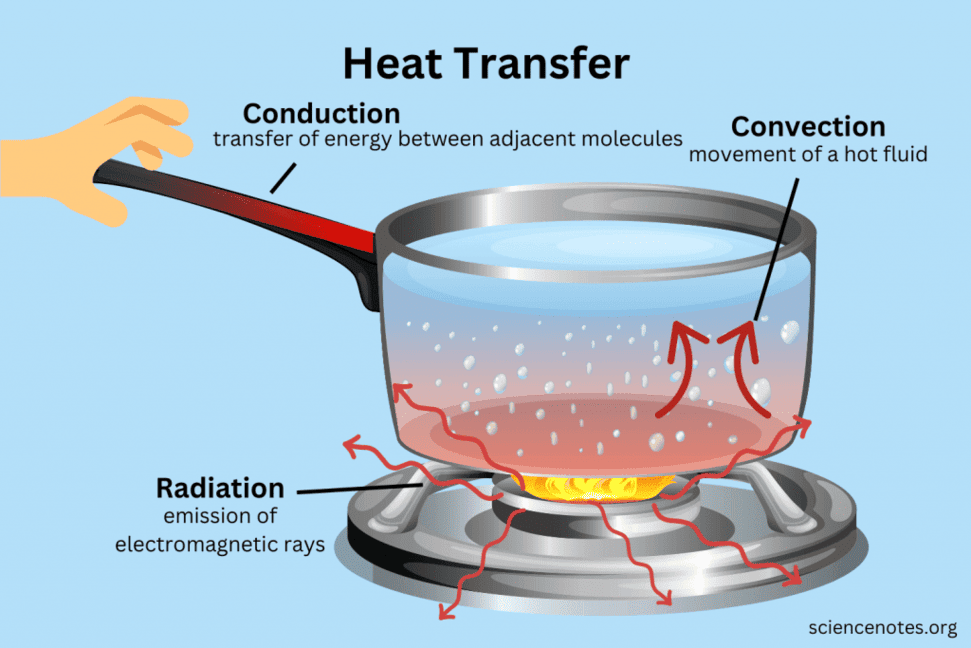
Thermal energy, or heat energy, is an important concept in science, and it’s essential for kids to grasp this topic. With hands-on activities, students can gain a better understanding of thermal energy and its effects. Here are 20 thematic thermal energy activities to engage and educate students of all ages.

1. Ice Cube Melting Race: Kids race ice cubes down an inclined surface to explore how heat affects melting rates.

2. Homemade Solar Oven: Students create a simple solar oven using a cardboard box and aluminum foil to harness the sun’s thermal energy.

3. Balloon-in-a-Bottle Experiment: Using hot water and ice water, kids explore how temperature affects air pressure.

4. Insulation Contest: Compete to see which material is best at insulating a container filled with ice.

5. Heat-Transfer Relay Race: Teams race to transfer heat from one container to another using spoons or other small objects.

6. Thermometer Craft: Children construct their own thermometers to study temperature changes over time.

7. Convection Currents Demonstration: Create convection currents in a tank of water with hot and cold sections.

8. Thermal Conductivity Investigation: Check which materials transfer heat more efficiently – metals, wood, plastics, or ceramics?

9. Freeze-Dance Exploration: Kids dance around while analyzing how movement generates body heat and increases overall temperature.

10. Lava Lamp Experiment: Make a homemade lava lamp to observe the continual movement of colored water in response to heating and cooling.

11. Friction Heat Observations: Students rub various objects together to feel the heat generated by friction.

12. Temperature-Induced Color-Changing Slime: Create slime that changes color based on its temperature using thermochromatic pigment powder.

13. Icy Marbles Experiment: Observe how applying thermal energy melts ice faster when salt is added to the mix.

14. Keep-It-Hot Challenge: Students build a device that retains thermal energy and maintains the temperature of a cup of hot water for an extended time.

15. Heat-Induced Rainbow Art: Make watercolor masterpieces using the heat of sunlight or a hairdryer to spread pigments on paper.

16. Melting Crayon Art: Use a hairdryer or oven to melt crayons and explore how heat affects solid materials.

17. Hot-Air Balloon Demonstration: Illustrate the concept of hot air rising with an easy balloon hovering experiment.

18. Pocket Hand Warmers: Teach students about exothermic reactions by making DIY hand warmers with iron, salt, and vermiculite.

19. Sound Bites Experiment: Show how different temperature levels influence sound speed by tapping on soda bottles filled with varying levels of hot and cold liquid.

20. Thermal Treasures Hunt: Coordinate a treasure hunt where participants must use their knowledge about thermal energy to locate hidden prizes via clues related to temperature changes or reactive materials.

These 20 thematic thermal energy activities will encourage students to learn more about this scientific concept while having fun and getting hands-on experience in the process.

16 Brain Mapping Activities To Help Kids Organize Their Thoughts

Introduction:

In today’s fast-paced world, organizing thoughts and focusing on tasks can be challenging for children. Brain mapping activities are a fun and effective way to help kids develop essential cognitive skills. Here are 16 brain mapping activities that can help your child organize their thoughts and improve their focus.

1.Mind Maps:

A creative technique that uses diagrams to visually organize information, making it easier for kids to see connections between ideas.

2.Storyboards:

Breaking down stories or narratives into a sequence of images or text boxes helps children understand the structure and flow of events.

3.Concept Maps:

Similar to mind maps but more focused on concepts and their relationships, these visual diagrams encourage critical thinking.

4.Flowcharts:

Flowcharts use simple shapes and arrows to represent the flow of information, helping kids understand processes and sequences in various subjects.

5.KWL Charts:

This stands for “Know”, “Want to Know”, and “Learned”, helping kids organize their thoughts before, during, and after learning new topics.

6.Venn Diagrams:

Two or more circles that overlap to illustrate similarities and differences between multiple subjects or concepts.

7.Timelines:

Displaying events in a chronological order allows kids to recognize patterns in history or life experiences.

8.Word Webs:

Visually linking related words encourages a deeper understanding of vocabulary and word relationships.

9.Mnemonics:

Creating memory aids such as acronyms or associations helps kids remember important facts or concepts.

10.Chunking Information:

Breaking information into smaller ‘chunks’ makes it easier for children to process, memorize, and categorize.

11.Visualization Exercises:

Encourage your child to create mental images of scenarios or processes which helps in better understanding and retention.

12.Color Coding:

Using various colors to differentiate information allows kids to connect ideas visually and categorize their thoughts.

13.Outlining:

Creating structured lists or hierarchical outlines promotes logical organization of ideas and facts.

14.Note-taking Skills:

Developing effective note-taking habits supports better information retention and organization of thoughts.

15.Brainstorming Sessions:

Encouraging group discussions and ideation aids in creating a dynamic flow of ideas and improves problem-solving skills.

16.Memory Games:

Matching games, puzzles, and other memory-enhancing exercises help strengthen cognitive abilities in children.

Conclusion:

Brain mapping activities can help children become more organized, improve their focus, and develop critical thinking skills. Explore these 16 techniques to find the best-suited activities that engage and inspire your child’s learning journey.

18 Unique And Hands-On Meiosis Activities

Introduction

Meiosis is a fundamental biological process that facilitates the formation of gametes or sex cells in sexually reproducing organisms. Teaching this concept effectively requires engaging and hands-on activities to help students understand the complex sequence of events better. In this article, we present 18 unique and hands-on meiosis activities to promote broader comprehension and stimulate curiosity.

1.Meiosis Video Tour

Have students watch a video on meiosis to help them visualize the stages and their progression. Encourage active engagement by asking questions and discussing key concepts during the video.

2.Build-a-Cell

Provide students with modeling clay, pipe cleaners, or other materials to create their models of cells undergoing meiosis.

3.Chromosome Twister

Using colored yarn or string, simulate chromosome movement throughout each stage of meiosis on a large floor mat.

4.Meiosis Card Game

Create your card game about matching stages and events in meiosis to spark collaborative learning and friendly competition.

5.Interactive Whiteboard Activity

Engage students with touch-sensitive screens that allow them to manipulate cell components throughout the steps of meiosis.

6.Edible Meiosis

Use candy or other edible materials to represent chromosomes, spindles, centrioles, and other cellular structures involved in meiotic processes.

7.Meiosis Dance Off

Assign different groups as various cell structures and have them perform choreographed movements representing each stage of meiosis while wearing costumes or props.

8.Microscopic Exploration

Provide microscope slides with prepared onion root tips or another organism for students to observe cells undergoing meiotic division.

9.Beads Models

Use different color beads to represent homologous chromosomes, allowing students to construct models illustrating each step in the process of meiosis.

10.Meiotic Flip Book

Assign students the task of drawing the stages of meiosis on index cards, which they can then flip through to review the process sequentially.

11.Puzzle Pieces

Create a meiosis board game with puzzle pieces to represent stages or events of meiosis, having students work their way around the game board as they answer questions and solve problems.

12.Chromosome Spreadsheets

In this activity, students can make diagrams of the meiotic process on spreadsheets or grid paper to help them visualize chromosomal interactions.

13.Meiosis Comic Strip

Encourage artistic learners to create comic strips illustrating each stage of meiosis, along with dialogue and explanations.

14.Meiosis Bingo

Generate cards and call out descriptions related to meiotic events, having students mark their spaces as terms are mentioned.

15.Digital Diagrams

Students can use graphic design software to create digital diagrams of the various stages of meiosis, either individually or collaboratively.

16.Crossword Puzzles

Construct crossword puzzles using key vocabulary terms related to meiosis for students to complete individually or in groups.

17.Matching Cards

Create sets of flashcards with illustrations of various meiotic processes on one side and brief written descriptions on the other, challenging students to match images with corresponding explanations.

18.Meiosis Gallery Walk

Display posters or other visual representations of the stages of meiosis around your classroom, having students walk around and examine each display before discussing their observations in groups or as a class.

Conclusion

These 18 unique and hands-on activities will help facilitate a better understanding of meiosis principles by engaging students in creative and interactive learning experiences. Employing these activities will not only foster deeper comprehension but also inspire curiosity in the fascinating world of cell biology.