Teachers

Philosophies of Education: Everything You Need to Know

This is a set of beliefs and ideologies commonly held by educators concerning the construction and application of educational systems. Educational philosophies are usually sourced from philosophies from the past that are still valuable in the present day. The information sourced from the past then goes through a process, where it is filtered through reality in order to produce theories and philosophies that are most appropriate for education today. These philosophies can be categorized into three groups, student-driven, society-driven, and teacher-driven philosophies.

There’s another type of classification, according to which four main types of educational philosophies are:

·         Perennialism: This subject-centered philosophy focuses on knowledge that surpasses time. A perennialist educator teaches students to think reasonably and critically while helping them master the content taught. The goal of a perennialist classroom is to develop a well-disciplined and closely organized setting, which helps encourage a lifelong quest for the truth in students.

·         Essentialism: Though this too is a subject-centered philosophy, it’s concerned with teaching basic skills. This philosophy is all about training the mind. The focus of essentialist educators is on teaching a series of progressively complex topics and helping the students move onto the next level. In an essentialist classroom, subjects are focused on the historical perspective of the material world and culture, and move in sequence to help students acquire a solid understanding of contemporary times.

·         Romanticism: This student-centered philosophy’s focus is on differentiation to meet the students’ learning readiness needs. Its five essential characteristics are intuition, imagination, individuality, inspiration, and idealism. Since this philosophy believes knowledge is acquired through intuition rather than deduction, schools founded on romanticism don’t have any set curricula, formal classes, or tests. Instead, students are allowed to decide what they desire to learn. In some cases, they are even expected to take complete responsibility for their learning.

·         Progressivism: According to progressivists, education should focus on the whole student rather than the teacher or content. Progressivism stresses that students should examine ideas by active experimentation. This educational philosophy promotes active learning and believes it to be rooted in the learners’ questions that crop up through their experiences with the world. In a progressive classroom, the students are thinkers and problem-solvers who find meaning through their individual experiences in the physical and cultural context. The content for such classes is based on and derived from students’ questions and interests. Progressive teachers in these classes provide experiences to help their students learn by doing. 

20 Ways to Teach Students Not to Use Profanity

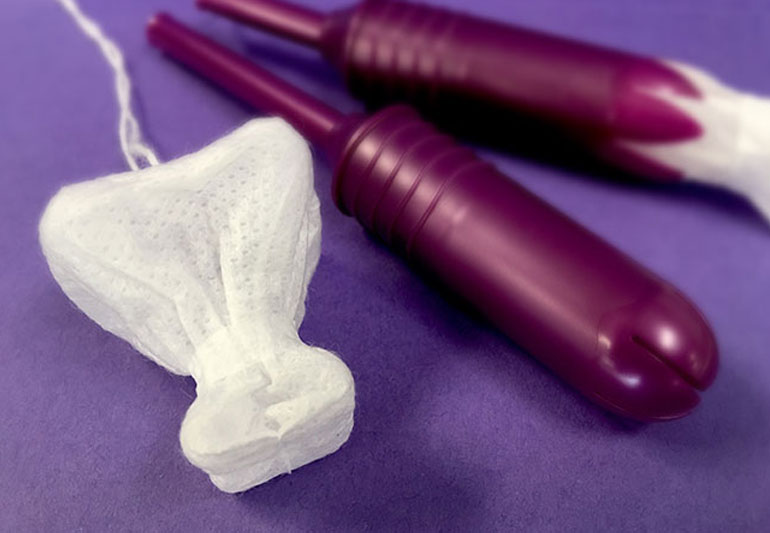
Urinary Incontinence Devices

Are you looking for ways to teach students not to use profanity? If so, keep reading.

1. Make sure you deal in a socially acceptable way with situations that may be upsetting.

2. Teach the learner to verbalize feelings before losing control (e.g., “The work is too hard.” “Please leave me alone; you ‘re making me angry.”).

3. Observe the behavior of others to make sure they are not teasing or otherwise stimulating the learner to become upset or angry.

4. Teach the learner ways to deal with conflict situations (e.g., talking, reasoning, asking an adult to intervene, walking away, etc.).

5. Watch for the warning signs (e.g., arguing, loud voices, etc.) that the learner is getting upset or angry and intervene to change the learning experience.

6. Make sure you approach the learner with words and phrases that offer support rather than stimulating antagonism, anger, etc.

7. Repeat rules and expectations before learning activities happen that might result in the learner becoming upset or angry.

8. Make sure to intervene early when the learner does curse before cursing becomes an established part of their speech.

9. Make sure the learner knows the consequences of cursing that will be delivered in your class (e.g., loss of privileges, loss of chance to associate with those with whom he curses, loss of freedom to be left alone with friends, etc.).

10. Make sure the learner knows that other teachers will not stand for cursing, the learner should expect to be embarrassed, and may be prevented from interacting with others.

11. Minimize the emphasis on competition. Highly competitive learning activities may cause the learner to become upset, angry, frustrated, etc.

12. Do not inadvertently reinforce the learner’s cursing by laughing, smiling, ignoring, etc.

13. Stop the learner from becoming frustrated to the extent that cursing results. Intervene to help the learner in those situations that may result in frustration and cursing.

14. If highly competitive learning activities contribute to the learner’s cursing, either lessen the learner’s involvement in those learning activities or make sure the learner knows that cursing will result in the loss of chances to take part in those learning activities.

15. Show the learner successful persons who actively take part in an assortment of learning activities without cursing.

16. Make sure the learner is taught those words that are socially appropriate to use in place of cursing (e.g., “dang,” “shoot,” “darn,” “heck,” etc.).

17. Using profanity is not a behavior that should be ignored. By ignoring the learner’s cursing, you send the message that it is acceptable.

18. Talk with the learner about ways to deal with unpleasant experiences that would typically cause them to use obscene language (e.g., talk to the teacher, go to a quiet area in the room, visit a counselor, etc.).

19. Embody using appropriate language at all times (e.g., use appropriate language to express disappointment, unhappiness, surprise, etc.).

20. Address the learner calmly and deliberately rather than in a manner that would show evidence of shock and surprise.

13 Ways to Teach Students Appropriate Mealtime Manners

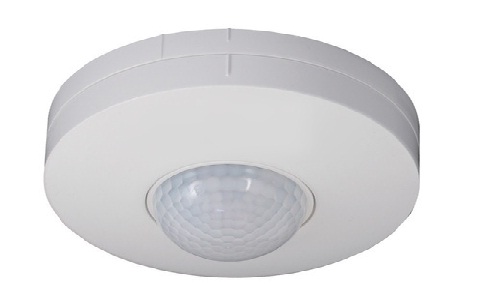
Occupancy Sensor

Are you looking for ways to teach students appropriate mealtime manners? If so, keep reading.

1. Train the learner in appropriate mealtime etiquette (e.g., speaking with an empty mouth, eating with mouth closed, chewing quietly, etc.).

2. Train the learner in selecting an appropriate amount of food, eating an appropriate amount of food, taking properly sized bites, etc.

3. Train the learner in appropriate cleanup learning activities upon the conclusion of eating (e.g., disposing of trash, putting trays and tableware in appropriate places, washing hands, etc.).

4. Train the learner in the appropriate use of napkins (e.g., keep on lap, wipe mouth, clean up spills, etc.).

5. Train the learner in appropriate line behavior (e.g., waiting quietly, refraining from physical contact, moving with the line, etc.).

6. Make sure the learner sits properly while eating (e.g., sits near the table, sits upright, leans forward, etc.).

7. Train the learner in appropriate behavior when finishing a meal early (e.g., making conversation, remaining in their seat, excusing themselves, etc.).

8. Train the learner in appropriate ways to get seconds or additional food (e.g., asking for seconds, going through the cafeteria line a second time, purchasing seconds, etc.).

9. Take the learner away from eating with their peers if they cannot demonstrate appropriate mealtime behaviors.

10. Teach the learner appropriate ways to drink liquids (e.g., opening milk cartons and juice containers, using a straw, pouring into a glass, drinking from a glass, etc.).

11. Teach the learner appropriate ways to respond to food they do not want (e.g., sample everything at least once, leave the food on the plate, offer extra portions to others, etc.).

12. Train the learner in appropriate ways to clean up spills (e.g., ask for assistance, use paper towels and napkins, etc.).

13. Train the learner inappropriate ways to clean clothing when accidents happen during mealtime (e.g., immediately go to the restroom, use paper towels and napkins, etc.).

16 Ways to Help Students Who Have Trouble Transitioning to the Next Learning Experience

Are you looking for ways to help students who have trouble transitioning to the next learning experience? If so, keep reading.

1. Show instructions/instructions prior to handing out appropriate learning materials.

2. Gather the learner’s learning materials (e.g., pencil, paper, textbook, workbook, etc.) when it is time to change from one learning experience to another.

3. Give the learner clearly stated expectations for all situations.

4. Stop the learner from becoming so stimulated by an event or learning experience that the learner cannot control their behavior.

5. Create rules that are to be followed in several portions of the school building (e.g., lunchroom, music room, art room, gymnasium, library, etc.).

6. Find the expectations of various environments and help the learner create the skills to be successful in those environments.

7. In collaboration with other school staff members, create as much consistency as possible in the school environment (e.g., rules, criteria for success, behavioral expectations, consequences, etc.).

8. Minimize the learner’s involvement in learning activities that prove too stimulating for him/her.

9. Get the learner to take part in transitional learning activities designed to lessen the effects of stimulating learning activities (e.g., put head on desk, listen to the teacher read a story, put headphones on and listen to relaxing music, etc.).

10. Give the learner more than enough time to adapt or modify their behavior to various situations (e.g., have the learner stop free-time learning activities five minutes prior to returning to class).

11. Plan learning activities so the learner has more than enough time to finish the learning experience if they work continuously.

12. Connect clearly to the learner when it is time to begin a learning experience.

13. Connect clearly to the learner when it is time to stop a learning experience.

14. Consider using a classroom management app. Click here to view a list of apps that we recommend.

15. Consider using Alexa to help you with classroom management. Click here to read an article that we wrote on the subject.

16. Click here to learn about six bonus strategies for challenging problem behaviors and mastering classroom management.

18 Ways to Support Students Who Show Phobic Reactions

Are you looking for ways to support students who show phobic reactions? If so, keep reading.

1. Be sure the learner makes appropriate use of the time given for learning activities.

2. If appropriate, give additional time for the learner to change clothing for physical education. As the learner shows success, slowly lessen the additional time given.

3. Make sure the learner has the appropriate clothing for physical education.

4. Stop peers from making the learner feel awkward when they take part in learning activities (i.e., prevent other students from making fun, teasing, etc.).

5. On occasions where requiring the learner to take part in a learning experience in which they are awkward, pair the learner with a peer/friend to lessen their discomfort.

6. Assess the necessity of requiring the learner to take part in learning activities in which he/she is awkward.

7. Give the learner alternatives to learning activities that make them awkward (e.g., let the learner write a poem instead of reciting a poem in front of a group).

8. Make sure the learner has sufficient time to perform learning activities.

9. Let the learner be an observer of learning activities without requiring them to be an active participant.

10. Let the learner perform functions or learning activities that require little participation (e.g., scorekeeper, notetaker, etc.).

11. Ask the learner to find under what circumstances they would be willing to take part in learning activities (i.e., the learner may be able to suggest acceptable conditions under which they would be comfortable participating in learning activities ).

12. Give a schedule whereby the learner slowly increases the duration of time spent at school each day, in the classroom, in a particular class or learning experience, etc.

13. Connect with parents, agencies, or appropriate parties to tell them about the problem, identify the cause of the problem, and discuss potential solutions to the problem.

14. If the learner is extremely awkward at school, let a parent, relative, or friend remain with the learner all day if appropriate. As the learner becomes more comfortable, slowly lessen the duration of time the person remains with the learner.

15. Consider using an adaptive behavior management app. Click here to view a list of apps that we recommend.

16. Consider using a socio-emotional learning app. Click here to view a list of apps that we recommend.

17. Consider using an emotional intelligence app. Click here to view a list of apps that we recommend.

18. Consider using a school counseling app. Click here to view a list of apps that we recommend.

16 Ways to Teach Students to Exhibit Appropriate Behaviors Related to Bodily Functions

Are you looking for ways to teach students to exhibit appropriate behaviors related to bodily functions? If so, keep reading.

1. Do not leave the learner unsupervised.

2. Take the learner away from the learning experience until they show appropriate behavior.

3. Take the learner away from the peer or situation that stimulates them to take part in unacceptable behavior related to bodily functions.

4. Notify other school staff members to make them aware of the problem.

5. Make sure the learner knows how to use restroom facilities appropriately.

6. Give the learner accurate information regarding bodily functions to answer questions and clear up misunderstandings.

7. Teach the learner alternative ways to deal with their anger (e.g., talk with the teacher, move away from the situation, talk to other school staff members, etc.).

8. Convey concerns and communicate fears to the administration and seek a referral to an agency for investigation of possible abuse and neglect.

9. Give the learner a full schedule of daily activities to increase active involvement in their surroundings.

10. Give the learner a quiet space to work to lessen overstimulation. This is to be used to lessen stimulation, not as a form of punishment.

11. Select a peer to model appropriate social behavior for the learner.

12. Provide visibility to and from the learner. The teacher should be able to see the learner; the learner should be able to see the teacher. Make eye contact possible at all times.

13. Consider using a classroom management app. Click here to view a list of apps that we recommend.

14. Consider using an adaptive behavior management app. Click here to view a list of apps that we recommend.

15. Consider using Alexa to help the student learn to behave appropriately. Click here to read an article that we wrote on the subject.

16. Click here to learn about six bonus strategies for challenging problem behaviors and mastering classroom management.

20 Ways to Teach Students Not to React Violently

Are you looking for ways to teach students not to react violently? If so, keep reading.

1. Provide supervision at all times and in all areas of the school environment.

2. Stop annoying or anxiety-producing situations from happening (e.g., give the learner tasks only on their capacity and ability level, give the learner only the number of tasks that can be tolerated in one sitting, lessen social interactions that encourage the learner to demonstrate involuntary physical reactions, etc.).

3. Make sure you are regularly in proximity to the learner.

4. Teach and urge the learner to use problem-solving skills: (a) find the problem, (b) find goals and objectives, (c) create strategies, (d) create a plan of action, and (e) carry out the plan.

5. Give an environment that is calm, consistent, and structured.

6. Give the learner a predetermined signal if they begin to exhibit unacceptable behavior.

7. Make sure that positive reinforcement is not inadvertently given for unacceptable behavior(e.g., answering the learner when errors are made, answering the learner when they feign a need for help, etc.).

8. Urge the learner to practice self-control learning activities designed to let the learner compose themselves before continuing a learning experience (e.g., placing hands on desk, sitting with feet flat on the floor, making eye contact with the instructor, etc.).

9. Give the learner a quiet space to work when involuntary physical reactions happen. This should not be used as punishment but as a way of helping the learner be more successful in their surroundings.

10. Take the learner away from the learning experience until they can demonstrate appropriate behavior and self-control.

11. Make sure the learner does not become involved in overstimulating learning activities.

12. Teach the learner acceptable ways to express displeasure, anger, frustration, etc.

13. Do not force the learner to interact with others.

14. Consider using a classroom management app. Click here to view a list of apps that we recommend.

15. Consider using an adaptive behavior management app. Click here to view a list of apps that we recommend.

16. Consider using Alexa to help the student learn to behave appropriately. Click here to read an article that we wrote on the subject.

17. Click here to learn about six bonus strategies for challenging problem behaviors and mastering classroom management.

18. Consider using a socio-emotional learning app. Click here to view a list of apps that we recommend.

19. Consider using an emotional intelligence app. Click here to view a list of apps that we recommend.

20. Consider using a school counseling app. Click here to view a list of apps that we recommend.

20 Ways to Teach Kids to Adapt to a New Routine

Are you looking for ways to teach kids to adapt to a new routine? If so, keep reading.

1. Give learning activities similar to those canceled in the learner’s routine (schedule) (e.g., if an art learning experience is canceled due to the art teacher’s absence, give a learning experience in the classroom for the learner).

2. Give the learner highly desirable learning activities to perform when changes in their routine (schedule) are appropriate.

3. If a change in the learner’s routine (schedule) proves too complicated, have the learner remain with the established routine (e.g., if a school assembly is overstimulating for the learner, have the learner continue to work in their established routine).

4. At the onset, limit the number/degree of changes in the learner’s established routine (schedule). As the learner shows success, slowly increase the number/degree of changes in the routine.

5. Apply environmental changes within the classroom to give the learner experience in change (e.g., change in seating, instructional delivery, task format, etc.) to help the learner accept change in an established routine (schedule).

6. Develop a substitute teacher information packet that includes all information about the classroom (e.g., learner roster, class schedule, class rules, behavior management techniques, class helpers, etc.).

7. Make sure that the learner knows that classroom rules and consequences are in effect when a substitute teacher is in the classroom.

8. Indicate the names of several staff members and where they can be located in case the substitute teacher should need some assistance.

9. Notify the substitute teacher of the classroom rules and the consequences if the rules are not followed by the learner.

10. Get the learner to work on practice work (e.g., work that has already been taught to the learner and that the learner knows how to do) when a substitute teacher is in the classroom to lessen frustration and feelings of failure.

11. Request a substitute teacher who has the appropriate skills to handle problem behavior and special needs students.

12. Make sure that the substitute teacher is familiar with the behavioral support system used in the classroom (e.g., rules, point system, reinforcers, etc.).

13. Give the substitute teacher detailed information on the learning activities and tasks.

14. Designate the learner specific learning activities to perform on any day when a substitute teacher may be responsible for the classroom (e.g., assistant to the substitute teacher, errands to run, line leading, class monitor, etc.).

15. Make sure the substitute teacher follows all procedures indicated by the classroom teacher (e.g., academic learning activities, behavioral support system, etc.).

16. Have special or unique duties performed by other staff members in the school building when a substitute teacher is in the classroom (e.g., administering medication, feeding, toileting, etc.).

17. Select a peer to model appropriate behavior and give information appropriate for success for the learner when changes are made in an established routine (schedule).

18. Consider using a classroom management app. Click here to view a list of apps that we recommend.

19. Consider using Alexa to help you with classroom management. Click here to read an article that we wrote on the subject.

20. Click here to learn about six bonus strategies for challenging problem behaviors and mastering classroom management.

20 Ways to Teach Students Not to Destroy Other People’s Property

Are you looking for ways to teach students not to destroy other people’s property? If so, keep reading.

1. Give an organizer for learning materials inside the learner’s desk.

2. Teach the learner appropriate care and handling of others’ property (e.g., sharpening borrowed pencils, keeping books free of marks and tears, etc.).

3. Make sure that all personal property is tagged with the learner’s name.

4. Teach the learner that borrowing personal property from others does not lessen their responsibility for the property.

5. Teach the learner how to conserve rather than waste learning materials (e.g., amount of glue, tape, etc., to use; putting lids, caps, and tops on such learning materials as markers, pens, bottles, jars, cans; etc.).

6. Teach the learner appropriate ways to deal with anger and frustration rather than destroying others’ property (e.g., pencils, pens, workbooks, notebooks, textbooks, etc.).

7. Teach the learner how to handle property belonging to others (e.g., keep property with them, know where the property is at all times, secure property in a locker, etc.).

8. Give the learner an appropriate space to store/secure others’ property (e.g., desk, locker, closet, etc.) and require the learner to store all property when not in use.

9. Teach the learner that the failure to care for others’ property will result in the loss of freedom to use others’ property.

10. Give reminders (e.g., a list of property or learning materials) to help the learner keep and care for school properly.

11. Restrict the learner’s freedom to take property from school if they are unable to remember to return the things.

12. Restrict the learner’s chances to use others’ property if the learner is unable to care for their own personal property.

13. Minimize the number of learning materials for which the learner is responsible. As the learner shows appropriate responsibility for the property, slowly increase the number of learning materials for which the learner is responsible.

14. Teach the learner safety rules in the care and handling of others’ property and learning materials (e.g., pencils, scissors, compass; biology, industrial arts, and home economics learning materials; etc.).

15. Require that lost or damaged property be replaced by the learner. If the learner cannot replace the property, compensation can be made by working at school.

16. Consider using an adaptive behavior management app. Click here to view a list of apps that we recommend.

17. Click here to learn about six bonus strategies for challenging problem behaviors and mastering classroom management.

18. Consider using a socio-emotional learning app. Click here to view a list of apps that we recommend.

19. Consider using an emotional intelligence app. Click here to view a list of apps that we recommend.

20. Consider using a school counseling app. Click here to view a list of apps that we recommend.

17 Strategies to Help Students Who Talk Incoherently

Are you looking for strategies to help students who talk incoherently? If so, keep reading.

1. Let the learner speak without being interrupted or hurried.

2. Embody speaking in finish statements or thoughts (e.g., speak clearly, slowly, concisely, and in finished sentences, statements, and thoughts) for the learner.

3. Get the learner to find who they think is an excellent speaker and why.

4. Separate the attributes an excellent speaker possesses (e.g., rate, diction, volume, vocabulary, etc.) and have the learner assess themselves on each quality. Establish a goal for improvement in only one or two areas at a time.

 5. Show acceptable and unacceptable speech. Utilize complete unfinished statements and thoughts and have the learner critique each example.

6. Get the learner to practice descriptive statements or thoughts they can use when speaking.

7. Do not require the learner to speak in front of other students if they are awkward doing so. Get the learner to speak to the teacher or another learner privately if they would be more comfortable.

8. Select a peer to model speaking in finished statements or thoughts. Have the students work together, perform tasks together, etc.

9. On occasions where the learner has difficulty during a conversation, remind the learner that this occasionally happens to everyone and they should not become upset.

10. Orally correct the learner when they do not use finished sentences or thoughts when speaking so they can hear the correct version of what is being said.

11. Do not force the learner to interact with others.

12. Get the learner to practice techniques for relaxing (e.g., deep breathing, tensing and relaxing muscles, etc.) that the learner can use when they start to become dysfluent.

13. Praise those students in the classroom who use finished statements or thoughts when speaking.

14. Consider using a classroom management app. Click here to view a list of apps that we recommend.

15. Consider using an adaptive behavior management app. Click here to view a list of apps that we recommend.

16. Consider using Alexa to help the student learn to behave appropriately. Click here to read an article that we wrote on the subject.

17. Click here to learn about six bonus strategies for challenging problem behaviors and mastering classroom management.