Uncategorized

Should Everyone Go To College?

For most people, education is an investment. It requires students of any age to devote most of their time, money, and social life to their academic responsibilities. After high school, the academic pressure on most students proceeds to swell if they choose to enroll in higher education. 

Furthermore, pursuing education above a bachelor’s degree is something many reflect on for a long time, as it demands a lot of commitment from the individual.

Vocational Centers vs College

Many high school graduates choose to pursue education further in the first place so that they can survive the era of free-market capitalism. Though vocational centers can help them develop hard skills to get employment in their field of interest, a certified graduate degree can equip students with many soft skills. 

Soft skills are a desirable trait for employees in many industries because they help people adapt to different positions and challenges. Meanwhile, the company is saved from diminution in reputation at the hands of its employees.

Students enrolled in vocational centers are bound to get job-specific training. These centers are cost-effective; therefore, it is expected that these workers will get lower pay than workers with a degree, especially if those with a degree have a high cumulative GPA.

Why Go Back To College?

This survey shows that there is a gradual reduction in students enrolling in undergraduate programs. Though the reason remains unclear, many people choose to join college well after their high school education. Chances are, they see a particular benefit in going back to college, which convinces them to return.

Here are some reasons students fresh out of high school or in the middle of their career might ponder going to college.

  • To get a degree necessary for their career
  • To obtain knowledge and the skills required for the career they are switching to
  • To polish their hard and soft skills 
  • To get an advantage against the competition in the job market
  • To utilize an educational assistance program

How Big Of an Investment Is College?

College is a massive investment. Considering that the national student loan debt is over $1.6 trillion, many students are unmotivated to enroll in costly colleges for fear that they won’t be able to handle the academic pressure. 

College drop-outs struggle to pay off their debts, as their earnings do not support their living costs alongside their debt payments. Undergraduates stand a better chance at gaining employment from which they can yield a decent living and pay off their debts quickly. 

Besides money, college demands a considerable time commitment from most students for them to be able to maintain a decent GPA. 

Concluding Thoughts

High school GPA normally reflects the potential performance of students in college. There may be a good chance for students to make a decent living and have a promising career with a high school diploma, but a degree can help students work and personal life.

How To Put Your Political Science Degree To Use

A political science degree is a social science degree that is incredibly versatile. Its curriculum makes it very versatile, as all political science students study many different subfields, such as international relations, comparative politics, political theory, political methodology, and more.

Career Tracks For Political Science 

If you are a political science major, you can begin a career in various fields in the nonprofit, public, and private sectors. This means that your options are incredibly open. You can choose to become anything from a legislative assistant to a political scientist, an agency administrator, a development officer, or even a policy analyst in political fields for the government.

You can become an advocate, a program director, and even a think tank member within the nonprofit sector. Other versatile job positions that you can apply for include a diplomat, a lobbyist, a market researcher, a high school teacher, and a human resource specialist. Don’t forget to calculate your GPA to find out which jobs you best qualify for. 

Is Getting a Political Science Degree Worth It?

While it is an expensive degree, a fresh graduate can start off earning around fifty to seventy thousand dollars if they choose to work as marketing professionals or research analysts. Those interested in earning more can choose to go for a more advanced degree within the field.

Establishing a Successful Political Career

When it comes to establishing a successful career, it is vital to understand your strengths as both a high school and college student, which you can do by calculating your GPA and choosing your area of focus accordingly. 

The next step to establish a successful career is to network, which is much more important in politics than other career paths. For students, networking begins with their professors. 

Why You Should Attend Graduate School For a Political Science Degree

A political science degree combines both numbers and theory, which can make it quite complicated. If you are enthusiastic about this field, then graduate school will be the perfect place to prepare yourself to step into the field’s professional side, specifically when dealing with public policies. 

Attending a graduate school can even allow you to publish studies related to the field, which would be quite tricky otherwise. 

Concluding Thoughts

All in all, when thinking of ways to put your political science degree to use, you must always remember that the current market is currently filled with a plethora of fresh graduates, so make sure that you don’t restrict yourself when it comes to how you can use your political science degree.

Is College the Answer For You?

As a young child and especially when you are a teenager, you are told that you need to study hard to get into a good college. There is an emphasis on making sure you calculate your school grades regularly to ensure you are doing well but is going to college the answer for you? Let’s look at some of the pros and cons of going to college.

Pro: An Avenue For Equality and Human Rights

Getting formal education through a college offers you a way to ensure that you make the most out of your life. You get to make decisions about what you wish to do with your life, as getting a college degree equals better employment chances and the ability to feel empowered. 

There are many benefits of education in terms of a college degree aside from merely getting a job. 

Con: High-Risk Investment

You will find that colleges can be high-risk investments, as you spend a lot of time and money to get a degree. Often, people give up because of the financial burden it adds to their lives. 

Many people drop out of college after a couple of years because of the inability to keep up with the increasing costs of tuition. 

Pro: Better Opportunities In Terms Of Career

It is evident that a range of opportunities exist when it comes to college degrees, and you get to ensure that better job opportunities are waiting for you when you graduate. 

With the advent of technology and digital learning, earning a degree has become easier than ever before. Not only will it increase your job security, but it will also ensure that you continue to get more opportunities as your work experience increases.

Con: Many Degrees Don’t Pay Well 

There is a disadvantage to college degrees – not every degree equals impressive pay. You might have to go for multiple post-graduate degrees to get higher up on the payscale. 

However, college degrees stand tall when it comes to education credentials, as getting a formal college degree ensures you have some stability in your life. 

Concluding Thoughts

Going to college should depend on what you aspire to do in your life. It isn’t necessary for everyone, but it should be available for those who wish to pursue a specific career. 

As a student, you will have to make sure to use a final grade calculator to see which bracket you fall into. If you wish to get into a specific college, you must look at the grade requirement to maintain that level.

The Best Career Opportunities For Introverted People

The real world can be daunting for anybody. However, when it comes to introverts, just the concept of communicating and dealing with people in the workplace every single day is enough to cause a headache. Many of these people struggle to find a job that they enjoy because they prefer keeping to themselves. 

With that being said, introverts should look into a few career opportunities if they are struggling to decide what they want to do with their future. In this article, we will be discussing these opportunities and what each job entails.

What Is An Introvert?

Contrary to popular belief, every single person on this earth is an introvert and an extrovert to some degree. However, some of us cannot be surrounded by people for long periods without growing exhausted. 

These types of people are described as being introverted, as they prefer being in their own company. More so, they are quiet and reserved when in public, often struggling to communicate with others. 

The opposite of an introvert is an extrovert. These people crave human interaction and are not afraid to speak their minds when in public. On top of this, they become energized and motivated when surrounded by others. 

Job Ideas For Introverts

Luckily, there are plenty of job opportunities for introverted people. A few of these include:

  • Architect – architects are hired to draw and design the layout of buildings. Even though they have to communicate with clients now and again, they keep to themselves and work independently. More so, this is an excellent choice for creative people who have good focus and problem-solving skills. 
  • Editor – editors are seen as the link between writers and readers. They are hired to proofread and analyze writing for any errors. This means that they work alone most of the time, making the job perfect for introverts. 
  • Librarian – libraries are very quiet places, making them ideal for introverted people. Essentially, librarians are hired to organize and manage the books. For this reason, they will need to communicate with others now and again. However, it entails much less talking and face-to-face contact than the average job. 

Concluding Thoughts

Introverted people often struggle to find a job that suits their personality type. Since they do not enjoy communicating with others and being surrounded by groups of people, it can be challenging to find an appropriate career field. 

However, there are a few opportunities that they should look into. For example, librarians, architects, and editors do not work with others too often, meaning that they will receive the independence that they look for in a job.

What Is The Difference Between A College And A University?

Not many people know the difference between a college and a university. Even though the two terms have different meanings, they are often used to describe the same thing and are interchanged frequently. 

However, for international students especially, it is imperative to know the difference between the two. This is mainly because the meaning of the word ‘college’ varies in different parts of the world. 

In this article, we will be discussing the main differences between these two institutions. More so, we will mention the pros and cons of each.

What Is A University?

In short, a university is an educational institution that offers undergraduate and graduate degrees. They are often known for their large campuses, diverse environments, and various course offerings. 

Students can choose between public and private universities. Public institutions generally accept tens of thousands of students, whereas private institutions are more discreet and limited. To put this in perspective, the University of Texas (a public university) currently has over 70,000 students enrolled. On the other hand, Princeton (one of the best private universities in the world) only has about 8,000 students. 

These institutions usually are more devoted to research than colleges. For this reason, they often boast excellent research facilities and science labs. The professors also happen to be some of the best in their field, meaning that students can learn from highly qualified teachers. 

What Is A College?

Unlike universities, colleges often serve very few students. More so, they have much more intimate campuses and offer fewer programs to their students. Most colleges are private institutions, meaning that they receive little to no funding from the state. 

For this reason, they place little importance on research and may even have a strong religious background. They are more focused on undergraduate teaching, meaning that students may receive more attention than those who study at a university. 

There are various types of colleges, including community, vocational and technical. However, while specific colleges do award bachelor’s degrees, most only offer associate degrees and certificates. 

One of the most significant advantages of studying at a college is that you will have to pay a fraction of the price you would when studying at a university. For this reason, it is a much more affordable and realistic option for many students. 

Concluding Thoughts

There are a few differences between a university and a college. Universities are often much larger and offer many more courses. More so, they focus on research and receive funding from the state. However, colleges are private institutions that pay closer attention to undergraduate students. More so, colleges are often much more affordable.

Should You Double Major?

A double major is as intimidating as it sounds – completing two separate majors simultaneously can be incredibly daunting! About 10-20% of students in the country enroll in a double major annually, which sees them undertaking almost double the work, mainly to set themselves a cut above the competition in the job market. 

What Defines a Double Major?

Referred to as a dual major by some universities and colleges, a double major tends to consist of two closely associated majors, although they are not always closely associated. Double majors work to expand one’s job prospects in a specific area of expertise. For example, business and economics is a popular double major; foreign languages and international studies would be another. 

A double major consists of obtaining two independent degrees at the same time. Anything that is a combination of degrees, such as BA and BS, is technically classified as a dual degree. Where double majors take about the same length of time to complete as a regular major, dual degrees tend to take much longer. 

For many schools, your ability to enroll in a double major is based on your GPA level. For example, for Columbia University, you must have a GPA of 3.2. Meanwhile, for the Massachusetts Institute of Technology, you are required to have a GPA of 4.0. 

The Benefits Of Enrolling In a Double Major 

Above all else, double majors help you stand out amongst the competition when applying for jobs. Double major graduates tend to earn more on average than those with just one degree.

It can also be highly beneficial when your main major has limited job prospects, such as photography. For example, enrolling in a double major in photography alongside business could increase your chances of finding a job tenfold. 

A double major will also give you a wide-ranging education with double the skills to learn and master. 

The Drawbacks Of Enrolling In a Double Major 

Enrolling in a dual degree can prolong your time studying and increase your time without earning income, which could land you in a bad financial situation. 

Your free time will also be shortened, as you are almost taking on double the workload. You may experience class overlaps, too. 

You can’t focus on one and let the other fall to the wayside. Both majors count towards your overall GPA, and you need to commit fully and equally to both. 

Alternatives

If you feel incapable of taking on two majors simultaneously, there are other methods of increasing your job prospect potential, including taking on a minor, doing an internship, carrying out volunteer work, or studying abroad. 

Concluding Thoughts

Enrolling in a double major is one surefire way of gaining favor with employers and increasing your job prospects. However, it’s not easy and should only be considered if you’re willing to commit.

Putting a Racial Justice Pledge into Action

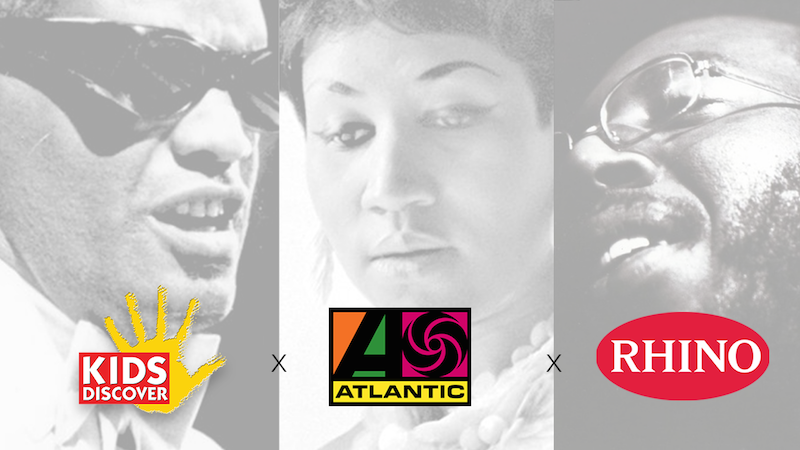
Ray Charles, Aretha Franklin, and Curtis Mayfield
Educational publishers need to consider the voices they’re highlighting as well as the communities they serve. 

By Ted Levine

During the rising social unrest of last spring and summer, Kid Discover felt pressure, as a social studies publisher, to make a statement. Many companies and organizations were speaking out, and were doing so in a hurry. In our opinion, this was not a moment to rush. Instead, we chose to pause and reflect. Obviously, we stand for social and racial justice, but we felt this was an important moment in American history, and we didn’t want to make a statement until we defined what it would mean as a company to deliver on it.

We spent weeks reviewing and assessing our online library, and it was clear that we were underrepresenting historical figures of color. We took time to reflect on what we could do to share the stories and impact of Black history and culture. We also discovered just how light we were on arts and music history, both enormous parts of American culture.

In July, we released a five-part pledge, two tenets of which were to increase the number of stories we tell about Black figures in American history and to collaborate with organizations that share this commitment.

In the past, we have created free materials for Black History Month, but this year, guided by the pledge, we sought out a collaboration with Atlantic Records, because they have such a rich history of representing Black artists and promoting music genres like soul, funk, and early rock and roll. Atlantic, along with their legacy roster Rhino Records, was really excited about the idea of creating units about pioneering artists Ray Charles, Aretha Franklin, and Curtis Mayfield that would incorporate music and album art.

We’re offering these units for free during Black History Month, with the goal to provide as many students and early learners as possible the opportunity to learn about and celebrate these three groundbreaking artists—and to get some feedback from teachers who have used these units.

Traditionally, a lot of material that is covered throughout Black History Month has centered on the Civil Rights Movement, and for good reason. However, I think we as educational publishers need to begin branching out from that. Of course it’s incredibly important to teach the heroes of the movement and recognize its tremendous influence in changing the direction of the country, but it’s also time to use that foundation to explore Black Americans’ impact on American history and culture in other ways, especially those figures who are underrepresented in the history books.

In addition to creating new units focusing on Black individuals, we’ve found a way to help students adopt the lens of social justice throughout our library. We’ve launched what we call “reflection pieces.” They’re small modules scattered throughout our library, in units about the Constitution or Thomas Jefferson. They ask questions that are a little bit tougher than the traditional questioning we’ve had in our library. It creates a space for the students to pause, to reflect deeply about that subject, and try to look at different sides of the matter. We’re writing these for eight- to 14-year-olds, so the challenge for our authors is to make those questions something that can result in a good, productive class discussion at the elementary or middle-school level.

Another change we’re making is increasing the amount of first-person accounts. Let’s go back to our unit on Thomas Jefferson. As president and the main author of the Declaration of Independence, he was an important figure in American history—but was also an active slave owner. So we wrote a new topic about the Hemingses, the slave family that worked for Jefferson, and included quotes from some modern-day descendants of the Hemingses. As we re-examine our content, wherever we can, we’re using first-hand accounts, incorporating excerpts from speeches, so that it’s not just about us doing the writing.

Like all education companies, though, we feel have a deep obligation to go beyond creating a product. We have to make sure our material gets to the kids who need it most. The final part of our pledge is to develop an annual scholarship program that grants free access to Kids Discover Online for individuals in socioeconomically challenged communities who would otherwise not be able to afford access. We’ve talked with a number of principals and districts throughout the country to develop criteria to qualify for the scholarships at the school level. As we did with the pledge, we’re taking our time with the scholarship, so that when we launch it, we can be fair and accommodating to the communities we’re serving.

We’re not trying to do everything all at once. Instead, we’re taking steps and looking back to the pledge on a regular basis, using it as a framework to guide future content development and to keep us accountable. It’s something that I’d recommend to other educational publishers. Have a clear set of principles that you can point to that will keep you accountable and will keep you moving in the direction of social and racial justice. If you’ve come out and said that’s what you stand for and you’re not taking action, what have you actually done? For us, it’s not about making a statement or creating a pledge. It’s about doing everything we can to make history speak for itself.

Ted Levine is the president and CEO of Kids Discover. He can be reached at [email protected].

The Theory of Attachment: From Bowlby and Beyond

John Bowlby was one of the first psychologists to present ideas about emotional attachments and adult relationships. His research gave birth to the Theory of Attachment—a theory about human relationships that is relevant to this day, especially in counseling and psychology. According to this theory, early attachments formed in childhood affect the types and quality of relationships formed later on in life.

Development of the Attachment Theory

John Bowlby defined attachment as a lasting bond between individuals. Before Bowlby’s research, psychologists believed that attachments are formed based on the caregivers’ ability to meet the basic needs of a child (i.e., food).

Bowlby’s research suggests that all children have an innate need to form connections with their immediate caregivers as a way to survive. A child looks to the person who is close to them. Through this proximity, children can receive comfort and protection and will likely survive.

Caregivers meeting the child’s needs for nurturance and responsiveness are determinants for attachment. Proximity plays an essential role in the formation of attachments. Bowlby observed that when children feel anxious, they seek proximity to their caregiver to feel care and comfort. When a child is close to a caregiver, his or her needs can be met successfully. It is not just food but the emotional connection that a child needs.  

Mary Ainsworth: The Strange Situation

Psychologist Mary Ainsworth added to the Attachment Theory by conducting an experiment called “The Strange Situation.” This experiment revealed different reactions from the children when they were left in a room without their primary caregivers (in this case, their mothers) and reunited afterward.

Ainsworth and her team found that the children’s reactions to being separated from their caregiver and later on being reunited were predicted by the types of attachment each child has with their caregiver. These attachment types were classified into three categories, which will be explained in the next section. A fourth attachment style was added to the research of Main and Solomon.

Types of Attachment

Attachments are formed when primary caregivers respond to a child’s needs. When done consistently, the child gets a sense of security. The first three attachment types are attributed to Ainsworth’s experiment, while the fourth type is the one contributed by Main and Solomon.

To illustrate each attachment style, consider this scenario: a parent takes their child to school. Once the child is with the teacher, the parent starts to walk back to the car. The child starts to react to being separated from the parent. How the child reacts will show their attachment style. Below are examples of what the reactions will look like:

1.      Secure – when the parent says goodbye, the child may feel distressed. However, the child will recover quickly once the parent assures the child that they’ll pick him or her up at the end of the school day. Because the parent has always kept their promise to the child, the child knows that their parent will show up.

2.      Ambivalent-insecure – children with ambivalent-insecure attachment style are quite reluctant and wary of strangers, even if the parent (the person who they trust) is present. When the parent drops a child off at school, the child will likely show distress when the parent starts walking away but will show ambivalent behavior when the parent comes back. This attachment style results from irresponsible parenting—the parents are not completely neglectful but cannot always meet their child’s needs.

3.      Avoidant-insecure – as the name suggests, those who have this type of attachment style avoid their caregivers. They may respond to a caregiver and a stranger with the same level of (or lack of) enthusiasm. When a parent drops off their child, the child may immediately join the class without hesitation. The child will show little to no distress when the parent says goodbye and will also show no enthusiasm when the parent returns. Studies suggest that this may happen when children are punished or ignored when seeking help from caregivers.

4.      Disorganized-insecure – this attachment style is characterized by a mixture of different behaviors. Compared to the other attachment styles mentioned, this one likely results from an unpredictable relationship with the caregiver. When a parent drops their child at school, the child may one day show avoidant behaviors and show distress on other days. There is no clear pattern of behavior of attachment style. 

Harry Harlow and the Rhesus Monkeys

This controversial experiment explored the factors that help form the bond between a child and a caregiver. In the experiment, it was observed that the monkeys went to the wire “parent” for food but spent most of the time with the “parent” with a soft cloth. In moments of distress, the monkeys immediately ran to the cloth parent instead of the wire parent. The results show that bonds are formed and strengthened when the monkeys were comforted and cared for rather than simply being fed.

Stages of Attachment (Schaffer and Emerson)

1.      Pre-attachment stage (0-3 months) – a parent responds to a baby’s needs based on the signal sent: crying, fusing, cooing, etc. There is not apparent attachment style formed at this stage.

2.      Indiscriminate attachment (6 weeks to 7 months) – a child will respond to any caregiver (a parent, a nanny, grandparent) that meets their needs.

3.      Discriminate attachment (7-11 months) – the child will show preference to one caregiver and will show distress when separated from them. This person is likely the one who has been the most consistent when it comes to responding to their needs.

4.      Multiple Attachments (9 months onwards) – the child will form attachments with other people (grandparents, older siblings) while maintaining the bond with the primary caregiver.

Factors that Influence Attachment

–         Opportunity for attachment –to observe attachment patterns, a child must first have an attachment figure (a caregiver). This caregiver, whether it is a biological parent or a close relative, is presumed to be able to meet the child’s needs.

–         Quality of caregiving –when a caregiver meets a child’s needs consistently and immediately, trust between the former and the latter is formed. This trust is the foundation for forming attachments. 

Summary

Attachment styles impact the behavior and relationships that are formed in adulthood. Many published studies even link attachment styles formed in childhood to romantic relationships formed in adulthood. It is essential to form strong emotional bonds starting from infancy. In most cases, the primary caregiver is the mother; however, this may not be the case for every child. Those whose mothers left or passed away very soon after they are born can form emotional bonds with others, such as their father, aunt, or grandparent.

The Goodness of Fit

When we talk about “goodness of fit” we are essentially talking about temperaments and how it fits with a person’s surroundings. In psychology, temperament refers to differences in behavior. There are 4 types: sanguine, phlegmatic, choleric, and melancholic. A person can have a combination of any of the temperaments, and this affects their behavior.

There are two types of goodness of fit: (1) how a trait interacts with the environment and (2) how it interacts with the people in that environment. In the sections below, I will discuss each one.

A Good Fit with the Environment

We can say that there is a goodness of fit between a child and their environment when the child’s temperament matches with the demands and expectations of the environment. For example, a child who likes routines and schedules may benefit from going to traditional, mainstream schools.

A hyperactive child that is required to sit through online classes for an entire morning may not be a good fit. Kinesthetic learners may find themselves struggling through online classes because they need to be able to move around and benefit most from hands-on learning as opposed to lectures.

A Good Fit with People

The goodness of fit between a child and other people refers to how well a child’s temperament fits with people within his or her environment. It also depends on how likable the child considers these people to be. Keep in mind that adults have different temperaments too, so it is possible for an adult to not match with the temperament of a child.

A parent who is introverted and values privacy might become frustrated with a child who is outgoing and social. Meanwhile, that same parent may show a preference towards a child who enjoys reading and staying in during weekends.

The Benefits of Knowing about Goodness of Fit

Having different temperaments is not a bad thing in itself. However, it is important to know about your and your child’s temperament and the concept of goodness of fit.

As a parent, you can manage your expectations for your child. If you are aware that your child is more introverted and may need more individualized instruction, then choose a school that has a smaller class size with a smaller teacher-student ratio. You can more or less predict that sending that child to a big school might hinder their growth. You can lessen or avoid tension because you will be able to approach situations with more empathy and understanding.

How to Establish A Good Fit

1.      Know your temperament – learn the ins and outs and the ups and downs of your temperament. Consider how your preferences and reactions can affect other people, specifically children.

2.      Know your child’s temperament – learn the ins and outs and the ups and downs of your child’s temperament. Assess how well your child fits with certain situations and environments. Knowing your child’s temperament will help you anticipate their needs. 

3.      Teach your child to adapt – as a parent, you can only do so much to create an environment that caters to your child’s temperament. Teach your child about his or her temperament and how they can adjust to new environments and get along with other people.

Summary Parents, teachers, counselors, social workers, and other professionals who work with children will benefit from knowing about temperaments. Knowing your and other people’s temperament is very helpful in understanding and improving your interactions with them. When it comes to adults interacting with children, it can help adults relate and build connections with them.

How to Teach Kids with Interpersonal Intelligence

When we talk about “intelligence” most of the time, we think about kids and adults who spend a lot of time in lecture halls and libraries quietly studying. Over the years, the concept of intelligence has evolved. 

Developmental psychologist Howard Gardner came up with the concept of multiple intelligences, which challenges the traditional notion of intelligence (IQ) as a singular ability. One of the eight intelligences that Gardner presented is “interpersonal intelligence” – the ability to communicate and interact effectively with others. People who have high interpersonal intelligence are known to be excellent communicators. His theory was explained in his book “Frames of Mind: The Theory of Multiple Intelligences.”

The Gift and Skill of Relating to Others

Having interpersonal intelligence is both a gift and a skill. Some have this natural talent for communicating, but those who do not have a natural talent can learn it. Those who have this gift can pick up on other people’s moods, temperaments, and motivations without the other person saying it.

Gardner presented Anne Sullivan as a good example of a person with high interpersonal intelligence. Anne Sullivan, who had little formal training in special education and was partially blind, taught a young Helen Keller. Helen Keller was a disabled child who lost her sense of sight and hearing at just nine months old. Anne Sullivan gave Helen Keller the tools she needed to overcome her disabilities so she could succeed later on in life. Helen Keller became a lecturer and disability rights activist as an adult.

In this example, you can see how Anne Sullivan was able to use her strengths to help Helen Keller. Despite her limitations, she was able to build a strong lifelong relationship with Helen Keller. In the end, they helped each other realize their full potential and overcome disability.

People with Interpersonal Intelligence

Other well-known people who have high interpersonal intelligence include Mother Teresa, Bill Gates, Eleanor Roosevelt, and Oprah Winfrey. They are known to have the ability to communicate and connect with people—one can say that they are quite influential.

Those who have high interpersonal intelligence might have potential in the field of teaching, counseling, sales, and public speaking. Their common characteristics include being adaptive and having the ability to think out of the box. They can come up with solutions that are creative and innovative.  

It’s a common misconception that all interpersonally intelligent people are outgoing, gregarious social butterflies. However, shy, introverted people can have this ability; after all, it’s all about communicating effectively and forming connections with people. 

Building on the Gift of Interpersonal Intelligence in the Classroom

Interpersonal skills can be taught in the classroom by giving peer-to-peer work, group tasks, and requiring students to deliver presentations. Tasks like these encourage students to work in teams—share ideas, delegate tasks, negotiate which parts of working on.

To help students develop interpersonal intelligence, they can be encouraged to head class meetings, organize small and big group activities, and even become student leaders. Pair a student with high interpersonal intelligence with shy and introverted classmates.

Those who are perceived to be high in interpersonal intelligence can benefit from being allowed to participate in as many activities as their current workload. They can model these skills to their classmates so that others will be encouraged to engage with others. 

Summary It would be great if parents and teachers could identify the type of intelligence that their child possesses. Knowing that will help the adult identify the strengths and areas for improvement of each student. Interpersonal intelligence is a natural ability, but it can also be learned. Incorporate some of the strategies suggested in the previous section to strengthen this ability.