
Uncategorized

Creating a Generation of Independent Thinkers

An author and former educator explains how teachers can change the way students think about math by giving them the time to reason and productively struggle.

By Brittany Goerig

In the past, math education too often focused on having students memorize multiplication tables and rush through “mad minute” exercises that rewarded finding an answer quickly. For today’s students to be successful in math, though, I believe educators need to emphasize that getting the right answer isn’t necessarily the only goal of math class. Students need to be okay with struggling and not see problem-solving as a negative aspect of understanding a math concept.

The goal of this is not just to prepare them for their next math class, but to prepare them for their future careers. We don’t know what the jobs of the future will be, so we’ve got to make sure our kids are thinkers. According to research by UCLA professor James Stigler, placement tests show that 60 percent of U.S. students who enter community colleges are not qualified to take a college mathematics course and many never graduate for that reason. He cites the American teaching method of memorizing and regurgitating answers, rather than deep understanding of mathematical concepts, as part of the problem. Rather than standing in the front of the class and telling kids the rules of math, we want them to figure it out for themselves in their own way, with teacher support to guide their process as needed. Here are three ways educators can help create a generation of independent thinkers.

Fostering Mathematical Reasoning

We all see math a bit differently, but some ways of thinking are more beneficial than others. It’s an educator’s job to present a problem, allow students to strategize, and use tools to model that strategy for them.

According to research done by Pamela Weber Harris, kids begin their journey to mathematical reasoning with counting strategies and perceiving numbers as 1, 2, 3. They eventually start thinking additively. With practice, a student who’s thinking additively about 8 + 7 is thinking 8 and 2 is 10, 5 more is 15. Or 7 and 7 is 14 and 1 more is 15. Rather than counting on their fingers from 8, they see numbers in chunks.

Once students advance, they are taught to think multiplicatively. Multiplicative thinking is seeing numbers in groups rather than chunks. Someone who’s thinking multiplicatively about 6 x 7 is working through 6 x 6 = 36, plus another group of 6 is 42. Or, 7 x 5 = 35, plus another group of 7 is 42. After multiplicative comes proportional thinking and then function reasoning.

What happens sometimes, though, is that kids get stuck in counting, which makes it hard for them to catch on in middle school when they are required to think proportionally. Creating a community of learners starts with valuing everyone’s abilities and voice. We want kids to be comfortable sharing their answers and strategies.

Open Discussion and Brainstorming

The ultimate goal is to have kids see a problem and be able to determine what strategy is best for those numbers. The problem is that the strategy happens in students’ minds and may not be reflected on their paper. Adding math talks to your classroom allows students to see different strategies that their peers are using. It also allows educators to see what paths students are taking and the ones they haven’t quite grasped.

If I threw out a problem like 7 + 8 in my classroom and one my kids explained, “8 + 2 =10, and 5 more is 15,” that gave me one understanding of their strategy. If, on the other hand, I heard a student say, “I started at 8 and went 9, 10, 11, 12, 13, 14, 15,” I had insight into their instinct to avoid the near-double strategy. To hone in on that skill, I would present a number string that illustrated that strategy. After I give them some practice, I would do another math talk to see if they’d made changes to their path.

The idea of holding math talks is to help students gain number sense by watching and hearing their peers’ thought processes visually modeled and explained. Developing insight into the various ways one problem can be solved allows students to see numbers and decide the best solution for themselves. If done right, math talks don’t place pressure on students to get the right answer; they’re about brainstorming the most efficient path to an answer.

Valuing Productive Struggle

While it’s important for students to be able to recall basic math, educators should persist in teaching the deep relationship between numbers. Instead of just memorizing facts, we want students to be able to visualize models and construct strategies. A surface-level understanding of numbers isn’t going cultivate the confidence students need to independently and creatively solve math problems.

Math classrooms are changing by letting students productively struggle. Rather than encouraging them to get the correct answer quickly, educators are giving students the time they need to reason with mathematics. Most of the time, the teacher isn’t teaching strategy directly. The strategy is a natural outcome of the product. After students experience a few number strings, they are able to pick up on the patterns. From there, they can construct the path to reason about the numbers.

We don’t know what future job markets look like, so we have to make sure the future generation is full of thinkers. We can help them prepare by equipping them with the ability to solve problems independently, without someone telling them what to do every step of the way.

Brittany Goerig is a product manager at hand2mind and lead-author and co-creator of Daily Math Fluency. Before that, she was a K–5 mathematics consultant and an elementary and middle school teacher for 17 years.

5 Simple Ways to Boost Your Intelligence

Our brains are extraordinary, and our intelligence is far more fluid than you may have previously realized. We know from neurobiological and psychological research that adults are capable of enhancing and boosting their IQ and intelligence by merely doing a small number of extra things. A theory that bodes well to this notion is the ‘selfish brain’ theory which suggests that our brains take the energy it needs and prioritizes this energy in accordance to how beneficial it will be to you. Essentially, our brains behave selfishly.

The idea that we can enhance our intelligence is highly attractive to those who are consistently improving themselves. So, we have produced a list of 5 ways to boost your intelligence.

1.    Read More

Reading both fiction and non-fiction books can be much fun, but there are considerable benefits to reading in terms of intelligence too. It reduces stress and improves memory and writing skills for the individual who regularly engages in it. Research also shows that over time, reading improves general intelligence and cognitive abilities. It’s a simple yet effective way to make the most of your time.

2.    Get Enough Sleep

Chronic sleep reduction can have detrimental effects on both adults and children, including impacting a child’s school performance. Yet, a study by Meijer and van de Wittenboer showed that having enough sleep can genuinely enhance your achievement motivation and intelligence as a child, which will continue into adulthood. In 2016, Phillip Hunter found that more extended periods of sleep are associated with improved cognitive and social skills as we can reach a deeper stage of sleep. This could, therefore, mean that getting enough sleep would enhance your intelligence.

3.    Listen to Classical Music

There are many positive effects of listening to classical music when you have free time; one of these is that you can improve your general intelligence. The “Mozart Effect” theory suggests that listening to Mozart can increase IQ levels, but due to skeptical research findings, it is labeled controversial. However, countless current research studies show the numerous benefits of listening to classical music that can convert to intelligence, such as increasing memory ability, building social relationships and making you more productive.

4.    Exercise

You’re most likely aware of the health benefits that exercising can have on your body, but in terms of your intelligence, you may not be up to date with the latest research. Exercise is a great way to increase your intelligence because it allows you to be more productive and energetic. How does this increase your intelligence? Scientific research reveals that energy metabolism facilitates synaptic plasticity within the brain neurons.

5.    Eat Brain-Boosting Foods

Surprisingly, the foods you eat every day can have an influence on your intelligence levels and IQ; even the ones you believe are only great for your health. There are many brain-boosting foods available out there and just by implementing them into your normal diet; you may see an increase in cognitive abilities. Matcha has been shown to improve short-term memory and increase brain function, Blueberries are known as one of the best brain foods as it’s an antioxidant which can enhance problem-solving abilities, and Avocado contains fatty acids which correlate with a higher intelligence level in adults.

What did we miss?

How Do Chinese and American Educational Systems Compare

It is not an uncommon belief that Chinese students are smarter than their American counterparts.  Education experts, psychologists, and scientists have hypothesized and studied why Chinese students often outperform American students.  Part of the answer lies in the foundational beliefs about the purpose of education.

Aim of Education

In China, learning aims to accumulate knowledge.  Chinese students are taught from the age of 2-3 years that learning is critical to success, and that discipline and strictness are required in that pursuit.  There is a high focus on memorization and a fundamental understanding of calculations—Chinese students are not even allowed to use calculators.

American education, on the other hand, focuses more on creativity and how the student will use the knowledge in society.  Homework is not just memorizing facts and demonstrating skills, but applying originality to the work in the form of critiquing thoughts and challenging the status quo.

Structure of Education

Chinese students stay with the same two or three teachers all the way through elementary school and into primary school, and the teachers are responsible for groups of 40 or more students.  The Chinese teacher thinks, “How can I help this group the most?”  Homework is assigned every day, with assignments over all of the holidays and breaks, and there is strong pressure to perform well on end of year exams.

In contrast, American teachers are encouraged to focus on individual students, creating plans like Individual Education Plans to structure a subject to a specific student’s learning needs.  The American teacher thinks, “How can I help this student the most?”  Many schools have done away with homework altogether, whether because they think students don’t need the extra practice or because students don’t bother to do it.  End of year exams are often viewed as just another test to pass. 

Societal Expectations

In Chinese society, there is a high value on learning and education for future success.  Beginning in preschool, Chinese parents communicate early that their children are expected to succeed in school, which has a very competitive environment.  Students do not typically have time for extra-curricular activities as the school day runs long and then they must complete homework. 

American parents tend to view education and learning as just another part of their children’s lives.  A majority of American children play sports, learn an instrument and socialize with friends from a young age.  School typically does not begin for the American child until five years, which is usually the first formal school experience.  And the American student does not have to strive in a competitive academic environment until late high school and into college as the American educational system is focused on any achievement, not just high grades. 

There are other significant reasons why Chinese students take education more seriously than American students, but the shift in academic focus and thinking seems unlikely for American educators.  However, American students would be wise to take notice of what Chinese students model and incorporate some of those strategies into their own learning. 

How to Help Teachers Conquer Their Fear of Robots

An education professor explains that, with coaching and student-included PD, educators no longer worry about teaching with (or breaking!) high-tech tools.

By Steve Coxon, PhD

We’ve all sat through meaningless professional development (PD). Whether it’s provided by someone so far removed from the classroom that they can’t relate to the demands today’s teachers face, or just something that could have been handled in an email. We would rather spend productive hours planning engaging projects or reviewing student work instead. At Maryville University, we’ve been using research to create effective, engaging PD that helps teachers implement new technologies and curricula that truly improve student learning. Since then, we’ve traveled to multiple districts replicating this model.

Our School of Education’s Center for Access and Achievement (CA2) conducts frequent PD in STEM, especially for pre-K–12 robotics. We’ve developed two effective models of professional development that work extremely well, both in terms of teacher engagement and learning, and in terms of student achievement. Here are some practical best practices to help any school district implement these two models, which are student-included PD (SIPD) and coaching.

Student-Included Professional Development (SIPD)

In our CREST-M (Children using Robotics for Engineering, Science, Technology, and Math) project, focused on creating STEM curricula using LEGO WeDo 2.0 robotics, we’ve had dozens of teachers and hundreds of students learn together. In the SIPD model, teachers work in the summers with small groups of students from their districts, going through the math-robotics curricula together, with an expert teacher there to help guide them.

It helps to have one teacher with expertise in robotics and a strong background in math education, along with 4–5 teachers learning the material and about 20 students split into small groups. The questions and challenges that arise are far easier to work out the first time with a small group than a large one. In this way, teachers learn the curriculum especially well and are completely ready to take their full classes through it during the school year. School administrators report very high implementation rates and teacher confidence. Pre- and post-assessment of the students also demonstrates very strong improvement in math.

Using Expert Coaches In Class

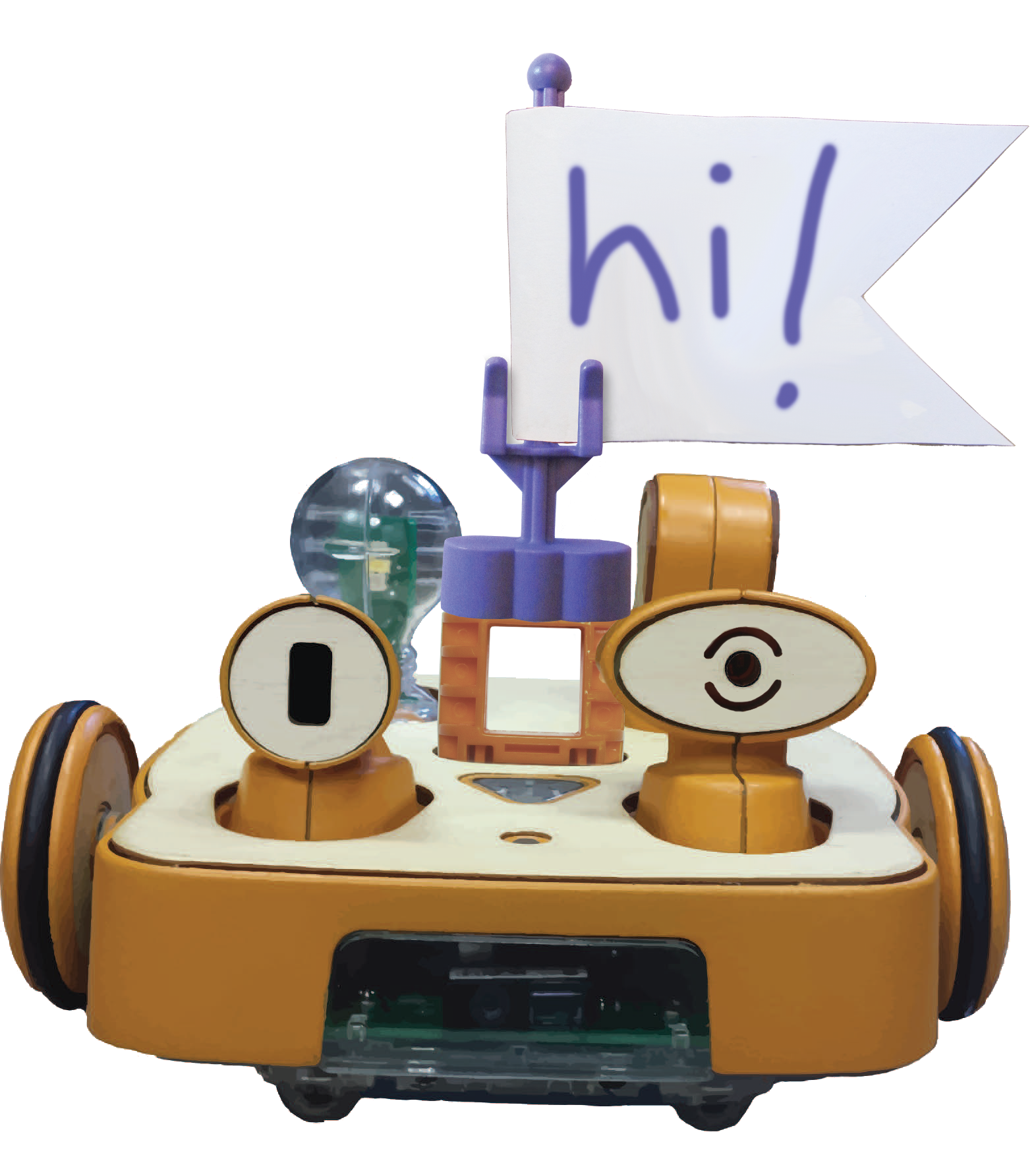
We’ve found individual coaching to be another very strong model of PD. For example, this year we worked with a diverse, high-poverty early childhood center on a grant-funded STEM project. We started with an hour of professional development just with teachers on the KIBO Robot at the onset of the school year. The real learning came later in the fall, when we made ourselves available for in-class coaching.

While teachers had attended PD on using robotics, having expert coaches available in their classrooms while they implemented the robotics platform for the first time was invaluable to their success. Our experts didn’t teach the kids, but were available to provide guidance when the teachers were implementing the robots.

Alleviating Common Fears

SIPD and coaching also have shown to help teachers overcome common fears associated with teaching new material and introducing new technology. Many teachers are afraid kids will break the robots. In some cases, it’s so bad that the teachers lock the robots in a closet and never let the kids use them!

I encourage schools to purchase robots and robotic kits designed for the classroom. Educational kits are often more heavy-duty and can withstand accidents without breaking. Both SIPD and coaching, provide opportunities for kids to accidently drop a robot and for teachers to see that sort of accident won’t derail the lesson or render the robot useless.

Teachers are also often afraid that they don’t know everything for which the robot can be programmed. I’ve been working with robotics for 15 years, and I don’t know all of the things they can do, either. It’s helpful for teachers to think about programming the robots less like solving an equation and more like creative writing. I can find the answer to almost any equation, but I never know what a student will dream of writing. There are unlimited possibilities.

PD doesn’t have to be a pain. SIPD and coaching can improve teacher quality and student learning. Teachers have no need to fear robotics, and these methods help them see a pathway to success.

Steve Coxon, PhD, is an associate professor and executive director for the Center for Access and Achievement at Maryville University.

Children in Foster Care Deserve Better Educational Outcomes

Tiffany Haddish, the breakout comedic star of 2018, often uses the pain and abuse that she endured as a result of being in and out of the foster care system as material for her comedy routines. She found a way to use comedy as a form of therapy, and her willingness to be open and authentic has gained her a legion of devoted fans. However, for the estimated 518,00 American children in foster care, life after aging out of the system is not a fairy tale.

For a multitude of reasons, foster care children have been removed from the homes of their birth parents or legal guardians and placed under state care. The best-case scenario involves these children being returned to their birth families or placed up for adoption. The worst-case scenario sees these children placed in long-term foster care.

Unfortunately, foster care children are more likely than the general public to become homeless, incarcerated, or dependent on state services. Many foster care children experience a horrific transition from foster care into the real world, kicked out once they become of legal age and expected to figure the rest out. Many of them have poor educational backgrounds, and when juxtaposed with their peers, they have lower standardized test scores and higher absenteeism, tardiness, truancy, and dropout rates.

Ask yourself, if you spent your formative years in the foster care system and were expected to transition to the real world without life skills, a place to stay, or any support or guidance, how would you fare? Many of us wouldn’t last one week on our own, and probably would end up in a homeless shelter or incarcerated.

What should be the government’s response?

Government agencies and lawmakers should revamp the foster care system to provide top-notch services, educational opportunities, and support to foster care children while they are in the system. We must understand that the most important thing that they need is better learning outcomes, which will help them make a smoother transition once they are in the real world.

However, policymakers need to be aware of and mitigate the issues that foster care children commonly experience in the education and child welfare systems. These problems include a lack of stability, consistently low expectations, lack of adult advocacy, poor life-skills training, lack of educator responsiveness to their special education needs, and cultural insensitivities. We need to fully understand these issues to develop reforms that improve educational opportunities for children in foster care.

I am also of the opinion that former foster care children should receive full-scholarships to the college of their choice. These children have been through so much, the least that we could do is help them get a head start on life by paying for college. They must work hard to gain admission and show adequate progress, but as long as they do that, we should foot the bill.

Also, they should receive a stipend that allows them to pay for housing, clothing, food, and other essentials while they are attending college. Sure, this could be expensive, but you know what else is expensive; incarcerating prisoners and funding the welfare system. I would rather empower former foster care children to transcend their situation and become productive members of society, as opposed to becoming prisoners or individual’s dependent on the welfare system.

Conclusion

Foster care children are given a tough lot in life. They are more likely to experience poor life outcomes than the general population. Adults who were placed in foster care as children are more likely than the rest of the population to be homeless, unemployed, and dependent on welfare. They are also more likely to be incarcerated, to abuse drugs and alcohol, and to suffer from physical or mental health issues. 

None of this is their fault, and we owe to them to help them grow up to be successful, well-adjusted adults. Policymakers and education advocates should be working feverishly to improve education opportunities for foster care children by expanding their education options. This will ensure that foster care children across the U.S. receive a high-quality education that prepares them for a successful transition into adulthood.

The 2019 Tech Edvocate Awards Will Start Accepting Nominations on May 1, 2019

The education market is currently worth around $5 trillion globally, and it is forecasted that edtech investment alone will reach $252 billion by the year 2020. This growing investment into edtech start-ups has created some exciting changes in the world of education. Naturally, with increasing capital, the number of edtech companies, products, and thought leaders is also growing.

In that spirit of change and innovation, The Edvocate and The Tech Edvocate are pleased to announce The 3rd annual Tech Edvocate Awards for P-20 education. The Tech Edvocate Awards honors the best that edtech has to offer by recognizing outstanding companies, people, products, etc. To find out how to nominate a company, product or person for a 2019 Tech Edvocate Award, along with other important information, please click here. We will begin accepting nominations on May 1, 2019.

How Comparing Grades Can Stunt Your Intellectual Development

We all know the feeling, you work hard to prepare for an exam, craft the perfect essay, or develop the perfect project, and now its time to receive your grade. Back in my day, we had to wait until the teacher physically provided you with your score, but now, students in K-12 and college can simply sign into their school’s LMS, and view their grade report. You are ecstatic when you find out that you received 85%, a good solid B. You let out a sigh of relief, but your happiness and sense of pride turn into envy when you find out that your friend received 95%, an A, and a full 10% points higher than yours.

To add salt to the wound, it took you weeks of writing to complete the essay and your friend who barely spent 4 hours on theirs received a 95%. After staying off the social scene, making frequent trips to your professor’s office, and going through 5 rounds of editing, you received a lesser grade than someone who wrote their paper the night before, after spending most of the night drinking and partying with friends. The crushing epiphany that someone completed something in 4 hours, that took you 50 hours is a shock to one’s ego. You worked hard and tried your best, but still, someone else did better.

It is hard for the ego to reconcile that this could happen. You start asking yourself questions like “What does my friend have that I don’t have?” Or make defeatist statements like “Its just not fair.” Unfortunately, all of these thoughts are counterproductive and do nothing to help you grow intellectually. As a matter of fact, I think that comparing ourselves with others academically, can stunt our intellectual growth. By focusing on and fixating on things that are outside of our control, we spend valuable time on the wrong thing.

How to respond when someone else gets a much better grade

Instead of obsessing over someone else’s gifts, we should be focusing on our own, and working on getting better in our areas of weakness. Instead of seeing your friend, who is a gifted writer as a competitor or as a threat, you should see them as an ally. Ask them to teach you their process for writing the perfect essay, and I am sure they will oblige. Yes, you spent hours being tutored by your professor, but sometimes our peers are better suited for that task, as they are able to explain things in a language that we understand. Not to undermine the importance of professors or teachers, as they are an important resource as well.

Focus on your gifts, and that friend who is a gifted writer will be asking you for help with statistics or public speaking. Teach me something, and I will teach you something; that’s the way friendship works, and that’s how the smartest people in the world get smarter. If you take my advice, you will see your intellectual development flourish, instead of being stunted by being obsessed with counterproductive things.

Also, don’t put so much stock in grades, as they do not define you. Only you can do that. Just keep working hard, in a disciplined and focused manner, and I promise that good things will happen.

The Neuroscience of Early Childhood Development

When we talk about early childhood development, especially best practices, we rarely factor in the importance of neuroscience. Before I begin my discussion, I feel that it is necessary to define what neuroscience is.

Neuroscience is the study of how the human nervous system develops and functions. The subcategories of computational, cognitive, cultural, linguistic and developmental neuroscience focus on different pathways in learning. We can derive a greater understanding of how our minds develop, what influences higher education functions, and how to better retain information from the science behind learning from neuroscience.

Neuroscience should be used as a way to understand key issues in early childhood development and education. I am not saying that it should be the main way to accomplish this, but it adds another approach to an essential field of study.

To accurately respond to the needs of young children and to help them grow in developmentally appropriate ways, we have to take a multi-view approach. We are currently seeing more early childhood practitioners and experts discuss the importance of brain science, and the need for early childhood educators to have a deep understanding of neuroscience, and how the human mind works.

By teaching preservice and graduate level teachers about brain science and early brain development, we can ensure that preschool students are instructed by professionals that are qualified to support all facets of early childhood development.

What educators and parents should understand about neuroscience

At the very least, early childhood educators and parents should understand four basic things about brain development in early childhood:

  • Toxic stress and the stress hormone cortisol exert a powerful effect on brain development – when infants and children are continuously exposed to traumatic and stressful situations or when their emotional and attachment needs go unmet, they develop a hyper-reactive stress response. This destroys the developing brain’s architecture and has harmful effects on a child’s ability to learn.
  • The relationships amongst, cognition, brain architecture and learning are tied together– understanding the importance of emotional health as an essential foundation for cognition and learning ability can help teachers develop an environment that is conducive to learning.
  • Brain plasticity is more pronounced in early childhood – this means that the brain is hypersensitive to traumatic and environmental experiences, with neural connections and activations growing and being strengthened based on these experiences (positive or negative).
  • The most profound synaptic activity occurs during the initial five years of life – this gives the young child the ability to acquire enormous behavioral, social, linguistic, environmental, and cultural information. This makes the role of parents, and early years practitioners essential in managing and encouraging healthy brain development.

What did we miss? What additional information should parents and early childhood practitioners know about neuroscience?

Education Customized to Your Genome is Coming, But I Don’t Know How I Feel About It

As an avid reader, I pride myself on staying abreast of the latest advances in every human endeavor, especially education. So when I read a magazine article that discussed how researchers are using genetic data from students to personalize their education, my curiosity was piqued. However, at the same time, the ethical implications of using eugenics in the field of education mortified me. As an African American man, I have studied the insulting eugenic research that was used to back up claims that black people were just not as intelligent as the other races.

Before I totally dismissed the idea, I decided to read the article in its entirety before making assumptions. It seems that researchers are attempting to personalize learning by giving schools the ability to create individualized curriculum programs based on a student’s DNA profile.

I came to the conclusion that just like its predecessors, this new wave of eugenics has the potential to perpetuate reckless and harmful thoughts and conclusions about the genetic heritability of intelligence. Even if the scientist’s intentions are pure, we need to discuss how educational policy and law should regulate this new era of genetic forecasting.

What will we see in the next decade?

Over the last decade, studies in human genomics have flourished. The subfield of educational genomics attempts to isolate and identify the genetic factors that determine individual differences in achievement, motivation, behavior, and intelligence. As we alluded to earlier, trying to link genetics and intelligence is a dicey subject.

Recent genetic studies have found correlations between intelligence test scores and certain genes, with more than 500 genes having a purported influence on intelligence test scores. Historically, similar types of studies have been used to suggest that certain races are genetically predisposed to be intellectually superior, while others are genetically predisposed to be intellectually inferior. Thankfully, these studies were debunked and proven to be untrue, but still, their legacy lives on, with many people believing them to be sound.

Recent genetic studies of educational genomics do not attempt to prove there is a specific gene or a genetic factor that influences learning ability, or that their research can explain the complexity of the learning process. Also, isolating someone’s genotype, which is a person’s complete genetic makeup, and correlating it to intelligence, learning or student outcomes is too complex for education researchers to unravel.

Education genomics today tries to find patterns in the genetic data of millions of people in the hopes that they can use this information to explain how genetics influence our cognitions, behaviors, motivation, etc.

Where educational genomics has a chance to do some good

Proponents of educational genomics argue that there is nothing nefarious about their research and that it can be used to personalize the teaching and learning process to respond to each student’s unique needs. I admit that this is an intriguing concept, and if it is genuine, then I could see where it could do some good.

The idea of “precision education” has started to disseminate itself among researchers who engage with education, psychology, neuroscience, and genomics. In turn, they are using this information to fully understand how the human brain learns new ideas and skills. This concept of precision education is part of the growing field of brain science, which seeks to develop a nuanced understanding of the teaching and learning process by using studying and researching the human mind, brain, and genome.

I am excited to see how education genomics will be used to usher in a new phase of evidence-based policies and practices in education. One new development in educational genomics that I find particularly interesting is “genome-wide polygenic scoring” (GPS). A polygenic score is derived by isolating and analyzing a large number of genetic markers in an attempt to predict a specific psychological or behavioral trait.

Thanks to the increased computer processing power of the modern world, it may soon become possible to predict academic achievement in schools. This turning point in education genomics is still in its infancy, but it shows lots of promise, although it may be decades before this method is perfected. I have read studies that claim to have perfected this ability, but the data tells me otherwise.

The collateral damage of educational genomics

Whenever a field of inquiry grows at a rate that outpaces regulations, laws, and policies, there is a chance for gross abuses. On the one hand, the field could help to personalize and differentiate instruction, but it could also lead us to perpetuate a trope and narrative that intelligence is fixed and solely determined by your genetics. This could lead to a dystopian education system where students are separated based on their genetic profiles, which will preclude them from having their actual abilities and efforts supported or recognized.

The scenario reminds me of the movie Gattaca, starring Ethan Hawke and Uma Thurman. The film presents a dystopian look inside of a future society dominated and driven by eugenics, where children are created through genetic selection to ensure they have the best hereditary traits of both parents. The film’s lead character is Vincent Freemen, played by Hawke, who was conceived the old fashioned way and fought to overcome genetic discrimination to fulfill his dream of going into space. The film espouses concern over the field of eugenics and the possible consequences that scientific advances can have on our society.

Also, the idea of education genomics is not without its issues. There is a reason to believe that intelligence tests based on genetics may be woefully flawed. Also, the predictive power of methods such as GPS is extremely weak. And when dubious research creates a public frenzy, shady companies come out of the woodworks trying to make a quick buck.

This is certainly occurring in the field of educational genomics and eugenics, as commercial companies are already selling DNA tests that misleadingly promise to predict the future intelligence of the owner of the assessed genome. This type of testing may take our attention away from the things that truly shape intelligence, including nurturance, school and teacher quality, diet, childhood trauma, stress, etc.  

A more pressing concern arises as parents might want to use this information to predict a child’s future academic and physical abilities, and “artificially select future generations.” This is already being done by parents worldwide but on a small scale. Eugenic researchers seem to be obsessed with finding the genetic code for high IQ.

This creates a scenario were selective-intelligence could be used by world leaders to create a society of “Übermensch” (supermen). This term was coined by philosopher Friedrich Nietzsche, in his 1883 book Thus Spoke Zarathustra. Hitler, in turn, used the concept of the “Übermensch” (Superman) to describe his idea of a biologically superior Aryan or Germanic master race; a racial version of Nietzsche’s Übermensch became the central philosophical basis for National Socialist ideas.

Conclusion

The reality of it all is that the concept of using educational genomics to personalize education is still in its infancy. We are right to remember the dark past of educational genomics and eugenics, as those who do not learn from the past are destined to repeat it. There is a need for regulated, empirical research to be performed on the field’s viability as well as the potential grim consequences of its work.

We need to ensure that we understand how the genetic datafication of student potential will affect how students are treated and influence their self-esteem and motivation. If we are not careful, educational genomics could become a repeat of the Rosenthal-Jacobs Study, that ended in students performing according to self-fulfilling prophecies (Pygmalion Effect), or the expectations of their teachers.

Do Incarcerated Youth Have Equal Access to Quality Education?

My common sense response is, of course, they don’t. I don’t need a research study or special report to tell me that. If you do, you should read Alexander Brand’s article, which takes a data-based approach to this issue. As for me and this piece, I want to provide a more experiential and observational approach to answering this question.

In areas all over the U.S. and the world, it becomes necessary to detain juveniles that engage in criminal or delinquent behaviors. This can range from theft to aggravated assault, to more heinous crimes like rape and murder. Although restorative justice can be used for some of the less heinous and nonviolent crimes, more serious ones may require incarceration and rehabilitation.

The problem with this approach is that youth detention centers and prisons all over the world do a very poor job of rehabilitating young offenders. Their stay in jail becomes more akin to crime school, where their conditions, treatment, and influences turn them into hardened criminals, who learn new antisocial behaviors and criminal strategies while they are separated from the rest of society.

They never receive the rehabilitation that they were promised and their access to quality education is nonexistent. I have observed and studied the youth detention programs of several states, such as California’s YA, and what I discovered was sickening. These young people live in atrocious conditions and are subjected to unbelievable acts of cruelty.

Because of this, I find the idea of incarcerated youth having access to quality education to be laughable. Many of the young men and women who are incarcerated in youth detention centers and prisons came from poverty-stricken neighborhoods and attended schools that were staffed by teachers and education administrators who were not highly capable or qualified. Many of them treated teaching as if it were a babysitting job that allowed them to just ride the clock, without doing any real work. The students that they failed end up being passengers in the school to prison pipeline.

At the end of the day, these young men were originally failed by society and the public schools that they attended. Once they become incarcerated, it’s the same story all over again. The only difference is that the teachers are of even lower quality. Ask yourself, what highly qualified teacher would choose to work in a youth detention center or prison, instead of the best schools in the world?

Teaching at one of these facilities usually means instructing your students from behind a clear partition of some kind, to protect your safety. At the end of the day, these students are given subpar teachers, who have found it hard to secure employment in a traditional educational setting. Youth prison education programs are not held to high standards, and no one loses their jobs if the students fail to show growth. Prison officials are just happy to satisfy federal and state requirements, and at the end of the day, these children are failed by the system again.

If they are released as adults, they leave without a quality education; the very thing that could have made a positive impact in their lives and placed them on the straight and narrow path. Without a high school diploma or GED, and sometimes on their own, they will find it difficult to find gainful employment. If they do, they will soon find out that the job will not sustain them financially. In response, they end up reoffending and headed back to prison. A life of recidivism and incarceration awaits them, and the prison gets another slave.

Maybe the system failed these young men by not giving them access to quality education or rehabilitation. Or maybe we are all naïve, and the system is working as it is intended to work.
