Uncategorized

What to Expect: Age 18

By the tender age of eighteen, your teenager is finally ready to spread their wings into adulthood. You’ve spent seventeen years monitoring their growth, helping them to blossom into this stage. What can you expect from this final year with your child?

Parents may wonder whether their children are truly ready for the next stage of their lives. It can be difficult to tell whether your teen is truly ready without comparing them to their peers. You can check these developmental milestones to see how your child may do in the coming years.

Social and Emotional Development

At age eighteen, your child’s transition into independence is likely finished. A child this age believes they have reached full maturity, and they expect to be treated that way. Because they are legally an adult, your child may expect more freedoms and be able to handle more responsibilities.

They may still value their relationship with you as a parent, but they are more likely to rely on peers. Relationships continue to grow in importance and become more mature over the course of this year. Intense romantic relationships may evolve during this time.

With all of the changes in their lives, you may want to pay close attention to your child’s mood. The increased stress of planning for their future may bring about a depressed mood or severe anxiety. Monitor them closely during this time so you can bring your concerns to them or to their doctor.

Cognitive Development

Children will be more capable of making long-term plans for their future. Without help from their parents, they should be able to set their own goals and make a roadmap for how to achieve them.

Because their brains are still developing, it isn’t uncommon to see your eighteen-year-old continue to further their reasoning abilities. Abstract thinking is still a skill that many have yet to master. However, they are able to see things in shades of “gray” instead of simply in concrete terms.

Physical Development

Physical changes have mostly been completed at this point. Your child is likely at their full adult height. Many other characteristics are done developing as well, including breast development.  By this age, your child should look and act like a fully developed adult.

As a parent, it is extremely exciting and nerve-wracking to see your child spread their wings into full adulthood. You want to celebrate their achievements as well as prepare them for the world ahead. Take time to ensure that your child is meeting these final developmental milestones consistent with their age. You’ll be grateful that you had these years, even though your child may no longer need you quite as much.

What to Expect: Age 17

Is your teenager rapidly approaching the days of adulthood? Their teenage years and adolescence are quickly coming to a close by their seventeenth year. Parents may begin to feel excited about their child’s future and upset that childhood is officially over. You may even begin to wonder whether your child is really ready for the years ahead.

By this age, children are almost fully developed but they still need guidance. You can check to make sure that your child is reaching all of the essential milestones using these general guidelines. Keep in mind that the pace will be different for each child. Don’t be alarmed if you feel your son or daughter is a little behind in some areas. They’re bound to catch up sooner or later.

Physical Development

Your child has likely seen many of the physical changes that their bodies are going to undergo. They may continue to grow slightly taller this year, growing even into their early twenties. However, many changes are likely already complete, including menstruation in girls and voice changes in boys.

Because of their rapid physical development, many seventeen-year-olds will have an increased interest in sex. Their relationships will continue to grow deeper and most children are very aware of their personal sexual orientation.

This is a key time for parents to begin having open conversations with their teens about important topics if they haven’t already. You should discuss things like birth control, safe sex, and sexually transmitted diseases. All of these essential conversations can help them to make better decisions when the time comes.

Emotional and Social Development

Your seventeen-year-old is continuing to explore the importance of their friendships and romantic relationships. Their friends will often take precedence over their relationships with family members, which is completely normal for this stage of development. They will continue to grow closer to their friends and care for them very deeply.

Parents can enjoy relative peace in their household. While your child is extremely interested in establishing their own independence, they have learned how to communicate more effectively with you. This should be a time of calm for everyone in the home.

It’s possible that you may begin to see the signs of clinical depression in your child around this age. Parents should take note of important signs of depression, including a loss of interest in preferred activities, fatigue, and loss of appetite. If any of these symptoms persist for more than two weeks, contact your child’s pediatrician regarding your concerns.

Cognitive Development

You may have already noticed it, but your child is very interested in their life past high school. Many will continue to show more concern about their future academic track or career path. They may be able to reason why they are interested in a particular field or make more concrete plans for their goals. Parents should notice children moving from a listless pattern of thought to more concrete actions.

Parents should take in every moment of these last few years before their teen leaves home. They may seem fully independent, but teens ultimately still need the supervision of their parents.

Don’t forget that your child will be making important life decisions this year. They could use your input and guidance, so be sure to make time to listen to them with empathy. Setting aside time to spend talking with your child will be essential. Not to mention, you will treasure these moments in the years ahead.

What to Expect: Age 16

Many parents associate the sweet age of sixteen with driver’s licenses, freedoms, and increased independence. Children look forward to this age with eager anticipation of the moment they will finally be able to have their own set of wheels and more autonomy. Beyond these standard and important milestones, many parents aren’t sure what to expect from their child’s sixteenth year.

Chances are that your child is no longer as open as they were years ago. You may not know exactly who their friends are or what their goals are for the future. In fact, you may not know much of anything about your child’s life this year.

Parents can take a look at these important guidelines to help determine if their child’s growth and development is socially appropriate. This can help you to make better parenting decisions and relate to your teen with greater empathy.

Social and Emotional Development

Fortunately for parents, much of the conflict at home begins to taper off by the age of sixteen. Your child is continuing to develop their independence in tangible ways, but they spend less time fighting over freedom with parents. It isn’t uncommon to see a sixteen-year-old who is more interested in spending time with friends than family though.

Friendships are able to reach new levels of intimacy this year as your teen learns to share more personal details. They may also develop more romantic relationships with their peers than they did in earlier years. Sexuality really becomes alive for many children this age, so parents should be sure to have open conversations about safe sex with their teens.

Parents should know to keep a good pulse on their child’s emotions during this year. If your child seems extremely sad or frequently depressed, discuss it with your pediatrician. Their mood problems could contribute to unsafe decisions related to drugs, drinking, and sex if left unchecked.

Cognitive Development

Your child is likely to spend far more time thinking about the future at this age. They may start to make specific plans for advanced schooling or careers after school. In preparation for these major life events, you should start to see better work habits that are more consistent.

This is also the time that many children begin to see things as less black and white. Abstract thinking plays a key role in their social interactions and their future decisions. They can understand more subtle nuances when it comes to morality. Unfortunately, they still have a difficult time understanding that their personal opinion could be incorrect.

Physical Development

Puberty is probably coming to a close in the next couple of years, so you may start to see physical changes taper off this year. Sixteen-year-olds are likely to look much older than they are as a result of their rapid changes.

One of the most significant things to watch for this year is your teenager’s sleep habits. Experts claim that teenagers are more likely to sleep in for hours on end. It’s advised that parents allow this slothful habit to continue in order to help further your child’s development. Besides, your teen may even have a better attitude after a good night’s sleep.

You may be tempted to hold your child close this year, as they near early adulthood. However, it’s important that parents take this time to teach their children how to manage independence. Keep the lines of communication wide open this year so your child can ask questions and receive input about important life decisions. You’ll be grateful to spend these last few years in relative peace with your teenager before they spread their wings.

What to Expect: Age 11

Your eleven-year-old is rapidly approaching the dramatic teenage years that many parents have come to dread. However, this is still an age where you can enjoy the last remnants of their childhood days. Many parents often try to skip over these awkward in-between stages with their children, but they are filled with extremely precious moments.

Enjoy all of the emotional and social growth that is sure to take place this year.

It can help parents to adequately prepare if they know what to expect from the year ahead. What kind of changes will your eleven-year-old go through this year? Each child will be unique in their approach to these basic milestones. This guide should give you a basic idea of what changes you can anticipate.

Social and Emotional Development

By eleven years old, many children will have already made the full-fledged leap into their friendships. Independence is something they are willing to fight for, even if they lack the maturity to handle it. Parents and their opinions start to become less important as children navigate the murkier waters of social cliques.

Peer pressure may be a prominent concern this year, so be sure to have plenty of open conversations with your child. You may have to give them clear directions about the difference between right and wrong. Discussing important topics like drinking and drugs can be crucial at this age.

Children who have a difficult time socially may have low self-esteem. This poor self-image can lead to negative decisions and increased susceptibility to peer pressure. Parents can help to combat these issues by encouraging their child and building them up. Quality time is essential to make this difference in your child’s life.

Physical Development

It isn’t uncommon for parents to start seeing the first signs of puberty in their children at this age. You may start to notice outward signs such as breast development, voice changes, oily skin, or body hair growth. All of these are completely normal indicators that your child is likely to undergo a physical transformation in the coming years.

In particular, it is common for your child’s growth spurt to continue at this age. Don’t be surprised to hear your child complain of growing pains or muscle cramps during this time. They may eat larger portions at mealtimes and spend more time asleep than they did previously. Both of these are signs of a growth spurt.

Cognitive Development

Your child may develop a lot more cognitively this year, but much of it is related to their social growth. An eleven-year-old is capable of understanding a friend’s perspective, and they are also able to understand the idea of secrets and privacy. Their ability to see other’s points of view allows them to argue and understand multiple sides of a particular issue.

They may begin to use social media more regularly to gather opinions from their friends and gain information. Parents will need to monitor their use of this platform closely to ensure that their children are practicing good safety habits.

There are a lot of important milestones for parents to look forward to in the coming year. From the physical changes to the increased capacity for social interactions, your child is growing at a stunning rate. Take time to enjoy these last few moments before your child grows even more independent in their teen years.

What to Expect: Age 10

As your child moves into the preteen years, they start growing and changing at a relatively alarming rate. Many of the changes that you’ll see in your ten-year-old are physical this year, though some emotional and social differences will pop up. Children begin to grow increasingly independent, which can leave parents at a loss. What can you truly expect during your child’s tenth year?

Parents can use this general guide to gauge where their child is at compared to peers. Your child will grow at a unique rate this year, so they may be slightly ahead in some milestones and behind on others. Don’t be too alarmed if you find that they don’t meet all of these general guidelines. You can always discuss specific concerns with your child’s pediatrician.

Physical Changes

Many of the changes in your ten-year-old are going to be physical this year. Puberty will hit your child in full force over the next few years, but their bodies begin preparing now. This is often the age where a major growth spurt occurs. Girls tend to grow faster and earlier than boys.

As a direct result of this growth spurt, your child is likely to have an increased appetite and an increased need for sleep. They may also complain of muscle cramps or growing pains at times.

Motor skills will continue to develop and improve over the coming year. Hand-eye coordination is especially important and improves rapidly. Your child may become more proficient at sports as they develop a specific right or left dominance during this year.

Social and Emotional Changes

As you may expect from a preteen, friendships can be almost all-consuming for a child this age. Your child is likely to rely on friends more than family during this time, particularly when it comes to their need for validation. They are very interested in fitting in socially, and their self-esteem often fluctuates quickly.

Parents should take a keen interest in their child’s self-esteem. Many children who have low self-esteem will begin to develop eating issues around this age. They may also be more heavily influenced by their peers, particularly when it comes to making immoral choices.

Cognitive Changes

Your child is slowly becoming more aware of the world around them. They can adjust their perspective in order to understand multiple points of view. This allows them to be more empathetic and compassionate toward others.

Your child is growing at an extremely rapid rate this year in every possible way. Parents can enjoy this time of growth alongside their child, helping them to reach the next level emotionally and cognitively.  This is an especially sensitive time in your child’s development. Be sure to set aside plenty of time to spend with them, so you can experience their growth firsthand.

What Your Child Should Learn in 3rd Grade

By the third grade, your child should have a very firm grasp on many of the skills we consider essential. Reading, writing, and basic math facts should all be memorized as children move on to more complex ideas. This is a year of tremendous learning as your child begins to think critically and come up with abstract ideas.

It will be one of the first times that learning is no longer so concrete for your child.

Children begin to develop more independence at this age. As a result, parents can sometimes become disconnected from the learning process. If you still want to know what your child should be learning, you can take a look at some of these key concepts. The specifics of what a child will learn may vary by state.

Reading and Writing

At this age, most children can read fairly fluently and their vocabularies continue to grow. This is the year that most children learn to be stronger readers. They will learn how to look for context clues and make inferences based on short passages. When finished with a text, they should be able to summarize it and ask questions about the material.

Many teachers also prepare students for future writing assignments. Your child may bring home several diagrams that are designed to assist in organizing key information. These can include Venn diagrams or mapping exercises. In addition, they may be asked to complete some reports, fiction assignments, and personal narratives.

Math

First and second graders tend to focus on addition and subtraction as the primary math skills. In third grade, children will be introduced to the basics of multiplication and division. Third grade will require students to use more memorization and skills than the previous years. They may also begin to work with larger numbers, fractions, and decimals.

Encouraging children to use mental math or paper and pencil to solve problems is a key concept this year. Younger children often use physical objects to come up with solutions. Now, they should be focusing on memorization and applying concepts without these aids.

Other key math concepts include:

  • Telling time to the minute
  • Recognizing and writing patterns
  • Take measurements for volume, weight, length, and temperature
  • Rounding and comparing numbers and fractions

Social Studies

The content for social studies is highly dependent on the school district and state. Common subjects for social studies may cover the basics of the economy, trade, the details of their home state, and different people groups or cultures.

In general, most social studies classes will focus on geography skills like map reading. Your third grader should be fairly proficient at reading a map by the end of the year.

Science

Some teachers may have used simple science projects in the past, but third graders can begin to do more experiments. They may learn how to observe and record data in order to prepare them for future lab reports. Typical topics that a third grader may study include nature and animal habitats, sound, and other aspects of natural science.

By the end of the year, you should expect your child to be fairly proficient in any and all of these areas. Third grade is a time of great learning for your child. As a parent, you can encourage them to explore different areas of interest and support their studies at home.

Set aside some time to investigate some of these concepts with your child, helping them to reinforce their knowledge. You’ll enjoy the quality time with your child, and they will start to realize how fun and important learning truly is.

What Your Child Should Learn in Kindergarten

The first year your child spends in school is a time of great exploration. Learning is often disguised as playtime, which allows your child to experience the fun of being in a classroom. Parents sometimes wonder exactly what things a child should know by the time they leave kindergarten.

When parents know what their children should be learning, they can provide better support to teachers and their students. If you want to know what your child should study and know by the end of kindergarten, this easy list is for you. Check out these key concepts all kindergarteners should be learning.

Reading

Your child may have already had an early start on learning their alphabet. Educational television shows like Sesame Street often allow kids to enter kindergarten with some foundational skills. Regardless of what they knew upon entering kindergarten, your child should further their phonics knowledge this year.

Children should be able to recognize upper and lowercase versions of all letters and identify what sound they make. Parents can help to reinforce these basic concepts at home through fun projects and asking children to identify letters around the house.

By the end of the year, they should also be able to recognize many high-frequency sight words. Common sight words that a child learns in kindergarten include and, the, and in.

Math

Counting is the primary math skill taught in kindergarten. Children will use objects around the classroom to begin visualizing what it means to count. They may use cubes, candy, paper clips, or any other materials to count to one hundred by ones and tens. Advanced students may even begin to learn the basics of addition and subtraction.

Some teachers also introduce the concept of time in kindergarten. They won’t necessarily teach your child how to read an analog clock, but they do help them to understand how time works. Clocks and calendars are common classroom objects.

Science

Your kindergartner may not be ready to dive into a science experiment just yet. Instead, a science class tends to focus on giving children space ask questions. They learn about their senses, the weather, and their bodies. Kindergarten science allows children to explore the world around them to a greater degree, with very little specific focus.

Social Studies

In social studies, your child isn’t going to be learning much about history. Teachers are likely to focus on helping your child interact with others, including memorizing important personal information. As your child’s grasp of personal concepts expands, they take a look at important community members. They will learn about common professions including firefighters, police officers, and doctors.

Children also start to learn about rules and the importance of following them. This may prompt many statements about what is “fair” when playing with their classmates. These social interactions are a key component to a successful kindergarten year.

Kindergarten is an essential time to help children learn and understand the basics of the world around them. They will start to read, count, ask questions, and even understand their communities better.

Parents can enjoy this time of rapid growth and learning by becoming involved in their child’s studies. Focus on making learning fun this year instead of drilling children on math facts. Take the time to encourage your child to learn and explore their interests even deeper. Simple actions like these can help to set them up for future academic success.


What Your Child Should Learn in 4th Grade

By fourth grade, your child’s elementary school years are quickly coming to a close. They should have learned a tremendous amount over the past four years. The fourth-grade year will bring about even more new skills and concepts. Parents should be certain to stay on top of these concepts to help reinforce their child’s education.

If you have questions about what your child is learning in fourth grade, this list of basic topics should help. Keep in mind that the specific standards may vary by state. This should still give you a general idea of what to expect from a child in this age group.

Reading and Writing

Critical thinking skills are starting to apply to your child’s basic English assignments this year. They will be asked to make more connections about the information in a given passage, including topics like themes, ideas, and identifying main events. They should be able to understand multiple points of view, use illustrations to enhance their understanding, and use context clues.

Writing becomes more detailed during the fourth grade. Teachers will start expecting your child to write structured pieces using an introduction and conclusion. Your child may have assignments that include non-fiction topics in addition to the opinion pieces and narratives from third grade. During this time, you may see your child doing more detailed projects that include:

  • Researching and organizing information for presentations
  • Taking notes
  • Editing writing drafts
  • Typing accurately and quickly

Math

Much like reading and writing, math classes expect children to take another step into the harder material. You often see children move from concrete ideas like positive numbers into more abstract territory with negative numbers. Your child should have a very good grasp on basic multiplication and division to prepare them for more difficult problems.

Graphs are an important part of the fourth-grade curriculum. Children should be able to read them, interpret them, compare the data, and even create their own graphs.

Fractions are also considered an important topic for fourth-grade students. When it comes to fractions, you can expect your child to learn how to:

  • Add and subtract
  • Reduce
  • Convert fractions to decimals
  • Understand improper fractions and mixed numbers

Science

Your child is going to start with the beginning steps of the scientific method during the fourth grade. When they perform lab experiments, teachers will often ask them for a hypothesis or prediction about the outcome. Areas of study will vary, but they often cover geology, natural science, astronomy, or the human body.

Social Studies

Social studies topics begin to shift from understanding the world around them into more historical topics this year. They will usually learn major events in their state history, including how to place them on a timeline. Your child may begin to understand how the government works and how laws are enforced.

Fourth-graders have plenty of opportunities to explore their own interests this year. They will be asked to do far more difficult work than they did previously. Parents may find that their children need more academic support this year, even though their children are largely independent.

Using this list of guidelines, parents can ensure that their children are learning and mastering key concepts before they move on. Understanding these basic steps is essential to having a successful experience in middle school in the years ahead.

Are Standards-Based Teaching Strategies Killing Creativity? Yes

Guest Post By Chad Malcolm

As the Fall local election time has passed, the elections for school board were more surprising than any others. While driving around constituents read sign after sign about how Common Core State Standards (CCSS) are killing creativity in children. It is amazing as an educator that voters are swayed by signs without understanding the behind the scenes actions.

In the state of Ohio, everyone is running for school board claiming common core is the sole reason the schools are not achieving as parents would like. The toughest part of this debate is Ohio decided over a year ago to drop common core and rewrite Ohio Department of Education standards to move forward. Then to take it a step further, the CCSS are just the guides to get children to mastery levels, yet parents are being lead to believe that these standards are why teachers are teaching content the way they are. Let us look at what CCSS compared to Ohio Model Curriculum:


CCSS Ohio Model Curriculum
CCSS.Math.Content.2.NBT.A.2
Count within 1000; skip-count by 5s, 10s, and 100s.
2.NBT.2

Count forward and backward within 1,000 by ones, tens, and hundreds starting at any number; skip-count by 5s starting at any multiple of 5


As you can see the standards mirror each other in content and level of mastery desired. However, as you can see the standards do not say anything about the “how to teach” the content. Both CCSS and Ohio Model Curriculum allow that freedom to the school district. Once the standards are reviewed a school district will make curriculum choices and buy new textbooks and materials for the teachers and students to use. It must be stated though, that most school districts chose a curriculum every seven years, but budget shortfalls make this a 10-12-year cycle on average.

So, given the information that standards are the same across CCSS and Ohio Model Curriculum, and schools change curriculum about every 10 years we can see a disconnect in how education is conveyed. Teachers are taking the brunt of the education discontent; however, they are trying to do the best they can to make people happy. Teachers are required to teach the curriculums adopted by a district, while making sure that it aligns with the standards the students will be measured against. This is made more challenging when you research the curriculum companies and realize that the major curriculums school districts select from normally are written based on the States of California and Texas standards, because these are the two biggest states to spend money buying curriculum annually. In 2014-15 the State of California budget outlined $77 billion to fund curriculum adoption.

The interesting aspect of the election signs for local school boards, is that CCSS and/or local state standards are not killing creativity. It is the curriculum that the local school district purchased. CCSS or any local state standards do not tell the teachers how to teach the concept, simply the skill that should be learned. The curriculums that schools purchase are the ones dictating the teacher methods. If we were to allow teachers to develop lessons based on the standard alone and teach developmentally appropriately for their individual children education would improve. However, the conversation for over a decade now has been about how teachers are failing. I would challenge leaders at the national, state, and local levels to allow teachers to do what we do. We have learned to develop lessons based on standards in teacher preparation schools, and we know how to teach our kids better than a fortune 500 curriculum mill.


Positive Reinforcement is Key Element in Preventative Behavior Management

By Mark MacDonald

Some kids always do what they’re supposed to. Others need a nudge every now and then to encourage proper behavior. Both types of students benefit from a system that rewards them for doing the right thing instead of simply punishing them when they mess up.
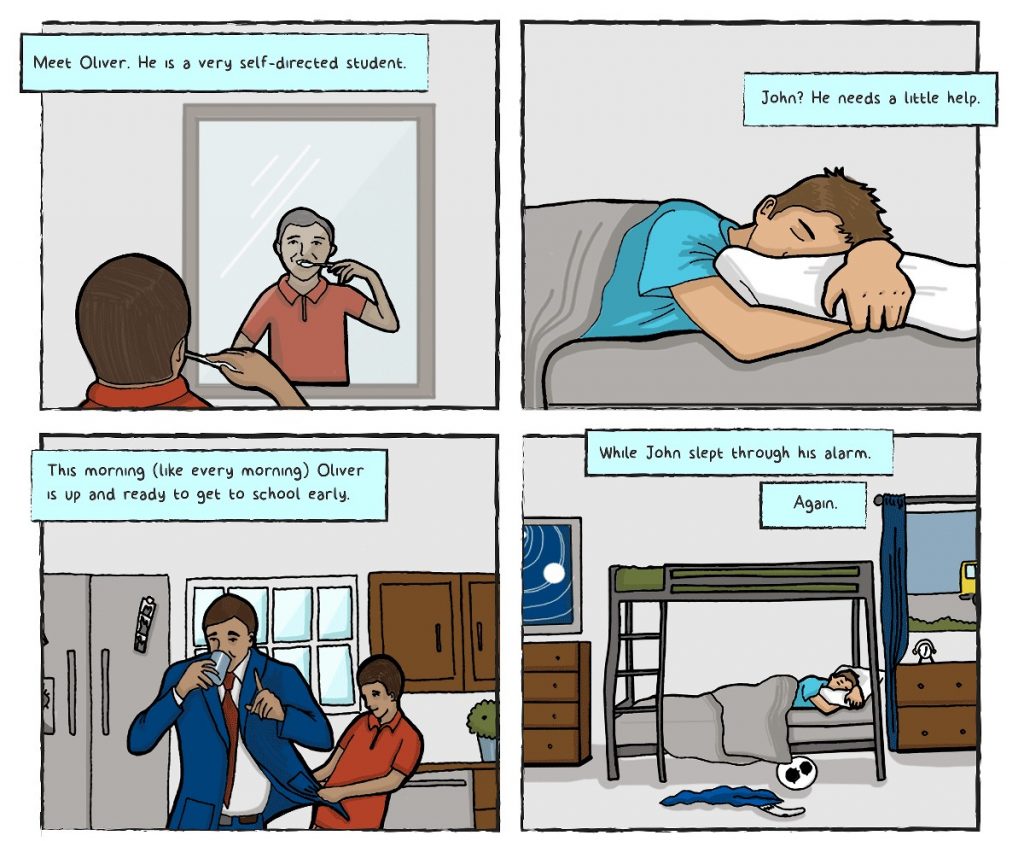
Positive behavior isn’t always automatic. Some students do the right thing on their own. Others need guidance and support. All students benefit from positive recognition for doing the right thing.

Research suggests that traditional approaches to school discipline (such as detentions and suspensions) have, at best, only a short-term effect on student behavior—and they might even increase problem behaviors for some students over time.

On the other hand, giving students positive feedback when they act appropriately can have a powerful effect on shaping behavior. Studies indicate that positive feedback reinforces good behavior, leads to intrinsic motivation among students, and helps them develop a sense of competence.
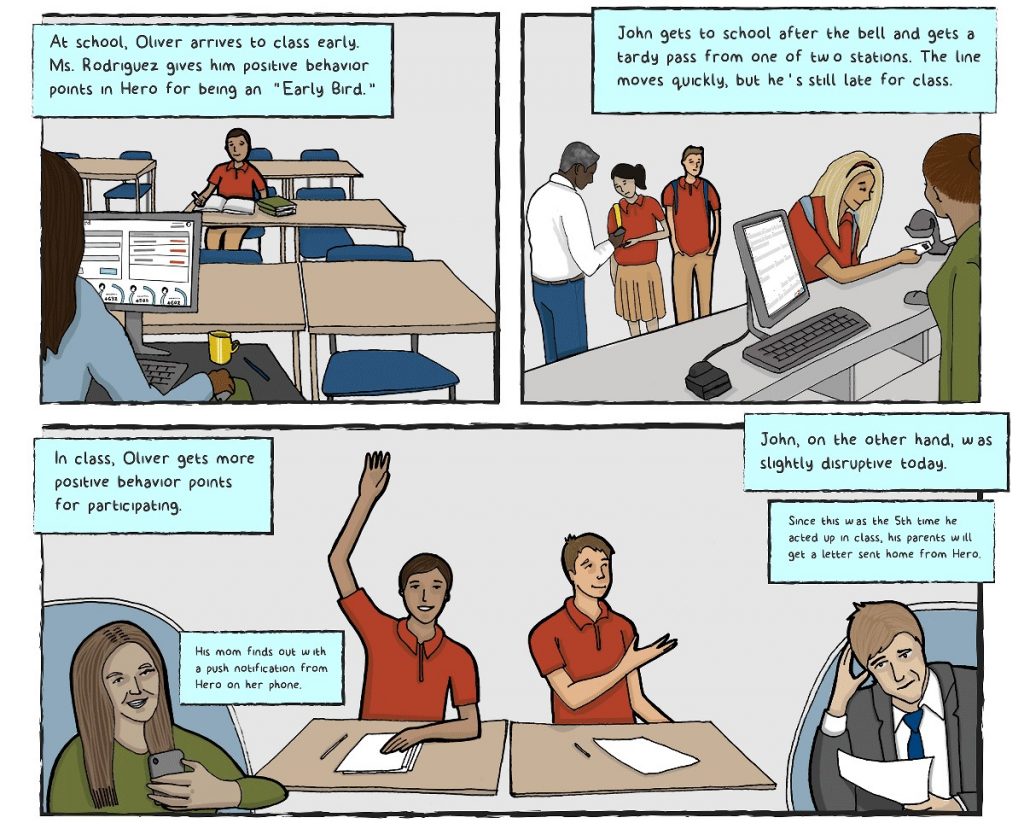
Hero K12 is a digital platform to recognize and reward students which reinforces making good choices.

Positive reinforcement is a key element of preventive approaches to school discipline, such as Positive Behavioral Interventions and Supports (PBIS). PBIS is an evidence-based framework for reducing disciplinary infractions, improving school climate, and increasing student achievement.

PBIS takes a three-tiered approach to instilling good behavior in schools. Tier 1 consists of interventions that are used for all students, school-wide, such as actively teaching and reinforcing appropriate behaviors. Tier 2 applies a more targeted approach to students who need further attention, while Tier 3 is for students who have significant behavioral problems and who might need wraparound support services.

Students learn how to act appropriately in the same way they learn other key skills, such as how to read and write: through a continuous cycle of instruction, practice, feedback, and support. PBIS acknowledges this fact by ensuring that positive behaviors are explicitly taught and encouraged throughout the entire school community. This encouragement can happen in many ways, such as by acknowledging or praising students for their good behavior and even offering prizes or other incentives when they do the right thing.
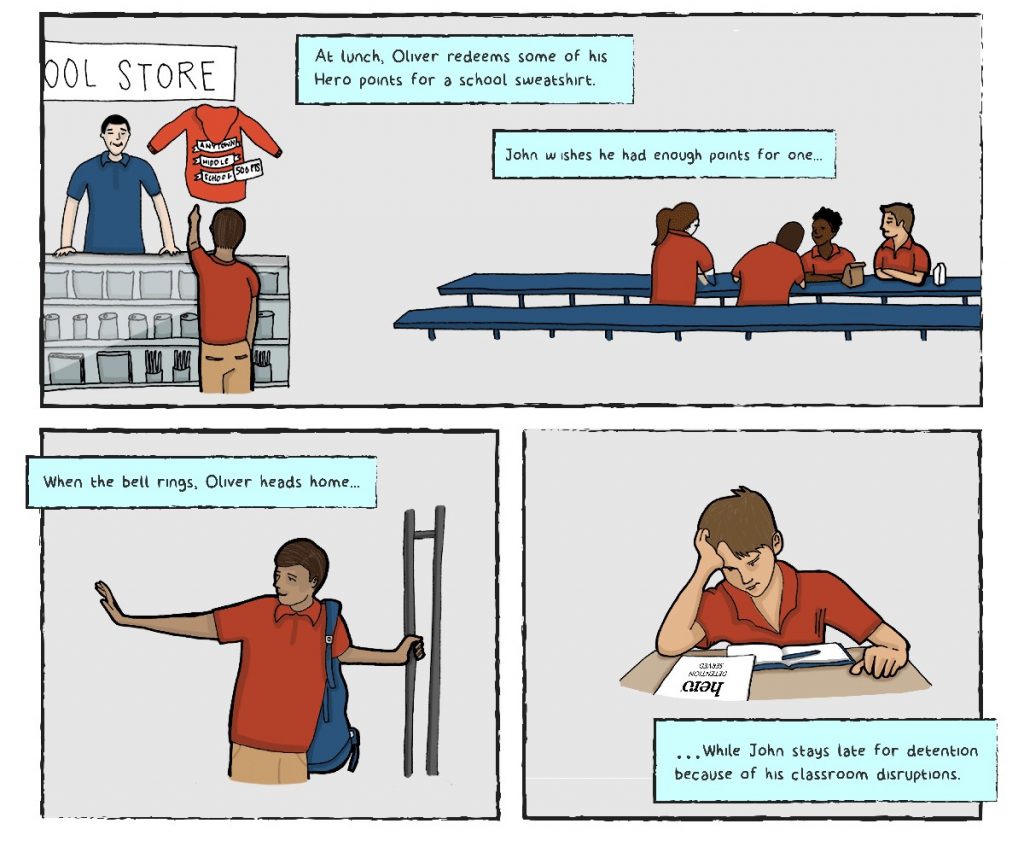
Consistent recognition for positive or disruptive behaviors is an important part of establishing trust in school staff and in the system.

One obvious advantage of this method is that it actively engages all students, and not just those who frequently need a nudge. Too often, schools tend to focus the bulk of their efforts on the handful of students who present the biggest challenge. Meanwhile, the majority of students continue doing what they should be doing, but without receiving any apparent recognition.

In contrast, all students benefit from a PBIS approach. Instead of feeling taken for granted, those who consistently do the right thing without having to be told are rewarded for their actions. When students who need frequent reminders see their classmates being rewarded, they too want to earn incentives—and when they begin to experience success, this motivates them even further.
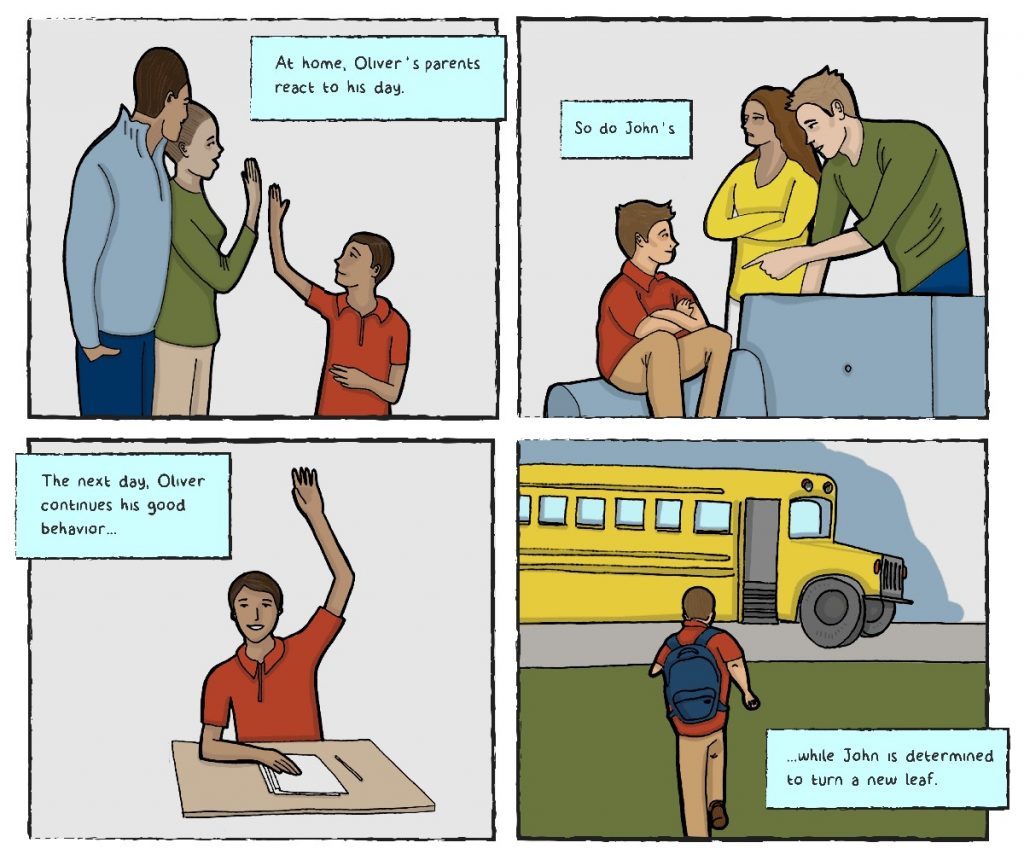
Immediate intervention gives the greatest opportunity for learning.

In schools that have adopted PBIS, the entire staff is involved in defining the expectations for student behavior and then teaching and reinforcing these skills. Typically, a leadership team consisting of a wide range of stakeholders—including administrators, general education teachers, special education teachers, and paraprofessionals—will meet regularly to review disciplinary data and determine which students need further intervention.

Research on the use of PBIS in schools has found decreases in problem behaviors, increases in student attendance and achievement, improved school climate, and greater satisfaction among staff. For PBIS to work, however, educators need a system for teaching and reinforcing positive behavior school-wide—and they need data to support their decision making.

This is what we had in mind when we developed Hero, a powerful online platform that allows users to track and acknowledge positive student behaviors in addition to recording disciplinary infractions. When teachers or administrators notice that students are doing what they are supposed to, they can assign “Hero points” that reward students for these good behaviors. Students can redeem these points for prizes, special privileges, and other incentives as determined by the school community.

We have seen time and again that students will strive to do the right thing when their positive behavior is recognized and rewarded. And if they have made a mistake in the past, this shouldn’t become an albatross hanging around their neck. They need to be able to start over at any time with a fresh slate. That’s why, although school leadership teams can view aggregated data on tardies and other disciplinary infractions over time, each student’s individual Hero points and infractions are wiped clean at the end of the year.
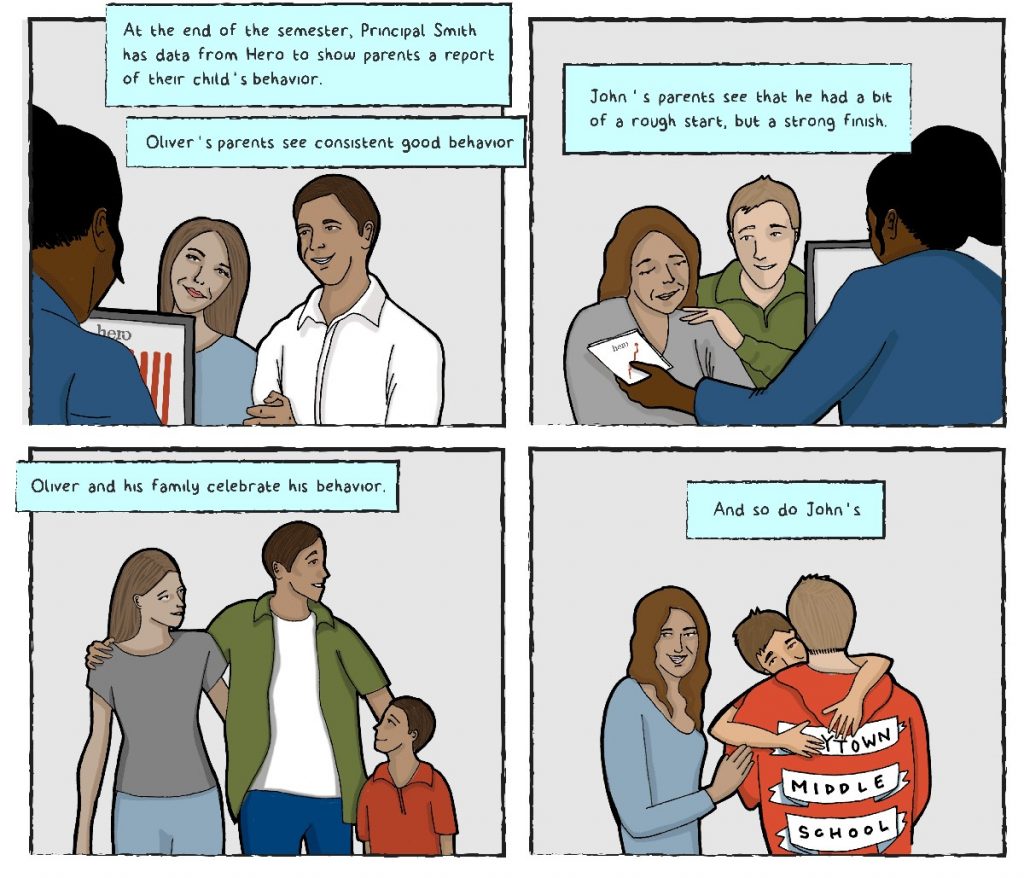
A positive culture shift creates ripples of success.

We work with thousands of schools that have seen a marked improvement in student behavior using this approach. For instance, Cedar Creek Middle School in Texas has seen a decline in the number of students who are late to class—and students are exhibiting more positive behaviors as well. In just a few short months, Kentucky’s Valley High School saw class tardiness fall by 25 percent, and inappropriate use of cell phones in class dropped 32 percent. More importantly, students were more engaged and prepared for class—and they were more courteous and helpful to others.

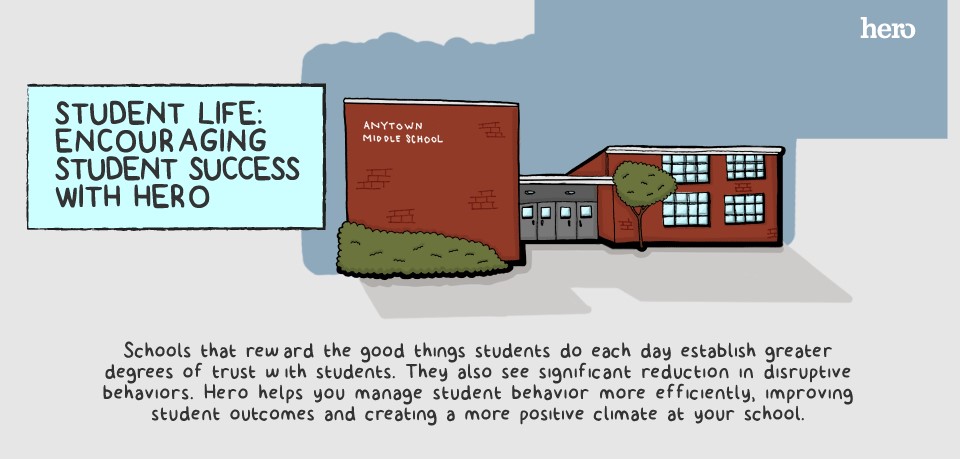
Schools that reward the good things students do each day establish greater trust among students. They also see a significant reduction in the number of disruptive behaviors. Our experience is proof that rewarding students for positive behavior has a significant effect on school climate and culture. It helps reinforce the good choices that students make, which leads to dramatically better outcomes in both the short and long run.

About the Author

Mark MacDonald is president and CEO of Hero K12. He and his team of Hero colleagues have helped thousands of schools recognize and reward students when they do the right thing which ultimately builds schools into places where students can learn and thrive.

