Uncategorized

My Vision for the Future of Education Leadership

Education leadership is changing, and so must our perception of what it is to be a leader.

My vision for the future of education leadership places leaders in a dynamic environment in which they will find themselves collaborating with other stakeholders. To be effective, future education leaders must understand how they will impact the lives of the people around them, what role technology will play in learning, and their ability to foster meaningful change.

Impact

Making an impact and understanding the implications of that impact are two different things. Future leaders in education will do both.

Educational leaders consistently impact academic achievement, whether through commission or omission. A good leader in education will influence others and create a ripple effect that carries learners far into the world.

In my vision for education leadership, future leaders recognize their impact, and they understand what that impact means for their future.

The role of technology

Educational leaders will rely on edtech for a variety of functions, and they will integrate its use seamlessly in schools.

Having lost their mistrust of digital learning, future leaders will incorporate technology with ease. Edtech will be a common tool in classrooms everywhere. Leaders will integrate digital technology as they prepare for the future.

Students will engage in application based learning – the kind that is hands-on and helps learners connect with their world. You will find a greater number of STEM classes, and the approaches used in STEM will permeate other subjects as well. Social studies and English language arts classes will become more hands-on in response to the demand that instruction becomes more aligned to our findings in neuroscience. For example, students may interact with holistic images of authors and historical figures.

Edtech’s role in this change is to equalize the playing field in the classroom, giving every learner the opportunity to access the individualized learning.

Change agents 

Education leaders of the future will be change agents who create disruptive learning. The leadership may come from the classroom or other unlikely areas, but they will all have one thing in common: they will no longer accept the status quo. Ultimately, education leaders of the future will have the capacity as well as the conviction to bring about meaningful change.

In my vision for the future of education leadership, our leaders will come from diverse backgrounds, and they will embrace digital technology as a way to improve learning.

My Vision for the Future of Neuroscience in Education

Researchers are uncovering how the human brain functions, learns and stores memory. The implications of this work have the potential to create disruptive change. Still in its infancy, neuroscience has the potential to change how educators approach instruction and learning.

I base my vision for the future of neuroscience in education on cooperative interaction between researchers and teachers. Already neuroscientists cannot study learning and memory without the assistance of educators who are working alongside students, and teachers must consider the implications of neuroscience for their teaching.

In the future, you can expect to see a strong focus on learning and memory, a strengthened partnership between science and education, and improved student achievement.

Learning and memory

We already know that learning takes place as a result of synaptic plasticity, or the ability of nerve cells in the brain to increase or decrease connectivity.

To say that the brain grows more brain cells is a misconception. The brain cannot produce more cells to increase learning and memory. Instead, it strengthens the nerve endings on either side of the synapses, thereby creating a stronger connection. By adding layers of connections, the brain’s memory is reinforced. This process is called plasticity.

The implication for the future of neuroscience in education is that teachers will have to find ways to strengthen synaptic plasticity. It’s unlikely, however, that they will be able to help build these connections with the aid of digital technology.

The science-education partnership 

Medicine and science often lead the way for schools by providing extensive brain theory research. In the future, educators will continue to take their cues from science, and doctors and scientists alike will use the techniques developed by educators to maximize learning and memory.

In the future, educators and science will collaborate on gathering and analyzing research. The science-education partnership will improve learning and memory, and it will likely shorten the learning process and increase memory.

Tech and medical science education go together, and the applications of scientific theory and discovery to educational practice are clear. Researchers have proven the cognitive connection between digital gaming and learning. Learning comes about as a result of edtech games and simulations that incorporate adaptive branching and require higher order thinking skills.

Improved student achievement

According to Scott Bolland, improved engagement comes about when we align learning with brain theory.

That improved engagement is the result of better synaptic plastic, which in turn is developed through digital technology that provides authentic simulation as well as stimulation.

The future of neuroscience in education looks promising because I visualize a future where neuroscience leads instructional practice and instructional practice influences neuroscience.

Why Low-income Kids Are Nowhere to be Found in STEM

Low-income students are substantially underrepresented in STEM. Whether it’s high school graduates or postsecondary graduates, reports show that low-income students are entering STEM programs at a much lower rate than their high-income counterparts.

Part of the problem is the fact that many low-income families can’t even afford a computer, let alone a good internet package. As authors, Vikki Katz and Victoria Rideout wrote, “The quality of families’ Internet connections, and the kinds and capabilities of devices they can access, have considerable consequences for parents and children alike.”

These consequences include gaps in homework quality, digital inequality, and developmental disparities. These effects lead to fewer postsecondary graduates from low-income households, especially in STEM programs.

Additionally, low-income families tend to live in less-privileged neighborhoods where the quality and financial situation of schools is also low.  “Poor schools” also get left behind as their ability to acquire and access resources is limited. This manifests in a lower quality of education, which limits the students’ opportunities and career options.

In fact, low-income students typically enter local, community colleges as they are either not aware of the financial aid available at more prestigious institutions, or they lack some admission requirements.

The postsecondary institutions that most low-income students attend also lack resources and have lower graduation rates. Again, the low-income student is at a major disadvantage.

All of these side effects of being low-income contribute to an inequity in education and postsecondary preparation, particularly in STEM programs. For, low-income students who attend low-income schools are more likely to have very limited access to STEM resources, classes, and experiences.

Such students are likely to have fallen behind in their education, specifically in STEM, and therefore might lack the knowledge or requirements to enter and graduate from a top postsecondary institution. On the other hand, some of the highest performing students are low-income but do not even apply to the most selective institutions, as they lack the resources and support.

However, Eve Riskin, UW associate Dean of Engineering, understands that “Engineering education needs to adapt to the tortoises, not just the hares.” She is part of an initiative to bring more low-income students to their universities to complete a five-year engineering bachelor’s program. The extra year will allow students to catch up and build a foundation in engineering.

Other universities are taking similar initiatives, trying to increase the number of low-income students entering and graduating from STEM programs. Low-income students in the U.S. account for only 14% of students in the nation’s top 200 postsecondary institutions, yet thousands of these students are achieving excellent GPA’s and SAT scores.

Moreover, through no fault of their own, low-income kids can’t acquire STEM skills at the same level as high-income kids, and they fall behind. Having the desire and desperately trying to keep up, but without the proper resources, some kids have even resorted to writing code on paper with a pencil.

Fortunately, some educators and institutions are now addressing the fact that low-income kids are nowhere to be found in STEM by providing extra education, better resources, and more financial aid.


A Vision of the Future of Higher Education

Every new generation sees changes in the landscape of higher education, but the essential tenets have always remained the same. Students live in dorms or student apartments and go every day to sit in classrooms where they hear lectures from professors.

However, many things we used to take for granted about the college experience may be changing. In fact, the higher education of future generations may be unrecognizable to those of us who came of age in the 20th century.

Here are some of the changes that seem to be emerging.

Adaptive learning

We are already witnessing technologies that adapt to learner needs. These tools can track student progress, making learning far more personalized. Students will no longer have to adjust to the lecture styles of various instructors. Instead, their online teachers will easily adapt to them. As AI (Artificial Intelligence) becomes more advanced, technology will adapt even more intuitively, responding to physical gestures and facial expressions.

Changes in concepts of the classroom space

The increasing popularity of the flipped/blended classroom models foreshadows a reimagining of the classroom space as we know it. Universities will investigate more creative approaches to learning spaces, similar to the global microcampuses proposed recently by the University of Arizona. As devices become smaller, classrooms themselves may be equipped with “smart” functions, able to adjust to the students that enter them as well as to connect to a wide range of teaching materials from around the world.

Equity around the globe

Institutions of higher learning are taking on the mission of making education accessible to students from a wide variety of ethnic, cultural and economic backgrounds. Massive Online Open Courses (MOOCs) have opened up a whole world to people that never could have considered a college education before. Although some issues of digital equity still remain, future generations will find educational opportunities increasingly available to the geographically remote and the economically disadvantaged, leveling the playing field to a greater degree than ever.

Collaboration

Technological advances have broken down walls, connecting students to real-world problem-solving and to leaders in their chosen field. Soon, possibilities for partnership between academia and the corporate world will surpass what anyone could have previously imagined. In addition, students and instructors will have the capacity to problem-solve together, resulting in deeper and more relevant learning experiences.

It seems clear that higher education of the future will turn our expectations upside down in many ways. It’s time to prepare to meet this brave new world.

My Vision for the Future of Artificial Intelligence in Education

Artificial Intelligence. It has many applications in education.

Imagine this: students wake up in the morning and, via SMS, confirm their attendance and that they will be taking the bus. Students then receive a reply with their transportation details, which vary depending on the number of pickups and the traffic. Upon arriving at school, students meet with their tutors who have individualized learning plans given to them based on collected data and the students’ strengths. Throughout the day, students receive alerts via SMS as to lab availability, opportunities to study with peers, fire alarms, and the fastest evacuation route, and more.

While this is not my vision for the future of A.I. in education, it is that of Innovation Leader, Christine Nasserghodsi. On the one hand, there are some definite benefits to this style of education; on the other hand, it seems like a very sporadic, unpredictable model for learning.

Nasserghodsi lists some of the possibilities for advancements in schools using A.I.:

  • Adaptive learning programs that respond to students
  • National and global data that advises teachers of the best learning interventions
  • Regularly updated and relevant content
  • Tailored learning plans based on student needs and performance
  • Predictive models that are school-specific

Ben Dickson also lists some ways in which artificial intelligence can enhance education:

  • “Machine Learning algorithms” identify gaps in educators’ teachings and points where students are struggling
  • “Personalized, supplemental guidance” for students
  • Self-optimized engines and “human-computer ”
  • Content moderation of online platforms
  • Textbooks and content creation customized to individual learning needs

Still more “roles for artificial intelligence in education” are highlighted in this article. Some of the roles mentioned include:

  • Automation of essential activities such as grading and marking
  • Filling in gaps and suggesting where courses and their content need improvement
  • Changing the role of teachers

Certainly, these applications are useful. But this is not my vision for the future of A.I. in schools. Frankly, artificial intelligence scares me, as it does Elon Musk, a man well-versed on the subject and one to whom we ought to listen.

In fact, Musk, alongside Stephen Hawking, began warning us about A.I. and the massive risks involved three years ago. He has even started a billion-dollar campaign to advocate against the advancement and use of artificial intelligence.

It’s really quite terrifying, the conversation that is ongoing about the development of A.I. While Demis Hassabis, a leading creator of A.I., believes he is undertaking the most important project in the world, Musk instead thinks he, himself, is undertaking the most important project in the world: interplanetary colonization.

This discussion should not be taken lightly. Musk has stated that other planets will be our salvation should A.I. “go rogue” and take over the world, while Hassabis replied that “A.I. would simply follow humans to Mars.”

This is frightening stuff. What’s more is that others, including partners and investors in Hassabis’ former company DeepMind – which has since been acquired by Google – believe that human extinction is probable and that our own technology will likely have a role in this destruction.

While increased use of technology in the classroom is improving education in many ways, it’s important to recognize the dangers associated with using such advanced artificial intelligence in general, let alone in schools.

My vision for the future of A.I. in education is not necessarily the total absence of it, but one where its use is strictly regulated and monitored, while heeding the advice of those learned on the subject, like Elon Musk.

While companies like Google and Alphabet might have good intentions, Musk makes an eery, yet valid point that they could “produce something evil by accident” – possibly even a “fleet of artificial intelligence-enhanced robots capable of destroying mankind.” I know that this may seem silly and mirror the plot of every movie in the Terminator franchise, but it’s a real possibly.

There must be a combination of “biological intelligence and machine intelligence” according to Musk. This is sage advice that should be noted by developers and educators. Not only does A.I. threaten the jobs of teachers, but it also diminishes human interaction, socialization, and creativity.

Beyond the alarming potential of advanced artificial intelligence to not only desocialize but also destroy humans, it threatens to significantly reduce the only trait humans have to stay ahead of an increasingly mechanized world: creativity.

While data and robots make our lives easier and stand to improve such models as education, creativity is ever-important. Creativity, compassion, and emotional connection are what separate us from machines, and if we lose these, we are most certainly doomed.

Thus, the use of A.I. in education is valuable in some ways, but we must be hyper-vigilant in monitoring its development and its overall role in our world.

My vision for A.I. in education mirrors that of Elon Musk’s vision for A.I. in general. Advanced A.I. should be kept out of education until we better understand it and its potential. After all, it is artificial intelligence; it learns on its own and at a much faster rate than humans. And we truly have no idea just how intelligent it could become and what that might mean for humankind.



Is Homeschooling a Good Idea?

As your child inches closer and closer to beginning school age, do you find yourself wondering which schooling option is best for them? You’re not alone. The decision on whether to send your child off to school or teach them from the comforts of your own home has become more or less the norm as of lately. In the past, it’s been a given that you send your child off to your nearest public (or private) school but times are changing, and homeschooling has become more popular in recent years.

Is homeschooling a good idea though?

There isn’t really a concrete answer to that question because it all depends on a few factors. Homeschooling may be a great option for one family but not the right fit for another. It all depends on the following factors whether or not you should homeschool your little ones.

What is your family’s lifestyle?

Everybody has a different lifestyle and living situation. Whether your family has two full-time working parents or you’re a single-parent doing your best to provide for your children, it is important to take into account how you and your little ones live your life.

Homeschooling takes a lot of time and motivation on both ends (you and your little ones), and if you work full-time and are a single parent, you may not be able to give your child the help they need in certain subjects. It is true that homeschooling allows your child to learn at their own pace, but what happens when they fall behind on math skills and are stuck learning simple addition when their other friends are already learning multiplication?

By no means is it your fault, but sometimes it is best not to pursue homeschooling for the sake of your child’s educational needs.

Is your child struggling in a traditional school (public, private, etc.) setting?

Maybe you’ve tried to put your child in a traditional school setting already. Let’s say they have had to deal with excessive bullying (God forbid) and it gets out of hand. Or, let’s say they had a hard time keeping up with the rest of the class or maybe they’re more advanced than their classmates. Each of these scenarios can cause feelings of isolation and not fitting in.

In this case, homeschooling may be a good route to take because your child may feel more comfortable working at home and at their own slower or more accelerated pace.

Do the schools in your area have a satisfactory rating?

Something several families struggle with today is the poor rating of schools in their district. With so many families struggling with poverty, and not enough funding going to inner city schools, this is enough to frustrate any parent who cares about their child’s future.

If you live in a school district with a subpar rating by the Department of Education, you are probably much more likely to seek out other options. There are always private schools, but in some cases, it may not be affordable to some parents, and they may not have the means to fund it.

In this case, homeschooling is the best option. To find out the rankings of your nearest schools, click here.

Choosing the best schooling option for your children can be really intimidating. You are responsible for determining where and how they get an education and the knowledge they will be using for the rest of their lives. Now you’ve had the chance to look at these factors, and now you must make a decision. Is homeschooling the best option for your family?

How Colleges Can Use Data Analytics to Improve Student Retention and Graduation Rates

Unlike K-12 schools, colleges and universities have not traditionally placed a huge focus on student retention and graduation. Students who couldn’t make it in college dropped out and colleges could easily fill their spot. But today’s higher education landscape is changing. There is more pressure on colleges and universities to keep students in school and ensure they graduate.

This has left colleges scrambling to find new ways they can better serve students. One method many schools are trying? Using data analytics to improve retention and graduation rates.

Data analytics can be used in a variety of ways. First, they can help colleges find patterns among students who are failing courses. Colleges can figure out whether there’s a particular subset of students that are more likely to fail. First generation college students, minorities, or female students may all be more likely to struggle in college. By determining if these groups are falling behind, colleges can figure out their next steps to help these students.

Colleges can also use data analytics to find the courses that are most challenging for students. It may be a particular department, professor, or type of course that is causing a disproportionate number of students to fail and ultimately drop out.

Keeping data on individual students can also help target struggling students. Data analytics can reveal exactly what students struggle with. This can be accomplished by tagging assignment types or course types and measuring where a student performs the worst.

Sharing this data with students and professors can also be a powerful tool for improving outcomes. Once it’s clear what a student, or a group of students, is struggling with, interventions can be used. Professors who find that many students fail a particular course may offer more tutoring or additional resources. Students who learn that they struggle with a particular skill, such as writing, can seek out help with that specific skill.

Now that more colleges and universities are working harder to retain students and increase graduation rates, it’s time to start looking for the best ways to do this. Data analytics will bring colleges into the 21st century and allow them to better target and serve students who are at risk of failing or even dropping out of school altogether.

How does your institution use data analytics to target students and increase achievement? Do you think data analytics are a necessary tool?


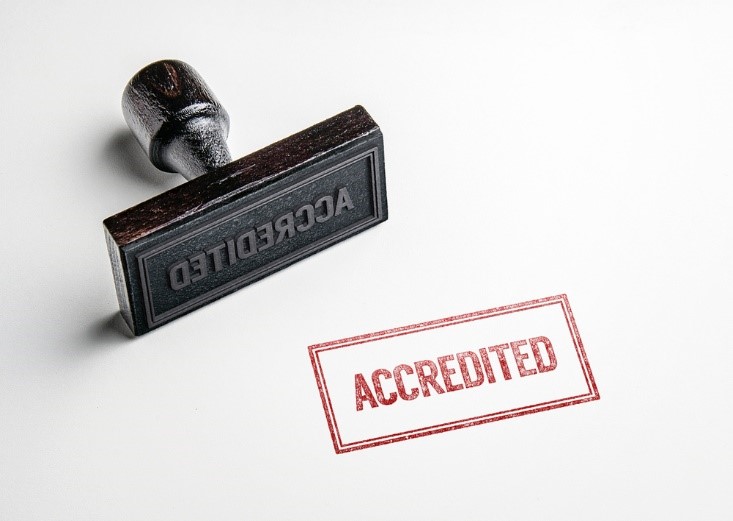
All About Accreditation: How It Works, Who to Trust, and More

 It doesn’t matter whether you are researching for your first-ever college program or hunting for a practical advanced degree; there is one piece of advice that always rings true: Look for accreditation.

Because higher education in America is such a profitable enterprise, there are thousands of schools trying to convince you to enroll, and accreditation helps you sort the institutions providing high-quality educations from those just after your money. Yet, even as most prospective students recognize the need for accreditation, many don’t understand how the process works. Thus, plenty of students accept any and all accreditations without a second thought.

The accreditation process is a rigorous test for universities looking to be branded as legitimate institutions of higher learning. To help you find the best possible school where you can gain the best possible degree, this guide should tell you all you need to know about accreditation.

What Is Accreditation?

At its simplest, accreditation is recognition that a school’s programs contain valid education fit for preparing students for professional practice or else admission into other reputable institutions of learning. Organizations that evaluating universities and colleges are working on behalf of the U.S. Department of Education, endorsing credentials based on national standards.

As there are different types of education, there are different types of accreditation. Institutional accreditation recognizes an entire university or educational organization, asserting that each of the institution’s parts contributes effectively to the qualitative achievement of that institution’s goals. For example, the Higher Learning Commission (HLC) — one of the more common U.S. accrediting agencies — provides institutional accreditation.

Additionally, organizations can award specialized accreditation, which recognizes individual programs, departments, or schools within a broader institution of learning. For example, you might find an AACSB-accredited online MBA program, which is at a business school that has received international recognition for specialized quality. This often applies to programs that require licensing or certification on a state or national basis, but some programs receive specialized accreditation to make distinct their high quality within their field.

Who Does the Accrediting?

Accrediting agencies are private associations dedicated to the enhancement of education. While the standards they set and the types of institutions they accredit are their decision, they ultimately report to the Department of Education (DOE), which can choose to accept or reject their reviews. There is also a private, non-governmental organization, the Council for Higher Education Accreditation (CHEA), that distinguishes legitimate accreditation agencies. The difference between the DOE and CHEA is that the DOE limits official recognition to agencies reviewing schools that participate in federal programs, like the Federal Student Financial Aid Program.

Few accrediting agencies are familiar enough with all industries to provide reliable ratings for all programs. Therefore, individual agencies tend to be expert in precise areas of learning. For example, there are national agencies specializing in trade and technical colleges and religious colleges and there are regional agencies that review all colleges within a certain boundary. As a result, there are dozens of accrediting agencies active in the United States, and you might find it difficult to keep legitimate organizations straight.

Fortunately, both the DOE and CHEA offer online lists of accreditation agencies to help you parse the respectable from the disreputable. Because their recognition can change from year to year, it is wise to check this list every time you apply to a new school or enroll in a new program.

How Do Schools Become Accredited?

The path to accreditation isn’t easy, but it is relatively straightforward. Before an institution is considered for evaluation, it must submit to a candidacy period, during which time, the agency will observe the instruction and determine whether it is eligible for accreditation. The candidacy period typically lasts four years, and it must prove itself eager to comply with the agency’s standards before the true evaluation may begin.

Though the precise accreditation process will vary from agency to agency, there are a few steps that are similar throughout the industry. For example, schools typically must prove that they are financially sound and that they plan to continue operating continuously into the future. Additionally, schools must submit to on-site assessments of courses and curricula, which will primarily influence most agencies’ criteria for accreditation. Often, the results of an accreditation evaluation will be made public, so you can learn whether a potential program has failed accreditation efforts in the past.

Accreditation matters, but who provides what accreditation matters more. Before you start paying tuition to any institution, you must research that school’s accreditations thoroughly to ensure you are getting the education you deserve.

My Vision For the Future of Early Childhood Education

Early childhood education is the foundation of our society. If we do not set children up to succeed, they will ultimately fail. The failure of future generations would be the downfall of our social and economic structure. This is a concept which is now widely accepted. And, many countries have implemented programs to encourage and support early learners. Consequently, the American ECE system needs to make significant strides to keep up.

In my vision for the future of early childhood education, American students will be enriched and supported. They will have the tools necessary to compete in the global market. If you’re unfamiliar with recent advances in ECE, you may wonder what we’re lacking. The hard truth is, a lot needs to be done to fix the ECE system in the United States. 

The Achievement Gap

Reducing and eliminating the achievement gap in American schools is an important goal. This work begins with Early Childhood Education. The gap is a measurable disparity between white and minority students, rich and poor students, and male and female students. This inequality of achievement is measured by test scores, college attendance, and future career earnings.

Research has shown that the best way to combat these inequities is a better ECE standard. The implementation of the Every Student Succeeds Act, this year, could be the catalyst for change in U.S. schools. The mandate, signed into law in 2015, returns state controls which had been superseded by the No Child Left Behind policy in 2002. Ideally, this new legislation will require greater accountability, closer standards measurement, and identify the problem areas for improvement. Additionally, the act focuses on the use of evidence-based science to improve learning.

What changes can we expect in Early Childhood Education from the implementation of the ESSA? And, what changes need to happen for Early Childhood Education to support continued learning and achievement? There are several approaches, backed by scientific research, which will benefit early learners and encourage compliance with the ESSA mandates.

Funding for ECE Programs in Libraries and Museums

A 2013 report by the Institute of Museum and Library Services, called upon these institutions to recognize their role in improving ECE. The report has stemmed a greater interest in these programs over the past four years. However, state or community funding could bring these programs to more children who are considered at risk.

Providing daycare and preschool opportunities in a learning rich environment can enhance children’s performance at Kindergarten entrance. The innovative programs that already exist combine hands-on learning with access to art, music, books, and history in surprising ways.

However, expanding these programs and the ability of at-risk children to attend them, is imperative to close the gap.

Use of Edtech with Early Learners

Another brain-based approach to ECE is the use of technology in the classroom. Even young children can benefit from screen time. However, the key is to make technology engaging and limit daily use to avoid learning delays with small children.

The benefits of including technology in early education programs can be incredible if properly implemented. Even young students gain confidence from the use of technology in the classroom. Interactive games and applications allow students to engage with their learning environment. Additionally, even low-income children are often familiar with technology before entering an ECE environment.

Outside the Desk Learning

There is an increased focus on the value of alternative teaching methods with early learners. Most international programs emphasize child-led learning, emotional maturity, and hands-on programs.

ECE programs within the U.S. have an opportunity to take advantage of these shifting perspectives. Allowing children to explore freely in an educationally inspired environment or conducting classes outside can better engage young minds. Additionally, employing the philosophy of Emotional, Cognitive, Social Early Learning can help ready young children for the world.

Sending children into first grade mentally, emotionally, and physically prepared should be the goal of Early Childhood Education. However, the top performers come equipped with an understanding of science, mathematics, art, and nature. Additionally, they often speak two or three languages upon admission to first grade. The disparity between children with the most advantages and those without, needs to become less palpable. And, it is my firm belief that transforming the future of ECE will accomplish that.

What ideas have you employed with early learners to bridge the gap? How does technology help your pre-K classroom? We’d love to hear your experiences.


Ready to Study Abroad?: The Top European Universities in 2018

Studying abroad next year and keen to make the most of your experience? Are you choosing to study in Europe? If so, read on. We combed the QS University Rankings for 2018 to find the best universities in Europe to study at next year.

1.   University of Cambridge

Cambridge is one of the oldest universities in the world and has produced some of the most essential scientists in history from Sir Isaac Newton to Stephen Hawking.

If you’re looking for a university dedicated to innovation, research, and specialist subjects, Cambridge is your best bet.

2.   Imperial College London

Are you a future scientist hoping to gain international experience? Imperial College London is the #4 university in Europe and #8 in the world.

Imperial is different from any other university in the UK because of its commitment to the scientific community and its multidisciplinary approach to teaching and research.

Moreover, Imperial is based in South Kensington, a center of culture in the heart of London. The campus provides international students with an incredible experience with access to the world’s top researchers on campus and some of the most incredible museums, theaters, and galleries on their doorstep.

3.   ETH Zurich- Swiss Federal Institute of Technology

ETH Zurich embodies the values of Switzerland itself: intellectual freedom, entrepreneurial spirit, global responsibility, and an open mind.

In other words, ETH Zurich is home to the future pioneers of the future scientific community. Not convinced? Nobel laureate Albert Einstein called this university home.

4.   Delft University of Technology

Based a stone’s throw from the international center The Hague and an hour from Amsterdam, Delft University of Technology is establishing itself as an important STEM university not only in Europe but across the world.

The university features one of the largest university campuses in the world and includes a new media center, aerodynamics and propulsion lab, and typically Dutch parks and cycle paths for students to enjoy.

5.   University of Copenhagen

The University of Copenhagen is known for its research capacity – and it’s one of the best places to study.

The university partners with global research groups and private sector companies for a multi-dimensional experience. It’s also welcoming of international students, who are 10% of the total full-time student population.

Do you have your sights set on any of these top European universities in 2018? Where will you go? Let us know in the comments below.